Himalayan
calm, gentle, affectionate, quiet
Quick Facts
- Lifespan
- 9-15 years
- Weight
- 3.2-5.4 kg
- Origin
- United States/United Kingdom
- Coat
- Long
Overview
The Himalayan is a breed that combines the lavish, flowing coat and colorpoint markings of the Siamese with the gentle, calm temperament and round, cobby physique of the Persian. The result is a strikingly beautiful cat that is as serene as it is visually impressive. Deeply devoted to their families, Himalayans are quintessential lap cats that bring a quiet, loving presence to any home.
History & Origins
The Himalayan was created through deliberate crossbreeding of Persians and Siamese cats to combine the Persian's body type with the Siamese's colorpoint markings. The first experimental cross was conducted in 1931 by Virginia Cobb and Dr. Clyde Keeler at Harvard University, producing the first Himalayan kitten named Newton's Debutante.
Parallel breeding programs were undertaken in Britain and Canada through the 1940s and 1950s. The breed was recognised by the GCCF in 1955 as the Colourpoint Longhair. US breeder Marguerita Goforth played a central role in achieving American recognition, and the CFA recognised the Himalayan as a distinct breed in 1957.
In 1984, the CFA reclassified the Himalayan as a colour division of the Persian rather than a separate breed — a classification still maintained today, though TICA, ACFA, and other organisations continue to recognise it as its own breed.
Appearance
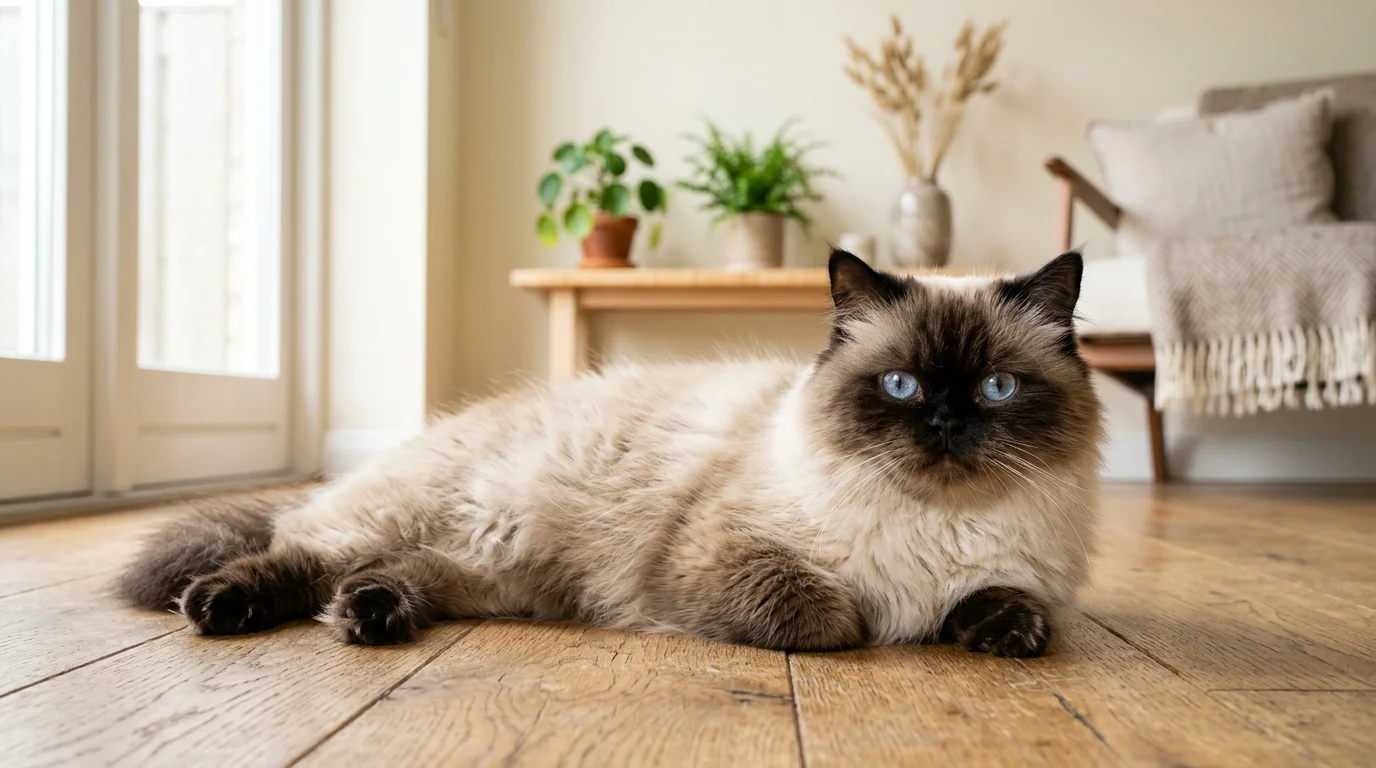
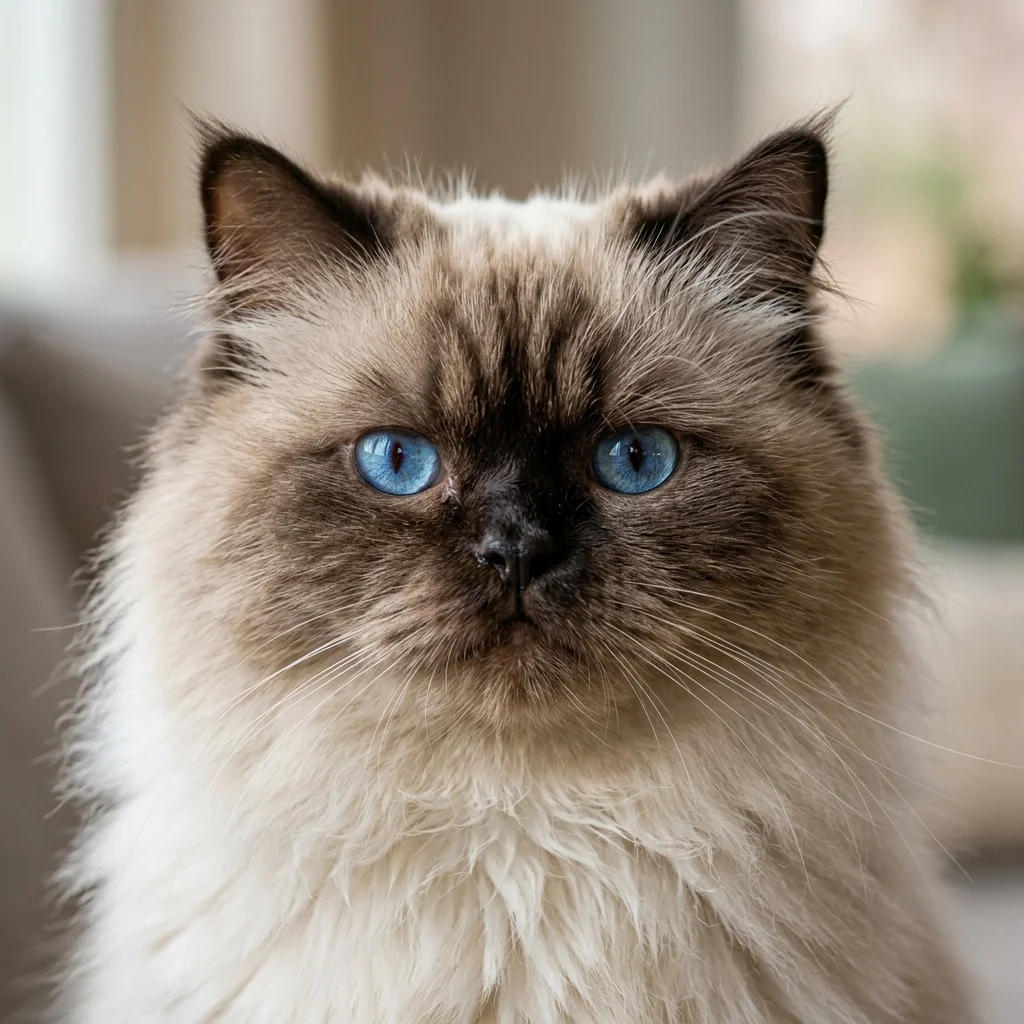
The Himalayan has the same cobby, round-bodied structure as the Persian — broad chest, short legs, large round head, and flat face. The most distinctive visual feature is the colorpoint pattern: the face mask, ears, legs, and tail are darker than the body, in shades that include seal, blue, chocolate, lilac, red, cream, and tortoiseshell.
The coat is long, thick, and silky, standing off from the body in a full ruff around the neck. The eyes are large, round, and a deep vivid blue — the blue eye colour is a breed requirement, inherited from the Siamese ancestry.
Adult males typically weigh 4–6 kg; females are somewhat lighter at 3–5 kg.
Temperament
Himalayans are poised, loving, and sweet-natured cats. They are neither demanding nor aloof — they enjoy being near their families and will seek out a warm lap, but they do not insist on constant attention. Their calm, even temperament means they adapt well to quiet households and get along with respectful children and gentle pets.
They are generally friendly with visitors but not overly exuberant — a Himalayan will typically observe a new arrival before deciding to engage. TICA describes them as highly in-sync with their owners' emotions, often sensing and responding to moods.
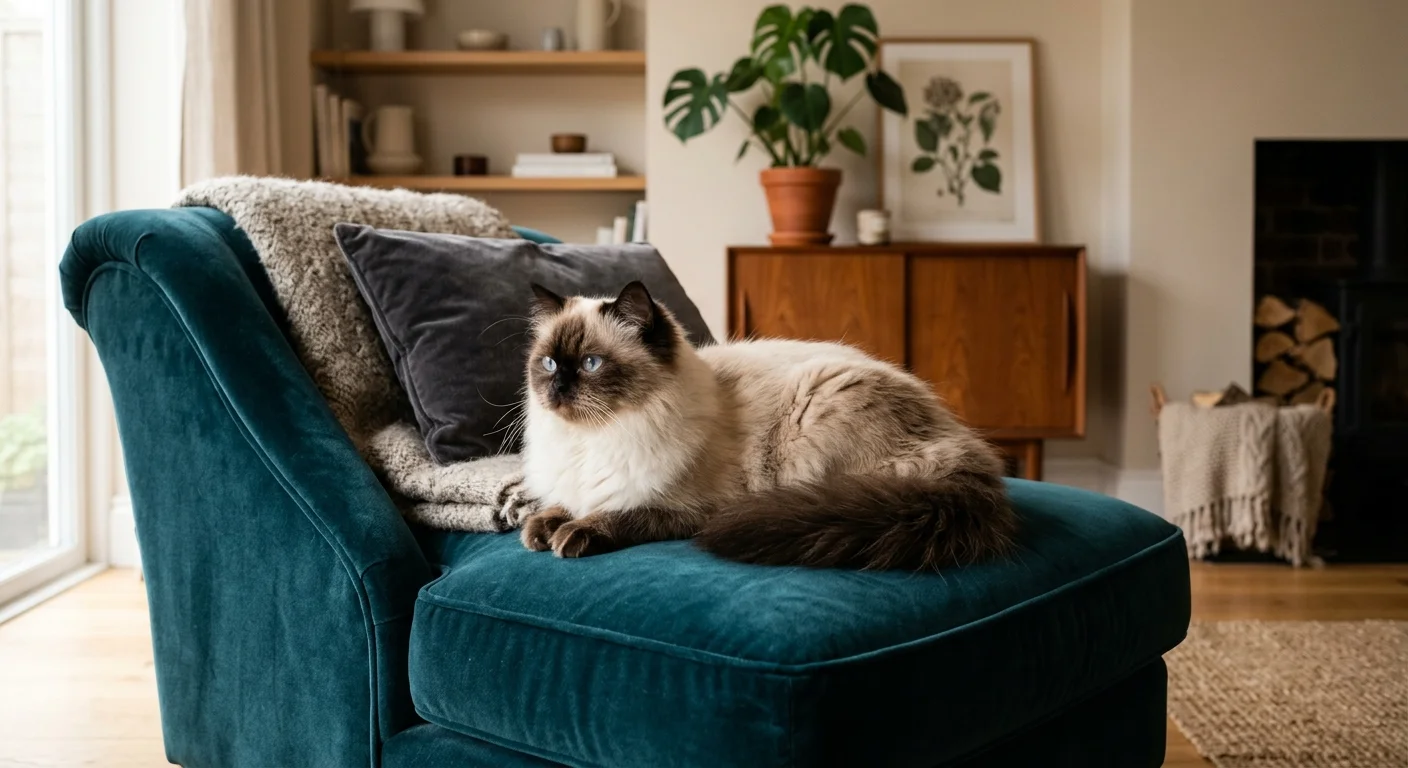
Himalayans are not high-energy cats. They prefer a peaceful, predictable routine and are not especially interested in climbing or acrobatics — a comfortable couch or sunny windowsill suits them perfectly.
Activity & Play
Activity & Exercise
The Himalayan is a calm, gentle breed that inherits the placid temperament of the Persian alongside the striking colourpoint coat of the Siamese. This cat is decidedly low-energy and is happiest in a quiet, stable environment where it can move at its own relaxed pace.
Daily Exercise Needs
Himalayans require around 15 to 20 minutes of interactive play each day. Their brachycephalic (flat-faced) facial structure can make vigorous exercise uncomfortable, so short, gentle play sessions are far better than extended high-intensity activity. Without daily engagement, they may become lethargic and gain weight.
Play Styles
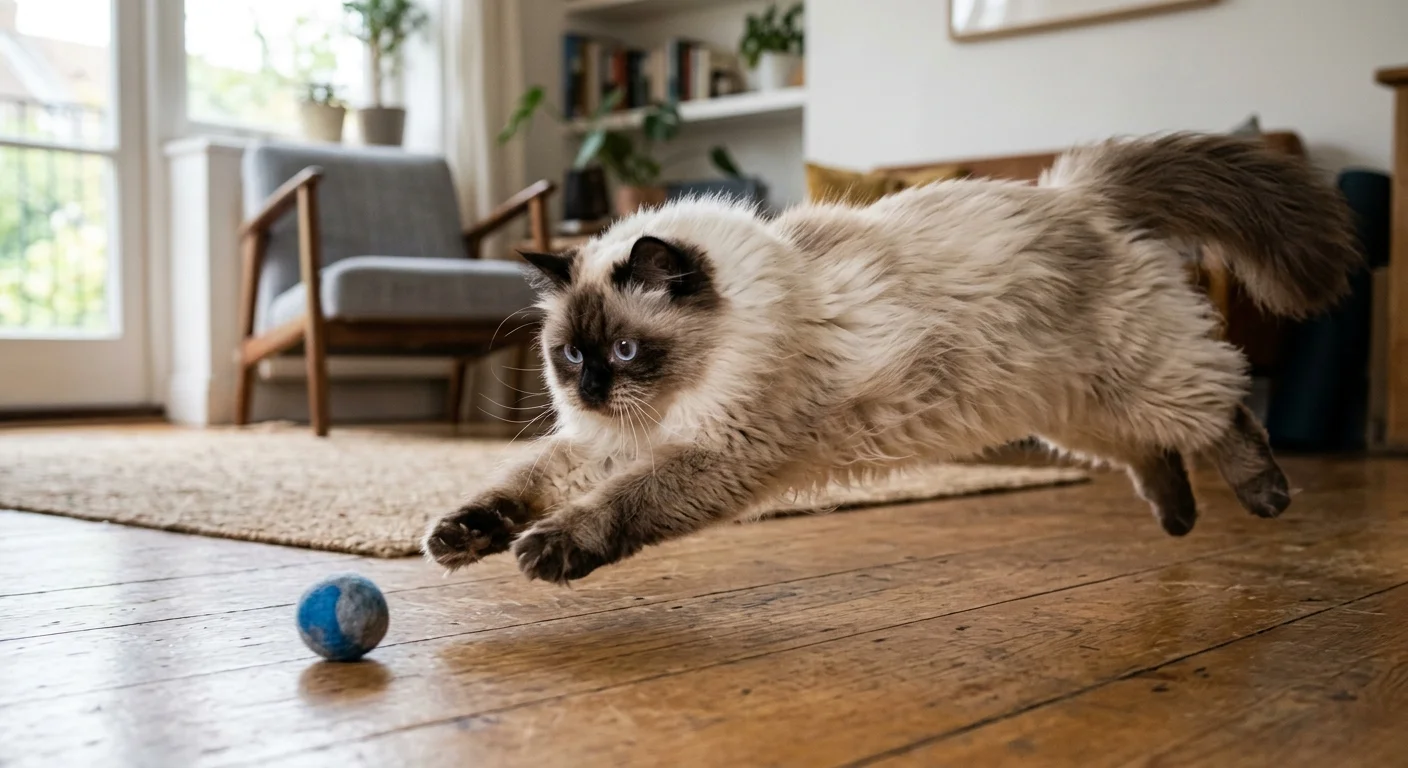
Slow-moving toys such as feather wands dragged gently across the floor appeal to the Himalayan's hunting instincts without overtaxing them. Rolling balls and soft stuffed mice are popular choices. Puzzle feeders provide mental stimulation and help slow down eating. Himalayans are unlikely to initiate high-energy play independently but will participate willingly when their owner leads the session.
Vertical Space & Environment
Himalayans are not strong jumpers and prefer low furniture and ground-level resting spots. Wide, padded window perches at a modest height allow them to watch the outside world, which they find entertaining. A plush cat bed placed in a warm, quiet corner is often the Himalayan's preferred resting spot throughout the day.
Indoor vs. Outdoor
Himalayans must be kept indoors. Their flat face makes them sensitive to temperature extremes, and their long, dense coat requires regular grooming that outdoor life would complicate. They lack the street awareness of more independent breeds and are not equipped to handle outdoor hazards.
Grooming
The Himalayan's long, silky double coat is its most spectacular feature — and its most demanding one. The coat requires a serious daily commitment: breeders recommend a 10–15 minute grooming session every day to prevent matting, along with a thorough one-hour session once a week.
The undercoat is dense and will mat if neglected, particularly around the collar, armpits, and lower abdomen. A wide-toothed comb or slicker brush is recommended for daily work, with a finishing comb used weekly. During spring and autumn shedding, additional grooming sessions are necessary.
The flat face requires daily eye corner cleaning — tear duct overflow is common, and leaving the discharge uncleaned can lead to skin staining and irritation. Facial folds should be kept clean and dry. Regular nail trimming and dental care are also essential.
Health
Himalayans share many of the same health concerns as Persians due to their similar genetic background. Polycystic kidney disease (PKD) is the most significant hereditary condition — a dominant gene mutation causes cysts to develop in the kidneys, progressively impairing function. DNA testing is available and responsible breeders test all breeding cats.
As a brachycephalic breed, Himalayans are prone to breathing difficulties, dental crowding, and eye problems including progressive retinal atrophy (PRA) and tear duct overflow (epiphora). Hypertrophic cardiomyopathy (HCM) has also been reported.
Their low activity level makes them susceptible to obesity. Expected lifespan is 9–15 years with good care, though cats with more extreme facial structure may face additional health challenges.
Nutrition
Nutrition & Feeding
Proper nutrition is especially important for Himalayans, who are prone to obesity and have specific health considerations linked to their flat-faced anatomy and coat condition.
Macronutrient Guidelines
Himalayans need a high-protein diet based on quality animal sources. Look for foods listing a named meat (chicken, turkey, salmon) as the primary ingredient. An appropriate adult diet contains around 30 to 38 percent protein and 12 to 18 percent fat on a dry matter basis. Avoid foods high in corn, wheat, or soy as primary ingredients.
Wet vs. Dry Food
Wet food is strongly recommended as the foundation of a Himalayan's diet. Their flat face can make drinking from a standard water bowl difficult, so wet food provides essential additional hydration. Kidney disease is a concern in the breed, and good hydration supports urinary and renal health. If dry food is offered, choose a kibble with a shape that suits flat-faced cats and ensure fresh water is always available.
Feeding Frequency
Kittens up to six months should receive three to four meals daily to fuel growth. Juveniles between six and twelve months can transition to three meals. Adults (one year and older) do best on two measured meals per day. Avoid free-feeding, as Himalayans will overeat when given unlimited access to food.
Breed-Specific Considerations
Himalayans are susceptible to polycystic kidney disease (PKD), so a diet that supports renal health is valuable. Some cats in this breed also have sensitive digestion, so food changes should be made gradually. Coat condition is supported by omega-3 and omega-6 fatty acids, so look for foods that include fish oil or flaxseed.
Family Fit
Family Compatibility
The Himalayan is a devoted, affectionate breed that thrives in calm, predictable households. Its gentle temperament makes it a wonderful companion, though it suits some family types better than others.
Children
Himalayans can do well with calm, respectful children who understand how to handle a cat gently. They are patient by nature, but they are not as robust or playful as some breeds and may retreat from noisy or boisterous environments. Older children who appreciate a quiet companion will find the Himalayan deeply rewarding. Toddlers and very young children should always be supervised.
Other Cats
Himalayans generally get along with other gentle, calm cats. They are not competitive or territorial, so introductions tend to go smoothly when given adequate time. Pairing with another similarly laid-back breed works best.
Dogs
A calm, cat-friendly dog can coexist peacefully with a Himalayan. High-energy or boisterous dogs may stress this sensitive breed, so careful matching is important. Slow, structured introductions are always recommended.
Elderly Owners
The Himalayan is an excellent companion for seniors and retirees. Its low exercise demands, affectionate nature, and love of quiet company make it ideally suited to a relaxed lifestyle. The grooming requirement is something to factor in, as daily brushing is necessary.
Apartments
Himalayans are perfectly suited to apartment living. They do not need outdoor access and are quiet enough not to disturb neighbours. A comfortable indoor environment with a few cosy spots is all they require.
First-Time Owners
Himalayans can work for first-time owners who are committed to daily grooming and routine veterinary care. Their gentle, undemanding nature makes them emotionally easy to manage, though the grooming commitment should not be underestimated.
Fun Facts
- The Himalayan's distinctive colorpoint pattern is temperature-sensitive: the darker colouring develops on the cooler extremities of the body (face, ears, paws, and tail).
- Mr. Bigglesworth, Dr. Evil's hairless cat in the Austin Powers films, was played by a Sphynx cat — but was described in the story as originally having been a Himalayan.
- The first Himalayan kitten produced through deliberate breeding was created in 1931 at Harvard University.
- Despite their glamorous appearance, Himalayans are among the most serene and least demanding of the longhaired breeds.
- All Himalayans have blue eyes, a trait inherited directly from their Siamese ancestors.
FAQ
Frequently Asked Questions
How long do Himalayans live?
Himalayans typically live between 9 and 15 years. Cats that are free from polycystic kidney disease and maintained at a healthy weight tend to reach the upper end of this range. Regular veterinary check-ups are important.
Do Himalayans shed a lot?
Yes. The Himalayan has a long, dense, double coat that sheds consistently throughout the year and more heavily during seasonal transitions. Daily brushing is strongly recommended to prevent matting and reduce loose hair around the home.
Are Himalayans vocal?
Himalayans are moderately vocal. They are quieter than their Siamese ancestors but will communicate with soft, melodic meows when they want attention or food. They are not known for loud or persistent vocalisation.
Are Himalayans hypoallergenic?
No. Himalayans are not hypoallergenic and are not considered a good choice for allergy sufferers. They shed significantly and produce the Fel d 1 allergen that triggers reactions in sensitive individuals.
How much does a Himalayan kitten cost?
Pedigree Himalayan kittens from a reputable breeder typically cost between $800 and $2,000 USD. Price varies based on coat quality, colour point pattern, and the breeder's location and reputation.
Are Himalayans easy to train?
Himalayans are intelligent but not particularly motivated by training challenges. They can learn basic routines and respond to their name, but they are less driven by games or tricks than more active breeds. Positive reinforcement and patience yield the best results.
Gallery
Explore more Himalayan-style breeds
Browse related breeds or take our matching quiz to find the right fit for your home.
Stay in the loop
Get weekly breed spotlights, care guides, and new additions - straight to your inbox.