Tonkinese
active, vocal, people-oriented, playful
Quick Facts
- Lifespan
- 12-16 years
- Weight
- 2.7-5.4 kg
- Origin
- Canada/Thailand
- Coat
- Short
Overview
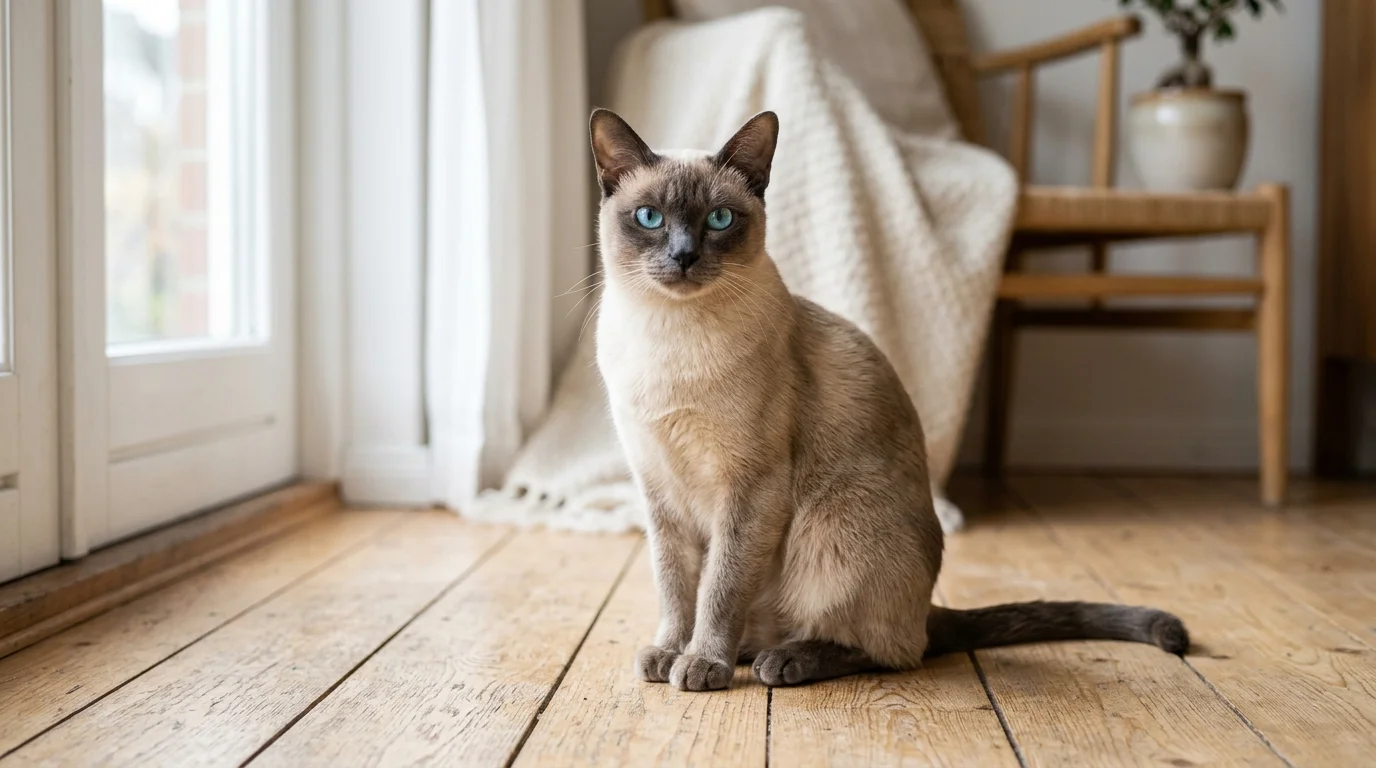
The Tonkinese is a beautifully balanced breed that blends the elegance of the Siamese with the sturdy warmth of the Burmese, resulting in a medium-sized cat with a muscular build, a people-first personality, and captivating aqua eyes. Playful, vocal, and deeply social, Tonkinese cats thrive on companionship and are rarely content to sit on the sidelines. They are a wonderful choice for families, singles, and households with other pets — as long as someone is always around to keep them company.
History & Origins
The Tonkinese story begins with an unusual historical footnote: a cat named Wong Mau arrived in the United States in 1930 and was initially classified as a chocolate Siamese, but was in fact a natural Tonkinese — a living example of the Siamese-Burmese cross before the breed had even been formally conceptualised.
Deliberate development of the Tonkinese began in the 1960s, when breeders in the United States and Canada set out to cross Siamese and Burmese cats, aiming to create a breed that combined the best traits of both: the slender elegance and personality of the Siamese with the rounder face and calmer temperament of the Burmese. The breed was officially recognised in Canada in 1965 under the Tonkinese name.
Today the Tonkinese is recognised by the CFA, TICA, GCCF, and WCF, and has a devoted following on both sides of the Atlantic.
Appearance
The Tonkinese is a medium-sized cat with a surprisingly solid, muscular body — owners frequently remark that their Tonk feels heavier than it looks. This is a classic trait of the breed: a deceptively dense, hard-muscled body beneath a sleek, elegant exterior. Typical weights range from 2.7–5.5 kg, with males usually larger than females.
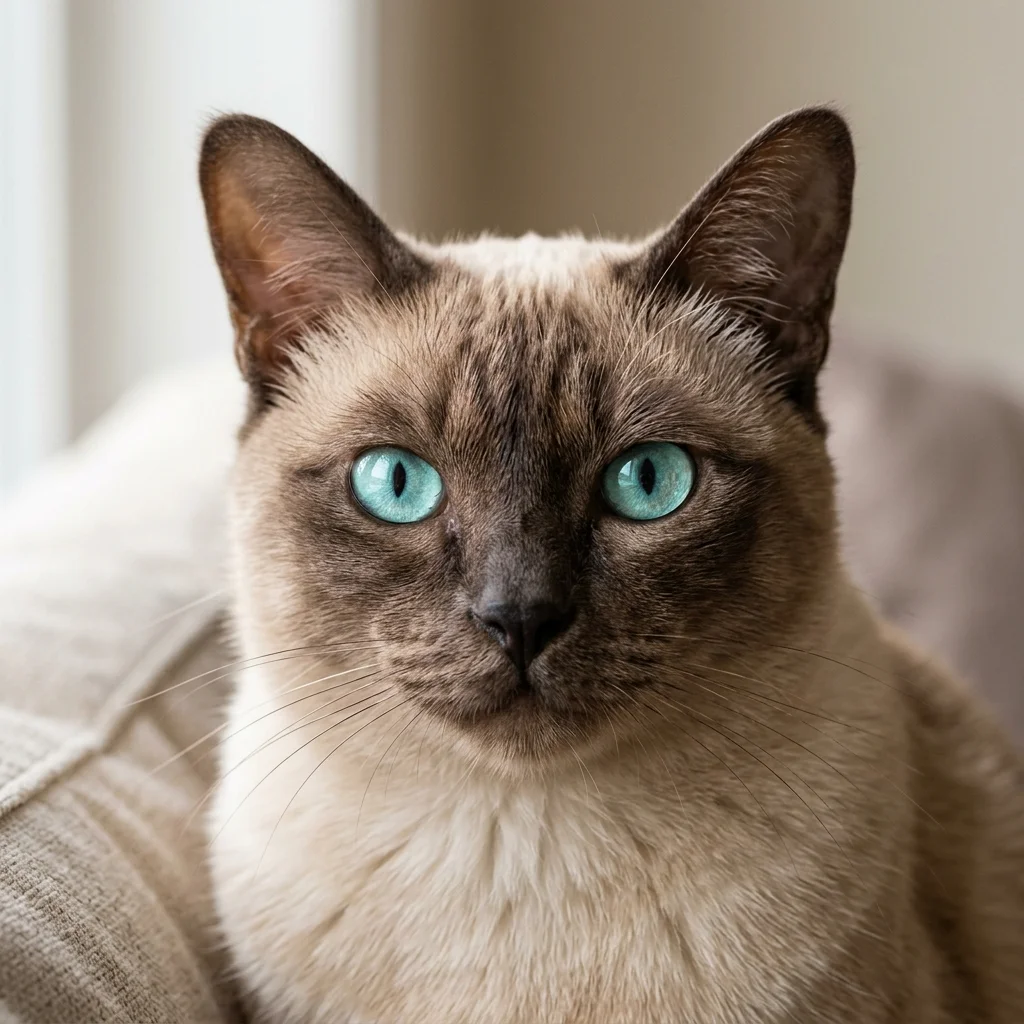
The head is a modified wedge, neither as angular as the Siamese nor as round as the Burmese, with medium-sized, slightly almond-shaped ears. The most iconic feature is the aqua eye colour — a unique blend of the Siamese's blue and the Burmese's gold that appears in mink-pattern Tonkinese, and is the only purebred cat to show this eye colour.
The coat is fine and close-lying with a silky texture and a natural lustre. Colour varieties include natural, champagne, blue, and platinum, each in three pattern types: pointed, mink, and solid.
Temperament
Tonkinese cats are social butterflies who genuinely want to be at the heart of everything happening at home. They follow their people from room to room, insert themselves into conversations, and have little patience for being ignored. Their affectionate nature extends to virtually everyone — they warm up to strangers quickly and tend to be excellent with children and other pets.
Intelligent and quick to learn, Tonkinese can be taught tricks, respond to their names reliably, and many take well to harness training. They enjoy puzzle feeders and interactive toys that challenge their active minds.
While they are vocal, Tonkinese are less demanding about it than their Siamese relatives — they will hold a conversation but won't howl at 3am just for the sake of it. Their voices are softer and more melodic, described by many owners as chirping rather than demanding.
Tonkinese do not do well with long periods of solitude. If you work long hours, a second cat is strongly recommended — Tonks are happiest when they have a feline companion to match their energy.
Activity & Play
Activity
Tonkinese cats are lively, curious, and sociable, inheriting their active temperament from their Siamese and Burmese ancestry. They are not as intense as some high-energy breeds, but they are definitely not couch cats.
Energy Level and Daily Exercise
Plan for 15-30 minutes of interactive play per day, split across two or more sessions. Tonkinese cats enjoy being involved in household life, so much of their activity comes naturally through following their owners around and participating in daily routines. Dedicated play sessions help channel their energy constructively and prevent boredom.
Play Styles
Tonkinese cats are versatile players who enjoy a mix of activity types:
- Interactive wand and feather toys that mimic prey
- Puzzle feeders and treat-dispensing toys for mental stimulation
- Climbing and jumping between furniture and cat trees
- Fetch (some individuals learn this readily)
- Social play with other cats or pets in the household
Toys
Tonkinese cats respond well to toys they can interact with alongside their owners. Solo toys are less satisfying for this social breed. Rotate toys regularly to maintain their interest, and use puzzle feeders at mealtimes to add a mental challenge to their routine.
Vertical Space
Tonkinese cats are athletic and enjoy height. A tall cat tree near a window gives them the dual benefit of a climbing outlet and a spot to observe outdoor activity. Wall shelves work well in smaller homes.
Indoor vs. Outdoor
Tonkinese cats are best kept as indoor-only cats. Their sociable, trusting nature makes them vulnerable outdoors. If outdoor access is desired, a secure catio or supervised harness walks provide enrichment without the safety risks.
Grooming
The Tonkinese has a short, fine, close-lying coat that is a pleasure to maintain. Weekly brushing with a soft-bristle brush or a grooming mitt removes loose hairs and keeps the coat gleaming. Shedding is minimal compared to many other breeds.
Routine care includes trimming nails every couple of weeks, cleaning ears gently when needed, and maintaining dental hygiene with regular tooth brushing. Gingivitis is a noted concern in Tonkinese, so starting a dental care routine early in the cat's life pays dividends long-term.
Bathing is rarely necessary — the short coat dries quickly and does not trap dirt easily.
Health
The Tonkinese is considered one of the healthier pedigree breeds, with a life expectancy of 15–20 years. As a hybrid of two naturally healthy breeds — Siamese and Burmese — the Tonkinese benefits from hybrid vigour, though it is not entirely free of health concerns.
Gum disease is a notable vulnerability, making dental hygiene an important part of daily care. Some Tonkinese are susceptible to bowel issues and respiratory infections. Hypertrophic cardiomyopathy (HCM) is seen in the breed, though it is not especially prevalent.
Regular veterinary check-ups, a balanced diet, and keeping the cat at a healthy weight are the main pillars of long-term health in this breed.
Nutrition
Tonkinese Nutrition Guide
The Tonkinese is an active, muscular cat with a moderate build. Good nutrition supports their energy levels, coat condition, and long-term health.
Macronutrient Priorities
Look for a cat food where named animal protein (chicken, turkey, fish) is the first ingredient. A good adult formula for a Tonkinese should contain around 35-40% protein on a dry matter basis and 15-20% fat. Carbohydrates should be minimal - cats have limited ability to process high-starch diets.
Wet vs. Dry Food
A combination of wet and dry food works well for most Tonkinese. Wet food provides hydration and is closer to a natural prey diet. Dry food can be useful for dental health and convenience. If you feed primarily dry food, make sure fresh water is always available, ideally from a running fountain since many cats prefer moving water.
Feeding by Age
- Kittens (0-12 months): Feed 3-4 times daily. Kittens need calorie-dense food formulated for growth, with higher protein and fat ratios.
- Adults (1-10 years): Feed 2 times daily. Measure portions carefully - Tonkinese cats can overeat if food is left out all day.
- Seniors (10+ years): Consider food formulated for senior cats, with joint-supporting nutrients like omega-3s. Wet food often suits older cats better as it is easier to chew.
Breed-Specific Considerations
Tonkinese cats have a tendency to gain weight if their diet is not managed, especially in indoor-only cats with lower activity. Monitor body condition regularly - you should be able to feel their ribs without pressing hard. Avoid high-calorie treats as daily supplements. If your Tonkinese seems to lose or gain weight quickly, consult your vet to rule out thyroid issues, which can occasionally affect this breed.
Family Fit
Is the Tonkinese a Good Family Cat?
The Tonkinese is one of the most adaptable and sociable cats you can bring into a home. This breed thrives on connection, and it fits into a surprisingly wide range of households.
Families with Children
Tonkinese cats are excellent companions for children. They have the energy to keep up with active kids and the patience to tolerate playful handling. Older children who understand how to interact respectfully with a cat will get a true play partner. Even with younger children, the Tonkinese tends to be gentle rather than reactive.
Multi-Pet Homes
This breed does not enjoy being the only pet. If you are away from home for long hours, a second cat (ideally another Tonkinese or a similarly social breed) is a good idea. They generally get along well with other cats, especially when introduced gradually. Dog-friendly homes are also a solid match, provided the dog has a calm temperament and respects the cat's boundaries.
Elderly Owners
Tonkinese cats bond deeply with their people, which makes them wonderful companions for older adults. Their affectionate nature and love of sitting close provide real comfort. The main consideration is their high activity level - they need daily play and stimulation, so owners should be prepared to engage with them regularly.
Singles and Couples
For anyone who works from home or simply spends a lot of time at home, the Tonkinese is an ideal cat. They will follow you from room to room, "help" with whatever you are doing, and keep the atmosphere lively.
Apartments
Tonkinese cats adapt well to apartment living as long as they have vertical space (cat trees, shelves) and regular playtime. They are not typically destructive, but boredom is their enemy, so enrichment matters.
First-Time Cat Owners
This breed is a great choice for first-timers who are ready for an engaged, interactive cat. They are forgiving and communicative, which makes it easy to understand what they need. Just be prepared for a cat that will demand your attention and genuinely enjoy getting it.
Fun Facts
- The Tonkinese is the only purebred cat breed with naturally occurring aqua eyes — a blend of the Siamese's blue and the Burmese's gold.
- Wong Mau, who arrived in the US in 1930 and was the founding cat of the Burmese breed programme, was actually a Tonkinese.
- Tonkinese cats are deceptively heavy — their muscular build often makes them feel significantly heavier than they appear.
- They can be leash-trained and are among the cat breeds most likely to enjoy structured outdoor walks.
- Tonkinese tend to retain their kitten-like playfulness well into their senior years, with many owners describing them as "forever kittens."
FAQ
Tonkinese Cat FAQ
How long do Tonkinese cats live?
Tonkinese cats typically live 15-18 years when kept healthy and indoors. They are generally a robust breed with few serious hereditary conditions, so many reach the higher end of that range with good care.
Do Tonkinese cats shed a lot?
No. The Tonkinese has a short, fine coat with minimal shedding compared to most breeds. Weekly brushing is enough to keep their coat looking smooth. Shedding increases slightly in spring and autumn but is never excessive.
Are Tonkinese cats vocal?
Yes. The Tonkinese is a talkative cat that uses a soft, melodious voice to communicate. They fall between the Siamese (very vocal) and Burmese (quieter) in terms of chattiness. Expect them to greet you, comment on your activities, and let you know when dinner is late.
Are Tonkinese cats hypoallergenic?
No cat is truly hypoallergenic. The Tonkinese produces the Fel d 1 allergen like all cats. Their short coat means less dander spreading around the home, but people with cat allergies may still react. Spend time with the breed before adopting if allergies are a concern.
How much does a Tonkinese cat cost?
From a reputable breeder, Tonkinese kittens typically cost between $600 and $1,200. Prices vary by lineage, location, and colour. Adopting from a rescue is also possible and considerably less expensive.
Are Tonkinese cats easy to train?
Yes. The Tonkinese is one of the more trainable cat breeds. They respond well to clicker training, can learn to fetch, walk on a leash, and pick up tricks quickly. Positive reinforcement with treats and praise works best. Their intelligence means they can also figure out how to open cupboards, so plan accordingly.
Gallery
Explore more Tonkinese-style breeds
Browse related breeds or take our matching quiz to find the right fit for your home.
Stay in the loop
Get weekly breed spotlights, care guides, and new additions - straight to your inbox.