Savannah
active, adventurous, curious, loyal
Quick Facts
- Lifespan
- 12-20 years
- Weight
- 3.5-11 kg
- Origin
- United States
- Coat
- Short
Overview
The Savannah is a striking hybrid breed created by crossing a domestic cat with the African Serval, resulting in a tall, athletic, and wildly patterned companion unlike any other. Known for its boundless curiosity, loyalty, and dog-like personality, the Savannah is one of the most interactive cats you can own. Early generations can grow to impressive sizes and retain strong wild instincts, while later generations (F4 and beyond) make more practical household pets. Ownership laws vary by state and country, so prospective owners should always verify local regulations before acquiring one.
History & Origins
The first known Savannah was born on April 7, 1986, when a domestic cat gave birth to a kitten sired by an African Serval. This pioneering kitten was named Savannah, giving the breed its name. Breeders Patrick Kelly and Joyce Sroufe collaborated to develop the breed further and wrote the original TICA Breed Standard in the mid-1990s.
TICA accepted the Savannah for registration in 2001 and granted Championship status in 2012, making it one of the newest recognised breeds in the cat fancy world. The Cat Fanciers' Association (CFA) does not recognise the Savannah, citing concerns about crossing wild and domestic animals.
The breed remains controversial in some regions: Georgia, Hawaii, Nebraska, and Rhode Island ban Savannah cats outright, while many other states restrict early-generation ownership. Prospective owners should always verify their local regulations before acquiring a Savannah.
Appearance
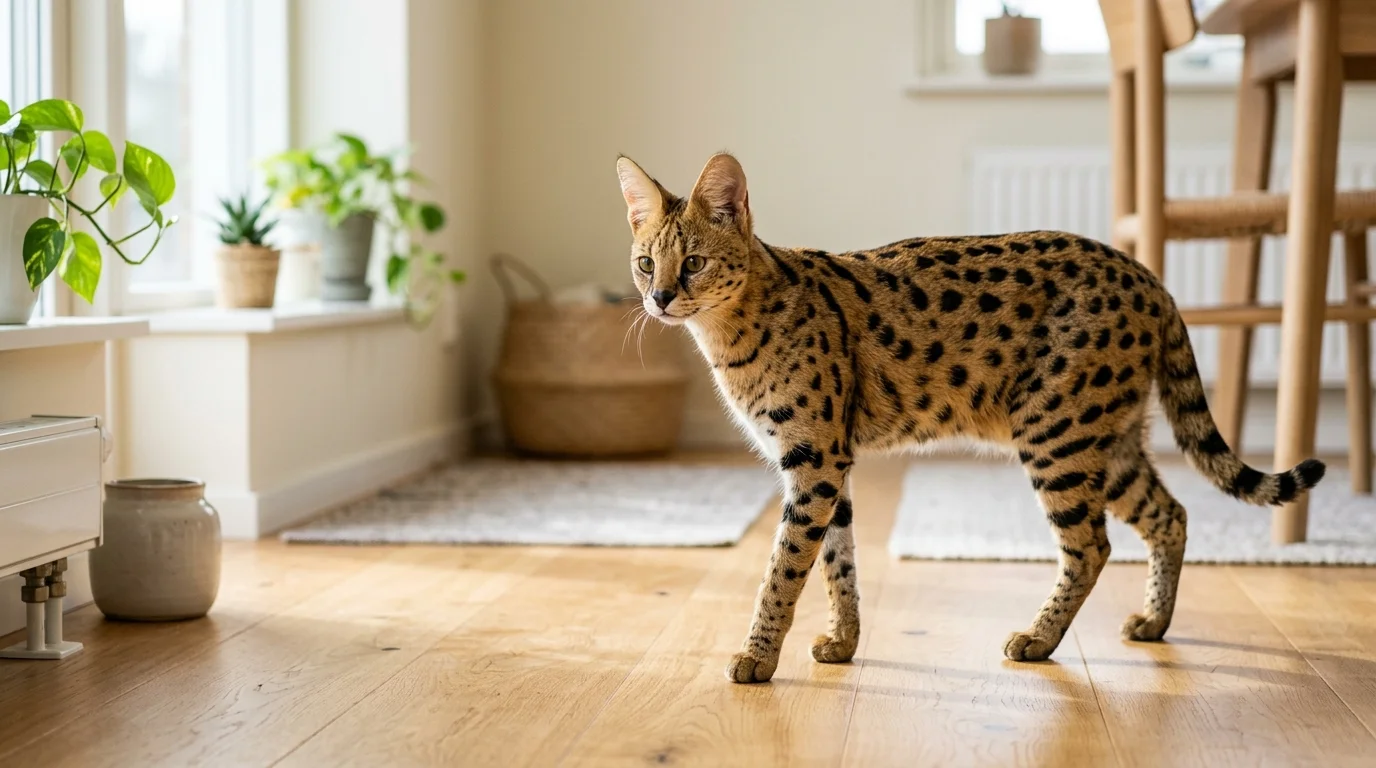
The Savannah is a tall, lean, and athletically built cat with long legs, a long neck, and a relatively small head compared to its body — features inherited from the African Serval. Early generations (F1–F2) are among the largest domestic cats in the world, with some individuals weighing up to 11 kg or more. Later-generation Savannahs (F4 and beyond) are closer in size to other large domestic breeds, typically weighing 3.5–8 kg.
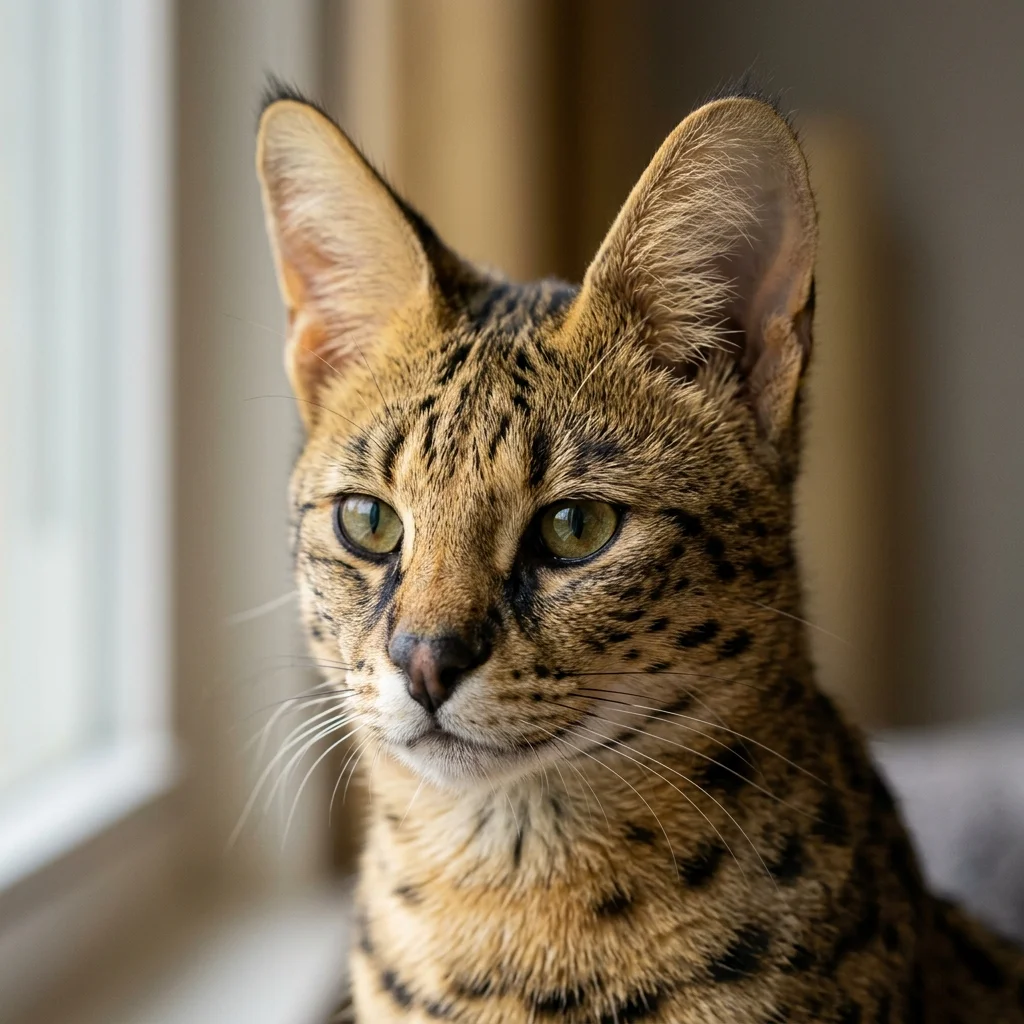
The coat is short and dense, displaying bold dark spots or stripes on a golden, silver, smoke, or black background — a pattern that echoes the Serval's wild markings. The ears are large, tall, and upright with distinctive ocelli (light-coloured markings on the back of the ears), and the eyes are hooded with dark tear-duct markings similar to a cheetah's.
The overall impression is of a miniature wild cat — striking, exotic, and unmistakable.
Temperament
The Savannah is fiercely loyal and often described as the most dog-like of all cat breeds. They greet their families at the door, follow people from room to room, and can even be leash-trained for outdoor adventures. Their connection to the African Serval gives them an intensely curious, exploratory nature — expect them to investigate every corner of your home.
Savannahs are highly intelligent and need significant daily interaction, either with their human family or a companion animal. Without sufficient stimulation they can become destructive. Puzzle toys, interactive play, and access to high climbing spaces are essential for their wellbeing.
While deeply loyal, Savannahs are not typically lap cats — they prefer to be near their people rather than on them. They are known to enjoy water and may voluntarily wade into a dish or shower. Temperament varies significantly by generation: F1 and F2 cats are closer to their wild ancestry and can be challenging to manage, while F4 and later generations tend to display a more typical domestic cat temperament.
Savannahs generally get along well with other cats and confident dogs, but their high prey drive means they may not be suitable companions for small animals such as rabbits or birds.
Activity & Play
Activity & Exercise
Savannah cats are among the most energetic and physically demanding domestic cat breeds available. Part wild serval ancestry (particularly in the F1 and F2 generations), Savannahs need a significant daily exercise commitment to stay happy and well-behaved.
Expect to spend at least 30-60 minutes on active play and enrichment per day, ideally spread across multiple sessions. Earlier-generation Savannahs (F1, F2) are the most athletic and demanding; later generations (F4, F5) are more settled but still well above average in energy.
Best toys and games:
- Interactive wand toys that encourage running and jumping
- Fetch (Savannahs are dog-like and many learn this readily)
- Cat wheels (highly recommended for this breed)
- Leash and harness walks outdoors
- Puzzle feeders and interactive feeders for mental engagement
- Large climbing trees and cat walkways installed high on walls
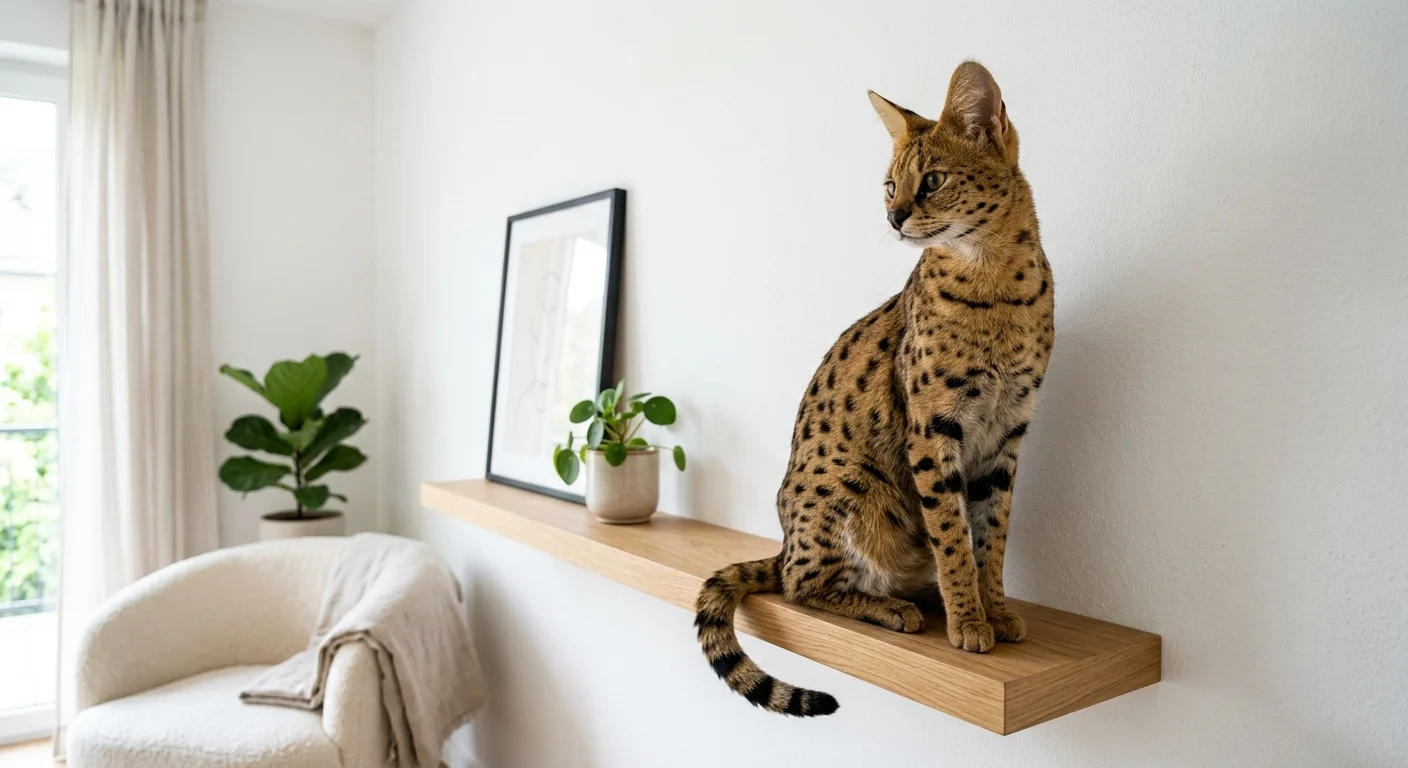
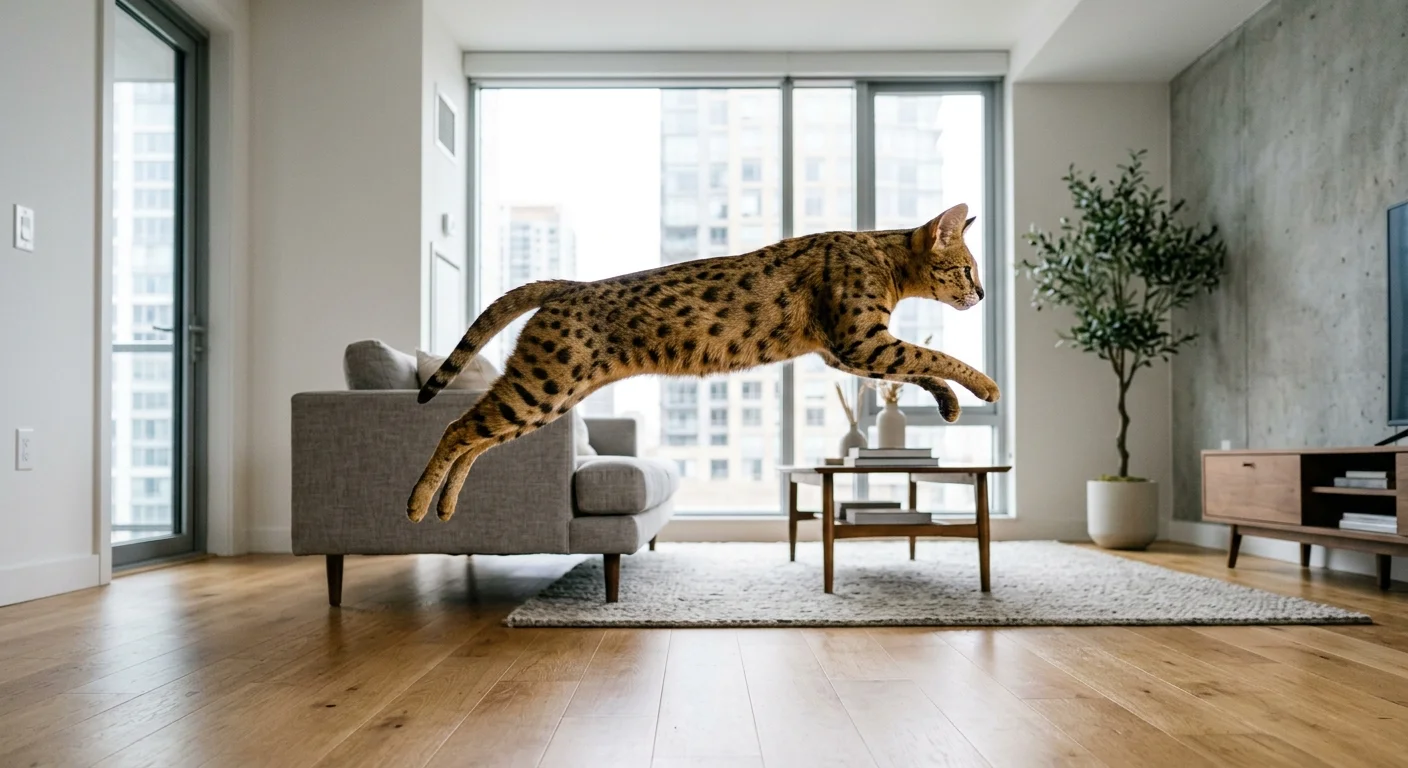
Vertical space is critical. Savannahs jump extremely well and need tall cat trees, shelving systems, and ideally ceiling-height climbing structures. A bored Savannah without outlets will find its own activities, which can include opening drawers, doors, and even turning on faucets.
Indoor vs. outdoor tolerance: Savannahs can adapt to full indoor life but they genuinely benefit from leash walks and outdoor access in a secure catio or enclosed yard. They are too athletic and curious for unsupervised outdoor roaming, and their exotic heritage means they may be subject to ownership regulations in some US states and countries. Always check local laws before acquiring a Savannah cat.
Grooming
The Savannah's short, dense coat is one of its easiest features to maintain. Weekly brushing with a soft-bristle brush or grooming mitt is sufficient to remove loose hairs and keep the coat looking its best. Shedding is moderate and manageable for most households.
Beyond coat care, routine grooming includes weekly nail trimming, ear cleaning to prevent wax buildup, and regular dental hygiene. Brushing teeth with a vet-approved pet toothpaste several times per week reduces the risk of periodontal disease, which is common in cats.
Bathing is rarely needed given the Savannah's short coat, though some individuals — particularly those with an affinity for water — may not object to an occasional rinse.
Health
Savannahs are generally a healthy breed with a lifespan of 12–20 years when well cared for, particularly from F4 generation and beyond. Like all cats, they are susceptible to hypertrophic cardiomyopathy (HCM), the most common heart disease in cats, and should be screened regularly.
Progressive retinal atrophy (PRA) and pyruvate kinase deficiency are additional hereditary conditions seen in some Savannahs. PRA causes progressive vision loss, while pyruvate kinase deficiency affects red blood cell health and can lead to anaemia. DNA testing is available for both conditions through reputable breeders.
Early-generation Savannahs (F1–F2) may have nutritional needs that differ from typical domestic cats — most breeders recommend diets higher in taurine. There are also animal welfare concerns associated with early-generation breeding: male Servals are significantly larger than domestic cats, which can complicate pregnancy for the domestic mother. The American Association of Feline Practitioners has noted these concerns regarding Serval and domestic cat crossbreeding.
Nutrition
Nutrition
Savannah cats are large, athletic animals, and their nutrition should reflect their size and energy demands. They are obligate carnivores, and a diet that prioritizes animal protein is essential.
Protein: A high-protein diet is the foundation. Look for foods with animal protein as the primary ingredient (chicken, turkey, duck, or whole fish) and ideally protein content above 40% on a dry-matter basis. Protein supports lean muscle development, which is a defining feature of the Savannah's body.
Fat: Moderate to moderately high fat provides the caloric energy this active breed needs. Omega-3 fatty acids support coat condition and general health.
Raw and whole-prey diets: Some Savannah owners and breeders advocate for raw food diets, citing the breed's proximity to wild ancestry. Raw feeding can work well but must be nutritionally complete (including calcium, taurine, and vitamins). A commercial raw food formulated for cats is a more reliable option than home-prepared raw without nutritional guidance from a vet.
Carbohydrates: Keep these minimal. Savannahs do not need carbohydrates and grain-heavy kibble is not appropriate as their primary food source.
Feeding schedule:
- Kittens: 3-4 meals per day to support rapid growth
- Adults: 2 meals per day, portioned to maintain lean body condition
- Note on free-feeding: Not recommended; structured mealtimes help manage weight and allow you to monitor appetite changes that may signal health issues
Breed-specific considerations: Savannahs can be sensitive to anesthesia due to their exotic heritage. Their digestive systems may also be more sensitive than typical domestic cats. Introduce any new food gradually over 7-10 days to avoid gastrointestinal upset. Some Savannahs do not tolerate grain or certain artificial additives well.
Family Fit
Family Fit
Savannah cats are loyal, dog-like, and deeply social, but their high energy and size make them a better fit for some households than others. Honest assessment before acquisition saves significant frustration.
Families with children: Later-generation Savannahs (F3 and beyond) that have been well socialized as kittens can live happily in homes with children. They are generally playful rather than aggressive, but their size, athleticism, and high energy can be overwhelming for very young children. Households with children aged 6 and older tend to work better. F1 and F2 Savannahs are not recommended in homes with young children.
Other cats: Savannahs can coexist with other cats when properly introduced, though their dominant personality and energy level can overwhelm timid or elderly cats. Another active cat of similar temperament is the most compatible companion.
Dogs: Many Savannahs get along well with cat-friendly dogs and can form close bonds with canine companions. Their confident nature means they are not easily intimidated.
Elderly owners: Not a good match. Savannahs need substantial daily activity, thrive on interaction, and can become destructive when understimulated. An owner who cannot commit to regular active play and enrichment will struggle with this breed.
Apartment dwellers: Possible only in large apartments with extensive climbing structures and a very committed enrichment routine. A house with a secure garden or catio is the more appropriate living situation.
First-time cat owners: Not recommended for first-time owners. Savannahs are intelligent, demanding, and capable of significant mischief when bored. Experienced cat owners who understand the breed's needs are better equipped to provide what Savannahs require.
Fun Facts
- The first Savannah kitten was born on April 7, 1986 — making the breed less than 40 years old.
- Savannahs hold the Guinness World Record for the tallest domestic cat, with several individuals exceeding 40 cm at the shoulder.
- Unlike most cats, many Savannahs genuinely enjoy water and will voluntarily play in sinks, puddles, or even swimming pools.
- The generation designation (F1, F2, F3…) indicates how many generations removed the cat is from its Serval ancestor — F1 cats are roughly 50% Serval.
- Savannahs are banned outright in four US states and are subject to permit requirements or restrictions in many others due to their hybrid wild cat heritage.
FAQ
Frequently Asked Questions
How long do Savannah cats live?
Savannah cats typically live 12 to 15 years, with some living into their late teens with excellent care. Their lifespan is broadly comparable to domestic cats of similar size.
Are Savannah cats legal to own?
It depends on where you live. Savannah cats, particularly early-generation F1 and F2 cats, are banned or restricted in several US states (including Hawaii, Massachusetts, and Georgia) and in some countries. The regulations vary by generation. Always check local and state laws before purchasing or adopting a Savannah cat.
How much does a Savannah cat cost?
Savannahs are among the most expensive domestic cat breeds. F1 Savannahs (closest to the wild serval) can cost $10,000 to $20,000 USD or more. Later generations (F4, F5) typically range from $1,000 to $4,000 USD. The price reflects the difficulty and cost of the breeding program.
Are Savannah cats good with other pets?
Later-generation Savannahs that are well socialized can live alongside other cats and cat-friendly dogs. Early-generation cats (F1, F2) tend to be more territorial and selective about companions. Introducing any new pet gradually and carefully is important.
Do Savannah cats like water?
Many Savannahs enjoy water, a trait believed to come from their serval ancestry. Some will play in shallow water, splash in bowls, or even join their owners in the shower. A pet fountain is often popular with this breed.
Are Savannahs good apartment cats?
Generally not well-suited to small apartments. They need significant vertical space, room to run, and ideally access to a secure outdoor area. A larger apartment with dedicated enrichment structures is possible, but a house with a garden or catio is a much better fit for this breed's energy levels.
Gallery
Explore more Savannah-style breeds
Browse related breeds or take our matching quiz to find the right fit for your home.
Stay in the loop
Get weekly breed spotlights, care guides, and new additions - straight to your inbox.