Nebelung
gentle, reserved, loyal, quiet
Quick Facts
- Lifespan
- 15-18 years
- Weight
- 3.5-6.5 kg
- Origin
- United States
- Coat
- Long
Overview
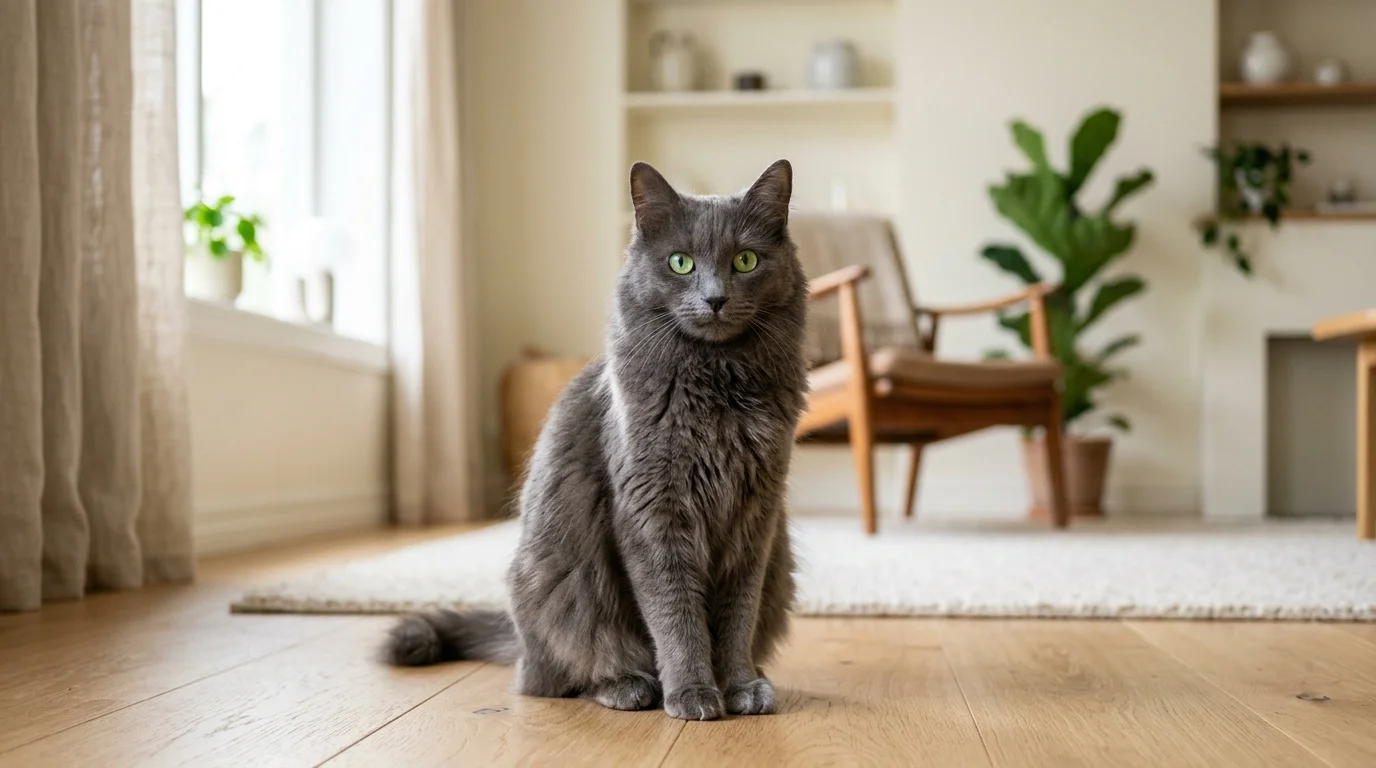
The Nebelung — whose name translates from German as "creature of the mist" — is a rare and elegant longhaired breed developed in the United States in the 1980s. Closely related to the Russian Blue, the Nebelung shares its cousin's refined build, striking green eyes, and gentle, reserved temperament, but adds a lustrous semi-long coat with a distinctive silvery blue shimmer. Graceful, devoted, and quietly affectionate, the Nebelung forms deep bonds with its family while remaining characteristically shy with strangers.
History & Origins
The Nebelung was developed by Cora Cobb of Nebelheim Cattery in the United States during the 1980s. The breed traces its foundation to two longhaired blue kittens — Siegfried (born 1984) and Brunhilde (born 1985) — whose mother was a black domestic shorthair and whose father was a blue domestic longhair. The appearance of these kittens suggested the presence of a longhair gene within what appeared to be a Russian Blue-type ancestry.
Working with TICA geneticist Dr Solveig Pflueger, Cobb drafted a breed standard modelled on the Russian Blue but specifically for semi-long coated cats. The breed was named "Nebelung" after the Nibelung saga of German mythology. TICA accepted the Nebelung as a new breed in 1987 and granted full Championship status in 1997.
The breed remains rare, with most active breeders found in Europe and Russia.
Appearance
The Nebelung is a medium-sized cat of semi-foreign type with a long, graceful body, wide-set green eyes, and a semi-long, dense blue coat. Adults typically weigh 3.5–6.5 kg, with males generally larger.
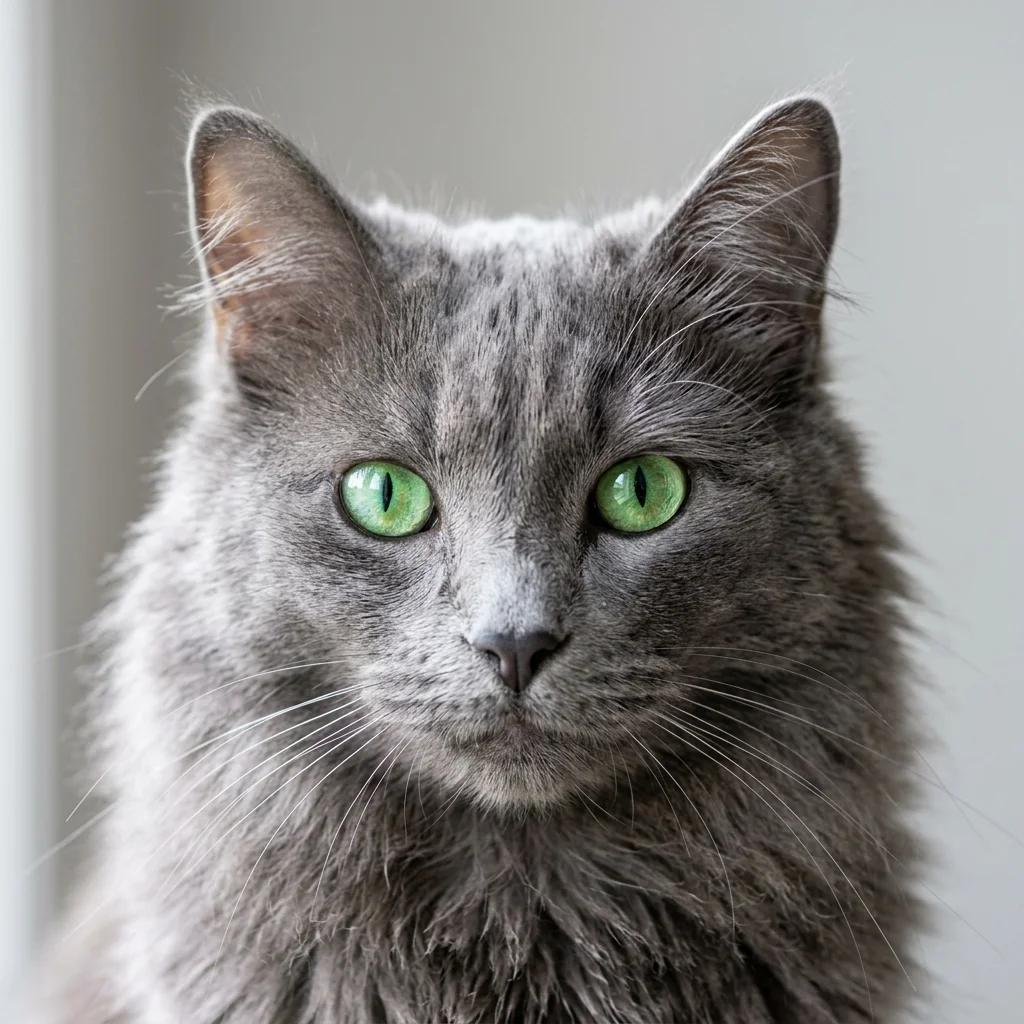
The coat is an even, solid blue-grey with silver tipping that creates a misty, shimmering appearance — particularly visible in good light. The fur is longest on the tail and the britches (hind leg fur), and there is often a noticeable ruff around the neck, more pronounced in males.
The head is a medium wedge with a flat forehead, prominent whisker pads, and large, pointed ears. The eyes are wide-set and vivid green — a defining feature shared with the Russian Blue. Paws are rounded with tufting between the toes.
Temperament
The Nebelung is a gentle, quiet, and deeply loyal cat that shares many temperament traits with its Russian Blue cousin. Reserved by nature, it takes time to warm up to strangers but is devoted and affectionate with the people it knows and trusts.
Once bonded, Nebelungs follow their favourite people from room to room and appreciate a calm, predictable household. They are not loud or demanding, but they communicate softly and enjoy quiet companionship. They are intelligent cats that enjoy mental stimulation through play and puzzle toys.
Not generally suited to chaotic or noisy environments, Nebelungs thrive in calm homes where their reserved nature is respected. They can coexist peacefully with other gentle pets, but may take longer than more outgoing breeds to accept new companions.
Activity & Play
Activity Level and Exercise Needs
The Nebelung is a gentle, moderately active cat that prefers quality over quantity when it comes to play. Often described as the long-haired version of the Russian Blue, this breed carries the same thoughtful, composed temperament and similar energy patterns.
Daily Exercise
Nebelung cats benefit from 20 to 30 minutes of interactive play per day. They are not high-drive cats that demand constant attention, but they should not be left entirely to their own devices either. Regular play sessions help maintain healthy weight and prevent the boredom-related behaviors that can develop in under-stimulated cats.
Play Styles
The Nebelung is a measured, deliberate player. They enjoy wand toys and feather teasers but tend to study them before engaging. Once they commit to play, they do so with focus. They enjoy stalking and pouncing rather than chaotic, high-speed chasing. Slow-moving, lifelike prey toys hold their attention better than very fast electronic toys.
Vertical Space
Nebelung cats appreciate elevated resting spots but are not the most avid climbers. A sturdy mid-height cat tree with comfortable perches and a window view satisfies their needs. They enjoy observing their environment from above but do not require elaborate wall-mounted climbing systems.
Indoor vs. Outdoor
The Nebelung is an exclusively indoor breed by temperament as well as design. They are sensitive to change and find outdoor environments stressful. They thrive best in a calm, predictable indoor setting. Outdoor access via a secure catio is acceptable if it is introduced gradually.
Enrichment Needs
Because the Nebelung can be reserved with strangers, it is important to maintain consistent enrichment that keeps it engaged without overwhelming it. Puzzle feeders, quiet toys, and a peaceful environment with reliable routines work best for this breed.
Grooming
The Nebelung's semi-long, silky coat requires more maintenance than a shorthaired breed, but is not as demanding as a Persian or Maine Coon. Brushing or combing two to three times per week is generally sufficient to prevent tangles and reduce shedding.
The coat has a fine texture with a light silver tipping that gives it a characteristic shimmer — this is best preserved with gentle grooming tools that do not pull or break the hairs. During spring shedding season, more frequent grooming will help manage increased hair loss.
Regular nail trimming, ear cleaning, and dental care complete the grooming routine. The fluffy tail and britches (long fur on the hind legs) may attract more debris outdoors and may require more frequent attention.
Health
The Nebelung is considered a generally healthy breed with an impressively long lifespan — 15 to 18 years is not uncommon with proper care. No breed-specific genetic disorders have been identified in the Nebelung to date.
As a breed developed from domestic longhaired cats with Russian Blue ancestry, the Nebelung benefits from a relatively broad genetic base. Health monitoring should follow the same general guidelines as for any pedigree cat: annual veterinary check-ups, vaccinations, parasite prevention, and dental care.
Obesity can occur if diet is not managed, particularly in indoor cats with lower activity levels. Keeping the Nebelung mentally and physically stimulated with play and enrichment supports long-term wellbeing.
Nutrition
Feeding Your Nebelung
The Nebelung is a medium-sized cat with a slender, elegant build. Its diet should support lean muscle and a healthy, silky coat without contributing to weight gain.
Macronutrient Guidelines
Protein from high-quality animal sources should form the backbone of the Nebelung's diet, at 35 to 40% of dry matter. Chicken, turkey, and fish are all good protein sources. Fat content of 12 to 18% provides necessary energy and supports the coat's famous silky sheen. The Nebelung's long, plush double coat benefits from omega-3 and omega-6 fatty acid supplementation, either through food or a small daily fish oil supplement. Carbohydrate content should be kept low.
Wet vs. Dry Food
Wet food is strongly recommended as the primary component of the Nebelung's diet. Their naturally moderate water intake makes it important to supplement hydration through food. A wet-primary diet supports kidney health over the long term. Dry food can be offered in small quantities, ideally in puzzle feeders that provide mental stimulation without encouraging overeating.
Feeding Frequency
Two meals per day is appropriate for adult Nebelung cats. Consistent feeding times support their preference for routine. Kittens under 12 months benefit from three to four smaller meals per day. Always ensure fresh water is available, particularly for cats eating a primarily dry diet.
Breed-Specific Concerns
The Nebelung is prone to becoming a picky eater, particularly if it has been offered too much variety or has learned to hold out for preferred foods. Establishing consistent, nutritious meals early prevents this habit from developing. Their slender build means any weight loss should be investigated promptly, as the Nebelung's reserved nature can mask illness until it is advanced.
Family Fit
Is the Nebelung Right for Your Family?
The Nebelung is not a cat for everyone. It is selective, sensitive, and takes time to build trust. But for the right household, it is an intensely loyal and affectionate companion that rewards patience with deep, lasting attachment.
With Children
Nebelung cats generally do better with older, calm children than with young ones. Their sensitivity to noise and sudden movement means they can find chaotic household environments stressful. A teenager who appreciates a quiet, beautiful cat and takes the time to earn its trust will have a devoted companion. Households with very young children should consider whether the calm environment a Nebelung needs can be maintained.
With Other Cats
Nebelung cats can coexist with other cats, but introductions must be handled slowly and carefully. They do not appreciate a new cat being thrust into their territory. Once trust is established, they can form close bonds, particularly with cats of a calm, non-dominant temperament. Avoid pairing them with boisterous or highly assertive breeds.
With Dogs
The Nebelung can adapt to a calm, cat-respectful dog, but the dog's temperament is critical. High-energy dogs or those with strong prey drives are not appropriate housemates. A dog that ignores or gently acknowledges the cat will, over time, be accepted.
For Elderly Owners
The Nebelung is an excellent match for retirees who can offer a calm, consistent environment and plenty of quiet companionship. Their moderate exercise needs, low-noise temperament, and deep loyalty suit older owners very well.
For Apartments
Apartments are well-suited to Nebelung cats. They do not need a large space and actually prefer a contained, familiar environment where they know every corner. Consistent routines matter more than floor area.
For First-Time Owners
The Nebelung requires patience from new owners who may be surprised by how long it takes to gain this breed's full trust. First-timers who approach the cat calmly and without forcing interaction will eventually be rewarded. It is not the ideal choice for someone expecting immediate warmth.
Fun Facts
- The name "Nebelung" is derived from German mythology — the Nibelungenlied — and translates loosely as "creature of the mist," reflecting the breed's ethereal, silvery coat.
- The foundation cats, Siegfried and Brunhilde, were named after characters from the same Nibelung mythology.
- The Nebelung is essentially a longhaired Russian Blue — same structure, same temperament, same striking green eyes, but with a flowing semi-long coat.
- Despite being recognised by TICA since 1997, the Nebelung remains one of the rarest pedigree breeds in North America and Europe.
- Nebelungs have been known to live well into their late teens — their longevity is one of the breed's most appealing qualities for committed cat owners.
FAQ
How long do Nebelung cats live?
Nebelung cats typically live 11 to 16 years. Their robust health, combined with careful veterinary attention and an indoor lifestyle, allows many individuals to reach the upper end of this range. They are considered a generally healthy breed without significant genetic predispositions.
Do Nebelung cats shed a lot?
Yes, the Nebelung has a medium-length double coat that sheds moderately year-round and more heavily in spring and fall. Regular brushing two to three times per week is necessary to prevent tangles and manage shedding. Their coat is fine and silky rather than coarse, which makes detangling easier than with some other long-coated breeds.
Are Nebelung cats vocal?
Nebelung cats are quiet and not particularly vocal. They may occasionally meow softly to communicate a need, but they are not chatty cats. Their communication tends to be subtle, relying more on body language and slow blinks than vocalizations. This quiet quality makes them especially suited to low-noise households.
Are Nebelung cats hypoallergenic?
No. Nebelung cats are not hypoallergenic. They produce Fel d 1 and their long coat can carry dander further through the home than short-coated breeds. People with cat allergies should be especially cautious with this breed. Regular brushing and vacuuming can help reduce airborne allergen levels.
How much does a Nebelung kitten cost?
Nebelung kittens from reputable breeders typically range from $600 to $1,200. The breed is not as widely known as some others, which keeps prices relatively moderate. Availability can be limited depending on geographic location.
Are Nebelung cats easy to train?
Nebelung cats are intelligent but can be slow to warm up to training. Once trust is established, they respond well to gentle positive reinforcement. They are not as food-motivated or eager to perform as more extroverted breeds, so training requires patience and very short sessions. Tricks and behaviors that align with their natural instincts, such as touch commands and coming when called, are the most achievable.
Gallery
Explore more Nebelung-style breeds
Browse related breeds or take our matching quiz to find the right fit for your home.
Stay in the loop
Get weekly breed spotlights, care guides, and new additions - straight to your inbox.