Burmilla
gentle, affectionate, sociable, playful
Quick Facts
- Lifespan
- 12-15 years
- Weight
- 3-5.5 kg
- Origin
- United Kingdom
- Coat
- Short
Overview
The Burmilla is a charming British breed that came into existence entirely by accident in 1981, when a Chinchilla Persian and a European Burmese produced an unexpectedly beautiful litter. The result was a cat that blends the Burmese's sociability with the Persian's calm elegance — shimmering silver coat included. Today the Burmilla is recognised by TICA, FIFe, and the GCCF as a breed in its own right, admired for its striking appearance and gentle, balanced temperament.
History & Origins
The Burmilla's story begins in 1981 in England, when Baroness Miranda von Kirchberg's lilac European Burmese female escaped her quarters and encountered a Chinchilla Persian male — an accidental meeting that produced four strikingly beautiful shorthaired female kittens, all in shaded silver.
The kittens were so attractive that the Baroness decided to develop them into a new breed, naming it "Burmilla" — a portmanteau honouring both parent breeds. A breed club was established in 1984, and by 1990 the Burmilla had achieved full Championship status with the Governing Council of the Cat Fancy (GCCF) in the United Kingdom.
The breed was subsequently recognised by FIFe and later by TICA in 2011. It remains more popular in the UK, Australia, and Europe than in North America, where it is still relatively rare.
Appearance
The Burmilla is a medium-sized cat with a well-muscled, rounded body that gives an impression of substance without heaviness. Adults typically weigh 3–5.5 kg, with males generally larger than females.
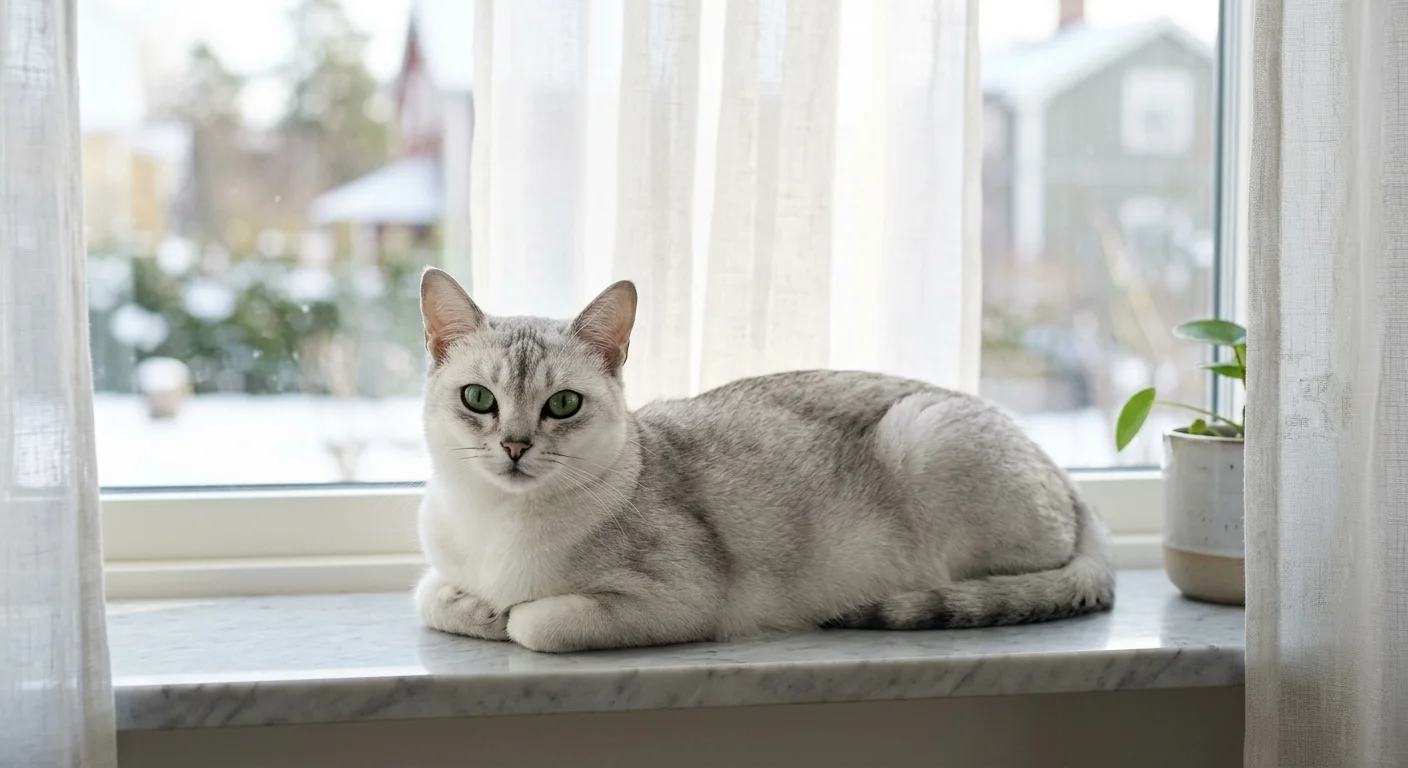
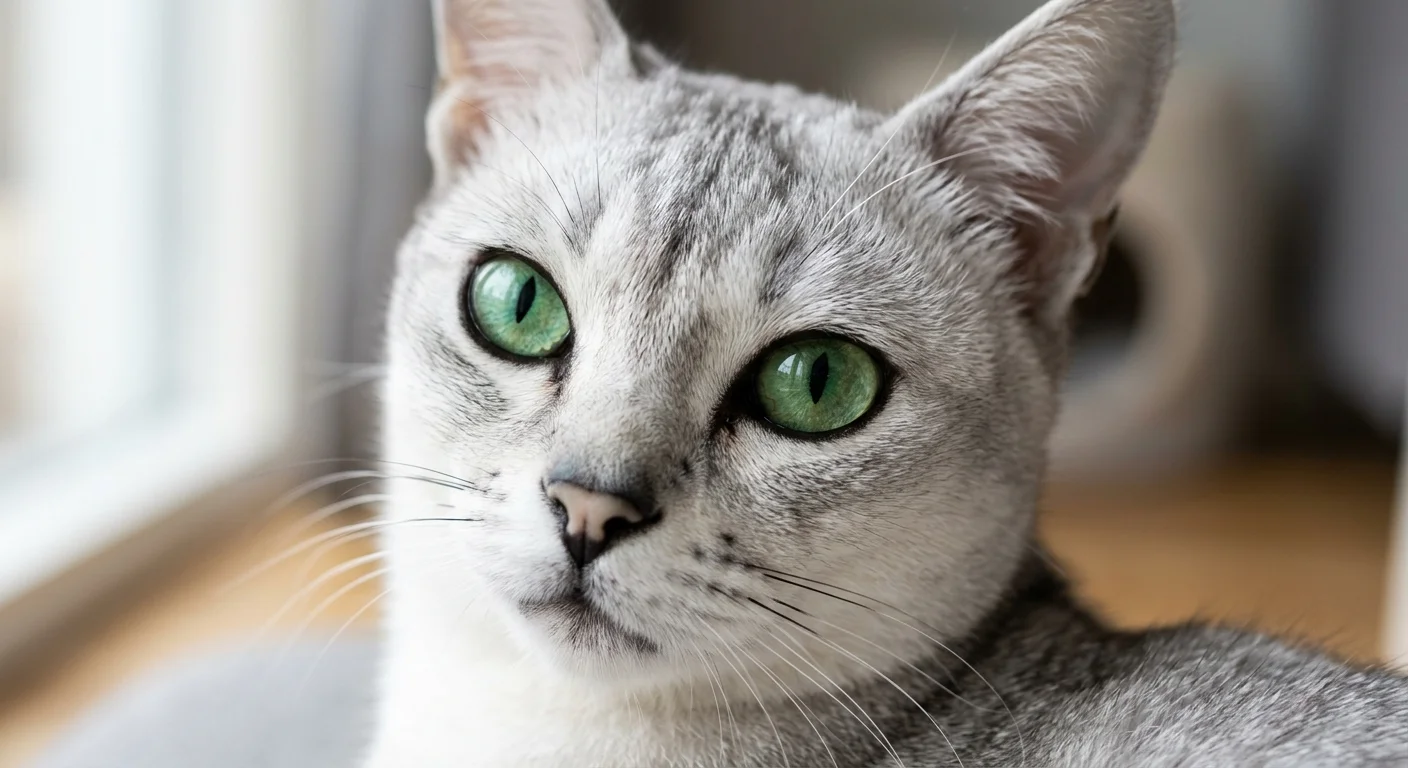
The most distinctive feature is the coat: dense and fine, with a characteristic silver or golden ground colour overlaid with tipping or shading in black, blue, brown, lilac, or other colours. The silver sheen gives the coat an almost luminescent quality. Large, expressive eyes — outlined in dark liner-like markings — are typically green, and add to the breed's striking appearance.
The head is gently rounded with a short nose and well-developed chin. The ears are medium to large, rounded at the tips, and set slightly forward.
Temperament
The Burmilla offers a wonderfully balanced personality — sociable and playful like the Burmese, yet calm and laid-back like the Chinchilla Persian. The result is a cat that loves being around people without being overly demanding.
Burmillas form close bonds with their families and are affectionate without being clingy. They enjoy interactive play and retain a mischievous streak well into adulthood, but they are equally content to curl up quietly and simply be in the room with their people.
They tend to get along well with children, other cats, and dogs, making them an excellent choice for multi-pet households. While they can adapt to being alone during the day, they do best when they have company — whether human or feline.
Activity & Play
Activity and Exercise
The Burmilla is a moderately active cat that balances playful bursts with long stretches of relaxed lounging. They are not the type to demand constant entertainment, but they do appreciate daily interaction and stimulation to stay mentally sharp and physically fit.
Energy level: Medium. Burmillas have a calm, composed nature inherited from their Chinchilla Persian ancestry, softened by the playful curiosity of their Burmese lineage.
Daily exercise: Aim for two play sessions of 15 to 20 minutes each. Interactive toys such as feather wands, crinkle balls, and puzzle feeders work well for this breed. They are happy to chase a toy mouse across the floor but are unlikely to bounce off the walls like higher-energy breeds.
Play styles: Burmillas enjoy stalking and pouncing games that tap into their natural hunting instincts. They tend to be focused and deliberate in play rather than frantic. Food puzzles and treat-dispensing toys add mental engagement alongside physical activity.
Vertical space: Burmillas appreciate a cat tree or wall shelves to survey their territory from above. They are capable climbers but are not obsessive about height the way some breeds are. A mid-height perch near a sunny window is ideal.
Toys: Wand toys, feather attachments, soft plush mice, and slow-moving puzzle toys. Laser pointers can work well for short sessions but should always end with a tangible toy so the cat feels a sense of completion.
Indoor vs. outdoor: Burmillas are best kept as indoor cats. Their gentle temperament and trusting nature make them vulnerable outdoors. A safe outdoor enclosure or harness walks can satisfy any desire for fresh air and sensory variety.
Weight management: Because Burmillas can be prone to weight gain as they age, keeping play sessions consistent and measuring meals is important. An aging Burmilla that slows down may need portion adjustments to avoid obesity-related health issues.
Grooming
The Burmilla is available in both shorthaired and longhaired (Tiffanie) varieties. The shorthaired coat is dense with a fine texture and requires only weekly brushing to keep it looking its best.
The longhaired Tiffanie variety benefits from brushing two to three times per week to prevent tangles and matting, particularly around the collar area and under the arms. The characteristic silver sheen of the coat is best maintained with gentle grooming tools that don’t disturb the undercoat.
Regular nail trimming, ear cleaning, and dental care round out the routine. The Burmilla's eyes may require occasional gentle wiping, as the breed can be prone to mild tear-staining inherited from the Persian parent.
Health
The Burmilla is generally considered a healthy breed with a lifespan of 12–15 years. Responsible breeders screen their cats for conditions known to occur in the parent breeds, which has helped reduce the prevalence of heritable health issues.
The primary concern to watch for is polycystic kidney disease (PKD), inherited from the Chinchilla Persian side. Responsible breeders test their breeding cats for the PKD1 gene mutation. Burmillas may also be prone to allergies and, like many Burmese-related breeds, can occasionally develop conditions such as hypertrophic cardiomyopathy (HCM).
With routine veterinary care, genetic screening from a responsible breeder, and a balanced diet, most Burmillas enjoy long, healthy lives.
Nutrition
Nutrition
Burmillas are obligate carnivores with no breed-specific dietary quirks, but they do benefit from a high-quality diet focused on animal protein.
Protein: Look for foods listing a named meat (chicken, turkey, salmon) as the first ingredient. Aim for at least 30% protein on a dry matter basis.
Fat: Moderate fat levels (12 to 18% dry matter) support coat shine and energy without promoting weight gain.
Wet vs. dry: A combination works well. Wet food supports hydration and urinary health; dry kibble helps with dental hygiene and is convenient for measured portions.
Feeding frequency:
- Kittens (under 12 months): 3 to 4 small meals daily to support growth.
- Adults (1 to 7 years): 2 meals per day, measured by body weight.
- Seniors (7+): 2 meals with possible calorie reduction as activity decreases.
Breed-specific concerns: Burmillas can trend toward obesity as they age. Avoid free-feeding and keep treats to under 10% of daily caloric intake. Discuss appropriate portion sizes with your vet based on your cat's weight and activity level.
Hydration: Always provide fresh water. A cat water fountain encourages drinking, which supports kidney and urinary health.
Family Fit
Family Fit
The Burmilla is gentle and adaptable, making it a good match for a wide variety of households. They are neither demanding nor stand-offish, which suits many different living situations.
Children: Burmillas do well with children who handle cats calmly, generally ages 6 and up. They are patient and tolerant but prefer gentle interaction over rough play. Always supervise young children.
Other cats: Sociable with other cats when introduced gradually. Non-territorial and peaceful with calm feline companions.
Dogs: Can coexist with cat-friendly dogs. A slow, supervised introduction works best. They appreciate having a retreat space where they can decompress.
Elderly owners: Their moderate activity needs and affectionate lap-cat tendencies make Burmillas excellent companions for older adults. Attentive without being overwhelming.
Apartments: Well suited to apartment living. Burmillas are not particularly vocal and are content in smaller homes provided they have a cat tree or perch for vertical space.
First-time owners: A strong choice. Burmillas are straightforward to care for, have no extreme health quirks, and their friendly, adaptable temperament makes bonding easy.
Alone time: Burmillas dislike long periods of solitude. If you work long hours, consider adopting a pair or having someone visit during the day to prevent loneliness.
Fun Facts
- The Burmilla was born by accident — an unsanctioned meeting between a Chinchilla Persian and a Burmese produced the founding litter in 1981.
- The breed's name is a portmanteau: Burmese + Chinchilla = Burmilla.
- The distinctive dark "eyeliner" outlining the Burmilla's eyes is a natural marking, not applied — giving the breed a permanently glamorous look.
- The longhaired variety of the Burmilla is known as the Tiffanie (not to be confused with the North American Tiffany/Chantilly breed).
- Despite being recognised in the UK since 1990, the Burmilla remains one of the rarer breeds in North America.
FAQ
Frequently Asked Questions
How long do Burmillas live?
Burmillas typically live 12 to 16 years with proper care, regular vet visits, and a balanced diet.
Do Burmillas shed a lot?
Moderate shedding. Their short to semi-long coat requires weekly brushing to reduce loose fur and prevent matting in longer-coated individuals.
Are Burmillas vocal?
Mildly vocal. They may chirp or meow to get attention but are not as talkative as Siamese-related breeds. They communicate in a gentle, unobtrusive way.
Are Burmillas hypoallergenic?
No. All cats produce the Fel d 1 protein that triggers allergies. Burmillas are not considered hypoallergenic.
How much does a Burmilla cost?
Purebred Burmilla kittens typically cost between $500 and $1,200 depending on breeder reputation, location, and lineage. They are a relatively rare breed.
Are Burmillas easy to train?
Yes. Their intelligence and curiosity make them receptive to basic training such as sit, come, and leash walking. Positive reinforcement with treats works well.
Do Burmillas tolerate cold climates?
They manage adequately indoors in cold climates but should not be exposed to harsh temperatures. Their coat provides some insulation, but they prefer warm, comfortable environments.
Gallery
Explore more Burmilla-style breeds
Browse related breeds or take our matching quiz to find the right fit for your home.
Stay in the loop
Get weekly breed spotlights, care guides, and new additions - straight to your inbox.