Bengal
active, energetic, intelligent, curious
Quick Facts
- Lifespan
- 8-15 years
- Weight
- 3.6-6.8 kg
- Origin
- United States
- Coat
- Short
Overview
The Bengal is one of the most visually dramatic domestic cat breeds, combining the wild, spotted appearance of a jungle cat with a fully domestic temperament. Developed by crossing domestic cats with the Asian Leopard Cat (Prionailurus bengalensis), Bengals carry the striking rosette and marble coat patterns of their wild ancestor, while their personality is thoroughly oriented toward people.
Bengals are athletic, curious, and high-energy. They are one of the most active cat breeds and genuinely thrive on physical challenge, interactive play, and mental engagement. They are often described as dog-like in their loyalty and trainability; many Bengals learn to fetch, walk on a harness-leash, and respond to cues on command.
One of the breed's most distinctive quirks is an unusual fascination with water. Many Bengals will voluntarily enter a shower, splash in a water bowl, or turn on a tap to investigate. This water-interest, along with their energetic and bold nature, is thought to be a behavioural trait retained from the Asian Leopard Cat.
Bengals bred for the pet market today are SBT (Stud Book Tradition) cats, which means they are at least four generations removed from wild ancestry. These cats are fully domestic in behaviour, though they retain the wild aesthetic that makes the breed so popular.
Adult Bengals typically weigh between 3.6 and 6.8 kg, with males generally heavier than females. They are a medium to large-sized breed with a long, muscular body and a notably horizontal, athletic posture. Lifespan is typically 12 to 16 years.
History & Origins
The Bengal was created through deliberate hybridisation between domestic cats and the Asian Leopard Cat (Prionailurus bengalensis), a small wild cat native to South and Southeast Asia. The breed's development is primarily credited to Jean Mill, an American breeder who began crossing Asian Leopard Cats with domestic cats in 1963. Her goal was to create a cat that retained the wild, spotted appearance of the jungle cat while possessing the temperament of a domestic companion.
Parallel breeding work was also conducted by Dr. Willard Centerwall at the University of California, who crossed Asian Leopard Cats with domestic cats as part of research into feline leukaemia resistance. Some of these cats were transferred to Jean Mill's programme, contributing to the Bengal's founding stock.
Hybrid offspring are classified by generation relative to the wild ancestor. F1 (first generation) cats have one Asian Leopard Cat parent; F2 cats have one Asian Leopard Cat grandparent; F3 and F4 cats are progressively further removed. Early generation (F1 to F3) males are typically infertile, which slowed the development of a stable breeding population. Female hybrids are generally fertile at all generations.
From F4 onward, cats are classified as SBT (Stud Book Tradition) and are considered fully domestic by major registries. The TICA recognised the Bengal as a championship breed in 1991. The CFA accepted Bengals for registration in 2016, requiring at least five generations of domestic ancestry, and advanced the breed to full championship status in 2018.
Legal status for early-generation Bengals (F1 to F3) varies by jurisdiction, with some US states and certain countries restricting or prohibiting ownership of cats with direct wild ancestry. Ownership laws should be confirmed locally before acquiring an early-generation Bengal.
Appearance
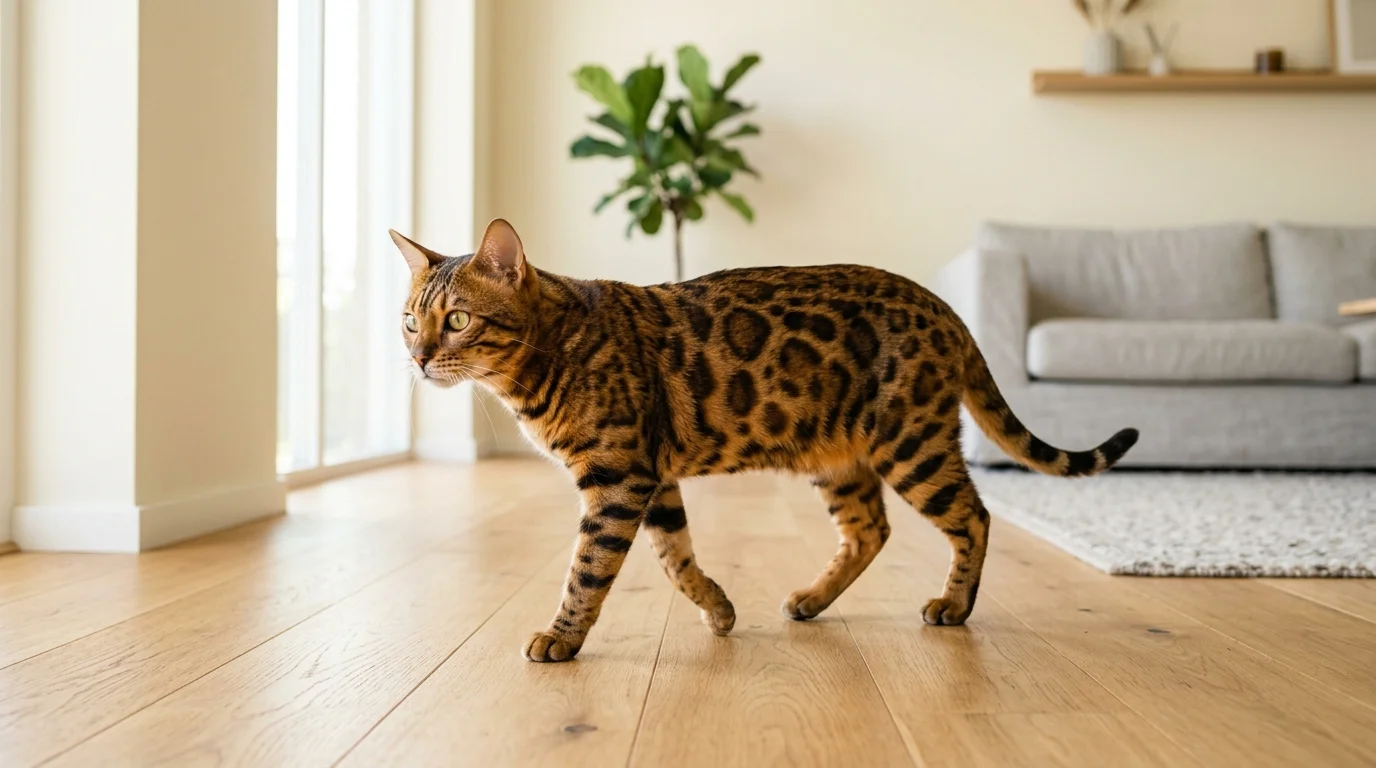
The Bengal's physical appearance is its most immediately striking feature: a coat that mimics the patterning of a wild jungle cat on a fully domestic body. The two primary coat patterns are spotted/rosetted and marble. Rosetted Bengals have spots arranged in two-toned clusters (rosettes) that closely resemble those of a leopard or jaguar. Marble Bengals have a flowing, swirling pattern similar to the markings of a clouded leopard. Both patterns should show high contrast between the spots or marble pattern and the ground colour.
Coat colours include brown (black), silver, snow (subdivided into lynx point, mink, and sepia varieties), blue, melanistic (black on black), and others accepted by TICA. The coat has a uniquely fine, short, and silky texture with a distinctive glitter effect in many individuals: individual hairs have a translucent quality that causes the coat to shimmer in natural light, as if dusted with gold or bronze. This glitter trait is highly prized by breeders and judges.
The body is long, muscular, and powerful, with a notably horizontal stance and a thick, medium-length tail carried low. The legs are substantial, with the hindquarters slightly higher than the shoulders, contributing to the wild, ready-to-spring posture.
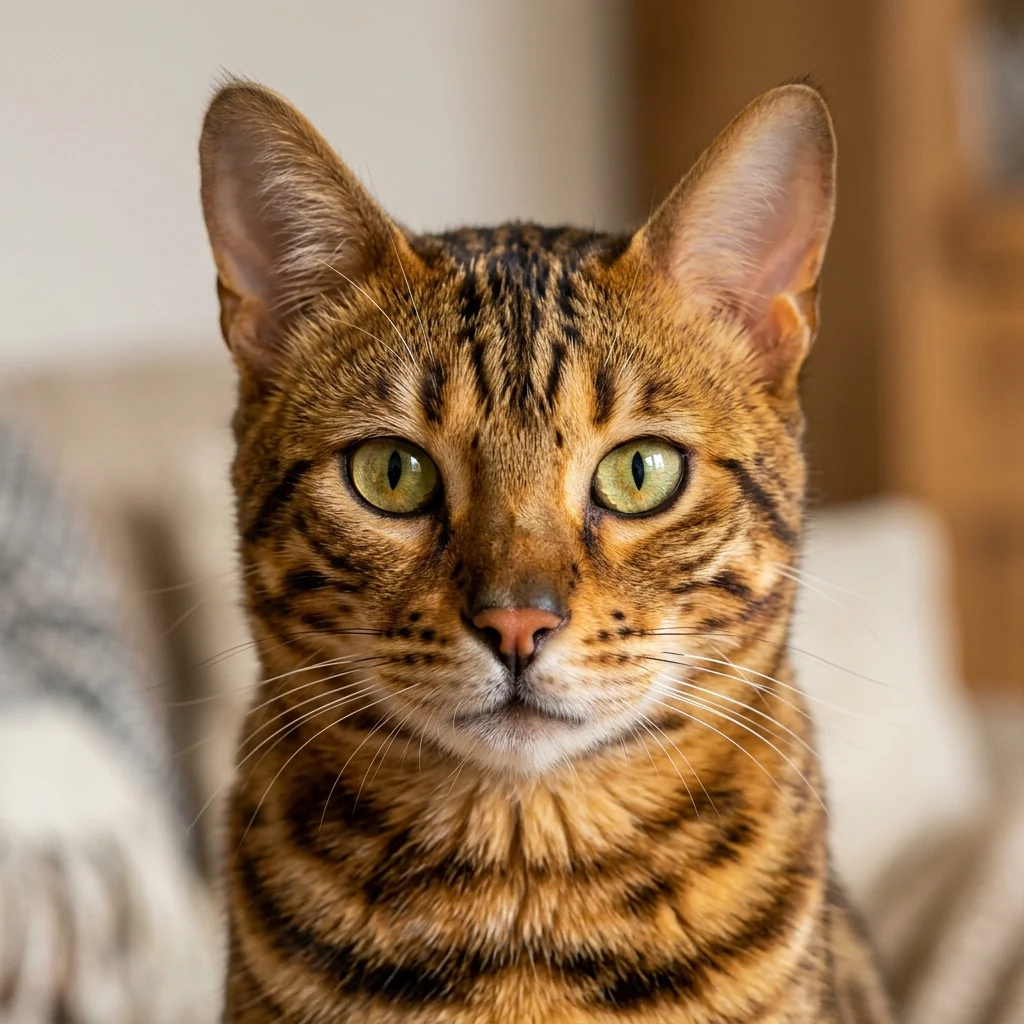
The head is broad and modified wedge-shaped, with high cheekbones, prominent whisker pads, and small, rounded ears set wide apart. Eyes are large, oval, and typically green, gold, or hazel in brown Bengals; blue in snow Bengals.
Adult males typically weigh 4.5 to 6.8 kg; females 3.6 to 5 kg. Full size is reached at approximately 2 years.
Temperament
The Bengal's personality is as intense and captivating as its coat. These are highly active, intelligent, and curious cats that need significant daily engagement to stay happy and well-adjusted. Bengals do not settle easily into a quiet, low-stimulation lifestyle; they thrive in households where there is movement, activity, and human (or animal) interaction.
Bengals are bold rather than timid. They investigate new people and environments with confidence, rarely hiding or freezing when confronted with something unfamiliar. Their curiosity is relentless: expect to find them exploring the tops of cabinets, monitoring the contents of open bags, and inserting themselves into any activity in the home.
Vocally, Bengals are variable. Some individuals are quite chatty; others communicate mainly through physical means such as head-butting, following, and pawing. When they do vocalise, the Bengal's voice tends to be unique, including chirps, chatters, and a range of calls quite distinct from the typical domestic meow.
The Bengal's affinity for water is well-documented and distinctive. Many Bengals will seek out running water, dip paws in drinking bowls, investigate open taps, and occasionally join owners in the shower or bathtub. This fascination appears to be a retained trait from the Asian Leopard Cat, which frequently wades and fishes in the wild.
Bengals bond strongly with their families and are playful and affectionate, but they are not typically lap cats. They prefer to be near people and involved in activities rather than sitting still for extended periods of petting. Stimulation is not optional for this breed; it is a welfare requirement.
Activity & Play
The Bengal is one of the most physically active domestic cat breeds. They are built for movement: muscular, agile, and possessed of a genuinely athletic drive that requires regular outlets. An under-exercised Bengal will find its own stimulation, usually at the expense of furniture, curtains, or anything left unattended on a countertop.
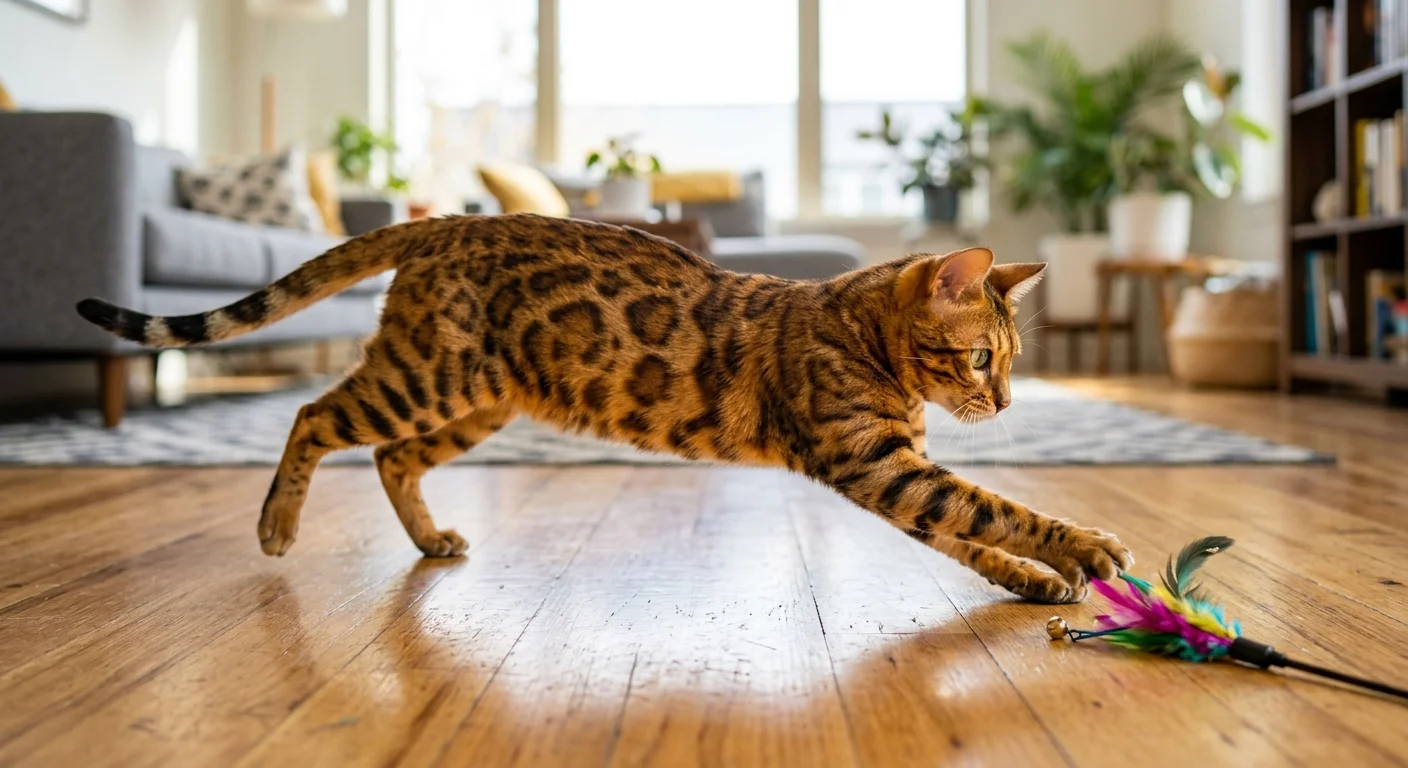
Plan for at least two dedicated play sessions per day of 15 to 20 minutes each, using wand toys, laser pointers, and interactive toys that mimic prey. Bengals are exceptional hunters by instinct; toys that move unpredictably and quickly hold their attention longest. Puzzle feeders and activity boards that reward exploration are highly effective for mental engagement.
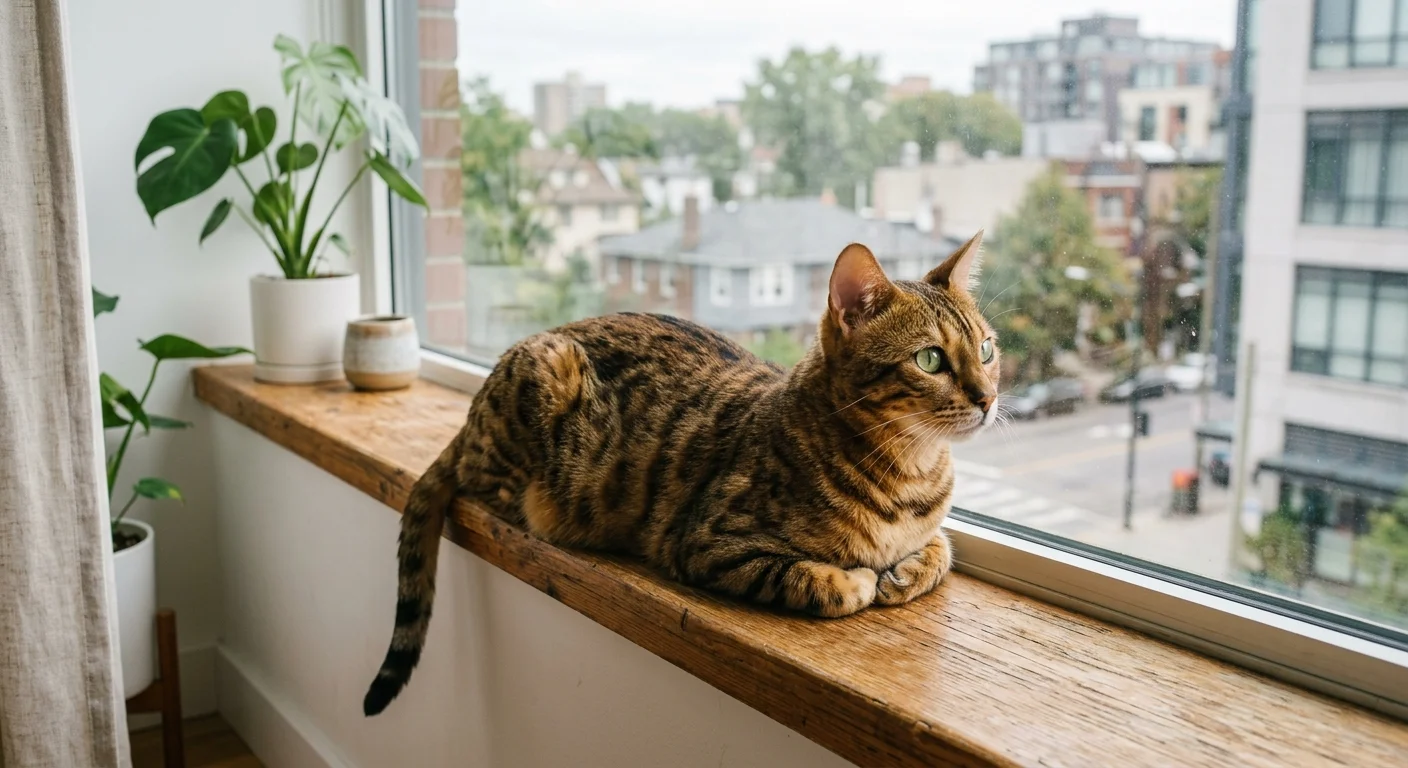
Bengals are natural climbers with a strong preference for height. A tall, robust cat tree is essential. Large floor-to-ceiling climbing structures are ideal. Because of their size and athleticism, ensure furniture is rated for heavier or more energetic use than standard cat trees may be designed for.
Many Bengals take readily to harness and leash training, which opens up outdoor enrichment safely. Starting this training early (8 to 12 weeks old) produces the best results. Outdoor access via a secure, cat-proofed garden or a substantial catio also works well. Unsupervised outdoor access is not recommended given the Bengal's bold, investigative nature and the associated traffic and hazard risks.
Without sufficient activity, Bengals may develop stress-related behaviours including repetitive vocalisation, destructive scratching, redirected aggression, or obsessive routines. Exercise and enrichment are not optional extras for this breed.
Grooming
The Bengal's short, dense, and silky coat is genuinely low-maintenance. It does not mat, sheds relatively little, and requires only a weekly brush with a soft-bristle brush or rubber grooming mitt to remove loose hairs and keep the distinctive glitter coat looking its best. Many Bengals will also benefit from a polish with a chamois cloth or damp hand after brushing, which brings out the natural sheen.
Bathing is only occasionally necessary, and given the Bengal's notable interest in water, it is often less traumatic than with other breeds. Some Bengals actively enjoy the experience. Use a gentle cat-safe shampoo and ensure the coat is thoroughly dried afterwards.
Nail trimming should be done every two to three weeks. Because Bengals are highly active cats, providing appropriate scratching surfaces (both horizontal and vertical) is especially important. Without them, furniture becomes the target of choice for a breed that needs to scratch frequently.
Ears should be checked weekly and cleaned gently with a vet-approved solution if wax accumulation is visible. Bengal ears are not excessively prone to problems, but regular inspection prevents minor issues from developing.
Dental hygiene is important for all cats. Introduce tooth brushing gradually from kittenhood using a finger brush and cat-safe toothpaste. Annual professional dental checks with your vet are also recommended.
Overall, the Bengal is one of the easier breeds to maintain from a grooming standpoint, which is somewhat at odds with the high maintenance their energy and activity level requires in other respects.
Health
The Bengal is generally a robust breed, but there are several breed-specific health conditions that owners and prospective buyers should know about before acquiring a Bengal kitten.
Progressive Retinal Atrophy (PRA-b) is the most significant genetic condition in Bengals. This autosomal recessive form of PRA causes degeneration of the photoreceptor cells in the retina, leading to progressive vision loss. Research published in PMC (2015) characterised this as an early-onset condition in Bengal cats; loss of photoreceptor cells begins around 7 weeks of age, with significant vision compromise typically apparent by approximately 2 years. A DNA test is available through the UC Davis Veterinary Genetics Laboratory. Responsible breeders test all breeding cats; only cats that are clear (n/n) or carefully managed carriers should be used in breeding programmes.
Hypertrophic Cardiomyopathy (HCM) is the most common heart disease in domestic cats and Bengals are not exempt. Reputable Bengal breeders screen breeding cats with regular echocardiograms. There is currently no breed-specific genetic test for HCM in Bengals.
Tritrichomonas foetus is a protozoal intestinal parasite more commonly seen in Bengal cats than many other breeds, particularly in cattery environments. It causes chronic loose stools and requires veterinary diagnosis and treatment.
Flat-chested kitten syndrome (FCKS) has been reported in Bengal litters, though its prevalence appears to have decreased with responsible breeding practices.
Lifespan is typically 12 to 16 years with good care. Ask breeders for PRA-b and HCM testing documentation before purchasing a kitten.
Nutrition
Bengals are muscular, active cats with a correspondingly higher caloric requirement than lower-energy breeds. A high-protein diet based on quality animal protein (chicken, turkey, fish, or rabbit) is well-suited to the breed's physiology. Wet food should form a significant part of the diet, as it supports hydration and mirrors the high-moisture content of a natural prey-based diet.
Raw or high-meat wet diets are popular with Bengal owners and breeders who argue they align best with the breed's semi-wild heritage. If considering a raw diet, speak with your vet about appropriate preparation and nutritional balancing to avoid deficiencies.
Bengals can be prone to digestive sensitivity, particularly in relation to grains and low-quality fillers. If your Bengal has recurring loose stools (not explained by Tritrichomonas foetus, which requires veterinary testing), a limited-ingredient or grain-free wet food may help. A vet check should always be the first step with chronic digestive issues.
Portion control is important despite the Bengal's active lifestyle. Measure meals and feed twice daily rather than free-feeding. As Bengals age and activity decreases, their caloric needs will reduce; adjust portions accordingly to prevent weight gain, which can stress joints and the cardiovascular system.
Fresh water should always be available. Many Bengals are enthusiastic about running water; a cat drinking fountain may increase water intake and is genuinely recommended for this breed. Avoid leaving full glasses or cups of water unattended.
Family Fit
The Bengal is a magnificent but genuinely demanding breed, and it is important to be honest about whether a particular household is a good match. Bengals are not suited to quiet, low-activity homes or owners who want a calm, low-maintenance companion. They are suited to active households that have the time, space, and energy to meet their needs.
With children, Bengals can be excellent companions, provided the children are old enough to engage interactively and understand the difference between a Bengal that wants to play and one that needs space. Very young children who do not yet understand cat body language can find a Bengal's boldness and physical energy overwhelming. School-age children who enjoy active play are typically excellent Bengal companions.
With other cats, Bengals do best with similarly energetic, confident breeds. A timid or low-energy cat may find a Bengal's relentless enthusiasm intimidating or exhausting. A second Bengal, or an equally active breed such as a Maine Coon or Abyssinian, is usually a successful pairing.
With dogs, the Bengal's confidence and size mean they typically stand their ground rather than fleeing, which reduces conflict risk. Many Bengals live harmoniously with dogs, particularly when introduced early. Prey-driven dogs should always be introduced carefully and under close supervision.
Apartment living is possible for Bengals but requires more investment: multiple tall climbing structures, intensive daily play sessions, and ideally a second companion animal. A house with access to a secure garden or catio is generally a better long-term environment. Unsupervised outdoor access is not recommended due to traffic and other hazards.
Fun Facts
1. They are a hybrid breed with wild origins. The Bengal descends from crosses with the Asian Leopard Cat (Prionailurus bengalensis), a small wild cat found across South and Southeast Asia. This heritage is entirely visible in their coat patterning.
2. Early-generation males are typically infertile. F1, F2, and most F3 Bengal males cannot reproduce, a common feature of hybrid animals. Fertile males generally appear from the F4 generation onward.
3. Many Bengals glitter. A unique trait in many Bengals is a coat that appears to shimmer in light. This glitter effect is caused by the transparent tip of each hair shaft, which refracts light. It is not found in other domestic cat breeds.
4. They love water. Unlike most domestic cats, many Bengals are genuinely attracted to water. Running taps, showers, and even full bathtubs are often explored voluntarily. This trait is believed to derive from their Asian Leopard Cat ancestor, which hunts near water.
5. Legal ownership varies by location. Early-generation Bengals (F1 to F3) are legally restricted or prohibited in some US states, the UK, Australia, and other countries. Pet-quality SBT Bengals (F4 and beyond) are legal in most places, but local laws should always be verified.
6. They are highly trainable. Bengals learn faster than many other cat breeds and can be taught to respond to names, walk on a harness, play fetch, and perform basic commands using positive reinforcement.
7. Their coat pattern changes as kittens age. Many Bengal kittens go through a 'fuzzy' stage in which the coat temporarily loses clarity and contrast. This is normal and the pattern re-emerges as the kitten matures.
FAQ
Are Bengal cats legal to own? Pet-quality Bengals (SBT, F4 and beyond) are legal in most countries and US states. Early-generation Bengals (F1 to F3) with direct wild ancestry are restricted or prohibited in some jurisdictions, including certain US states, Hawaii, and New York City. Always verify your local laws before acquiring a Bengal.
Is the Bengal cat dangerous? No. SBT Bengals are fully domestic cats in behaviour. The wild appearance is a product of selective breeding for coat pattern, not temperament. A well-bred, properly socialised Bengal is affectionate and people-oriented, not aggressive.
Do Bengal cats need a garden? A secure garden or catio is beneficial but not essential. Indoor-only Bengals can thrive with sufficient vertical space, interactive play, and companion animals. Unsupervised outdoor access is not recommended.
How do I know if a Bengal is right for me? Bengals are best suited to active households that can commit to daily play, mental stimulation, and preferably a companion animal for the Bengal. They are not suited to owners seeking a quiet, low-maintenance cat.
What is PRA-b and should I ask breeders about it? PRA-b (Progressive Retinal Atrophy type b) is a hereditary genetic condition causing blindness in Bengals. Reputable breeders DNA-test all breeding cats. Ask for a copy of both parents' test results; both should be either clear or carrier status with only a clear mate.
Do Bengal cats get along with other cats? Generally yes, when well-matched. Bengals do best with similarly energetic, confident cats. A timid or elderly cat may be stressed by a Bengal's exuberant energy.
Gallery
Explore more Bengal-style breeds
Browse related breeds or take our matching quiz to find the right fit for your home.
Stay in the loop
Get weekly breed spotlights, care guides, and new additions - straight to your inbox.