Balinese
vocal, affectionate, intelligent, playful
Quick Facts
- Lifespan
- 12-20 years
- Weight
- 2.7-5 kg
- Origin
- United States
- Coat
- Long
Overview
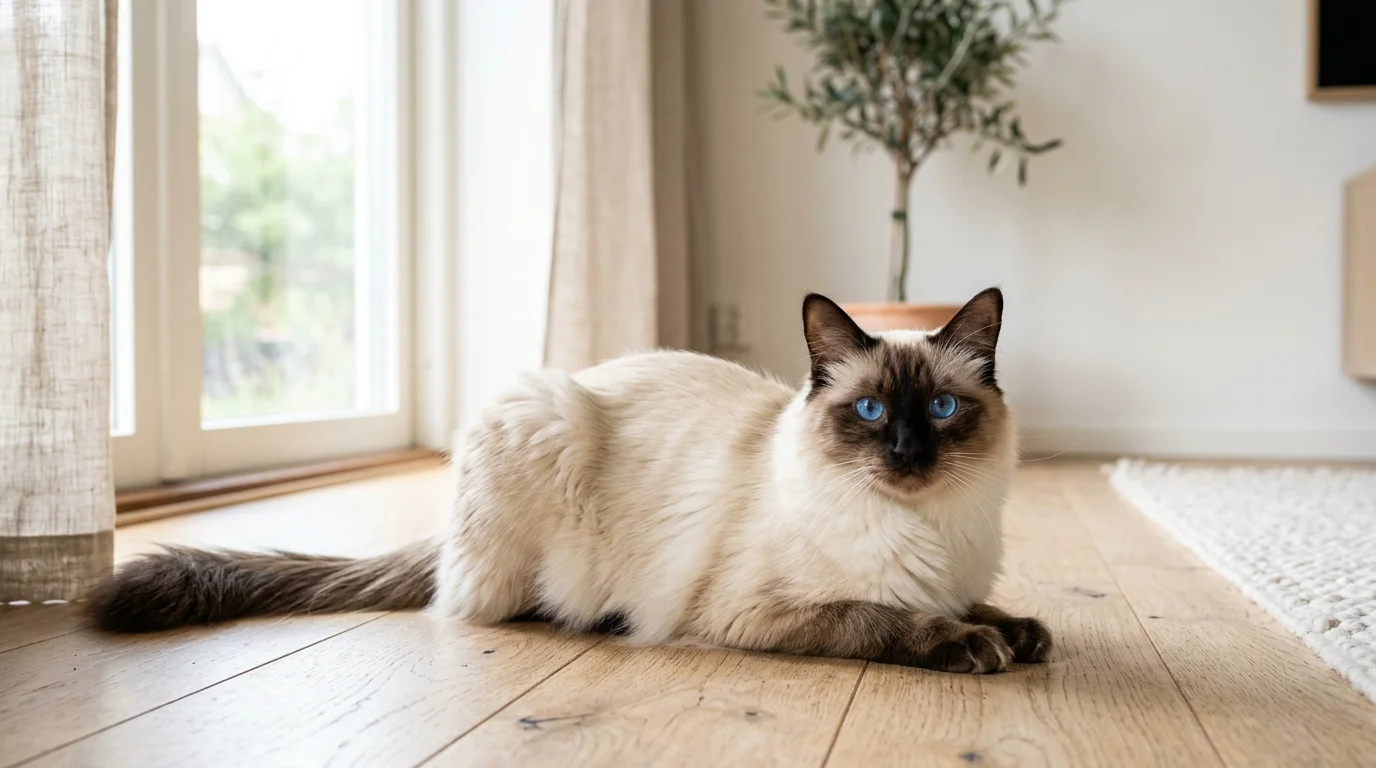
The Balinese is often described as the longhaired Siamese — and that description captures both its appearance and its soul perfectly. Graceful and silky-coated, with the same distinctive colour points as the Siamese, the Balinese combines striking elegance with a warm, vocal, and deeply social personality. Despite its flowing coat, the Balinese is surprisingly easy to groom, and its affectionate, communicative nature makes it one of the most rewarding breeds to live with.
History & Origins
The Balinese emerged in the United States in the 1940s and 1950s, when longhaired kittens began appearing in litters from Siamese breeding programmes. Rather than discarding these kittens as off-type, two pioneering breeders — Marion Dorsey in California and Helen Smith in New York — recognised their potential and began selectively breeding for the longhaired trait.
Helen Smith coined the name Balinese, inspired by the grace and elegance of traditional Balinese dancers, though the breed has no actual connection to the Indonesian island. The name captured the cat's fluid movement and refined beauty perfectly.
The CFA accepted the Balinese for Championship competition in 1970. TICA recognised the breed in 1979. Today both organisations recognise the breed, as do FIFe and GCCF. Show standards accept only the four traditional Siamese point colours — seal, chocolate, blue, and lilac — in the CFA, while TICA accepts a wider range.
Appearance
The Balinese is a medium-sized, svelte cat with the same long, lithe body type as the Siamese — elegant and muscular, with fine bones and graceful lines. Males typically weigh 4–6 kg, females 3–4.5 kg.
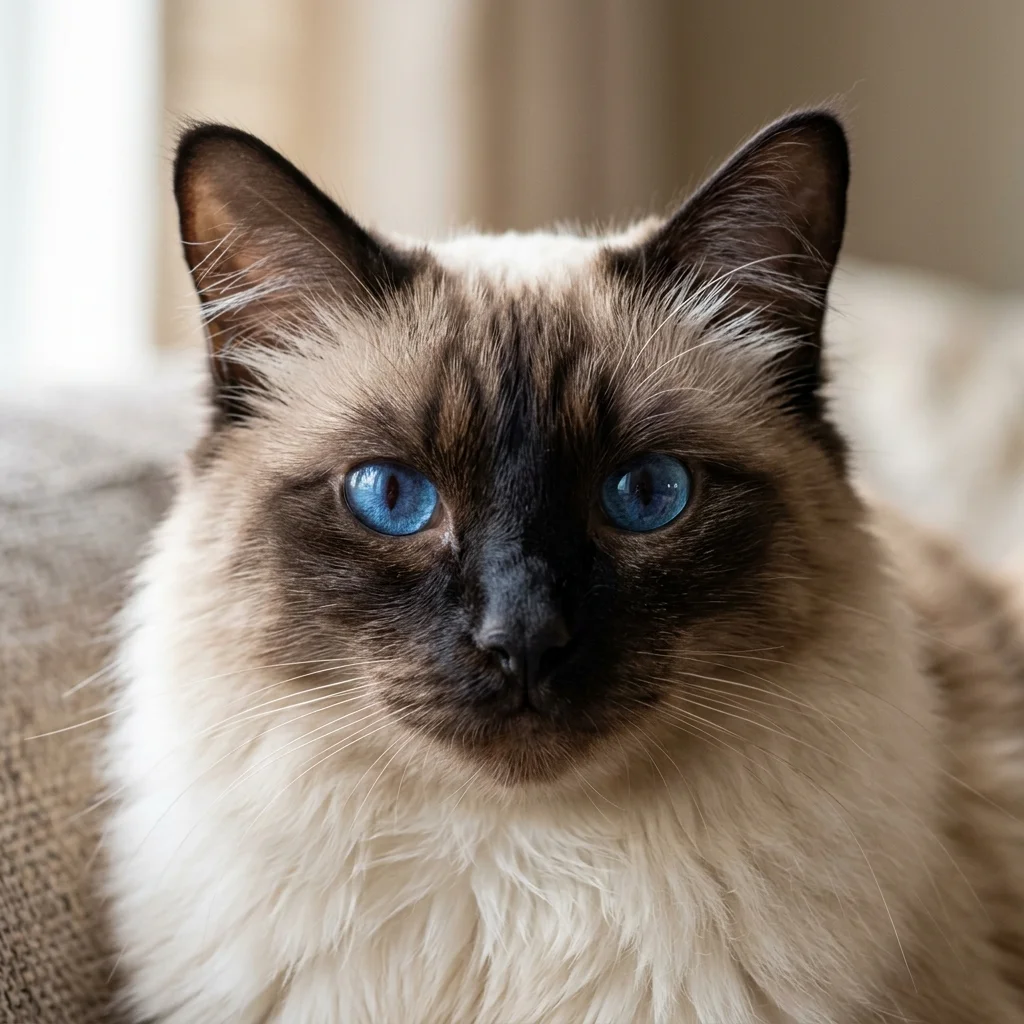
The defining feature that sets the Balinese apart from the Siamese is its silky, semi-long coat that lies close to the body and flows to a magnificent plumed tail. The single coat — with no undercoat — gives the breed its easy-care qualities. Coat colours are the traditional Siamese point colours: seal, chocolate, blue, and lilac, each on a lighter body.
The head is a long, tapering wedge with a straight profile, large pointed ears, and vivid blue almond-shaped eyes that are as striking as those of the Siamese.
Temperament
The Balinese is a deeply affectionate, highly communicative breed that bonds tightly with the people it loves. It follows its family from room to room, participates enthusiastically in household activities, and is sensitive to the moods of the people around it — many owners find their Balinese comes to comfort them when they are upset.
Like its Siamese relatives, the Balinese is vocal, but tends to be somewhat less demanding about it. Its voice is softer and its conversational style gentler, making it an excellent choice for those attracted to the Siamese personality but hoping for a slightly quieter companion.
Highly intelligent and playful, the Balinese excels at interactive games and can learn tricks readily. It gets along well with children, other cats, and cat-friendly dogs. It thrives in active households where it can be part of daily life.
Like all Siamese-type breeds, the Balinese does not enjoy prolonged solitude. If your household is empty for long hours, a second cat companion is strongly recommended.
Activity & Play
Activity and Exercise
The Balinese is a high-energy, athletic cat that needs both physical exercise and mental stimulation every day. Despite their graceful, silky appearance, these cats are built for movement and will not be content to lounge around.
Plan for at least 30 to 45 minutes of interactive play daily, ideally split into two or three shorter sessions. Feather wands, laser pointers, and puzzle feeders tap into their hunting instincts and help burn energy effectively. Balinese cats are quick learners and enjoy games that challenge them mentally as well as physically.
Vertical space matters greatly to this breed. Cat trees, wall shelves, and climbing structures give them the height they seek and keep their muscles conditioned. A bored Balinese will find its own entertainment, which may include opening cupboards, knocking items off surfaces, or demanding your attention loudly.
The Balinese is an indoor-oriented breed and adapts well to apartment living when enrichment is adequate. They do best with a companion, whether another active cat or a patient dog, to help fill the hours when you are away. Solo Balinese cats left for long stretches are prone to separation anxiety and destructive behavior.
Consistency is key. Daily play routines, rotating toys, and scheduled feeding that incorporates puzzle elements will keep a Balinese mentally satisfied and physically healthy throughout their long lifespan.
Grooming
Despite having a longer coat than the Siamese, the Balinese is surprisingly easy to groom. The silky single coat — notably lacking an undercoat — rarely tangles or mats, and shedding is considerably lighter than that of most longhaired breeds. Weekly brushing with a soft slicker brush or a fine-toothed comb is generally sufficient to keep the coat looking its best.
The plumed tail is the most distinctive feature of the coat and requires a gentle comb-through during brushing sessions. During seasonal shedding periods, brushing twice a week helps keep loose hairs under control.
Routine care includes nail trimming every one to two weeks, ear cleaning when needed, and regular tooth brushing. Eye discharge may need gentle wiping, a common minor issue in Siamese-type cats.
Health
The Balinese is generally a healthy breed and is notably long-lived, with many individuals reaching 18–20 years of age. Its single-coat genetics and mixed lineage contribute to reasonable overall hardiness.
As a Siamese derivative, the Balinese shares some hereditary health concerns with that breed. Progressive retinal atrophy (PRA) can cause gradual vision loss and has been reported in the breed. Amyloidosis — abnormal protein deposits in the liver — is another condition seen in the Oriental family of breeds including the Balinese, though it is not extremely common.
Some Balinese are sensitive to anaesthesia, which is worth informing any vet about before any surgical procedure. Strabismus (crossed eyes), occasionally seen in Siamese, may also appear in Balinese but is generally cosmetic rather than a health concern. Regular veterinary check-ups and prompt attention to any changes in vision or appetite are the best safeguards.
Nutrition
Nutrition
The Balinese is a lean, active breed with a fast metabolism. Their diet should be built around high-quality animal protein to support their muscle condition and sustained energy.
Protein and fat: Aim for a food with at least 30 to 40 percent protein on a dry matter basis, with a named meat source such as chicken, turkey, or salmon as the first ingredient. Fat content around 15 to 20 percent supports energy and coat health without adding unnecessary weight.
Feeding frequency: Adult Balinese cats do well on two to three measured meals per day totaling around 20 to 30 calories per pound of body weight, adjusted for activity level. Kittens require three to four meals daily until around six months of age. Avoid free-feeding, as even active cats can overeat when food is always available.
Wet versus dry: A ratio of roughly 70 percent wet food to 30 percent dry kibble works well. Wet food supports hydration and is easier to digest, while dry kibble provides dental benefit. Puzzle feeders during mealtime can double as enrichment.
Breed-specific considerations: Balinese cats share some genetic traits with Siamese cats and may carry a predisposition to certain digestive sensitivities. If your cat shows signs of loose stools or vomiting with standard foods, a limited-ingredient or single-protein diet may help. Fresh water should always be available; a running water fountain often encourages better hydration in this breed.
Family Fit
Family Fit
The Balinese is a deeply social, affectionate breed that flourishes in busy, engaged households. They form strong bonds with all family members and want to be involved in daily life, following people from room to room and inserting themselves into every activity.
Children: Balinese cats generally do well with children who are old enough to interact respectfully. They enjoy active play and match the energy of school-age kids. With toddlers and very young children, supervision is recommended, as this breed is sensitive to rough handling and unpredictable loud sounds.
Other cats and dogs: This is one of the more gregarious cat breeds. Balinese cats typically welcome other cats, particularly a similarly active companion. They can coexist with cat-friendly dogs when introductions are done gradually and on neutral ground.
Elderly owners: A Balinese can be a wonderful companion for a retired person who has time to engage with them daily. Their talkative, affectionate nature provides genuine company. However, their activity needs should be considered honestly before adoption.
Apartments: The Balinese adapts well to apartment living provided there are climbing opportunities, interactive toys, and daily play. They are not a breed that can simply be left to entertain themselves.
First-time owners: With some research and realistic expectations about their vocal and social demands, first-time owners can succeed wonderfully with a Balinese. Their intelligence makes training intuitive, and their affectionate nature makes the bond deeply rewarding.
Fun Facts
- Despite the name, the Balinese has no connection to Bali — it was named after the graceful Balinese dancers whose flowing movements the breed's gait resembles.
- The Balinese has a single coat with no undercoat, which is why it sheds much less than most longhaired breeds.
- Many Balinese owners report that their cats live to 18–20 years — exceptional longevity even by cat standards.
- Balinese cats are thought to produce lower levels of the Fel d 1 allergen than many other breeds, though they are not truly hypoallergenic.
- The breed appeared spontaneously in Siamese litters and was initially considered a flaw — today it is celebrated as a distinct and beautiful breed in its own right.
FAQ
Frequently Asked Questions
How long do Balinese cats live?
Balinese cats are known for their longevity. Most live between 12 and 20 years, with well-cared-for individuals sometimes reaching beyond that. Regular vet checkups and a balanced diet contribute significantly to their long lifespan.
Do Balinese cats shed a lot?
Less than you might expect from a long-haired cat. The Balinese lacks a dense undercoat, which means their silky coat sheds minimally. Weekly brushing is usually enough to keep it looking its best.
Are Balinese cats vocal?
Yes. Like their Siamese relatives, Balinese cats are communicative and opinionated. They will let you know when they are hungry, bored, or want attention. Their voice is slightly softer than the Siamese, but still very present.
Are Balinese cats hypoallergenic?
They are sometimes described as more allergy-friendly due to lower Fel d 1 protein production and minimal shedding. However, no cat is completely hypoallergenic. Spending time with the breed before adopting is the best test for sensitive individuals.
How much does a Balinese cat cost?
Expect to pay between $800 and $1,500 from a reputable breeder. Rarer color varieties or show-quality cats may cost more.
Are Balinese cats good for training?
Very much so. Their intelligence and desire to please make them responsive to clicker training and positive reinforcement. Many Balinese learn tricks, respond to their name reliably, and enjoy interactive training sessions as a form of mental enrichment.
Gallery
Explore more Balinese-style breeds
Browse related breeds or take our matching quiz to find the right fit for your home.
Stay in the loop
Get weekly breed spotlights, care guides, and new additions - straight to your inbox.