LaPerm
gentle, affectionate, active, curious
Quick Facts
- Lifespan
- 12-15 years
- Weight
- 2.3-5 kg
- Origin
- United States
- Coat
- Medium
Overview
The LaPerm is a uniquely charming breed best known for its soft, curly coat — a spontaneous natural mutation that gives it ringlets, waves, and loose curls from nose to tail. Originating on a farm in Oregon in 1982, this breed pairs its distinctive appearance with an affectionate, playful, and clown-like personality. The LaPerm is gentle enough for family life yet lively enough to keep things interesting, and its curly coat is as tactile as it looks.
History & Origins
The LaPerm breed began with a single kitten born on a cherry farm in The Dalles, Oregon, in 1982. Owner Linda Koehl noticed that one kitten in the litter was born nearly bald and appeared quite different from its siblings. Over several weeks, the kitten grew a coat of distinctly curly fur and was given the name Curly.
Curly was allowed to breed freely with the farm's other cats, and over the following decade produced a colony of curly-coated kittens. Koehl began to investigate the genetics involved and eventually worked with breeders and geneticists to formally establish the breed. The mutation responsible for the LaPerm's curls is a dominant gene unique to the breed, designated the Lp gene.
Both shorthaired and longhaired varieties were developed. The LaPerm received championship recognition from TICA in 2002 and from CFA in 2008. FIFe and GCCF also recognise the breed. Today LaPerms remain a relatively uncommon breed, but their distinctive appearance and excellent temperament are steadily building a dedicated following.
Appearance
The LaPerm is a medium-sized cat with a semi-foreign, athletic build. Adults typically weigh 2.3–5 kg, with males larger than females. The body is well-muscled and moderately long, with long legs, a long neck, and a full, plumed tail.
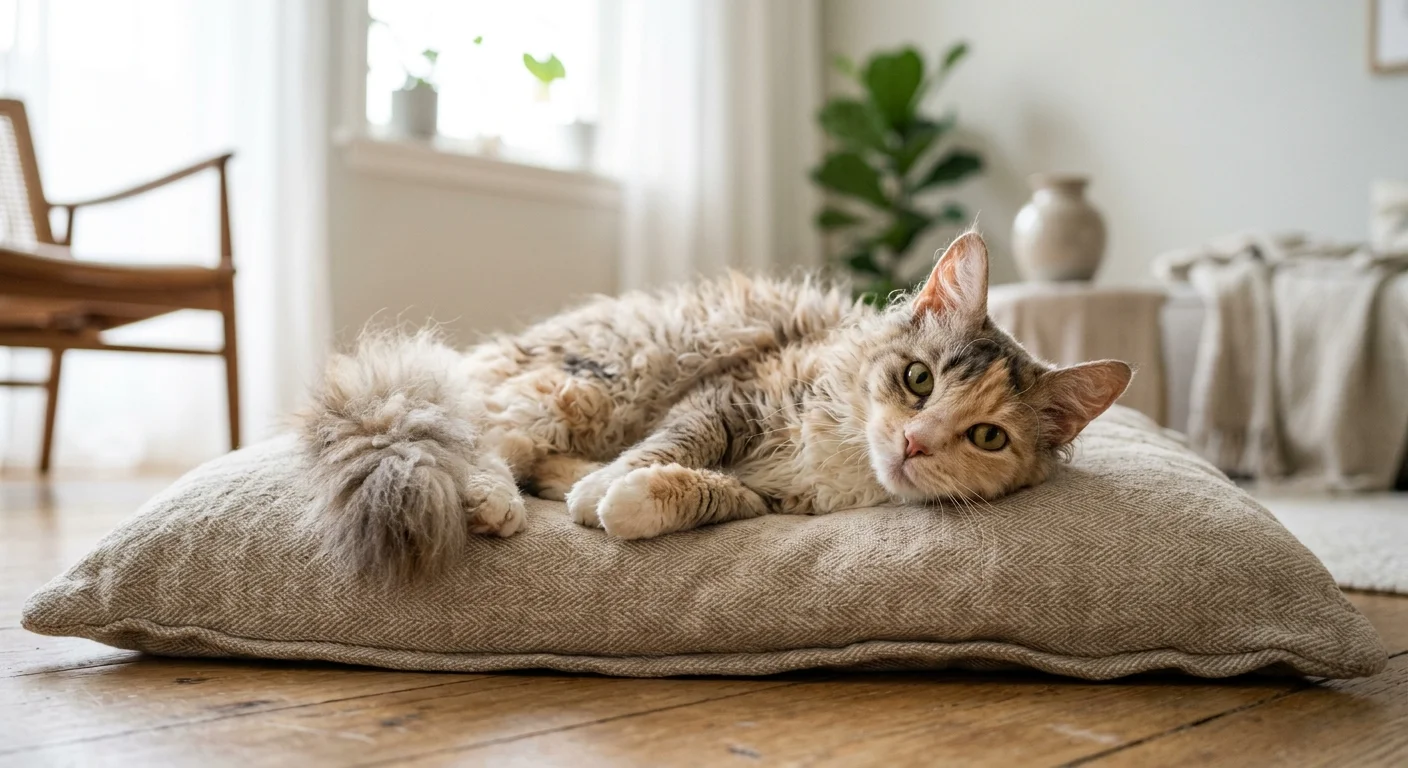
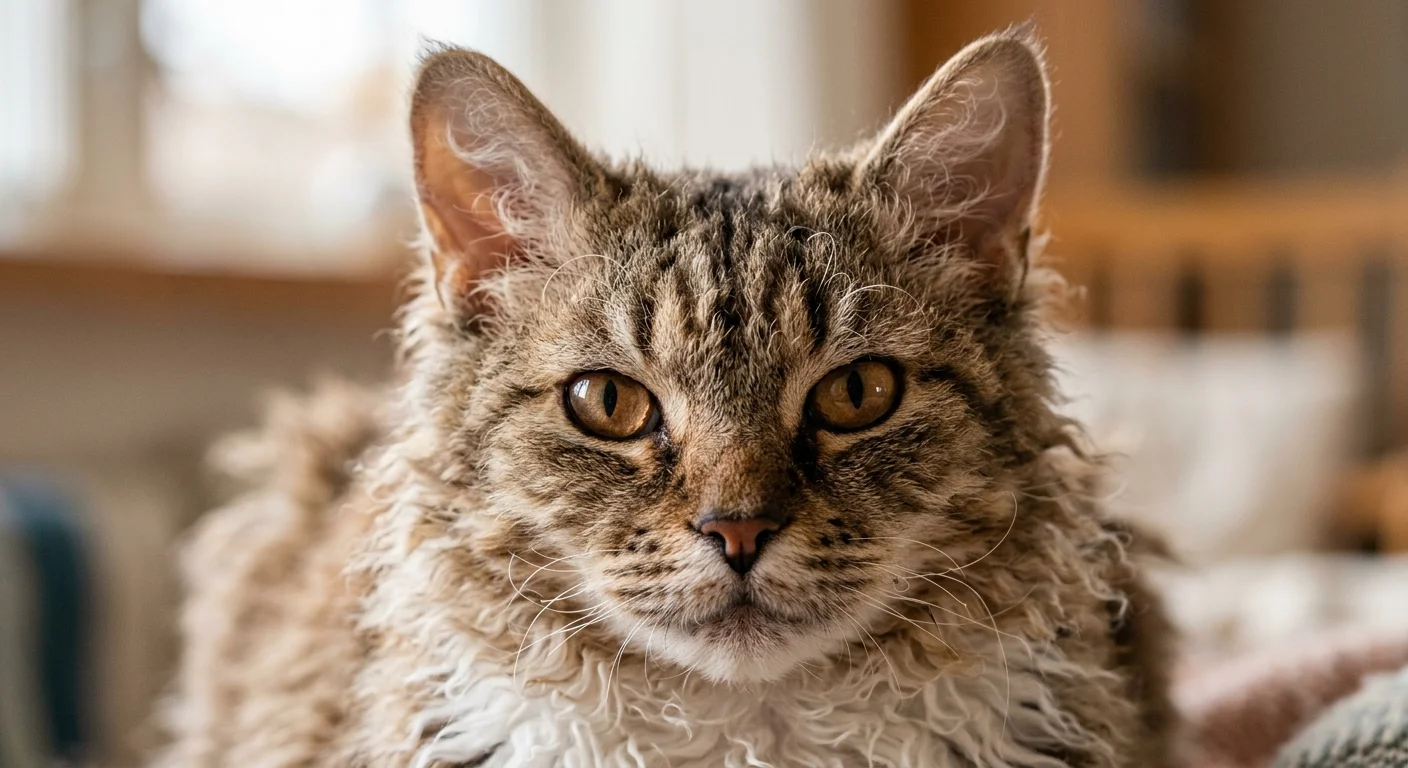
The defining feature is the coat: soft, springy curls and waves that can range from tight ringlets to loose waves depending on coat length and individual genetics. Both shorthaired and longhaired varieties exist. The tightest curls are typically found at the base of the ears, on the stomach, and at the throat. The longhaired variety develops a fuller, curly ruff around the neck. The coat comes in all colours and patterns.
The head is a modified wedge, slightly rounded, with a broad muzzle and prominent whisker pads. Eyes are large, almond-shaped, and expressive in any colour. Ears are medium to large, continuing the line of the face, and often have interior tufting. The overall impression is of an alert, warm, and uniquely textured cat unlike any other breed.
Temperament
LaPerms are affectionate, people-oriented cats that enjoy close contact with their families. They are known for actively seeking out laps, shoulders, and warm necks to snuggle against, and they are gentle and patient in their approach — earning their reputation as "lap cats with a sense of humour."
Despite their love of cuddling, LaPerms are also active and curious. They explore enthusiastically, enjoy climbing, and retain a kitten-like playfulness well into adulthood. Interactive toys, feather wands, and chasing games all appeal to them. They have been described as "clown-like" by breeders, often inventing their own games and displaying a cheeky, inventive energy.
LaPerms are sociable with everyone — family, strangers, children, other cats, and dogs. They adapt readily to new people and environments. They thrive on attention but are not excessively demanding; they will find their own entertainment if their owner is busy, then return for affection when the moment is right.
They communicate in soft, gentle voices and are not particularly vocal compared to other active breeds. Their overall temperament is balanced — lively but not exhausting, affectionate but not clingy.
Activity & Play
Activity and Exercise Needs
The LaPerm is a moderately active cat that enjoys play without being relentlessly demanding. They have enough energy to stay entertained and engage their owners, but they also know how to wind down.
Energy level: Moderate to moderate-high. LaPerms are playful and curious throughout adulthood but are not the kind of cat that tears through the house at midnight. They balance activity with affectionate downtime.
Exercise: Around 20 to 30 minutes of interactive play daily keeps a LaPerm well-stimulated. Two shorter sessions work better than one long one for maintaining interest.
Play styles: LaPerms enjoy wand toys, feather teasers, and small toy mice they can carry around. They are gentle hunters and prefer toys they can stalk and pounce on. Puzzle feeders and treat balls engage their minds between sessions.
Vertical space: Appreciated but not critical. A cat tree of medium height with platforms and a scratching post covers most of their needs. They enjoy perches but are not obsessive climbers.
Toys: Rotate toys to keep things fresh. LaPerms can lose interest in the same toy if it is always available. A small rotating selection works better than a large static pile.
Indoor vs outdoor: LaPerms adapt well to indoor life. Those with safe outdoor access appreciate it, but they do not have the high-drive roaming instinct of more athletic breeds. A catio or harness walk is a good compromise.
Grooming
Grooming the LaPerm requires a gentle, considered approach — over-brushing can cause the curls to frizz or lose their definition. Despite the curly appearance, the coat is surprisingly tangle-resistant, and most LaPerms require only weekly combing with a wide-toothed comb to keep the coat healthy and the curls looking their best.
The curls are tightest on the stomach, chest, and base of the ears. The tail is plumed. Both shorthaired and longhaired LaPerms exist — the longhaired variety has a fuller, ringlet-heavy coat that benefits from slightly more frequent attention.
Occasional bathing can enhance the coat's curl and texture; towel-drying gently while scrunching the coat helps the curls reform naturally. Avoid vigorous rubbing, which disrupts the curl pattern.
Routine care includes nail trimming, ear cleaning — the tufted ears can accumulate debris — and dental hygiene. Because the LaPerm's gene pool is maintained through outcrossing with other breeds, the coat quality can vary between individuals.
Health
The LaPerm is a generally healthy and hardy breed, with a lifespan of 12–15 years. Notably, LaPerms do not carry any known breed-specific hereditary diseases, which is partly attributable to the deliberate outcrossing practices used by breeders to maintain a broad and diverse gene pool.
Because LaPerms are routinely outcrossed with shorthaired and longhaired domestic cats, they benefit from a level of genetic diversity unusual for a pedigree breed. This has contributed to their reputation as a naturally robust cat with few health concerns.
As with all cats, routine annual veterinary check-ups are recommended, along with standard preventive care including vaccinations, parasite control, and dental hygiene. Obesity can be a concern in less active individuals, so maintaining a healthy weight through a balanced diet and regular play is important.
Nutrition
Nutrition
The LaPerm is a medium-sized cat with a lean, athletic build. Despite its delicate curly coat, this is not a fragile breed, and its dietary needs are straightforward. A protein-focused diet that supports muscle maintenance and a healthy skin and coat is the main priority.
Macronutrient targets
- Protein: 35-45% on a dry-matter basis, from named animal sources
- Fat: 15-20% on a dry-matter basis; omega-3 and omega-6 fatty acids support the distinctive curly coat
- Carbohydrates: below 25%; avoid fillers like corn syrup or excessive grain content
Coat support
The LaPerm curl is a genetic trait, but its quality is influenced by nutrition. Foods rich in omega fatty acids, whether from fish oil, salmon meal, or flaxseed, help maintain coat softness and reduce dryness. If the coat looks dull or brittle, adding a small fish oil supplement after consulting a vet is a reasonable first step.
Wet vs. dry food
A combination of wet and dry food suits most LaPerms. Wet food contributes to daily hydration, which benefits the urinary tract. Dry kibble can be offered as the base meal. Avoid free-feeding dry food, as LaPerms can overeat when bored.
Feeding schedule
- Kittens (up to 12 months): three to four small meals per day
- Adults (1-10 years): two measured meals per day
- Seniors (10+): two meals per day; consider lower-calorie options if activity slows
Breed-specific notes
LaPerms have no known breed-specific metabolic disorders. A commercially complete food carrying an AAFCO nutritional adequacy statement is a reliable baseline. Monitor weight annually, as indoor cats with lower activity levels can trend toward overweight.
Family Fit
Family Fit
The LaPerm is one of the more versatile cat breeds when it comes to fitting into different households. Its gentle, affectionate nature means it adapts well to a wide range of living situations.
Children
LaPerms are patient and sociable, making them a solid match for families with children. They enjoy interactive play and can keep up with the energy of older kids. Younger children should be taught to handle cats gently, as with any breed, but the LaPerm is not known for skittishness or aggression.
Other cats and dogs
This breed generally gets along well with other cats and with dog-friendly dogs. LaPerms are curious and social rather than territorial. Introductions should be done gradually, but most LaPerms settle in without prolonged conflict.
Elderly owners
The LaPerm is a wonderful companion for older adults. It is affectionate without being overwhelming, enjoys sitting close and being stroked, and does not demand the high-energy play that some athletic breeds require. Its calm presence and soft curly coat make it particularly enjoyable for those who simply want a gentle companion.
Apartment living
LaPerms adapt well to apartment life. They are not excessively vocal and do not require outdoor access to be content. Regular play sessions and a window perch are enough to keep them satisfied.
First-time owners
This is an excellent breed for first-time cat owners. LaPerms are forgiving, easy to read, and communicate clearly without being demanding. Their coat requires moderate grooming rather than daily attention, and their health record is generally robust.
Fun Facts
- The LaPerm's curly coat is the result of a dominant gene unique to the breed — even one copy of the gene is enough to produce curls, making it straightforward to breed for the trait.
- The breed's founder, Curly, was born nearly hairless on an Oregon cherry farm in 1982 and grew into a fully curly-coated cat — the first LaPerm ever recorded.
- LaPerm kittens may be born bald, straight-coated, or curly, and some go through a period of shedding their birth coat before their adult curls grow in.
- The breed's name was inspired by a brand of hair perm product — a nod to the breed's distinctly curly coat and its Pacific Northwest farm origins.
- Because LaPerms are regularly outcrossed with non-pedigree cats to maintain genetic diversity, no two LaPerms look exactly alike — coat texture, curl tightness, and colour vary widely between individuals.
FAQ
Frequently Asked Questions
How long do LaPerms live?
LaPerms typically live 12 to 15 years. The breed has no widespread hereditary health conditions, and with regular veterinary care and a good diet, many reach the upper end of that range.
Do LaPerms shed a lot?
Less than most cats. The curly coat traps loose hairs rather than letting them fall freely, which means less fur on furniture and clothing. Regular combing helps remove shed hairs before they mat, but overall shedding is considered low to moderate.
Are LaPerms vocal?
LaPerms tend to be quiet cats. They communicate through soft chirps and trills rather than loud meowing. They are attentive and will follow you around the house, but they rarely make noise for the sake of it.
Are LaPerms hypoallergenic?
Not technically. All cats produce Fel d 1, the protein responsible for most allergic reactions. LaPerms do shed less dander than many breeds, and some allergy-prone people report tolerating them better. If allergies are a concern, spend time with a LaPerm before adopting.
How much does a LaPerm kitten cost?
Expect to pay between 900 and 1,500 USD from a reputable breeder. The LaPerm is a relatively rare breed, so availability varies by region. Breed-specific rescues occasionally have adults available at much lower cost.
Are LaPerms good for first-time owners?
Yes. LaPerms are gentle, adaptable, and easy to understand. They are not overly demanding and tolerate being left alone for reasonable periods. Their moderate grooming needs and calm temperament make them one of the more manageable breeds for people new to cat ownership.
Gallery
Explore more LaPerm-style breeds
Browse related breeds or take our matching quiz to find the right fit for your home.
Stay in the loop
Get weekly breed spotlights, care guides, and new additions - straight to your inbox.