Devon Rex
mischievous, playful, affectionate, social
Quick Facts
- Lifespan
- 10-15 years
- Weight
- 2.5-4.5 kg
- Origin
- England
- Coat
- Short
Overview
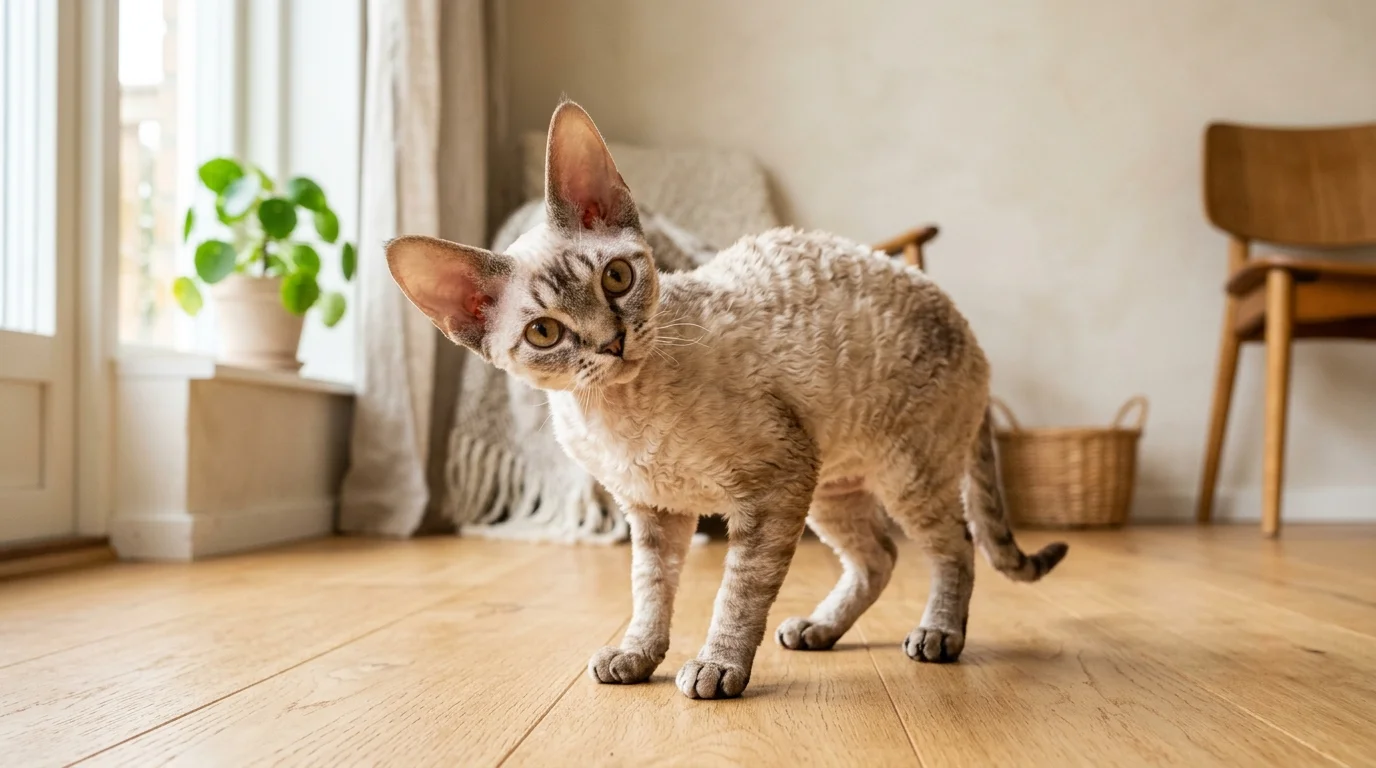
The Devon Rex is often called the "pixie" or "alien" of the cat world — a small, elfin breed with enormous ears, large eyes, and a uniquely wavy coat that sets it apart from every other cat. Behind its otherworldly looks is an irrepressibly mischievous, clownish personality and an unshakeable devotion to human company. Devon Rex cats are in perpetual motion, and their owners rarely have a dull moment.
History & Origins
The Devon Rex was discovered by chance in 1959 in Buckfastleigh, Devon, England. Beryl Cox, a cat lover, noticed a curly-coated stray tomcat living near an old tin mine and later found that one of her cat's kittens had inherited a similar wavy coat. She named the kitten Kirlee.
Initially, breeders hoped Kirlee was related to the Cornish Rex — a curly-coated breed discovered a decade earlier in Cornwall — but crossing the two produced only straight-coated kittens, confirming that the Devon and Cornish Rex mutations are genetically different.
The CFA officially recognised the Devon Rex in 1979, and the breed is now accepted by all major registries including TICA, FIFe, and GCCF.
Appearance
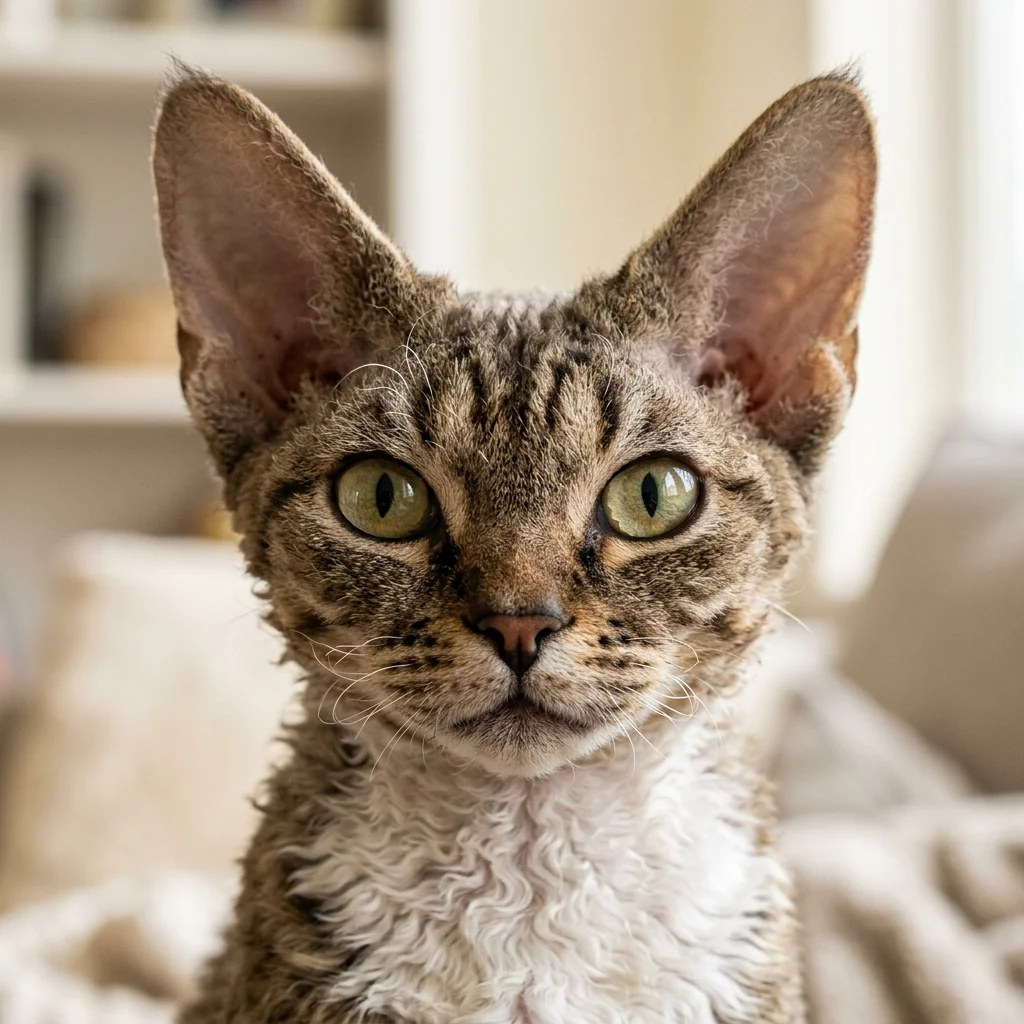
The Devon Rex is immediately recognisable by its large, wing-like ears set low on a broad, wedge-shaped head, prominent cheekbones, and short, upturned nose. The eyes are large, oval, and wide-set, giving the cat a perpetually curious or mischievous expression.
The body is slender but muscular, with long legs and a fine-boned frame. The coat is short, soft, and uniquely wavy or curled — the result of a mutation in the guard hairs. The degree of curl varies: some individuals are very curly while others have a looser wave. The coat is thinnest on the head, neck, chest, and paws.
Devon Rex cats come in virtually all colours and patterns. Adults typically weigh 2.5–4.5 kg.
Temperament
Devon Rex cats are among the most sociable, interactive, and mischievous of all cat breeds. They have the clownish energy of a court jester — constantly inventing games, investigating everything, and inserting themselves into every activity with infectious enthusiasm.
They are intensely people-oriented and do not do well when left alone for extended periods. Devons love sitting on shoulders, sleeping under duvets, and supervising cooking, reading, and computer work. They thrive in households with plenty of activity and human interaction.
Despite their high energy, Devon Rex cats are deeply affectionate and will happily curl up in a lap or under a blanket with their favourite person. They are wonderful with children and generally get on very well with other cats and dogs.
Activity & Play
Activity
Devon Rex cats are high-energy acrobats with a mischievous streak. They move quickly, jump confidently, and are rarely content to sit still for long unless it is on a warm human lap.
Energy Level and Daily Exercise
Despite their seemingly boundless curiosity, Devon Rex cats can meet their physical exercise needs with as little as 15-20 minutes of vigorous interactive play per day. That said, they will likely play considerably more than that minimum on their own. The key is providing enough variety and stimulation to keep their active minds engaged.
Play Styles
Devon Rex cats are often described as dog-like in their play behavior. Common favorites include:
- Fetch with small toy mice, crinkle balls, or foil wads
- Wand and feather toys they can leap and swat at
- Puzzle toys and food dispensers that reward problem-solving
- Chasing laser pointers (always finish with a physical toy they can catch)
Toys
Devon Rex cats benefit from a rotating selection of toys. They pick up new skills quickly and will lose interest in the same toy after a few days. Interactive toys that move unpredictably, or toys you control manually, tend to hold their attention longest.
Vertical Space
Devon Rex cats love height. Cat trees, wall shelves, and perches near windows give them a vantage point that satisfies their need to observe everything. They are confident jumpers and will find their way to the highest available surface regardless.
Indoor vs. Outdoor
Devon Rex cats should be kept indoors. Their thin, wavy coat provides minimal insulation, making them sensitive to cold temperatures. They also crave human companionship and can become stressed or anxious if left outdoors without the social contact they need.
Grooming
The Devon Rex's coat is short, soft, and wavy — comprising modified guard hairs with very little undercoat. The reduced coat structure means the Devon Rex sheds far less than most cats and the coat is unlikely to mat.
Grooming needs are minimal: a gentle stroke with a soft cloth or occasional light brushing is all that's required for the body coat. Over-brushing can actually damage the fragile curls and cause bald patches, so a light touch is essential.
The breed's very large ears collect oily buildup readily and should be checked and cleaned weekly with a moistened cotton ball and pet-safe ear cleaner. Nails should be trimmed regularly, and the nail beds are also prone to oily accumulation and should be cleaned as needed.
Health
Devon Rex cats can be prone to several hereditary conditions. The most serious is Devon Rex hereditary myopathy — a genetic muscular disease caused by a variant in the COLQ gene. Signs typically appear between 3 and 23 weeks of age, and the condition can progress to the point of being life-threatening due to laryngospasm. Genetic testing is available and all breeding cats should be tested.
Atopic dermatitis (skin allergies) and congenital hypotrichosis (a condition causing sparse coat or hair loss) are also seen in the breed. HCM screening is recommended. The breed's large ears make it somewhat more prone to ear infections if ear hygiene is not maintained.
Expected lifespan is 9–15 years. Responsible breeders screen for all available genetic markers.
Nutrition
Nutrition
Devon Rex cats have a fast metabolism and an active lifestyle that demands consistent, high-quality nutrition. Despite their slender frame, they can be surprisingly food-motivated and prone to digestive upset if their diet changes suddenly.
Protein and Fat
The Devon Rex does best on a high-protein diet built around quality animal sources such as chicken, turkey, or fish. Protein should be the first listed ingredient. Healthy fats, particularly omega-3 and omega-6 fatty acids, support their thin skin and maintain the softness of their unusual wavy coat. Moderate fat content also provides the concentrated energy this active breed burns through.
Feeding Frequency by Age
- Kittens up to 12 months: 3-4 small meals per day to fuel growth
- Adults 1-7 years: 2-3 meals per day; avoid free-feeding as some individuals eat too quickly and regurgitate
- Seniors 7 and older: 2 meals per day; monitor weight and adjust portions as activity levels change
Wet vs. Dry Food
A combination approach works well. Wet food contributes to hydration and is easier on the digestive system for cats prone to vomiting after eating too fast. If your Devon Rex eats quickly, a slow-feeder bowl can help pace meals. High-quality dry food in measured amounts can complement wet food while supporting dental health.
Breed-Specific Dietary Concerns
Devon Rex cats can be prone to hereditary myopathy, a muscle weakness condition, so supporting overall muscle health with adequate protein is important. Some individuals have sensitive stomachs, so stick with consistent formulas and introduce any food changes gradually over 7-10 days. Avoid high-carbohydrate foods that provide empty calories without meeting their nutritional needs.
Family Fit
Family Fit
Devon Rex cats are sociable, adaptable companions that fit well into a wide range of households. Their affectionate, playful nature makes them popular with families, singles, and seniors alike.
Families with Children
Devon Rex cats are a good choice for families with children of all ages. They enjoy interactive play, are generally gentle, and tend to match the energy of playful kids. Young children should still be supervised to ensure the cat's space is respected, but Devon Rex cats are known for their tolerance and good humor.
Other Cats and Dogs
Devon Rex cats typically get along well with other pets. Their outgoing personality makes them adaptable to multi-pet households. They enjoy having companions and can become lonely or destructive if left alone for long periods regularly. A second pet can be a good solution for busy households.
Elderly Owners
Devon Rex cats are affectionate lap companions that enjoy warmth and closeness. Their smaller size and manageable grooming needs make them a practical choice for older owners. They do need daily interactive play, so elderly owners should be prepared to engage them or provide enrichment through puzzle toys.
Apartments
Devon Rex cats adapt very well to apartment life. Their indoor preference and social nature mean they do not need outdoor access, provided they receive enough mental and physical stimulation indoors. A window perch or cat tree is a simple way to satisfy their curiosity in smaller spaces.
First-Time Owners
Devon Rex cats are a strong choice for first-time cat owners. They are communicative, affectionate, and easy to read. Their intelligence means they respond well to routine, and their people-oriented nature makes them rewarding companions from the start. The main point to be aware of is that they should not be left alone for extended stretches regularly.
Fun Facts
- The Devon Rex and the Cornish Rex look superficially similar, but their wavy coats are caused by entirely different genetic mutations — they cannot produce curly-coated offspring when crossed.
- Devon Rex cats are often nicknamed "poodle cats" because of their wavy, poodle-like coat.
- The breed is known for its love of warmth and will seek out the warmest spot in the house — often directly on a person.
- Kirlee, the founding cat of the breed, was discovered living wild near an old tin mine in Devon, England, in 1959.
- The Devon Rex was one of the breeds used in early Sphynx breeding programs to widen the gene pool of the hairless cat.
FAQ
Frequently Asked Questions
How long do Devon Rex cats live?
Devon Rex cats typically live 9-15 years, with many healthy individuals reaching the higher end of that range under good care.
Do Devon Rex cats shed a lot?
No. Devon Rex cats shed less than almost any other breed. Their wavy coat consists mostly of short, soft down hairs, and loose hair rarely becomes an issue. Weekly light brushing is sufficient for most cats. Their coats and skin can accumulate oils more quickly than other breeds, however, so occasional gentle baths are recommended.
Are Devon Rex cats vocal?
Devon Rex cats are moderately vocal. They communicate through chirps, soft meows, and purrs, and enjoy engaging in what feels like conversation with their owners. They are not loud or demanding in the way that Siamese cats can be.
Are Devon Rex cats hypoallergenic?
No cat is truly hypoallergenic. Devon Rex cats produce the Fel d 1 allergen in their saliva and skin. However, because they shed very little, there is less airborne dander than with heavy-shedding breeds. Some people with mild cat allergies find them easier to live with.
Can Devon Rex cats be trained?
Yes, quite easily. Devon Rex cats are highly intelligent and eager to engage with their owners. They pick up tricks like fetch, high five, and sit quickly with positive reinforcement. Training sessions double as enrichment and help keep this curious, fast-thinking breed mentally satisfied.
How much does a Devon Rex cost?
From a reputable breeder, Devon Rex kittens typically cost between $1,000 and $2,000, depending on lineage and location. Breed-specific rescues occasionally have adult cats available at lower adoption fees.
Gallery
Explore more Devon Rex-style breeds
Browse related breeds or take our matching quiz to find the right fit for your home.
Stay in the loop
Get weekly breed spotlights, care guides, and new additions - straight to your inbox.