Cornish Rex
active, athletic, social, playful
Quick Facts
- Lifespan
- 12-15 years
- Weight
- 2.5-4.5 kg
- Origin
- England
- Coat
- Short
Overview
The Cornish Rex is a slender, elegant cat best known for its extraordinarily soft, wavy coat — a look unlike any other breed. Born from a spontaneous natural mutation in 1950s Cornwall, England, this breed combines an athletic build with a kitten-like personality that never fades. Highly social and people-oriented, the Cornish Rex thrives on human companionship and brings a lively, acrobatic energy to any household.
History & Origins
On 21 July 1950, a curly-coated kitten named Kallibunker was born in a litter of barn cats on a farm in Bodmin Moor, Cornwall, England. His owner, Nina Ennismore, recognised the unusual coat and — on the advice of her veterinarian and geneticist A.C. Jude — bred Kallibunker back to his mother. Two more curly-coated kittens were produced, confirming the mutation was heritable.
The gene pool was initially very small, and the breed faced extinction in the late 1950s. To broaden the genetic base, breeders outcrossed to Siamese, Russian Blues, American Shorthairs, British Shorthairs, and Havana Browns. This diversity is reflected in the wide range of colours and patterns seen in the breed today.
The Cornish Rex was accepted for registration by the CFA in 1962 and achieved Championship status in 1964. It is now recognised by CFA, TICA, FIFe, and GCCF.
Appearance
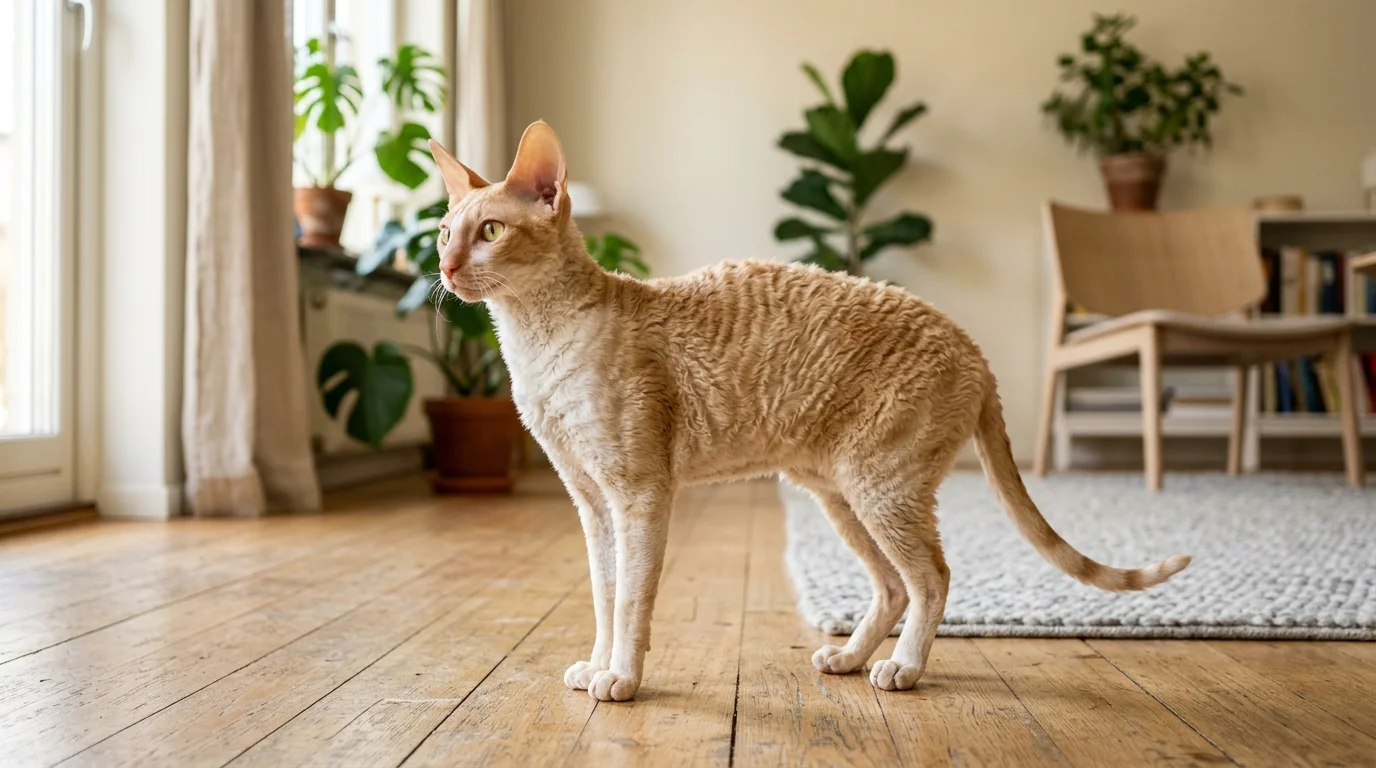
The Cornish Rex has a slender, elongated body that stands noticeably high on its legs — giving it an almost greyhound-like profile. Despite appearing delicate, this is a surprisingly muscular and athletic cat. Adults typically weigh 2.5–4.5 kg.
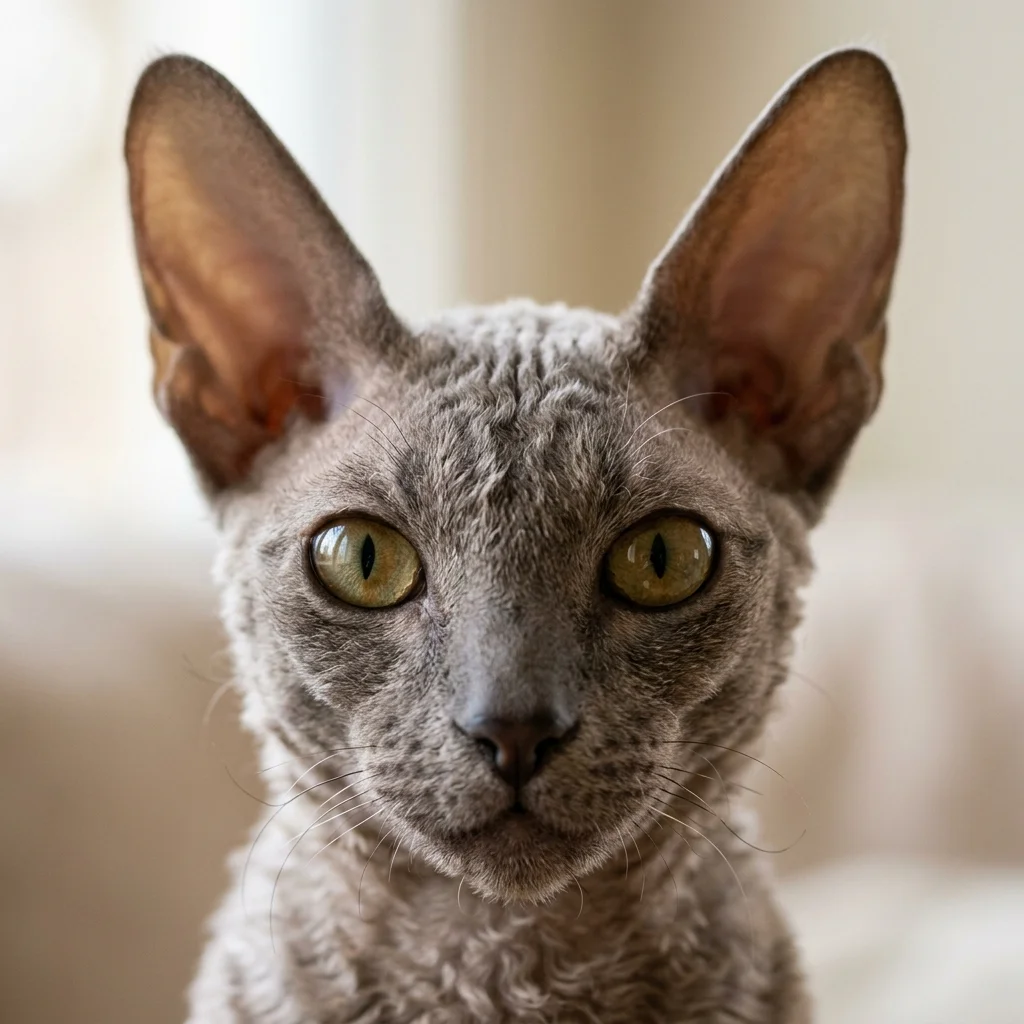
The head is small and egg-shaped, roughly one-third longer than wide, with a prominent Roman nose and two distinct convex arcs in profile. Large, wide-set ears sit high on the head, and medium-to-large oval eyes slant slightly upward, adding to the breed's alert, curious expression.
The defining feature is the coat: short, completely free of guard hairs, and composed solely of a fine, wavy undercoat with a tight marcel wave pattern running from head to tail. This coat comes in virtually all colours and patterns.
Temperament
Few cats are as socially enthusiastic as the Cornish Rex. These cats are often called "Velcro kitties" for their tendency to stay in constant physical contact with their favourite people — following you from room to room and curling up wherever you settle.
Highly intelligent and endlessly playful, the Cornish Rex retains its kitten-like curiosity and energy well into adulthood. They love to be the centre of attention and will actively seek out interaction with anyone in the household, including children and other pets.
They are quick learners and can be taught tricks, retrieve toys, and even open latches. Their expressive, outgoing nature makes them a favourite for families who want an active, engaged companion rather than a lap ornament.
Activity & Play
Activity
The Cornish Rex is one of the most athletic and playful cat breeds available. Lean, agile, and seemingly inexhaustible during play sessions, they maintain a kitten-like energy throughout much of their adult life.
Energy Level and Daily Exercise
Cornish Rex cats need daily active play and will actively seek out entertainment when bored. Aim for at least 20-30 minutes of intentional interactive play per day, though most Cornish Rex cats will happily play longer. Their lightweight, muscular body makes them natural athletes capable of impressive speed and leaping ability.
Play Styles
Cornish Rex cats are intensely interactive and love:
- Fetch, which many individuals learn readily and will initiate on their own
- Wand and feather toys they can sprint and leap after
- Climbing to high points and diving back down
- Puzzle feeders and treat-dispensing toys
- Chasing toys along the floor at speed
Toys
Interactive toys you operate manually will always engage a Cornish Rex more than battery-powered alternatives. Rotate toys frequently to maintain novelty. They are clever enough to become bored with the same stimulus after a short time.
Vertical Space
Cornish Rex cats love to climb and perch. They will often be found at the highest accessible point in any room. Tall cat trees, wall-mounted shelves, and sturdy furniture give them appropriate outlets for this tendency.
Indoor vs. Outdoor
Cornish Rex cats must be kept indoors. Their thin single-layer coat offers very little insulation, making them highly sensitive to cold temperatures. They should always have access to a warm indoor environment and should not be exposed to drafts or cold weather.
Grooming
The Cornish Rex's coat is its most distinctive feature — short, soft, and composed entirely of a wavy undercoat with no guard hairs. This creates a velvety, suede-like feel that is a joy to pet.
Because the coat is so fine and close to the body, grooming is minimal. A gentle weekly wipe-down with a soft cloth or chamois is usually sufficient to keep the coat clean and gleaming. Brushing should be done carefully, as the delicate waves can be disrupted by aggressive grooming.
Owners should be aware that the lack of a thick outer coat means this breed retains less body heat. Cornish Rex cats often seek warm spots — a sunny windowsill, a lap, or a warm radiator. Occasional ear cleaning and nail trimming complete the routine.
Health
The Cornish Rex is generally considered a healthy breed with a lifespan of 12–15 years. Thanks to the early use of diverse outcrosses — including Siamese, Russian Blue, and British Shorthair — the breed has a reasonably broad genetic base.
Health concerns to be aware of include hypertrophic cardiomyopathy (HCM), the most common heart disease in cats, which can occur in Cornish Rex. Patellar luxation — where the kneecap slips out of place — has also been noted in the breed. The thin coat offers little protection from sun exposure, so sunburn is a real risk for light-coloured individuals with outdoor access.
Routine vet check-ups, a balanced diet, and keeping the cat indoors or limiting unprotected sun exposure will help maintain good health throughout their lives.
Nutrition
Nutrition
Cornish Rex cats have a fast metabolism driven by their high activity level. They often need more calories per pound of body weight than less active breeds, and their diet should reflect this through quality ingredients rather than quantity.
Protein and Fat
High-quality animal protein is the cornerstone of the Cornish Rex diet. Look for foods where chicken, turkey, salmon, or rabbit appears as the first ingredient. Protein supports lean muscle mass and provides taurine, an essential amino acid vital for heart, eye, and reproductive health. Omega-3 and omega-6 fatty acids help maintain skin elasticity and coat softness, which matters for a breed with an unusual, easily damaged coat.
Feeding Frequency by Age
- Kittens up to 12 months: 3-4 small meals per day
- Adults 1-7 years: 2 meals per day with portions sized to maintain a lean body
- Seniors 7 and older: 2 meals per day; monitor weight and adjust as activity slows
Wet vs. Dry Food
A mixed wet and dry approach is appropriate. Wet food supports hydration and is more palatable for many cats. Dry food in measured amounts supports dental health. Avoid free-feeding, as Cornish Rex cats may overeat when food is always available.
Breed-Specific Dietary Concerns
Cornish Rex cats can be prone to hypertrophic cardiomyopathy (HCM), so ensuring adequate taurine in the diet is important. Their thin skin is susceptible to oiliness, and omega fatty acids from food can help manage this. Due to their fast metabolism, watch for any signs of weight loss, which can indicate underlying health issues. Always transition to new foods gradually to avoid digestive upset.
Family Fit
Family Fit
Cornish Rex cats are highly social and adaptable. Their outgoing, curious temperament makes them one of the more universally agreeable breeds across different living situations.
Families with Children
Cornish Rex cats are excellent companions for families with children. They enjoy interactive play and are generally patient with the energy that children bring. Their playful nature means they can keep up with active kids, and their social temperament makes them comfortable with the noise and activity of a busy home. As always, young children should be taught how to handle cats respectfully.
Other Cats and Dogs
Cornish Rex cats are naturally curious about other animals and tend to approach them with confidence rather than anxiety. They adapt well to multi-pet households, particularly when introductions are done gradually. Many Cornish Rex cats will actively seek out other pets to play with, making them a good addition to homes with friendly dogs or other sociable cats.
Elderly Owners
A Cornish Rex can work well for older adults who enjoy an engaged, interactive companion. Their smaller size is manageable, and their affectionate nature provides genuine companionship. However, their high energy means they need daily play. An older owner who enjoys light interactive sessions will find them rewarding, but someone seeking a purely low-key lap cat may find the Cornish Rex's energy level demanding.
Apartments
Cornish Rex cats adapt well to apartment living. Their indoor preference and social nature mean they do not need outdoor access. Vertical space in the form of cat trees or shelves helps them burn energy and feel stimulated within a smaller footprint.
First-Time Owners
Cornish Rex cats are a great choice for first-time owners who are prepared for an active, social cat. They are affectionate, communicate clearly, and do not require elaborate grooming. The learning curve is managing their need for daily interaction and preventing boredom.
Fun Facts
- The Cornish Rex has no guard hairs — its coat consists only of the soft undercoat layer, making it the silkiest-feeling cat breed in the world.
- Kallibunker, the foundation cat born in 1950, was named after the field where he was found.
- Despite the absence of a thick coat, the Cornish Rex is not considered a hypoallergenic breed — the Fel d 1 protein responsible for allergies is produced in saliva and skin, not fur.
- Their love of warmth means Cornish Rex cats are often found perched on computers, near radiators, or burrowing under blankets.
- The "Rex" name is shared with the Cornish Rex, Devon Rex, and Selkirk Rex — but the curly coat in each breed results from a completely different and independent genetic mutation.
FAQ
Frequently Asked Questions
How long do Cornish Rex cats live?
Cornish Rex cats are generally healthy with a lifespan of 11-15 years, and many well-cared-for individuals live into their late teens.
Do Cornish Rex cats shed a lot?
Cornish Rex cats shed less than most breeds due to their short, single-layer wavy coat. They do shed to some degree, and their skin tends to become oily more quickly than other breeds, which means occasional baths are recommended to keep their coat and skin in good condition.
Are Cornish Rex cats vocal?
Cornish Rex cats are sociable and communicative. They use soft chirps, trills, and meows to interact with their owners, and they enjoy being part of conversations. They are not excessively loud but will make their presence known.
Are Cornish Rex cats good for allergy sufferers?
No cat is truly hypoallergenic. Cornish Rex cats produce the Fel d 1 protein in their saliva and skin. Their light shedding means less airborne hair and dander, which some allergy sufferers find easier to tolerate, but they are not a guaranteed solution for people with cat allergies.
Can Cornish Rex cats be trained?
Cornish Rex cats are among the most trainable cat breeds. Their intelligence, curiosity, and love of interaction make them natural learners. Many owners successfully teach them fetch, sit, come, and other commands through short, reward-based training sessions.
Do Cornish Rex cats tolerate cold weather?
No. Their thin single-layer coat offers very little insulation. Cornish Rex cats are sensitive to cold and drafts, and should always be kept indoors in a warm environment. Providing warm bedding and avoiding cold rooms or outdoor exposure is important for their comfort and health.
Gallery
Explore more Cornish Rex-style breeds
Browse related breeds or take our matching quiz to find the right fit for your home.
Stay in the loop
Get weekly breed spotlights, care guides, and new additions - straight to your inbox.