Thai
affectionate, social, vocal, intelligent
Quick Facts
- Lifespan
- 12-16 years
- Weight
- 3-5.5 kg
- Origin
- Thailand
- Coat
- Short
Overview
Overview
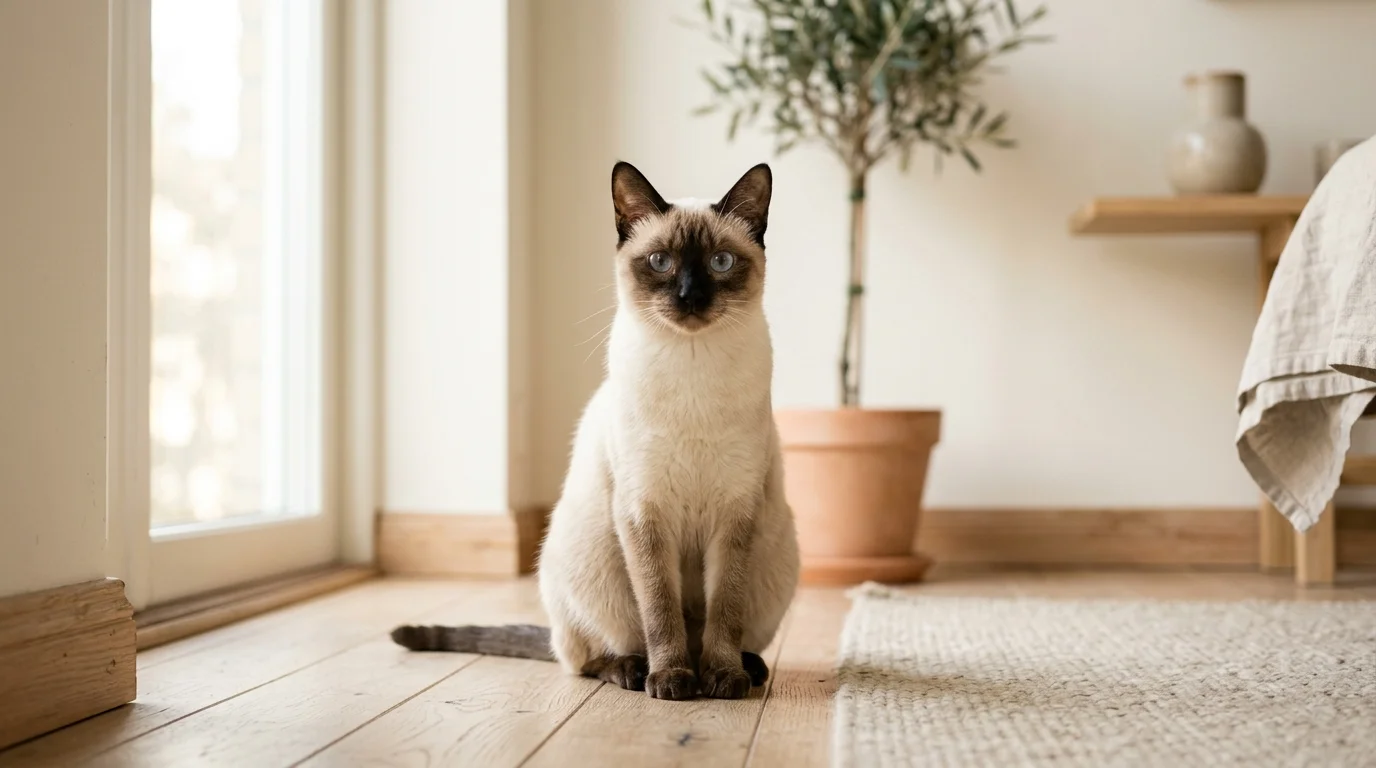
The Thai cat — also known as the Wichien Maat or "old-style Siamese" — is the traditional form of the Siamese breed that existed before Western breeders began selecting for increasingly angular, elongated features in the mid-20th century. Where the modern Siamese is wedge-headed and ultra-slender, the Thai has a rounder, more moderate face and a sturdier body — much closer to the cats depicted in Thailand's historic Tamra Maew manuscripts.
Recognized by WCF since 1990 and by TICA since 2010, the Thai preserves the authentic look and temperament of the original pointed cat from Southeast Asia. It is intensely people-oriented, vocal, and affectionate — all the hallmarks of the Siamese personality, in a more classically proportioned body.
For those who love the Siamese character but prefer a less extreme physical type, the Thai is the ideal breed.
History & Origins
History
The Thai cat has roots stretching back at least 700 years in Southeast Asia. The ancient Tamra Maew — the Thai Cat-Book Poems, created during the Ayutthaya Kingdom — describes and illustrates pointed cats called Wichien Maat (meaning "diamond gold" in Thai), which are recognizably the ancestors of today's Thai breed.
When Siamese cats were first brought to Europe and North America in the late 19th century, they looked much like the Thai does today: rounded, moderate, and sturdy. Over the following decades, Western show breeders selectively bred for an ever more extreme wedge-headed type. By the 1980s, the original moderate type was no longer competitive in mainstream shows.
Dedicated breeders in several countries continued to maintain the traditional type. The World Cat Federation (WCF) recognized it as the Thai in 1990, and TICA granted Championship status in January 2010. Since 2001, native cats have been imported directly from Thailand to preserve genetic diversity.
Appearance
Physical Characteristics
The Thai cat is a moderate, foreign-type cat — neither the extreme wedge of the modern show Siamese nor the rounded apple head of some older strains. The head has a modified wedge shape with a flat forehead, and the profile shows a gentle, slight concave curve at eye level rather than a straight Roman profile.
The body is semi-foreign: longer than it is wide, muscular without being heavy, and well-proportioned. Weight ranges from 3 to 5.5 kg. Coat is short, flat-lying, and single-layered — fine and glossy.
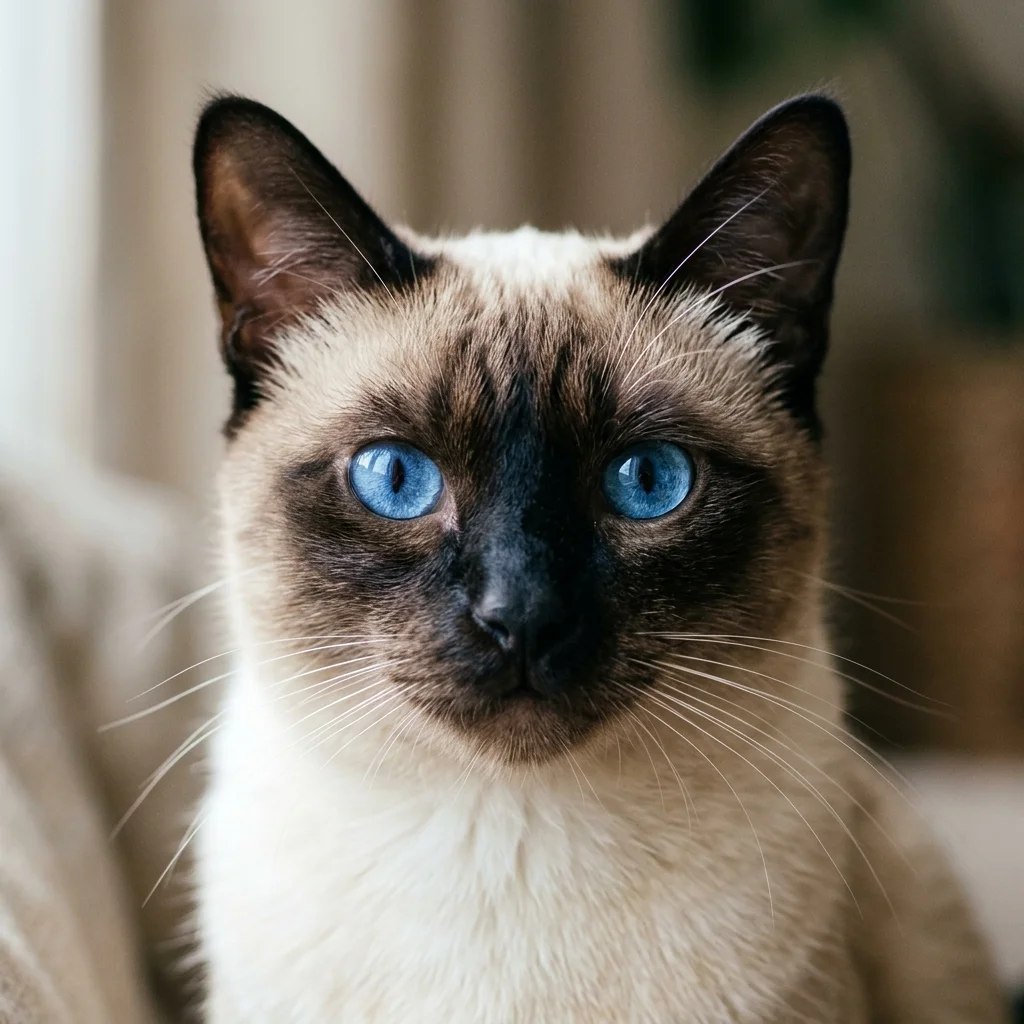
Point coloration is the breed's hallmark: a pale cream or white body with darker color on the face, ears, paws, and tail. Recognized point colors include seal, blue, chocolate, and lilac. The eyes are always vivid, deep blue.
Temperament
Temperament
The Thai cat is, in personality, quintessentially Siamese: intensely affectionate, highly vocal, deeply social, and endlessly curious. These cats love everyone — family members, children, other cats, and cat-friendly dogs — and they have little tolerance for being alone.
They communicate constantly, using a wide repertoire of vocalizations to express opinions, request attention, and narrate the day's events. While their voice is generally slightly softer than the modern Siamese, they are by no means quiet cats.
Thai cats are intelligent and benefit from interactive play and mental stimulation. They are people-oriented to the point of following their owners from room to room. If you want a calm, independent cat, the Thai is not for you — but if you want a devoted, communicative companion, it is a wonderful choice.
Activity & Play
Activity
The Thai cat, also known as the Wichian Mat or Traditional Siamese, is an active, playful breed with a strong social drive. Its energy levels are high but more measured than the modern Siamese, making it athletic yet manageable.
Energy Level
Thai cats are moderately high-energy. They enjoy active periods throughout the day but also settle comfortably for rest and close human contact. They remain playful well into adulthood.
Daily Exercise
Aim for 20-40 minutes of interactive play each day, split across 2 sessions. Thai cats respond well to wand toys, feather teasers, and interactive puzzle games. They particularly enjoy play that mimics prey behaviour.
Play Styles
- Chase and pounce: Moving toys engage the Thai's strong prey drive.
- Fetch: Many Thai cats will retrieve small toys when in the mood.
- Interactive puzzle toys: Food puzzles provide mental stimulation alongside physical activity.
- Social play: Thai cats strongly prefer play with people over playing alone with static toys.
- Exploration: Rotating toy selections and changing the environment keeps them mentally engaged.
Vertical Space
Thai cats enjoy elevated positions. A cat tree or set of wall shelves gives them a sanctioned vantage point. They are agile climbers and will use vertical structures frequently if available.
Indoor vs. Outdoor
Thai cats are best kept indoors or given access to a safe, enclosed outdoor space. Their social, trusting nature can put them at risk outdoors. A secure catio or cat-proofed garden satisfies their curiosity about the outside world without the associated risks.
Grooming
Grooming
The Thai has a short, flat-lying single coat with no undercoat, making it one of the easiest-to-groom longhaired... well, shorthaired cats available. A weekly brushing with a soft bristle brush or rubber grooming mitt is all that is needed to remove loose hairs and keep the coat gleaming.
The Thai is not a heavy shedder, and its coat rarely mats. Regular grooming sessions double as bonding time — most Thais enjoy the attention.
Beyond coat care, maintain routine health hygiene: trim nails every two to three weeks, clean ears gently if needed, and keep up with dental care, as Siamese-related breeds can be susceptible to periodontal disease.
Health
Health
The Thai cat shares some health vulnerabilities with the broader Siamese family. The most notable breed-associated condition is amyloidosis — a progressive disorder in which abnormal proteins accumulate in organs such as the liver and kidneys. There is no genetic test for this condition, so choosing breeders who carefully track health histories in their lines is important.
Because native Thai cats have been imported from Thailand since 2001 to maintain genetic diversity, the breed's gene pool is somewhat broader than that of its Western Siamese relatives, which may support general robustness.
Lifespan ranges from 12 to 16 years. Routine preventive care — annual vet check-ups, dental monitoring, parasite control, and appropriate diet — is essential for keeping this active breed in good health.
Nutrition
Nutrition
The Thai cat has a medium-sized, semi-foreign body type with a naturally lean, muscular build. Its diet should support that physique and the energy demands of an active, social lifestyle.
Macronutrient Targets
- Protein: 35-45% of dry matter. High-quality animal protein (chicken, turkey, fish) should form the basis of the diet. The Thai's lean build is maintained primarily through adequate protein intake rather than calorie restriction.
- Fat: 15-20% of dry matter. Moderate fat from quality sources supports energy and coat condition. Omega-3 fatty acids benefit the Thai's short, close-lying coat.
- Carbohydrates: Below 10% where possible. Low-carbohydrate diets align better with feline metabolic physiology and help prevent gradual weight gain.
Feeding Frequency by Age
- Kittens (up to 12 months): 3-4 meals per day. Growing kittens need frequent calorie-dense feeding to sustain development.
- Adults (1-7 years): 2 measured meals per day. Scheduled feeding prevents snacking habits and maintains a consistent body weight.
- Seniors (7+ years): 2-3 smaller meals per day. Senior formulas with easy-to-digest proteins and kidney support are beneficial as the breed ages.
Wet vs. Dry Food
Wet food should form a significant portion of the Thai cat's diet. Siamese-related breeds are prone to dental issues and kidney sensitivities, and good hydration supports both. Dry food can be used as part of meals or for dental benefit, but wet or raw food should predominate.
Breed-Specific Considerations
Thai cats may inherit some of the dental and kidney sensitivities common to Siamese lines. Fresh water availability is important, and a pet fountain can encourage drinking. Dental-safe dry food or regular tooth brushing supports oral health. Monitor body condition monthly as this lean breed can mask subtle weight changes.
Family Fit
Family Fit
The Thai cat is a warm, people-centred breed that adapts well to family life. Its sociable, affectionate nature makes it one of the more versatile companions in the Siamese family.
Children
Thai cats are well-suited to families with children. They are playful and enjoy interactive games, making them natural companions for older children. Younger children should be taught to handle cats gently, as the Thai prefers respectful interaction to rough handling.
Other Cats
Thai cats generally get along well with other cats, particularly those of similar social temperament. They enjoy feline companionship and can become lonely without it if owners are frequently away. A slow, structured introduction is always the safest approach.
Dogs
With careful introduction, Thai cats can coexist peacefully with dog-friendly dogs. Their confident temperament means they are less likely to feel overwhelmed by dogs and more likely to establish a workable social dynamic over time.
Elderly Owners
Thai cats can be excellent companions for elderly owners who enjoy an affectionate, communicative cat. They form close bonds and enjoy being nearby without always demanding high-energy interaction. Their moderate exercise needs can be met with shorter daily play sessions.
Apartments
Thai cats adapt well to apartment living. They do not require large outdoor spaces and are content in a smaller home as long as they receive regular interaction and some vertical space. They are not excessively loud compared to modern Siamese.
First-Time Owners
Thai cats are a solid choice for first-time owners seeking an interactive, affectionate breed. They are sociable and communicative, which makes their needs easy to understand. Owners should be prepared to invest time in daily play and socialisation, as the Thai does not enjoy extended isolation.
Fun Facts
Fun Facts
- The Thai cat is directly descended from cats depicted in the Tamra Maew — ancient Thai manuscripts from at least 700 years ago that describe and illustrate the ideal cat.
- The word Wichien Maat in Thai roughly translates to "diamond gold" — a poetic reference to the breed's valued status.
- When Siamese cats were first shown in the UK in the 1870s, they looked much like today's Thai — rounded and moderate, not extreme and wedge-headed.
- Native Thai cats have been imported directly from Thailand since 2001 to maintain the breed's genetic authenticity and diversity.
- The Thai and the modern show Siamese are genetically the same breed at their core, but have been bred in very different directions over the past 70+ years.
FAQ
Frequently Asked Questions
How long do Thai cats live?
Thai cats typically live 12-16 years. With proper veterinary care and a high-quality diet, many individuals remain healthy into their mid-teens. Regular dental care and kidney monitoring are important parts of preventive health for this breed.
Do Thai cats shed a lot?
Thai cats shed moderately. Their short, close-lying coat does not produce the volume of loose fur associated with long-haired breeds. A weekly wipe-down with a grooming glove or soft bristle brush keeps shedding manageable and the coat looking its best.
Are Thai cats vocal?
Yes, but less so than the modern Siamese. Thai cats are communicative and will use a pleasant, medium-pitched voice to interact with their owners. They enjoy conversation but are not known for the persistent, loud vocalisation associated with the show-type Siamese.
Are Thai cats suitable for people with allergies?
Thai cats are not hypoallergenic. They shed regularly and produce the Fel d 1 allergen. However, their short coat distributes less fur around the home than long-haired breeds. People with mild sensitivities sometimes find them more tolerable, but individual reactions vary.
How much does a Thai kitten cost?
Thai kittens typically cost between $500 and $1,200 USD depending on the breeder and the cat's lineage. The breed has dedicated preservation breeders in Europe and North America, though supply can be limited compared to more widely bred Siamese lines.
Are Thai cats easy to train?
Yes. Thai cats are intelligent and people-focused, which makes them receptive to training. Positive reinforcement works well, and they can learn tricks, leash walking, and basic recall. Training also provides the mental stimulation this social breed needs.
How do Thai cats handle hot climates?
Thai cats originate from Thailand and are naturally suited to warmer temperatures. They handle heat better than many cold-adapted northern breeds. In very hot climates, ensure they have access to shade, ventilation, and fresh water. They should not be left in unventilated spaces during extreme heat.
Gallery
Explore more Thai-style breeds
Browse related breeds or take our matching quiz to find the right fit for your home.
Stay in the loop
Get weekly breed spotlights, care guides, and new additions - straight to your inbox.