Kurilian Bobtail
gentle, intelligent, social, clever
Quick Facts
- Lifespan
- 14-20 years
- Weight
- 3-6.8 kg
- Origin
- Russia
- Coat
- Short
Overview
Overview
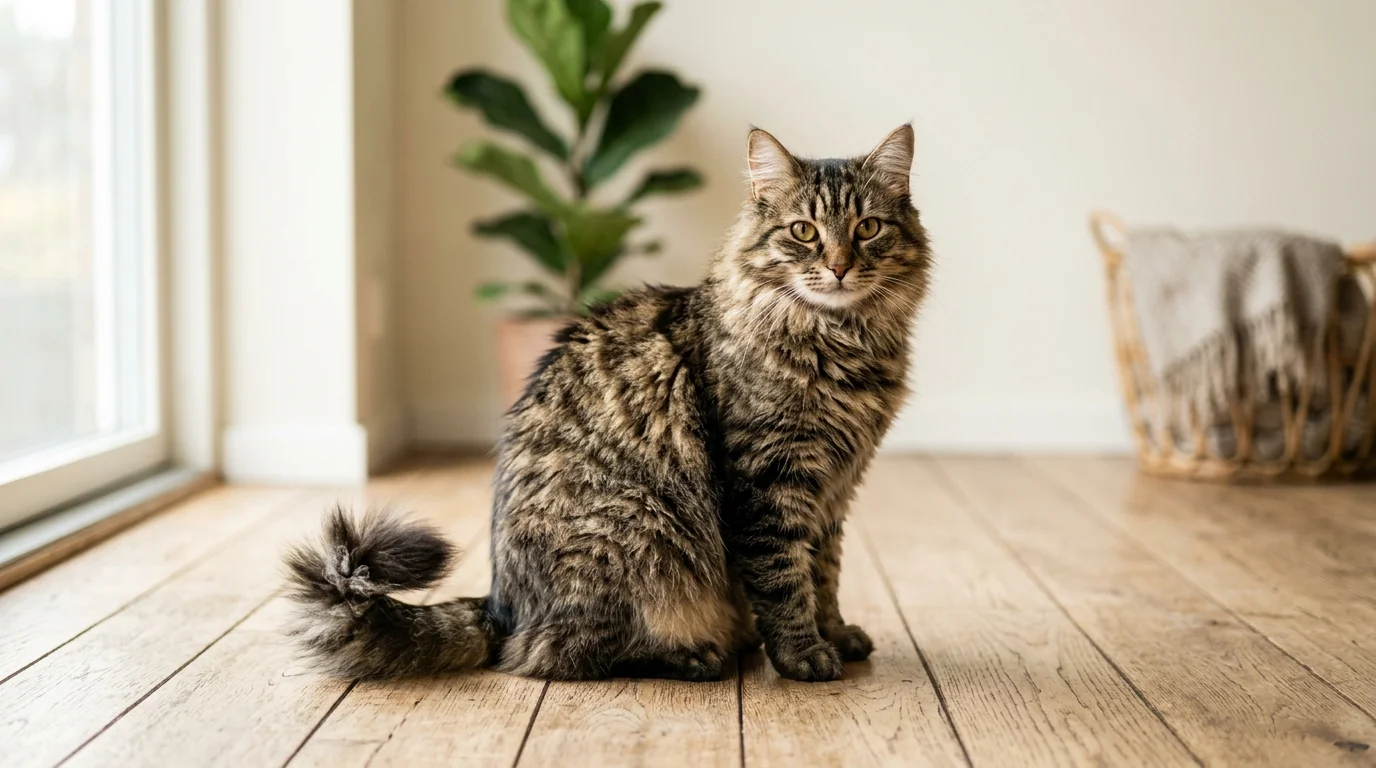
The Kurilian Bobtail is a natural breed from the remote Kuril Islands and Sakhalin Island of Russia, recognized for its distinctive short, fluffy pom-pom tail and surprisingly gentle temperament. Unlike the Manx, the Kurilian's shortened tail is caused by a separate genetic mutation that carries no risk of spinal defects.
Recognized by TICA (championship 2012), FIFe (2004), and WCF, the Kurilian Bobtail has been present on its island home for over 200 years and was brought to mainland Russia in the mid-20th century by scientists and military personnel. It remains relatively rare outside Europe and Russia.
Weighing 3–6.8 kg and living 14–20 years, the Kurilian Bobtail combines hardy island resilience with a loving, people-oriented nature.
History & Origins
History
The Kurilian Bobtail evolved naturally on the Kuril Islands — a remote chain of about 56 volcanic islands stretching between Russia's Kamchatka peninsula and Japan's Hokkaido — as well as on the nearby Sakhalin Island. The short tail is believed to be an isolated spontaneous mutation that became fixed in the population due to the islands' geographic isolation.
Cats with short tails have been documented on the islands for at least 200 years. In the mid-20th century, Soviet scientists and military personnel stationed on the islands brought cats back to mainland Russia, where formal breed development began.
FIFe recognized the breed in 2004, and TICA granted championship status in 2012. The breed remains extremely rare in North America — fewer than 100 individuals were recorded in the United States as of 2011 — but is well-established and popular in Russia and parts of Europe.
Appearance
Physical Characteristics
The Kurilian Bobtail has a semi-cobby, powerful build that hints at its wild island heritage, topped by a unique short, tufted tail.
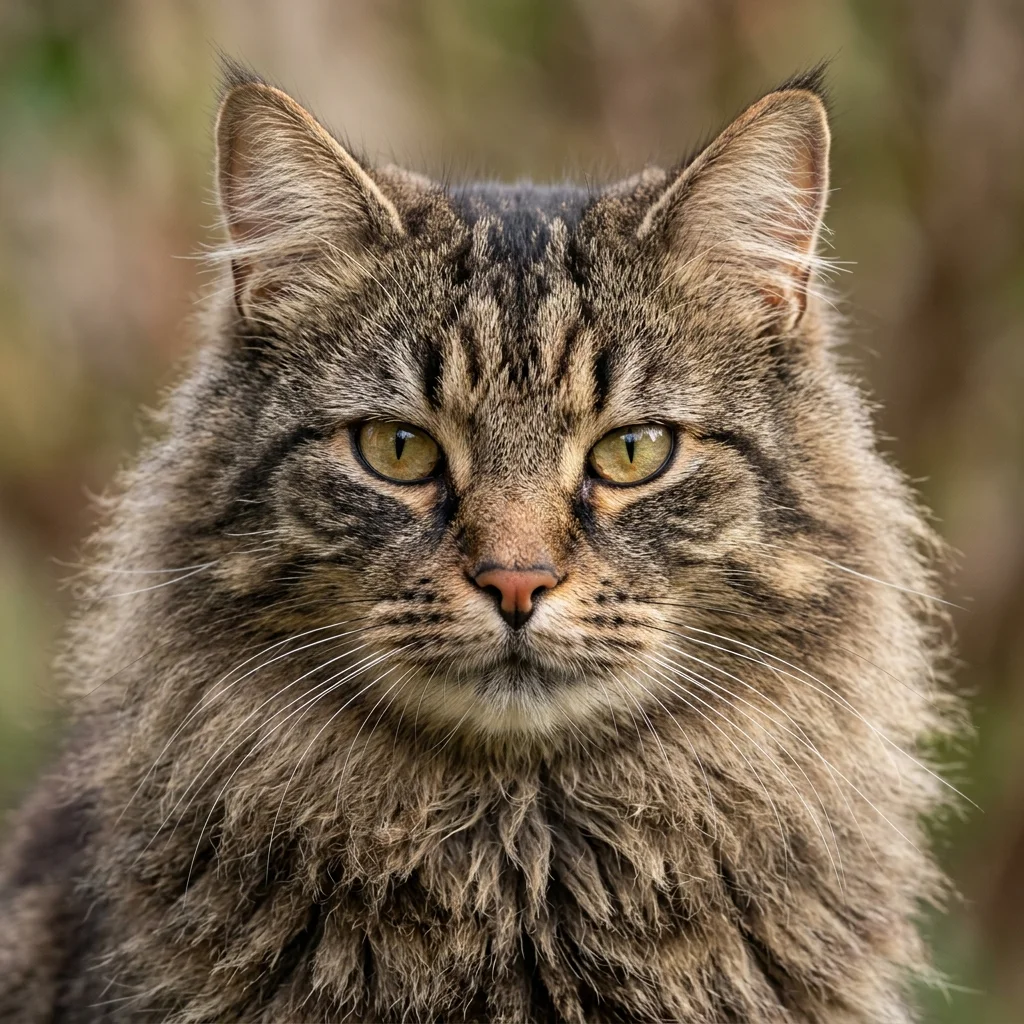
Body: Semi-cobby, substantial, and muscular; hind legs slightly longer than front Head: Rounded-rectangular with a broad, gentle muzzle Eyes: Large and rounded; all colors Ears: Medium-sized, upright, sometimes tufted Coat: Short or semi-long; dense and plush; all Western colors except colorpoint Tail: 2–10 kinked vertebrae forming a unique pom-pom or spiral shape; no two tails are identical Weight: Males 5–7 kg; females 4–5 kg Lifespan: 14–20 years
Temperament
Temperament
Despite their rugged, wild appearance, Kurilian Bobtails are gentle, affectionate, and highly social cats. They adapt well to family life and are known for their patience with children.
Key traits:
- Gentle and trusting — bonds strongly with the whole family
- Intelligent — easily trained; enjoys interactive play and puzzle toys
- Social — gets along well with other cats and calm dogs
- Independent streak — content to entertain themselves but always happy to be involved
- Love of water — inherited from island life; many Kurilian Bobtails are fascinated by water and are naturally skilled fishers
- Good hunters — a strong prey drive; outdoor or large indoor space is ideal
The Kurilian Bobtail's laid-back temperament makes it a popular choice in Europe, particularly for families with children or other pets.
Activity & Play
Activity
The Kurilian Bobtail is a naturally athletic cat that originated in the rugged terrain of the Kuril Islands. It has the body and instincts of a working hunter, and its activity needs reflect that heritage.
Energy level
This is a moderately high-energy breed. Kurilian Bobtails are active and curious throughout the day, though they also have a calm, composed side. They are not relentlessly hyperactive, but they need consistent physical and mental engagement to stay content.
Exercise: minimum per day
Aim for at least 20 to 30 minutes of active, structured play each day, split into two or more sessions. Kittens and young adults may need closer to 45 minutes.
Play styles
Kurilians are natural hunters. They excel at chase-and-catch games using wand toys, feather teasers, and motorised prey simulations. Many individuals also retrieve small objects and will carry them back to you. Puzzle feeders and treat-dispensing toys tap into their problem-solving instinct and provide mental exercise alongside physical activity.
Toys
- Wand and feather teasers for burst sprinting
- Small plush mice for carrying and wrestling
- Puzzle feeders and snuffle mats for mental stimulation
- Tunnels for ambush-and-chase play
Vertical space
Kurilians are strong climbers. A tall cat tree with multiple platforms, wall-mounted shelves, and window perches are important for this breed. Vertical territory reduces boredom and lets them survey their environment, which satisfies a deep instinct.
Indoor vs. outdoor
Kurilian Bobtails can thrive indoors with sufficient enrichment, but they also do well in safely enclosed outdoor spaces such as a catio or a secured garden. Their hunting instinct is strong, so unsupervised outdoor access in urban areas is not recommended.
Grooming
Grooming
The Kurilian Bobtail comes in two coat varieties — shorthaired and semi-longhaired — with correspondingly different grooming needs.
Shorthaired:
- Weekly brushing keeps the dense, plush coat healthy
- Minimal shedding outside seasonal moults
Semi-longhaired:
- Brush 2–3 times per week to prevent tangles around the neck ruff and tail
- Seasonal shedding can be heavier
For both varieties:
- Bathe occasionally, especially as the breed enjoys water
- Check and clean ears monthly
- Trim nails every 2–3 weeks
- Regular dental brushing is recommended
The distinctive pom-pom tail is made of kinked, tufted fur and adds to the breed's charm without requiring special care.
Health
Health
The Kurilian Bobtail is among the healthiest domestic cat breeds, shaped by centuries of natural selection in a challenging island environment.
Key health notes:
- No known hereditary genetic disorders
- The bobtail gene is safe — unlike the Manx, the Kurilian's tail mutation does not cause spinal defects; bobtail-to-bobtail breeding is considered safe
- Small litters — typically only 2–3 kittens; this is normal for the breed
- Long-lived — lifespan of 14–20 years is among the highest of any cat breed
Routine preventive care is all that is typically needed. The breed's robust genetic background means no breed-specific screening tests are currently recommended beyond standard health checks.
Nutrition
Nutrition
The Kurilian Bobtail is a naturally robust, muscular breed that historically survived on a diet of fish, small prey, and whatever the Kuril Islands provided. In a domestic setting, that heritage translates into a cat that thrives on high-protein, moisture-rich food.
Macronutrient targets
- Protein: 38-48% on a dry-matter basis; fish-based proteins are well tolerated and historically appropriate
- Fat: 15-20% on a dry-matter basis
- Carbohydrates: keep below 20%; this breed does not need a grain-heavy diet
Wet food priority
Because Kurilians evolved near water and traditionally consumed prey with high moisture content, wet food should form a significant part of their diet. A predominantly wet diet or at least one substantial wet meal per day supports kidney function and urinary tract health.
Fish as a protein source
Fish-based foods, such as salmon, mackerel, or tuna-blend wet foods, are typically well accepted and provide omega fatty acids that benefit the coat and joints. Rotate protein sources to avoid nutritional gaps and to prevent fussiness.
Feeding schedule
- Kittens (up to 12 months): three to four meals per day
- Adults (1-10 years): two meals per day, portion-controlled
- Seniors (10+): two meals per day; consider joint-supporting formulas with glucosamine
Breed-specific notes
Kurilian Bobtails are naturally lean and muscular. Monitor body condition and adjust portions if the cat becomes sedentary with age. No specific dietary disorders are documented in this breed. A commercially complete AAFCO-approved food, with fish or poultry as the primary protein, is a reliable foundation.
Family Fit
Family Fit
The Kurilian Bobtail has a reputation for being one of the more well-rounded breeds when it comes to household compatibility. It is confident, sociable, and calm enough to handle a busy home without becoming stressed.
Children
Kurilians generally do well with children who respect animals. They are sturdy, patient, and enjoy interactive play. Older children who understand how to engage a cat appropriately will find a willing and enthusiastic playmate. Toddlers should always be supervised, as with any cat.
Other cats
This breed is known to be sociable with other cats. Kurilians from the islands historically lived in groups, and that social instinct carries through in domestic settings. Proper introductions over one to two weeks are still recommended, but most Kurilians integrate without lasting territorial tension.
Dogs
Kurilian Bobtails are often described as dog-tolerant or even dog-friendly. Their confident nature means they do not flee from dogs, which usually reduces the chasing dynamic. A calm, cat-savvy dog is an ideal pairing.
Elderly owners
Kurilians can work well for older adults, particularly those who want a cat with some personality and presence rather than a purely lap cat. They are affectionate and loyal, but they also appreciate having their play needs met, so an elderly owner should be comfortable providing daily interactive sessions or supplementing with puzzle toys.
Apartment living
Possible, but requires commitment to enrichment. A Kurilian in a flat needs tall cat trees, window access, and daily play to stay mentally healthy. Without that, boredom can lead to restless or destructive behaviour.
First-time owners
Suitable for first-time owners who have researched the breed and are prepared for a cat with genuine activity needs. Their predictable, even-tempered nature makes them readable and enjoyable to live with.
Fun Facts
Fun Facts
- No two tails alike — each Kurilian Bobtail's tail is uniquely shaped, like a fingerprint; there are no identical tails in the breed
- Safe bobtail gene — unlike the Manx, the Kurilian's tail mutation causes no spinal health problems
- Island fishers — Kurilian Bobtails are known to fish in streams and pools; many happily play with running water
- Soviet discovery — the breed was introduced to mainland Russia by military and scientific personnel returning from the Kuril Islands in the mid-20th century
- Ultra-rare in North America — fewer than 100 individuals were recorded in the United States as of 2011
- Extraordinary lifespan — a potential of 20 years makes the Kurilian Bobtail one of the longest-lived domestic cats
FAQ
Frequently Asked Questions
How long do Kurilian Bobtails live?
Kurilian Bobtails typically live 15 to 20 years, making them one of the longer-lived cat breeds. Their robust island genetics and lack of widespread hereditary disease contribute to this longevity. Regular veterinary care and a good diet support reaching the upper end of that range.
Do Kurilian Bobtails shed a lot?
Shedding depends on coat type. Shorthaired Kurilians shed moderately. Longhaired individuals shed more, particularly during seasonal changes in spring and autumn. Weekly brushing manages loose hair for both types, and longhaired cats benefit from two to three sessions per week during heavy shedding periods.
Are Kurilian Bobtails vocal?
This breed is known for being relatively quiet. Kurilian Bobtails communicate through soft, chirping sounds rather than loud meowing. They are expressive and engaged with their owners but not persistently vocal.
Are Kurilian Bobtails hypoallergenic?
No. Like all cats, Kurilians produce Fel d 1 allergen. There is no documented evidence that this breed is lower-allergen than average. Allergy sufferers should spend time with a Kurilian before committing to ownership.
How much does a Kurilian Bobtail kitten cost?
The Kurilian Bobtail is a rare breed outside Russia and Japan. In the United States and Europe, expect to pay between 1,000 and 2,000 USD from a specialist breeder. Availability is limited, and waiting lists are common.
Can Kurilian Bobtails tolerate cold climates?
Yes. The Kuril Islands have a cold, often harsh climate, and the breed is naturally adapted to lower temperatures. Their dense coat provides good insulation. They adjust well to cold homes and climates, though they should always have access to warm resting spots indoors.
Gallery
Explore more Kurilian Bobtail-style breeds
Browse related breeds or take our matching quiz to find the right fit for your home.
Stay in the loop
Get weekly breed spotlights, care guides, and new additions - straight to your inbox.