Donskoy
affectionate, social, intelligent, loyal
Quick Facts
- Lifespan
- 12-15 years
- Weight
- 2.7-5 kg
- Origin
- Russia
- Coat
- Hairless
Overview
Overview
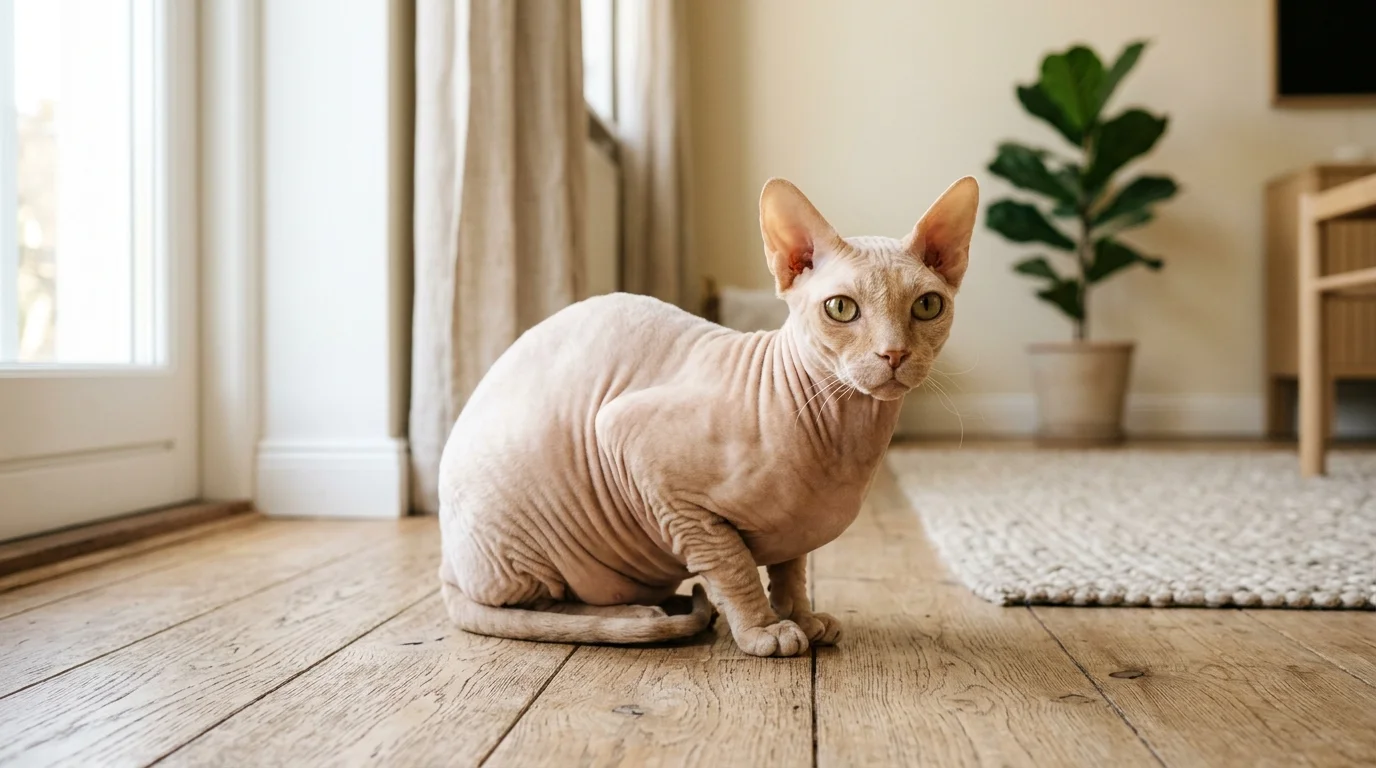
The Donskoy (also known as the Don Sphynx) is a hairless Russian cat breed with a warm, velvety skin, a deeply affectionate temperament, and a strikingly expressive face. The breed originated in 1987 in Rostov-on-Don, Russia, after the discovery of a hairless kitten whose hair loss was later confirmed to be caused by a dominant genetic mutation — unlike the recessive mutation responsible for the Canadian Sphynx's hairlessness.
Donskoys come in four distinct coat types (rubber bald, flock, velour, and brush) and are recognized by TICA, the WCF, and FIFe. They are intelligent, social, and loyal cats that thrive on human companionship. Despite their bold appearance, Donskoys are gentle homebodies. They typically weigh 2.7–5 kg and live 12–15 years.
History & Origins
History
The Donskoy breed originated in 1987 in Rostov-on-Don, a city in southern Russia. The founding cat was a hairless kitten named Varvara, discovered by Elena Kovaleva in the city and taken in as a pet. At around four months of age, Varvara began losing her fur. Despite veterinary attempts to treat what was assumed to be a skin disease, the hair loss continued and proved to be genetic rather than medical.
Varvara later had kittens, some of which were also born hairless or lost their coats. One of these kittens was adopted by professional breeder Irina Nemikina, who recognized the value of the natural mutation and began a deliberate breeding program. Nemikina is credited with establishing the breed as we know it today.
The World Cat Federation (WCF) officially recognized the Donskoy in 1997. TICA followed in 2005. FIFe also recognizes the breed. The breed's dominant hairless gene was later used in the development of the Peterbald breed in St. Petersburg.
Since 2014, breeding Donskoys has been prohibited in the Netherlands under animal welfare legislation.
Appearance
Physical Characteristics
The Donskoy is a medium-sized, well-muscled cat with a triangular head and large, expressive eyes. Weight ranges from 2.7–5 kg.
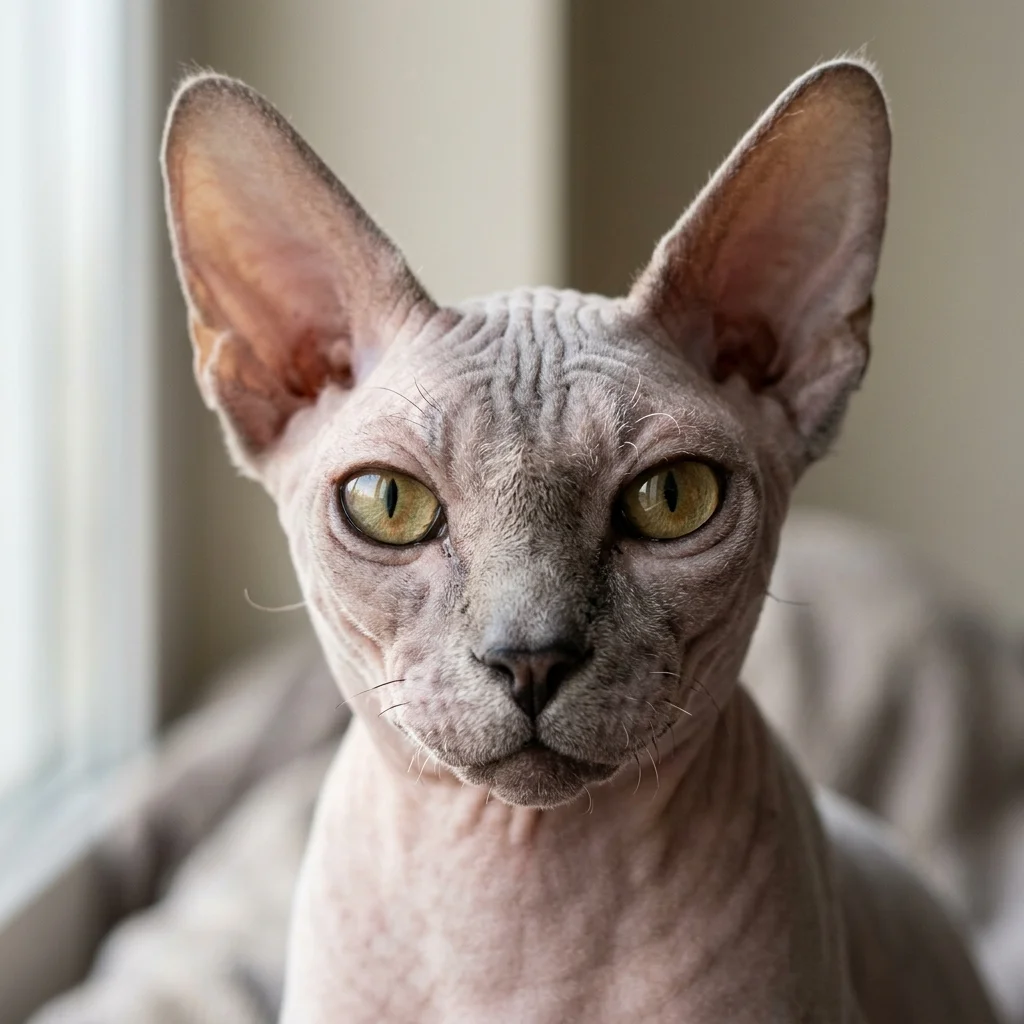
Skin: Warm and velvety to the touch, heavily wrinkled on the face, neck, and chest. The skin often feels warmer than that of coated cats due to heat radiation through the bare surface.
Head: Triangular with prominent cheekbones, a flat forehead, and a strong chin. Large ears set high and wide.
Eyes: Almond-shaped, medium to large; all eye colors accepted and often striking against the bare skin.
Paws: Long toes, noticeably webbed, giving the feet a distinctive appearance.
Coat types (four varieties):
- Rubber bald: born completely hairless; remains so for life
- Flock: born with a chamois-like coating that may shed over time
- Velour: born with wavy coat that disappears within the first year
- Brush: bristly, wiry coat; some areas may remain permanently
Body: Medium length, muscular, with a slightly rounded belly.
Temperament
Temperament
Donskoys are exceptionally social and affectionate cats. They are described as even-tempered and friendly — able to make friends with almost anyone, from small children to strangers entering the home. Their openness and adaptability make them excellent family pets.
These cats crave company and do poorly when left alone for extended periods. They will follow their owners around the house, vocalize to get attention, and actively seek physical closeness. Like many hairless breeds, the Donskoy is often described as having a "velcro cat" quality — always wanting to be near or on their person.
Donskoys are intelligent and moderately active. They enjoy interactive play, puzzle feeders, and activities that engage their minds. They get along well with other cats and with dogs when introduced properly. Their tolerant, gentle nature makes them suitable for multi-pet households.
Activity & Play
Activity & Exercise
The Donskoy is a sociable, moderately active cat with a curious, engaged approach to its environment. It is not as high-energy as some Oriental-type breeds but has a consistent playfulness that persists well into adulthood.
Daily Exercise Needs
Aim for 30 to 45 minutes of interactive play each day, split across two or three shorter sessions. The Donskoy stays engaged throughout the day and prefers distributed play over single long sessions.
Play Styles
The Donskoy is playful and curious:
- Wand toys and feather teasers: effective for triggering active chasing and jumping
- Small toy mice and crinkle balls: the Donskoy enjoys solo batting and carrying toys
- Interactive tablet games: the breed shows interest in moving images
- Fetch: can be trained with patience, though not a natural fetcher for all individuals
- Puzzle feeders: satisfy the Donskoy's intellectual curiosity at mealtimes
Vertical Space
The Donskoy enjoys elevated positions and benefits from a cat tree or wall shelves at moderate height (4 to 5 feet). It appreciates warm perches near radiators or sunny windows given its lack of a coat.
Indoor vs. Outdoor
Strictly indoor only. The Donskoy's hairless or near-hairless skin is vulnerable to sunburn, cold, and abrasion. Even brief unsupervised outdoor access carries significant risks. A warm, secure catio is the only appropriate outdoor option, and only in mild weather.
Mental Stimulation
The Donskoy is intelligent and benefits from enrichment that engages both body and mind. Rotate toys regularly and use food puzzles. This breed is strongly people-oriented and gains much of its mental stimulation through interaction with its owners rather than solo activity.
Grooming
Grooming
Despite the absence of a traditional coat, Donskoys require dedicated grooming to keep their skin healthy.
Skin care: The skin produces oils that would normally be distributed through fur. Without fur to absorb them, these oils accumulate and need regular removal. Wipe the skin down daily or every other day using a warm damp cloth or pet-safe cleansing wipes.
Bathing: Bathe once a month with a gentle, fragrance-free cat shampoo. Avoid over-bathing, which can strip the skin's natural oils and trigger overproduction of sebum — leading to greasy, irritated skin.
Temperature regulation: Donskoys cannot regulate body heat through fur and are sensitive to both cold and heat. Provide warm, draught-free sleeping areas and cat-safe clothing in cooler environments. Protect from direct sun exposure to prevent sunburn.
Ears: Clean weekly — bare-skinned cats accumulate ear wax more rapidly than coated breeds.
Nails and teeth: Trim nails every 2 weeks; brush teeth regularly to prevent dental disease.
Health
Health
Donskoys are generally robust, but the dominant hairless gene brings specific health considerations owners should be aware of:
- Feline ectodermal dysplasia: When two copies of the dominant hairless gene are inherited (homozygous), this condition can occur, causing issues with dentition (especially in females), impaired lactation, and abnormalities in sweat glands. Responsible breeders breed Donskoy-to-coated-cat only to avoid homozygous kittens.
- Dental issues: Dental problems including missing teeth, misaligned bite, or early tooth decay are documented in some Donskoys, and regular dental care is particularly important.
- Skin sensitivity: The bare skin is vulnerable to sunburn, environmental irritants, and temperature extremes. Owners must monitor for redness, rashes, or skin infections.
- Temperature regulation: Donskoys cannot tolerate cold temperatures and require a warm living environment.
Lifespan is 12–15 years with appropriate care.
Nutrition
Nutrition
Like all hairless breeds, the Donskoy has an elevated metabolism compared to coated cats. It burns more energy maintaining body temperature and requires a calorie-dense, high-quality diet to stay healthy and well-conditioned.
Macronutrient Targets
- Protein: 40 to 50% of dry matter -- animal-sourced protein must lead every meal; chicken, turkey, and fish are excellent choices
- Fat: 20 to 30% of dry matter -- higher fat intake supports energy density and helps maintain skin health in the absence of a coat
- Carbohydrates: keep below 10%
Wet vs. Dry Food
Wet food is the preferred foundation for the Donskoy's diet. Its caloric density supports the breed's higher energy requirements, and the moisture content benefits urinary and kidney health. High-quality grain-free dry food may be offered as a supplement but should not form the majority of the diet.
Feeding Frequency
- Kittens (under 6 months): 4 meals per day
- Juniors (6 to 12 months): 3 meals per day
- Adults (1 to 8 years): 2 to 3 meals per day; the higher metabolism means some adult Donskoys do better with 3 smaller meals rather than 2
- Seniors (8+): 2 to 3 meals per day; watch for unexplained weight loss and consult a vet promptly
Breed-Specific Considerations
The Donskoy's lack of coat insulation means it loses body heat faster than coated breeds. If a Donskoy appears to be losing weight despite adequate portions, increase caloric density rather than volume. Omega-3 fatty acids support the skin's natural oil barrier. Ensure constant access to fresh water -- a fountain encourages drinking. Avoid free-feeding as the Donskoy may overeat when sedentary in cold conditions.
Family Fit
Family Fit
The Donskoy is a warm, affectionate, and people-focused cat that adapts well to households offering consistent companionship. Its gentle nature and love of physical contact make it a rewarding companion for the right family.
With Children
Good with gentle, older children. The Donskoy is patient and sociable, but its exposed skin requires careful handling -- no rough grabbing, squeezing, or pinching. Children old enough to understand and respect these boundaries make excellent companions. Young children should always be supervised around the Donskoy.
With Other Cats
The Donskoy is sociable with other cats and benefits from feline company given its strong need for interaction. It does best with a companion that matches its moderate energy level. As with any introduction, a gradual, scent-first approach is recommended.
With Dogs
Generally adapts well to dogs when introduced carefully. The Donskoy's confidence and social nature mean it is unlikely to be intimidated, but a calm, cat-friendly dog is the best match. Avoid dogs that show strong interest in chasing or herding.
With Elderly Owners
An excellent companion for older adults who are home frequently. The Donskoy loves warmth and physical closeness -- it will seek out warm laps eagerly and provides affectionate, consistent companionship without excessive demands.
Apartment Living
Well suited to apartments. The Donskoy is a fully indoor breed by necessity and adapts readily to smaller spaces. It does not need outdoor access and thrives in warm, comfortable indoor environments.
For First-Time Cat Owners
Possible for dedicated first-timers, but the Donskoy's skin care requirements (regular bathing, sun protection, temperature management) require research and commitment. Those willing to invest in proper care will be rewarded with an exceptionally affectionate companion.
Fun Facts
Fun Facts
- Different from Sphynx: The Donskoy's hairlessness is caused by a dominant gene, while the Canadian Sphynx's is caused by a recessive gene — meaning they are genetically unrelated.
- Warm to the touch: Because there is no fur to trap heat, a Donskoy's skin radiates warmth directly — making them feel noticeably warmer than a coated cat when you hold them.
- Founder of a breed: The Donskoy's dominant hairless gene was deliberately used to create the Peterbald in 1994, making the Donskoy a parent breed in its own right.
- Varvara the founder: The entire breed traces back to a single stray kitten named Varvara, found on a street in Rostov-on-Don in 1987.
- Wrinkled at birth: Donskoys are born with significant skin wrinkling — especially on the face and chest — which becomes a defining visual characteristic throughout their lives.
FAQ
Frequently Asked Questions
How long do Donskoys live?
The Donskoy typically lives 12 to 15 years. It is a relatively healthy breed, though its hairless status requires attentive ongoing care to prevent skin problems and temperature-related health issues.
Do Donskoys need baths?
Yes, regularly. Without a coat to absorb and distribute skin oils, the Donskoy develops an oily residue on its skin that requires removal. Weekly baths with a gentle, cat-appropriate shampoo are standard care. The inside of the ears also accumulates wax and dirt faster than in coated breeds and should be cleaned weekly.
Are Donskoys vocal?
Moderately. The Donskoy communicates its needs and emotions clearly but is not as persistently vocal as Siamese-influenced breeds. It will vocalise when it wants attention or food, but is generally not disruptive with noise.
Are Donskoys hypoallergenic?
No. The Donskoy lacks a coat, but the main cat allergen (Fel d 1) comes from the skin and saliva, not the fur. Some allergy sufferers find hairless cats more tolerable since less airborne dander circulates, but this varies significantly between individuals. Spending time with a Donskoy before committing is advisable for allergy sufferers.
How much does a Donskoy cost?
The Donskoy is rare outside Russia and Europe. Prices from reputable breeders typically range from $1,000 to $2,000 USD. The breed is uncommon internationally, and finding a reputable breeder may require a waitlist.
Can Donskoys live with hairless breeds like the Sphynx?
Yes, and this pairing often works very well. Both breeds have similar needs (indoor only, temperature sensitivity, regular bathing), similar energy levels, and a shared appreciation for warmth and body contact. Two hairless cats will often sleep curled together for mutual warmth.
How do Donskoys handle cold climates?
Poorly without support. In cold climates, heated indoor spaces are essential year-round. Cat jumpers or heated beds help the Donskoy maintain comfortable body temperature. The breed should never be exposed to outdoor temperatures below 15 degrees Celsius (59 degrees Fahrenheit).
Gallery
Explore more Donskoy-style breeds
Browse related breeds or take our matching quiz to find the right fit for your home.
Stay in the loop
Get weekly breed spotlights, care guides, and new additions - straight to your inbox.