Turkish Angora
playful, intelligent, active, social
Quick Facts
- Lifespan
- 12-18 years
- Weight
- 2.5-5 kg
- Origin
- Turkey
- Coat
- Long
Overview
The Turkish Angora is one of the world's oldest and most refined natural cat breeds, originating in the Ankara region of Turkey and prized for centuries for its silky, flowing coat and graceful, dancer-like movement. Beneath that ethereal beauty lies a spirited, playful, and fiercely social personality. The Turkish Angora is not a passive ornament — it is an active, entertaining, and deeply engaging companion.
History & Origins
The Turkish Angora is one of the oldest known cat breeds, originating in the Ankara (formerly Angora) region of central Anatolia, Turkey. References to longhaired cats from this region appear in European literature from the late 16th century, and the breed was imported to Britain and France in the early 17th century, where it became fashionable among the aristocracy.
During the 19th and early 20th centuries, the Turkish Angora was almost bred out of existence through excessive crossbreeding with Persians. The Turkish government, recognising the breed's cultural heritage, established a preservation programme at the Ankara Zoo in the 1930s, focusing exclusively on white cats. In 1962, American Colonel and Mrs Walter Grant were permitted to bring two Angoras from the Zoo to the United States, beginning the modern American breeding programme.
The CFA granted the Turkish Angora Championship status in 1972. TICA, FIFe, and GCCF also recognise the breed. Today both white and coloured varieties are accepted, though white remains the most iconic and traditionally prized colour.
Appearance
The Turkish Angora is a medium-sized cat with a slender, fine-boned, and gracefully athletic body. Males typically weigh 3.5―5 kg, females 2.5―4 kg. The overall impression is of effortless elegance — a cat that appears to flow rather than walk.
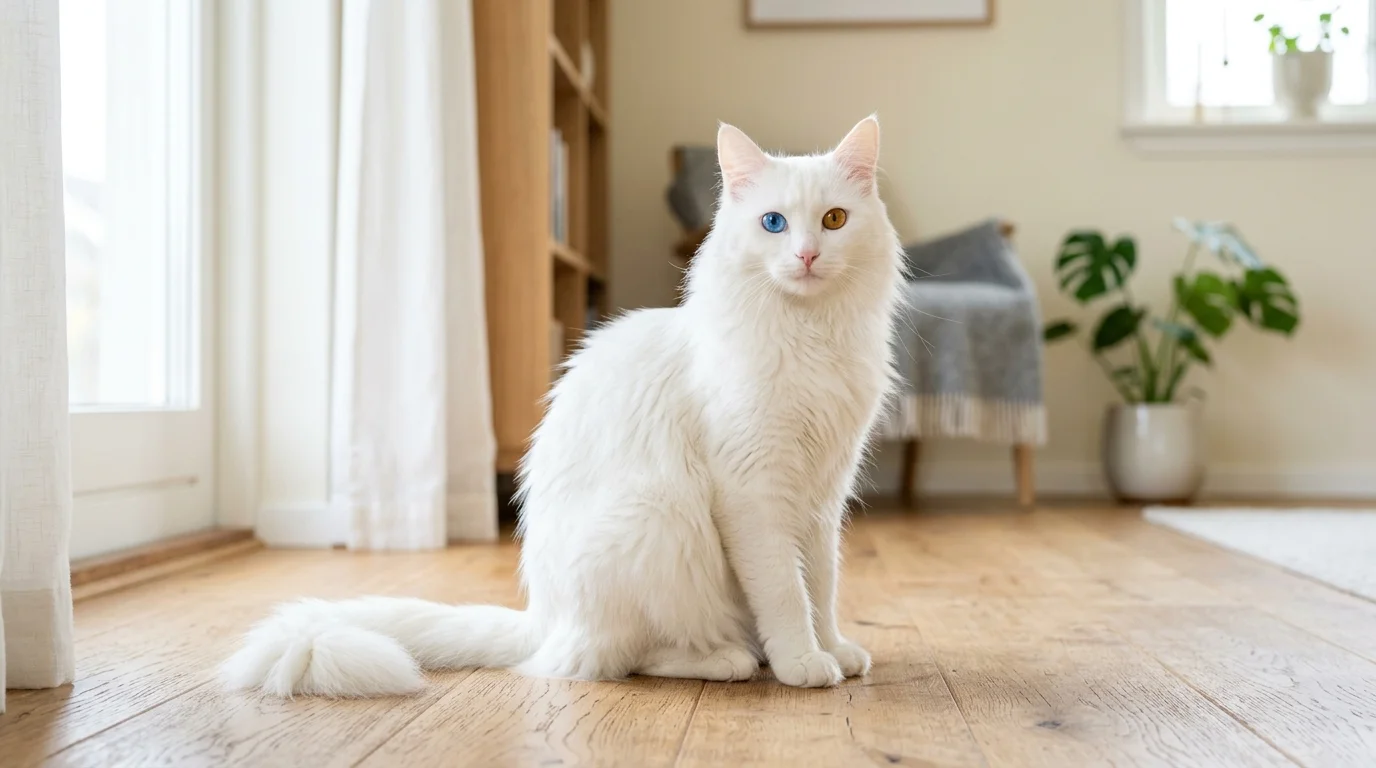
The coat is semi-long, single-layered with no undercoat, and silky in texture with a natural sheen. White is the traditional and most prized colour, but the breed is accepted in a wide range of colours and patterns including black, blue, red, cream, tortoiseshell, tabby, and bicolour. The tail is long and tapering, carried in a proud plume.
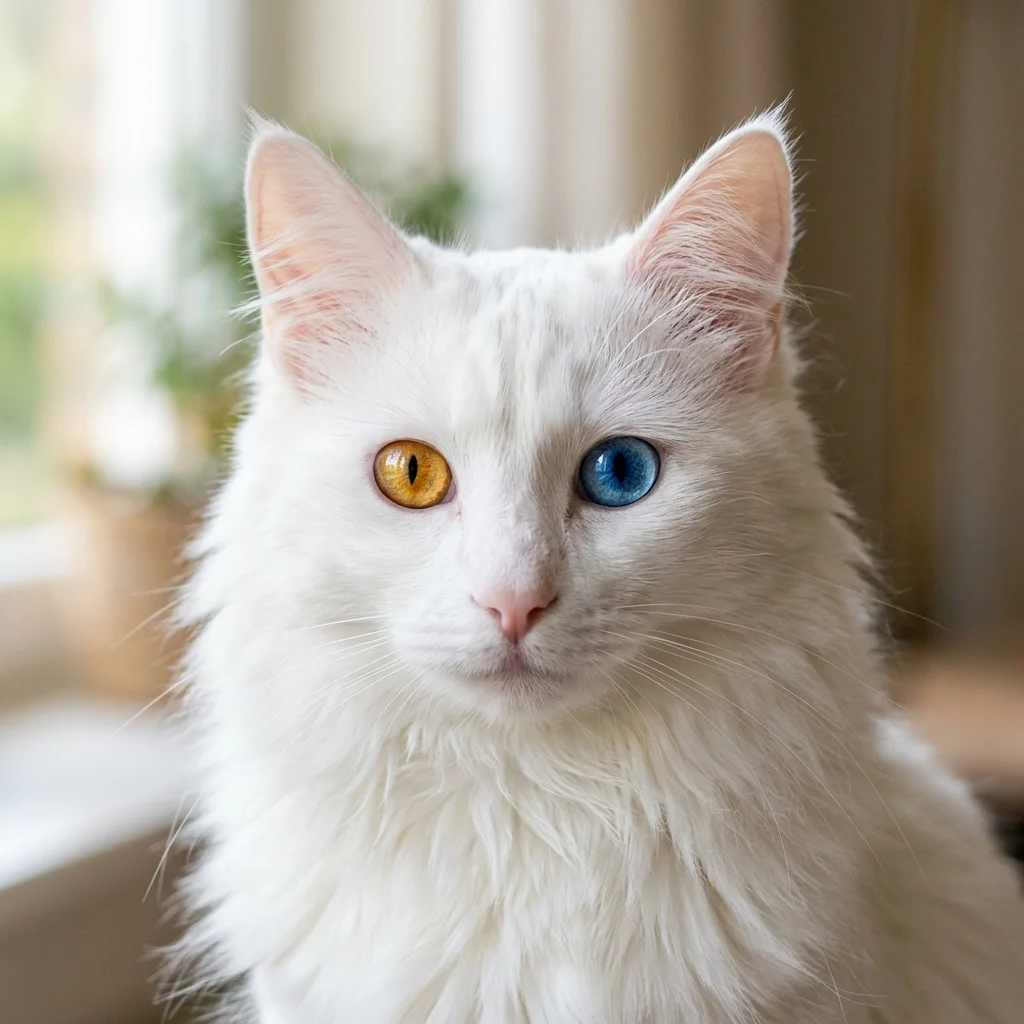
The head is small to medium-sized with a gentle wedge shape, large upright ears, and almond-shaped eyes. Eye colour varies widely: blue, amber, green, and odd-eyed (one blue and one amber) are all seen. The distinctive long neck and arching back give the breed its characteristic ballerina silhouette.
Temperament
The Turkish Angora is one of the most extroverted and socially confident breeds in the cat world. It greets guests at the door, inserts itself into conversations, and thrives on being the centre of attention. Breeders sometimes call it the "host with the most" — an Angora will take charge of any room it occupies.
Highly intelligent and inventive, Turkish Angoras are accomplished tricksters. They open doors, knock objects off shelves to observe the results, and devise elaborate games to entertain themselves and their humans. Interactive play is essential, and they respond well to training, puzzle toys, and enrichment activities.
Despite their outgoing nature, Turkish Angoras are also affectionate and bond deeply with their primary people. They are not always lap cats — they prefer to be near rather than on — but they are reliably warm, playful, and present.
They typically get along well with other cats and cat-friendly dogs. Their high activity level and competitive social nature means they do best in households that can match their energy and engagement.
Activity & Play
Activity and Exercise
The Turkish Angora is an energetic, agile cat that enjoys staying active. Plan for at least 20 to 30 minutes of dedicated play each day, though many will play longer if invited.
Play Styles
Turkish Angoras love interactive play above all. Wand toys, feather teasers, and puzzle feeders suit their quick reflexes and sharp minds. They are natural hunters and respond enthusiastically to anything that mimics prey movement. Some individuals enjoy fetch and will retrieve small toys repeatedly.
This breed is also quite acrobatic. Tall cat trees and wall shelves allow the Turkish Angora to climb and leap, satisfying its instinct to find high vantage points. Without vertical space, it will improvise on bookshelves and curtains.
Indoor vs Outdoor
Turkish Angoras adapt well to indoor life provided they have sufficient enrichment. Their long, silky coat picks up debris outdoors, and their social nature makes unsupervised outdoor time risky. A secured garden or catio offers a good compromise.
Toys and Enrichment
Rotate toys to prevent boredom. Crinkle balls, motorised mice, and interactive puzzle feeders all work well. A window bird feeder provides hours of free entertainment. This breed dislikes being ignored and benefits greatly from a second cat companion if owners work long hours.
Grooming
The Turkish Angora's semi-long, silky coat has no undercoat, which gives it an elegant drape and significantly reduces the tendency to mat or tangle. This makes grooming considerably easier than many longhaired breeds.
Weekly combing or brushing with a soft-bristle brush or fine-toothed comb is sufficient for most of the year. The coat lies close to the body rather than fluffing out like a Persian, and loose hairs are shed cleanly. During the spring moult, more frequent brushing — two to three times per week — helps manage shedding.
The tail is the most spectacular part of the coat and benefits from gentle combing to keep it full and flowing. Routine nail trimming, ear cleaning, and dental hygiene complete the grooming care. White Angoras in particular should have their ears checked regularly, as white cats with blue eyes are prone to deafness and may need additional monitoring.
Health
The Turkish Angora is generally a healthy and long-lived breed, with lifespans of 12–18 years well documented. Its natural origin and lack of exaggerated physical features contribute to its robustness.
The most significant breed-specific health concern is deafness in white cats. The gene responsible for the white coat and blue eyes in Angoras is linked to cochlear degeneration; white cats with two blue eyes have an approximately 60–80% chance of being deaf in one or both ears. Odd-eyed white Angoras (one blue, one amber eye) are typically deaf only on the side of the blue eye. Coloured Turkish Angoras are not affected by this gene.
Hypertrophic cardiomyopathy (HCM) has been reported in the breed and should be monitored through regular cardiac screening. Ataxia — a progressive neurological condition causing loss of coordination — has been identified in some lines, though responsible breeding programmes have worked to reduce its prevalence. Cats with deafness can live full and enriched lives indoors with appropriate care.
Nutrition
Nutrition
The Turkish Angora is a lean, athletic cat. Quality nutrition supports its silky coat and active lifestyle.
Macronutrients
Target at least 30 percent protein on a dry matter basis. Fat around 15 percent fuels energy without promoting weight gain. Avoid high-starch formulas.
Wet vs Dry
A mix of wet and dry food works well. Wet food provides hydration and higher protein density. Dry kibble can support dental health. Avoid fillers in the first ingredients.
Feeding Schedule
Kittens under 6 months: three to four meals daily. Adults: two meals at set times. Puzzle feeders slow fast eaters and add mental stimulation.
Breed Notes
Some Turkish Angoras carry a gene linked to hypertrophic cardiomyopathy. A heart-supportive diet with taurine is advisable. Monitor weight as this breed can become overweight if activity decreases with age.
Family Fit
Family Fit
The Turkish Angora is an affectionate, social cat that fits well in many households. It bonds closely with its people and prefers a home where it is an active part of daily life.
With Children
Good with children who play gently. Their playful nature makes them engaging companions for older kids. Young children should be supervised to ensure the cat is handled respectfully.
With Other Cats
Generally sociable with other cats when introduced gradually. They enjoy feline company and a second cat reduces boredom during long days alone.
With Dogs
Adapts reasonably well to calm, cat-friendly dogs. Confident by nature, the Turkish Angora is unlikely to be intimidated, but early introductions matter.
With Elderly Owners
A gentle, attentive companion for quieter households. They enjoy lap time and conversation. Still needs daily play, so owners should be able to provide basic interaction.
Apartments
Suited to apartment life with vertical space provided. Cat trees and shelves allow them to climb and explore without outdoor access.
First-Time Owners
A reasonable choice for first-time cat owners. They are affectionate and communicative, which makes understanding their needs relatively straightforward. Their active side requires consistent engagement.
Fun Facts
- White Turkish Angoras with two blue eyes have a high probability of being deaf in one or both ears — a result of the same gene that produces their white coat and blue eyes.
- The breed is sometimes called the "ballerina of cats" for its graceful, arched posture and fluid movement.
- The Ankara Zoo in Turkey maintains a dedicated breeding programme for white Turkish Angoras as a matter of national heritage.
- Turkish Angoras are known to enjoy water — some individuals will voluntarily wade into shallow water or play with running taps.
- The name "Angora" has become so associated with fine, silky fibre that it is also used to describe the wool of Angora rabbits and Angora goats.
FAQ
Frequently Asked Questions
How long do Turkish Angoras live?
Typically 12 to 18 years with good care.
Do they shed a lot?
Moderately. Their silky single-layer coat sheds less than double-coated breeds. Weekly brushing keeps it in good condition.
Are they vocal?
Yes. Turkish Angoras are communicative and will let you know their opinions clearly.
Are they hypoallergenic?
No cat is truly hypoallergenic. Turkish Angoras produce Fel d 1 like all cats.
How much do kittens cost?
Typically $800 to $1,500 USD from a reputable breeder.
Are they good for first-time owners?
Yes, with the right expectations. They are affectionate and social but need daily interaction and play.
Gallery
Explore more Turkish Angora-style breeds
Browse related breeds or take our matching quiz to find the right fit for your home.
Stay in the loop
Get weekly breed spotlights, care guides, and new additions - straight to your inbox.