Russian Blue
quiet, reserved, intelligent, loyal
Quick Facts
- Lifespan
- 15-20 years
- Weight
- 3.6-6.8 kg
- Origin
- Russia
- Coat
- Short
Overview
The Russian Blue is an elegantly refined breed celebrated for its striking silver-blue coat and vivid emerald-green eyes. Often described as aristocratic in both appearance and bearing, this cat is deeply devoted and gentle with its family while maintaining a natural reserve around strangers. With a reputation for quiet loyalty, keen intelligence, and a remarkably long lifespan, the Russian Blue has won committed admirers across Europe and North America for well over a century.
This is a breed of contrasts. At home with trusted people, the Russian Blue is warm, playful, and visibly affectionate; it follows its favourite humans from room to room, greets them at the door, and communicates with a surprisingly expressive vocabulary. With unfamiliar people, it can be markedly reserved, often choosing to observe from a distance before deciding whether to approach. This is not anxiety but considered caution, a trait deeply ingrained in the breed's character.
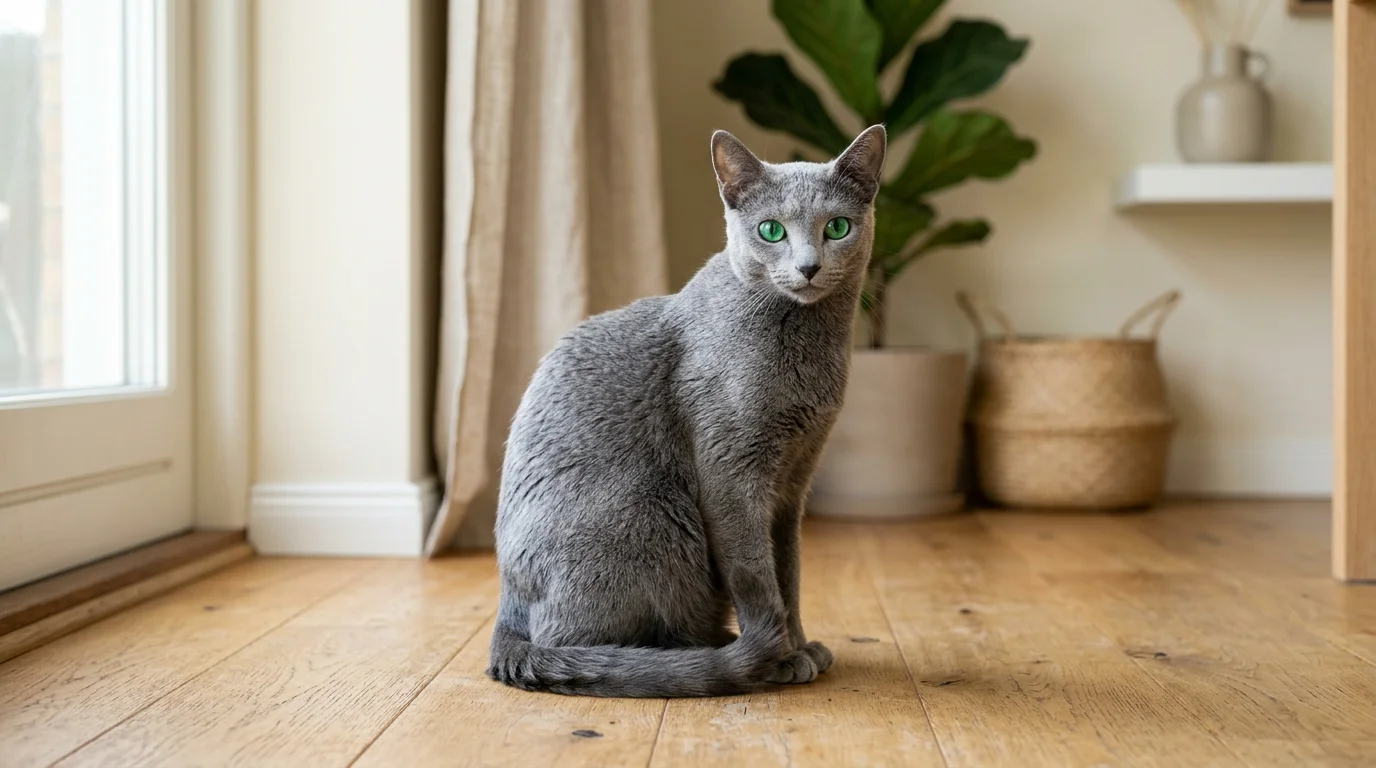
The Russian Blue is a moderate-sized, athletic cat with a fine but muscular body, long elegant legs, and the characteristic upward turn at the corners of the mouth that gives the breed its distinctive, perpetually serene expression. Males typically weigh 4.5 to 6.5 kg; females are somewhat lighter at 3.5 to 5 kg.
Despite their silky, double-layered plush coat, Russian Blues are relatively low-shedding and require only weekly grooming. They are often mentioned in the context of cat allergy management: some studies suggest Russian Blues may produce somewhat lower levels of the Fel d 1 protein than many other breeds, though they are not hypoallergenic and individual variation is considerable.
Lifespan is among the best of any pedigree cat breed. Well-cared-for Russian Blues commonly live 15 to 20 years, and some individuals have reportedly exceeded this. They are a worthy long-term companion for those who appreciate a gentle, intelligent, and quietly affectionate cat.
History & Origins
The Russian Blue is believed to have originated in the port city of Arkhangelsk in northern Russia, sometimes called the Archangel Isles in historical accounts, which gave the breed its early name: the Archangel Cat. Sailors on trading routes between Russia and northern Europe are credited with transporting these cats to Britain and Scandinavia from the 1860s onward. The breed's thick, plush double coat is well-suited to cold northern climates and is consistent with an origin in the far north of Russia.
The first documented appearance of the Russian Blue at a cat show was at Crystal Palace in England in 1872, where it was exhibited alongside all other blue-coated cats rather than as a distinct breed. The breed received its own separate competition class in 1912, a recognition of the growing interest in the type among British cat fanciers.
Like many breeds, the Russian Blue suffered near-extinction following the Second World War. To rebuild numbers, breeders in Britain outcrossed to Siamese cats. This improved the gene pool but introduced the Siamese type, and for a period the Russian Blue lost much of its original moderate, rounded appearance in favour of a more angular, Oriental look. Scandinavian breeders, who had largely avoided the Siamese cross, preserved a type much closer to the original, and American breeders subsequently worked with both lines to develop the modern Russian Blue that balances elegance with the breed's classic moderate build.
All major registries, including the CFA, TICA, FIFe, and GCCF, recognise the Russian Blue for championship competition. All major registries restrict show competition to the blue coat colour. The breed is now firmly established worldwide and consistently popular among those seeking an intelligent, gentle, and long-lived companion.
Appearance
The Russian Blue is a medium-sized cat of refined, athletic proportions. The body is slender yet genuinely muscular, with long legs, a graceful carriage, and a naturally horizontal, balanced posture. The overall impression is of elegance without fragility. Males typically weigh 4.5 to 6.5 kg; females are somewhat lighter at 3.5 to 5 kg.
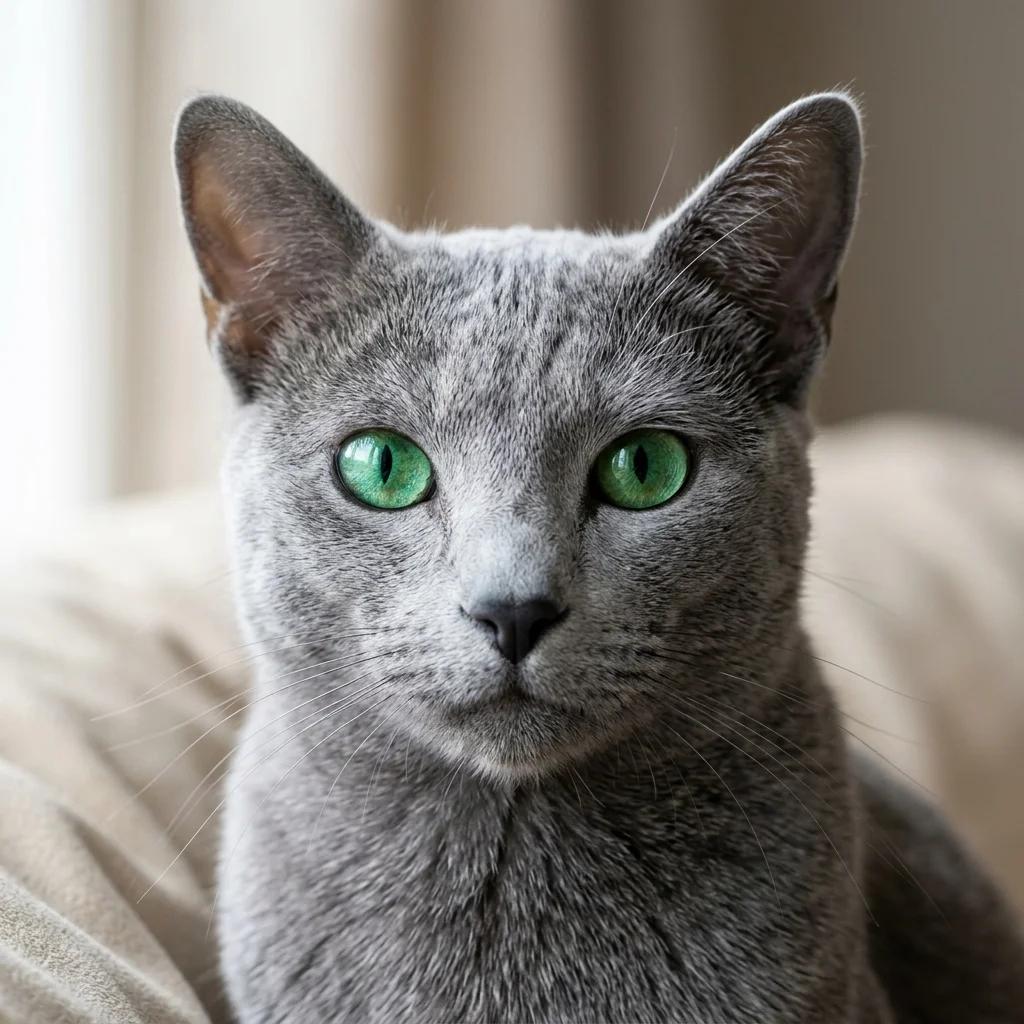
The coat is the breed's most immediately distinctive feature: a short, dense double coat in an even, bright blue-grey shade. Each hair is tipped with silver, creating a subtle but beautiful shimmer across the coat surface in natural light. This silver tipping gives the coat a quality quite different from other blue-coated breeds and is a defining characteristic in show competition. The double coat stands slightly away from the body rather than lying flat, and has a plush, velvety texture.
The eyes are large, wide-set, and vivid emerald green, a colour that is a strict requirement in all major breed standards. Kittens are born with yellow eyes that transition to green as they mature, with the full vivid green colour established by around four months of age.
The head is a medium wedge with a flat forehead, a long straight nose, prominent whisker pads, and large, wide-based ears set vertically. One of the breed's most charming features is the slight natural upturn at the corners of the mouth, which gives the cat a perpetually serene and contented expression, sometimes compared to the Mona Lisa's smile.
The legs are long and fine-boned, with small, rounded oval feet. The tail is moderately long and tapers gently to the tip. The overall silhouette is refined and balanced, consistent with a cat bred for both agility and aesthetic elegance.
Temperament
Russian Blues are deeply loyal cats that tend to form especially close bonds with one or two favourite people. This is not a breed that distributes its affection evenly to all comers; it chooses its inner circle carefully and then invests in those relationships with consistent, quiet devotion. Many Russian Blue owners describe the experience of being chosen by their cat as one of the breed's most rewarding qualities.
At home with trusted people, the Russian Blue is genuinely engaging. It follows its humans from room to room, greets them at the door, and participates in household life with curious attention. Many Russian Blues develop habits that owners compare to dogs: waiting by the door when a regular return is expected, learning the household routine, and responding with obvious pleasure to familiar people's voices.
With strangers, the Russian Blue is typically reserved and cautious. It may retreat to observe from a distance when visitors arrive, and is unlikely to offer attention to unfamiliar people until sufficient time has passed. This should never be forced; patience is rewarded with a warm, curious cat who eventually decides the new person is acceptable.
The breed is highly intelligent and engages actively with interactive play. Russian Blues can learn tricks, respond reliably to their names, and are amenable to positive reinforcement training. They enjoy puzzle toys and activities that engage their problem-solving instinct. Mental stimulation is not merely appreciated but genuinely important for this sharp-minded breed.
Russian Blues are calm and quiet cats with a gentle voice, well-suited to peaceful households. They are not typically destructive or highly vocal. With children who are gentle and respectful, they can be excellent companions. They generally coexist peacefully with other cats and well-mannered dogs, though early, patient introductions work best.
Activity & Play
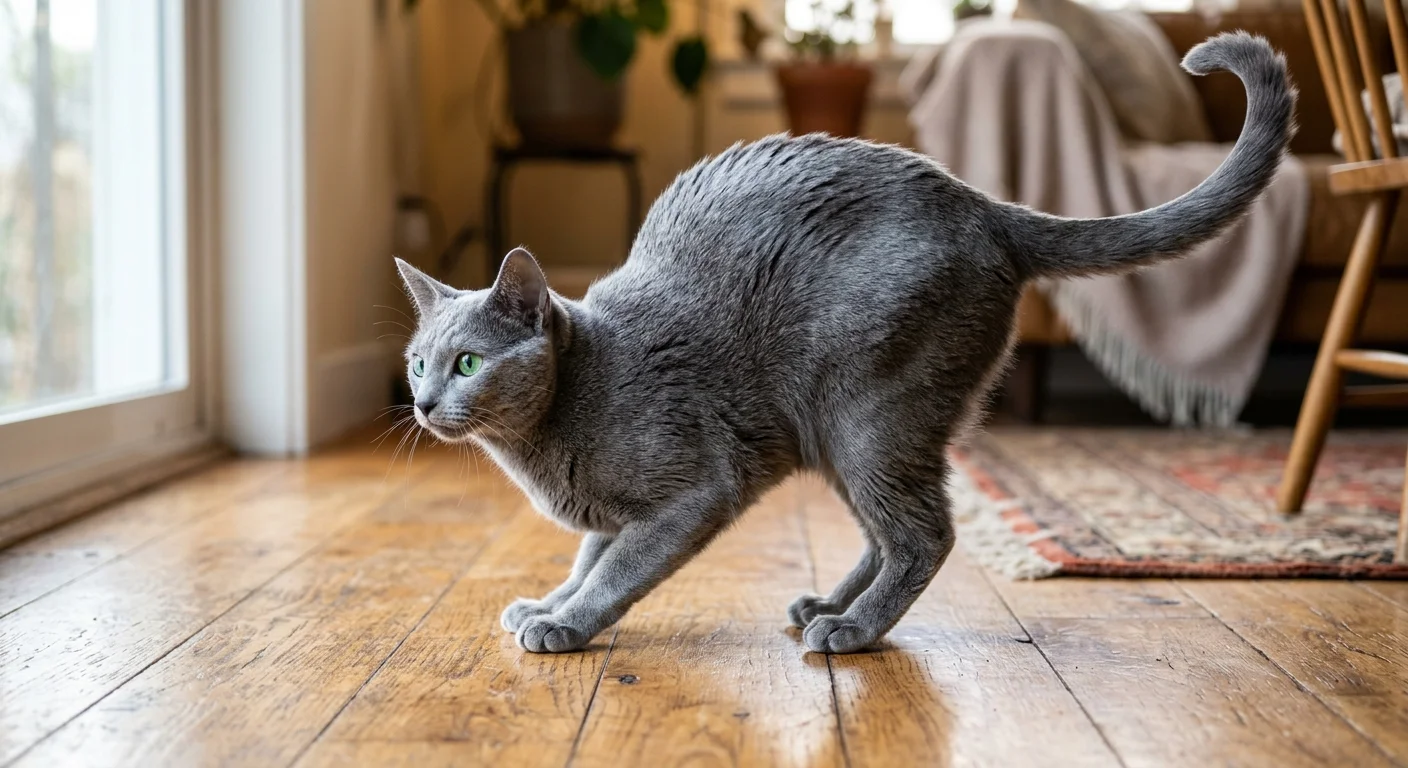
The Russian Blue is a moderately active breed with a playful, curious nature that persists well into adulthood. They are not as relentlessly energetic as a Bengal or as sedate as a Persian; they occupy a comfortable middle ground, enjoying genuine engagement with play while also being content to settle quietly for long periods.
Two play sessions per day of around 10 to 15 minutes each is a good baseline. Wand toys, feather teasers, and small toys that allow stalking and pouncing suit the Russian Blue's natural hunting instinct. Many Russian Blues also take to puzzle toys and treat dispensers with genuine enthusiasm; their intelligence makes these a particularly effective enrichment option.
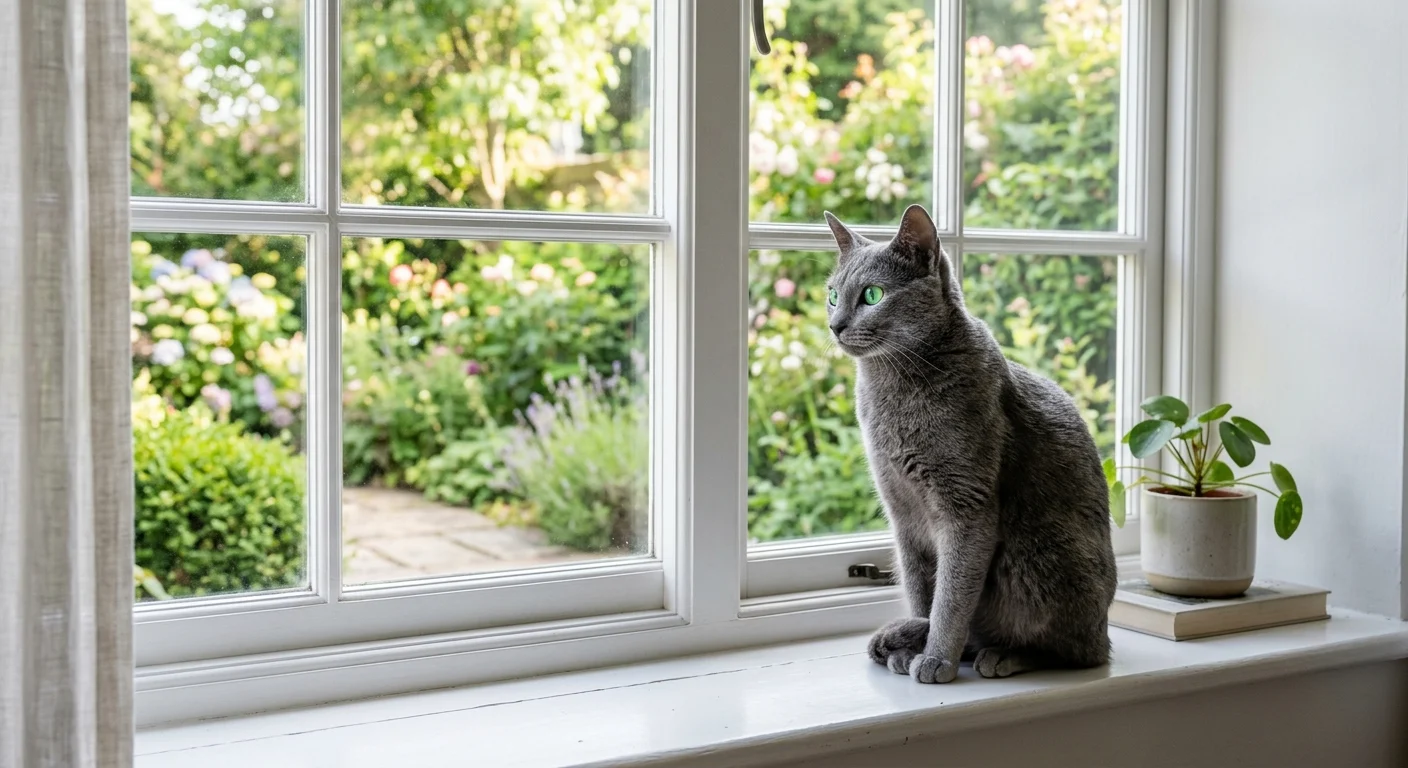
Russian Blues are agile and enjoy some vertical territory. A cat tree with multiple levels and a window perch with a good view gives them space to observe their environment, which suits the breed's naturally watchful temperament. A bird feeder positioned outside a window provides passive entertainment and mental stimulation.
The Russian Blue is well-suited to a primarily indoor life. Given their cautious, reserved nature with unfamiliar situations, unsupervised outdoor access carries real risk. A secure catio or enclosed garden space provides safe outdoor enrichment; harness-leash walking is also worth attempting, as the Russian Blue's intelligence and moderate boldness make it a reasonable candidate for leash training with patient, gradual introduction.
Without sufficient daily engagement, Russian Blues can become anxious or develop repetitive behaviours. Their need for mental stimulation is genuine, even if they do not always express it as dramatically as higher-energy breeds. Consistent daily play is important for both physical health and emotional wellbeing.
Grooming
The Russian Blue's plush double coat is one of its most distinctive features: dense, fine, and silky with a beautiful silvery sheen caused by the silver tipping of each individual hair. Despite its luxurious appearance, this coat is genuinely low-maintenance and one of the easier pedigree coats to manage.
Weekly brushing is generally sufficient to remove loose hairs and keep the coat looking its best. A soft bristle brush or rubber grooming mitt works well for the fine texture. During the spring shedding season, brushing two to three times per week will help manage increased hair loss before it distributes across furniture and clothing. The double coat stands slightly away from the body rather than lying flat, giving the breed its distinctive plush appearance; gentle brushing maintains this effect without disrupting it.
Despite the Russian Blue's association with lower allergen levels in some discussions, the coat does shed and should be managed accordingly. Regular grooming reduces the amount of hair and dander in the environment, which is relevant for household members with mild cat sensitivities.
Nail trimming should be done every two to three weeks. Provide at least one good scratching post to support natural claw maintenance and muscle stretching behaviour. Ears should be checked weekly and cleaned gently with a vet-approved solution if wax accumulation is visible.
Dental hygiene is important for long-term health. Begin tooth brushing during kittenhood, ideally several times per week using cat-safe toothpaste. Annual professional dental examination with your vet is recommended. The Russian Blue's long lifespan makes early establishment of good dental care habits particularly worthwhile.
Overall, grooming a Russian Blue is a relaxed, low-effort routine that many cats come to accept and even enjoy as a bonding experience.
Health
The Russian Blue is considered one of the hardier pedigree cat breeds and is not associated with a high number of breed-specific genetic conditions. With attentive care, Russian Blues commonly live 15 to 20 years, and some individuals are reported to have reached or exceeded this range. This is an exceptional lifespan for a pedigree cat.
Hypertrophic Cardiomyopathy (HCM) can occur in Russian Blues but is considered less common in this breed than in many others. There is no breed-specific genetic test. Reputable breeders may carry out echocardiographic screening on breeding cats as good practice, and an annual cardiac auscultation at your vet's annual examination is recommended.
Obesity is the most common manageable health concern in the Russian Blue. The breed has a healthy appetite and can be prone to weight gain if food is not carefully portioned. Obesity increases the risk of diabetes, bladder stones (urolithiasis), and joint strain. Measured twice-daily feedings, avoiding free-feeding, and regular weight monitoring are the primary preventive measures.
Bladder health deserves attention. Russian Blues may be predisposed to urinary issues, particularly if overweight. A high-quality diet with adequate moisture content (wet food), plenty of fresh water, and healthy body weight all support urinary tract health.
Respiratory sensitivity is occasionally noted in the breed. Some Russian Blues react to dusty litters, strong household fragrances, or aerosol products. Low-dust, unscented litter and avoidance of strong household chemicals are sensible precautions.
The breed's allergen profile is sometimes raised by prospective owners. Some studies have found that Russian Blues may produce somewhat lower levels of the Fel d 1 protein. However, Russian Blues are not hypoallergenic; all cats produce Fel d 1, and individual variation within any breed can be substantial. Allergy sufferers should spend time with an individual cat before committing.
Nutrition
Nutrition and weight management are among the most important ongoing health considerations for Russian Blue owners. This breed has a healthy appetite and a tendency to overeat if food is freely available. Obesity in Russian Blues is associated with an increased risk of diabetes, urinary tract issues, and joint strain, all of which are conditions that can significantly reduce quality of life in a breed that otherwise has every prospect of living 15 to 20 years.
Feed measured portions twice daily using a quality complete cat food with a named animal protein (chicken, turkey, fish) as the primary ingredient. Avoid free-feeding. Even a small daily surplus accumulates into meaningful weight gain over months. Most Russian Blues will eat whatever is offered and will not reliably self-regulate.
Wet food is strongly recommended as the primary dietary base. It supports hydration, provides high protein with lower carbohydrate content than most dry foods, and is associated with better urinary health, which matters for this breed. A small amount of dry food can be included for dental benefit if preferred, but should not dominate the diet.
Kittens require a kitten-formulated diet rich in protein and essential fatty acids until around 12 months of age. Transition to adult food gradually to avoid digestive upset. Senior Russian Blues (10 years and older) benefit from diets that support kidney function and lean muscle maintenance, with adjusted protein levels as advised by your vet.
Fresh water should be available at all times. Many Russian Blues enjoy running water; a cat drinking fountain can meaningfully increase daily water intake, which supports kidney and urinary health over the long term. Regular body condition checks at home and at veterinary visits ensure that weight is managed proactively.
Family Fit
The Russian Blue is a wonderful choice for the right household, but it is important to understand that this is a breed with specific social preferences. It thrives in calm, predictable environments where its bonds with trusted people can develop at its own pace. Chaotic, high-traffic households with constant visitors and upheaval may not suit this reserved, sensitive cat.
With family members it knows well, the Russian Blue is warm, engaged, and playful. It enjoys being included in daily life, following people around, and participating in household routines. Children who understand and respect cat body language and allow the Russian Blue to set the pace of interaction will find it a loyal and affectionate companion. Very young children who cannot yet read a cat's signals may find the Russian Blue withdraws rather than tolerates; patience and guidance for children is important.
With strangers, the Russian Blue will typically retreat or observe from a distance rather than approach. Households with frequent visitors should ensure the cat has quiet retreat spaces where it feels safe. This behaviour is not a welfare concern; it is simply how this breed is wired.
With other cats, Russian Blues generally coexist peacefully when introduced carefully and gradually. A compatible feline companion can be very beneficial, particularly in households where the owner is away during the day, as the Russian Blue forms strong bonds and can be prone to stress with excessive solitude. Matching with another calm, compatible cat works best.
With dogs, the Russian Blue's cautious nature means introductions need to be managed patiently. Once trust is established, many Russian Blues live harmoniously with calm, cat-friendly dogs.
Russian Blues adapt well to apartment or flat living. They are primarily indoor cats and do not require outdoor access, though access to a secure catio or enclosed garden enriches their environment considerably.
Fun Facts
1. Kittens are born with yellow eyes that turn green. Russian Blue kittens begin life with yellow eyes. The vivid emerald green that defines the adult breed standard develops gradually, typically establishing itself fully by around four months of age.
2. The 'smile' is structural, not an expression. The slight upward turn at the corners of the Russian Blue's mouth is a fixed anatomical feature of the head shape, not a mood or trained behaviour. It gives the cat a perpetually serene, pleased expression that owners find deeply appealing.
3. They are sometimes described as lower-allergen cats. Some studies have found that Russian Blues may produce somewhat lower levels of the Fel d 1 protein compared to many other breeds. However, they are not hypoallergenic: all cats produce Fel d 1, and individual variation is considerable. Allergy sufferers should spend time with an individual cat before committing.
4. Their early name was the Archangel Cat. Before 'Russian Blue' became standard, the breed was widely known as the Archangel Cat or Archangel Blue, after the port city of Arkhangelsk in northern Russia from which it was believed to have been transported to western Europe.
5. They were nearly reshaped by Siamese breeding. Post-war recovery efforts in Britain involved crossing with Siamese cats, which temporarily altered the breed type toward a more angular, Oriental look. Scandinavian breeders who avoided this cross helped preserve the original moderate type.
6. They are among the longer-lived pedigree cats. Russian Blues commonly live 15 to 20 years with good care. This exceptional lifespan makes them a genuine long-term commitment, and one of the most rewarding in pedigree cat ownership.
7. All major registries only accept blue coat colour for show. The CFA, TICA, FIFe, and GCCF all restrict Russian Blue championship competition to the classic blue coat. While white and black colour variants exist in some countries, they compete under different breed names.
FAQ
Are Russian Blue cats hypoallergenic? No cat is truly hypoallergenic. Some studies suggest Russian Blues may produce somewhat lower levels of the Fel d 1 protein than many other breeds, and their low-shedding coat reduces allergen dispersal. However, individual variation in Fel d 1 production is very wide, and no Russian Blue can be guaranteed safe for allergy sufferers. Anyone with cat allergies should spend time with an individual cat before committing to ownership.
Are Russian Blue cats shy? Reserved is a better word than shy. Russian Blues are cautious with new people and situations, but are genuinely warm and engaged with family members they know and trust. This quality is characteristic of the breed, not a sign of poor socialisation.
How long do Russian Blue cats live? Russian Blues are among the longer-lived pedigree cats, with a typical lifespan of 15 to 20 years. Some individuals have reportedly exceeded this. Consistent veterinary care, weight management, and a low-stress environment contribute significantly to longevity.
Do Russian Blue cats get along with other pets? Generally yes, with patient introductions. They do well with other calm cats and dog-friendly dogs. A second cat companion is beneficial, particularly if the household is empty during the day.
Do Russian Blues need outdoor access? No. They adapt well to indoor-only living and are recommended primarily as indoor cats given their reserved, sensitive temperament. A secure catio or enclosed garden provides enriching outdoor experience without the risks of unsupervised outdoor access.
Are Russian Blues high-maintenance? No. Their coat requires only weekly brushing, they are quiet and calm, and they are not destructive. The main ongoing management consideration is weight monitoring and measured feeding to prevent obesity.
Gallery
Explore more Russian Blue-style breeds
Browse related breeds or take our matching quiz to find the right fit for your home.
Stay in the loop
Get weekly breed spotlights, care guides, and new additions - straight to your inbox.