Highlander
playful, energetic, social, confident
Quick Facts
- Lifespan
- 10-15 years
- Weight
- 4.5-11 kg
- Origin
- United States
- Coat
- Short
Overview
Overview
The Highlander is a striking American breed that combines the wild-cat look of curled ears and a naturally short bobtail with the sunny, people-loving personality of a family companion. Despite its dramatic appearance — inspired in part by wild cats — the Highlander is entirely domestic in temperament and thrives on human company.
Recognized by TICA, the Highlander was developed in the early 2000s from crosses between the Desert Lynx and the Jungle Curl. It comes in both shorthaired and longhaired varieties, in virtually any color or pattern, and is notable for being a large, powerfully built cat that is nevertheless gentle and playful.
If you want a cat that looks like it belongs in the mountains but acts like the most affectionate member of the family, the Highlander is a breed worth meeting.
History & Origins
History
The Highlander's story begins in 1993 when American breeder Joe Childress introduced a new hybrid breed called the Highland Lynx, developed from crosses between the Desert Lynx and the Jungle Curl (the latter a curl-eared breed with some wild cat influence). The goal was a powerful, wild-looking domestic cat with distinctive curled ears.
In 2004, a group of breeders formalized the breed under TICA's developmental framework. The name was changed from Highland Lynx to Highlander in late 2005 to reflect its domestic breed status and distinguish it from wild cat hybrids. TICA accepted the Highlander into its Preliminary New Breed class in May 2008 and elevated it to Advanced New Breed status in 2016.
Today the Highlander is an established and growing breed, celebrated for combining an exotic, lynx-like appearance with an entirely domestic, people-loving character.
Appearance
Physical Characteristics
The Highlander is a large to very large cat, with males weighing 6–11 kg and females typically 4.5–7 kg. The body is long, muscular, and powerful — a build that reflects the breed's intended wild-cat aesthetic.
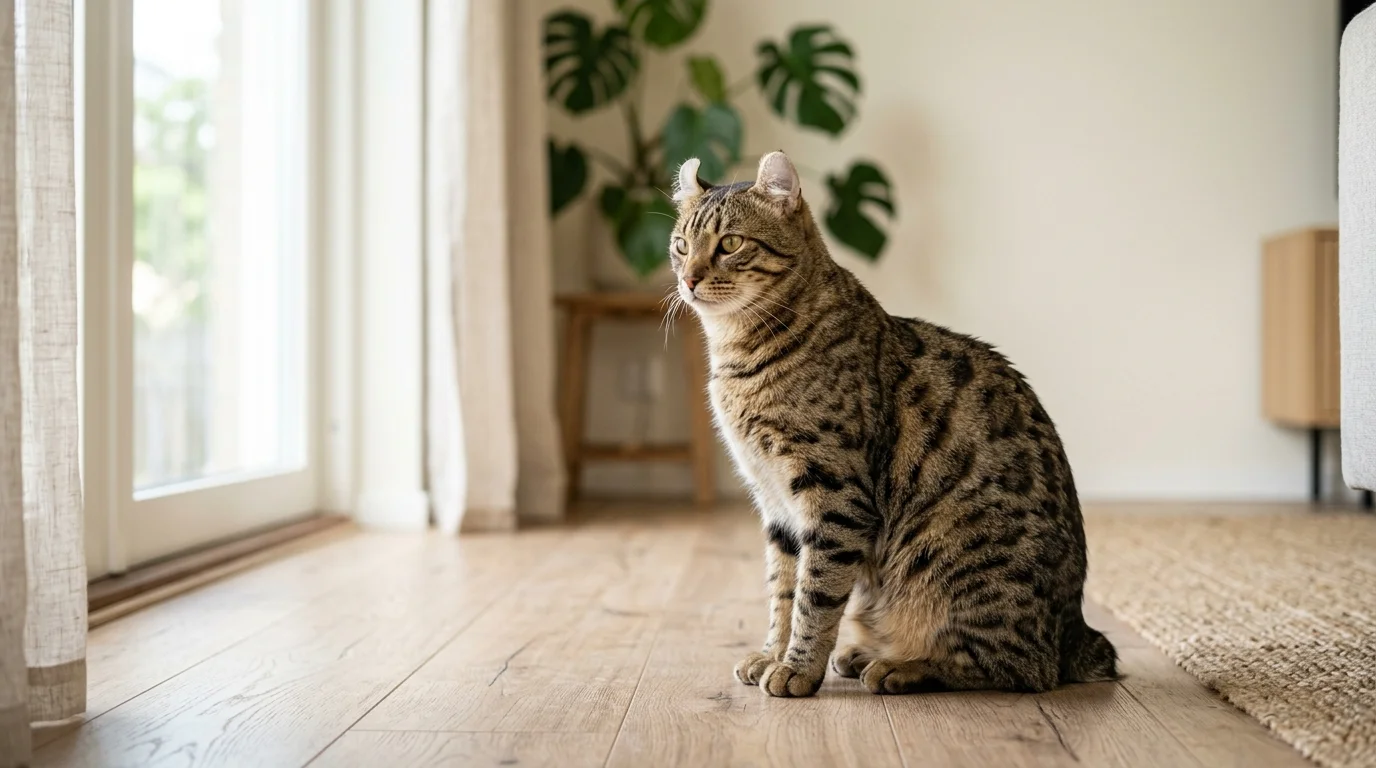
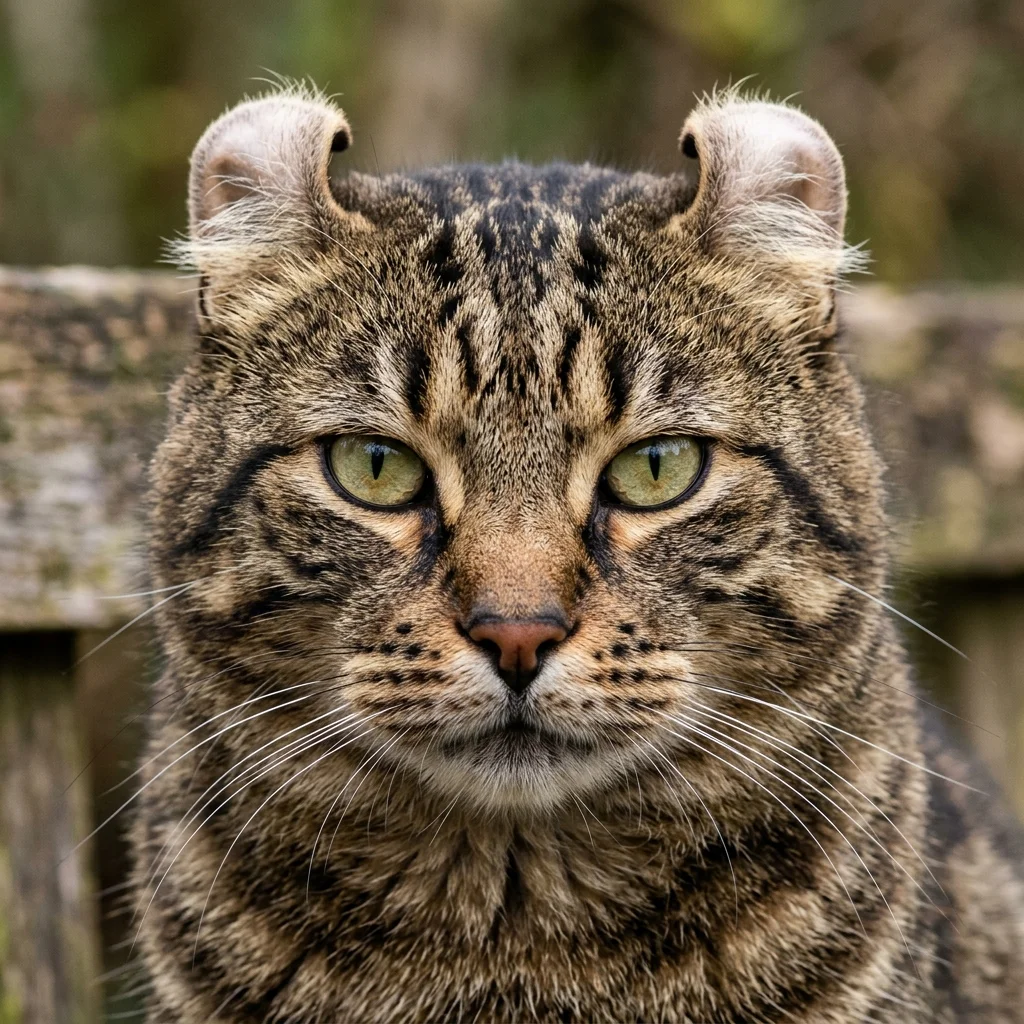
Its most distinctive features are its curled ears (which curve back naturally, like those of the American Curl) and its naturally short bobtail — though full-tailed cats also appear in some litters. The head is broad with a wide nose and prominent, wide-set eyes.
The Highlander comes in both shorthaired and longhaired coat varieties, in virtually all colors and patterns. Some individuals are polydactyl (extra toes), though polydactyly is not required by the breed standard.
Temperament
Temperament
Highlanders have been called the "clowns of the cat fancy" — and it is easy to see why. They are high-energy, playful, and enthusiastically engaged with everything happening around them. They love to chase, leap, and engage in exuberant games, and their powerful build means their play is vigorous.
Despite their energy, Highlanders are confident and gentle rather than nervous or aggressive. They are deeply human-oriented: they will greet you at the door, show off for visitors, and seek out your company throughout the day. They are sociable with children and other pets.
Vocally, Highlanders are relatively quiet for such an active breed, preferring to communicate through physical presence and action rather than meowing. They do best in active households that can match their enthusiasm for play and interaction.
Activity & Play
Activity
The Highlander is a big, athletic cat with a playful, high-energy personality that stays strong well into adulthood. Despite its wild appearance, it thrives as an interactive indoor companion.
Energy Level
Highlanders are high-energy cats. They love to run, jump, and explore and can become bored or destructive if left without stimulation. They retain kitten-like energy levels for many years.
Daily Exercise
Plan for 30-45 minutes of active play spread across 2-3 sessions per day. Interactive wand toys, feather teasers, and laser pointers are all effective for burning energy. Many Highlanders enjoy a game of fetch and will bring toys back to their owners.
Play Styles
- Chase and pounce: Wand toys and moving targets trigger strong prey drive.
- Fetch: Many individuals retrieve toy mice or crinkle balls reliably.
- Puzzle feeders: Food-dispensing toys engage problem-solving instincts.
- Water play: Some Highlanders are fascinated by running water and enjoy pawing at dripping taps or shallow water dishes.
Vertical Space
Highlanders are natural climbers. Tall cat trees with wide platforms suit their large frame. Wall-mounted shelving systems give them a dedicated climbing route and a high vantage point, which they use frequently.
Indoor vs. Outdoor
The Highlander can be kept fully indoors as long as its environment is enriched. A secure outdoor enclosure or catio is an excellent option for owners who want to offer outdoor access safely. Free-roaming outdoor access is not recommended given road, predator, and disease risks.
Grooming
Grooming
The Highlander comes in two coat lengths: shorthaired and longhaired. Shorthaired Highlanders need only a weekly brush to remove loose hairs and keep the coat in good condition. Longhaired individuals benefit from brushing two to three times per week to prevent tangles and reduce shedding around the home.
The breed's distinctive curled ears require some attention: gently clean the ear canals regularly to prevent wax build-up, being careful not to insert anything deep into the ear. Check the ears weekly for signs of irritation or infection.
Routine maintenance — nail trims every two to three weeks, and regular dental care — applies as for any breed. The Highlander is not a high-maintenance cat, but the ears do require a little extra attention compared to straight-eared breeds.
Health
Health
The Highlander is generally considered a healthy breed with no known breed-specific genetic conditions documented at this time. Lifespan ranges from 10 to 15 years.
As with any cat with curled ears, it is important to monitor the ear canals for wax accumulation and signs of infection. Responsible breeders select for moderate ear curl to avoid overly tight curls that can restrict the ear canal.
Because the Highlander is a large, active cat, maintaining a healthy weight through appropriate diet and regular exercise is important for long-term joint and cardiovascular health. Routine preventive care — annual vet check-ups, vaccinations, parasite control — is recommended.
Nutrition
Nutrition
The Highlander is a large, muscular cat that can weigh between 10 and 20 pounds. A diet that supports lean muscle mass and prevents excess weight gain is essential given their athletic build.
Macronutrient Targets
- Protein: 35-45% of dry matter. Animal-based proteins such as chicken, turkey, or fish should lead the ingredient list. Muscle and organ meats provide the amino acid profile cats need as obligate carnivores.
- Fat: 15-25% of dry matter. Healthy fats support energy levels and coat condition. Omega-3 fatty acids from fish oil help maintain the Highlander's dense coat.
- Carbohydrates: Below 10% where possible. High-starch diets can contribute to weight gain in larger cats.
Feeding Frequency by Age
- Kittens (up to 12 months): 3-4 meals per day. Growing kittens need calorie-dense food to fuel rapid development.
- Adults (1-7 years): 2 measured meals per day. The Highlander's large size means portion control is important to avoid obesity.
- Seniors (7+ years): 2-3 smaller meals per day. Senior formulas with joint support supplements are beneficial as this breed can be prone to joint stress given its size.
Wet vs. Dry Food
A combination of wet and dry food is recommended. Wet food supports hydration and kidney health, while dry food can provide dental benefits. Prioritise high-protein, low-carbohydrate formulas for both formats.
Breed-Specific Considerations
The Highlander's large frame means caloric needs are higher than average, but overfeeding is still a risk. Weigh food portions rather than eyeballing to keep weight in check. Free-feeding dry kibble is not recommended. Always provide fresh water, and consider a pet fountain if the cat is reluctant to drink from a still bowl.
Family Fit
Family Fit
The Highlander is a sociable, adaptable cat that fits well into a wide range of households. Its confident, outgoing nature makes it one of the more family-friendly large cat breeds.
Children
Highlanders are excellent with children. They are sturdy enough to handle active play and patient enough to tolerate enthusiastic handling. They enjoy interactive games and tend to seek out children as play partners. As with all cats, young children should be taught gentle handling.
Other Cats
Highlanders generally get along well with other cats. Their social, playful temperament means they usually welcome a feline companion. Proper slow introductions are still recommended to ensure both cats feel comfortable.
Dogs
Many Highlanders adapt well to dog-friendly homes, especially when raised alongside dogs or introduced carefully. Their confident, bold nature means they are less likely to feel intimidated by dogs and more likely to hold their own.
Elderly Owners
Highlanders can work for elderly owners who have the time and energy for interactive play. However, their high activity level means they are best suited to owners who can provide regular engagement. A second cat as a companion can help meet their social needs when owners are less active.
Apartments
A Highlander can live in an apartment if vertical space and enrichment are provided. Tall cat trees, puzzle toys, and daily play sessions compensate for the lack of outdoor roaming room.
First-Time Owners
First-time cat owners can manage a Highlander if they are prepared for an active, engaging companion. They are not a cat that thrives with minimal interaction, so owners should be ready to invest time in play and socialisation.
Fun Facts
Fun Facts
- Highlanders were originally called Highland Lynx when first developed in 1993 — the name was changed to Highlander in 2005 to emphasize their fully domestic nature.
- Despite looking like a wild cat, the Highlander has no verified wild cat DNA in its modern breeding lines.
- Some Highlanders are polydactyl — they can have extra toes, adding to their distinctive appearance.
- The breed's curled ears are caused by a dominant gene, meaning only one copy is needed for the trait to appear in offspring.
- Highlanders are described by TICA enthusiasts as "the clowns of the cat fancy" for their entertaining, high-energy personalities.
FAQ
Frequently Asked Questions
How long do Highlander cats live?
Highlanders typically live 10-15 years. With routine veterinary care, a quality diet, and an indoor lifestyle, many reach their mid-teens in good health.
Do Highlander cats shed a lot?
Yes, moderately to heavily. Both the short-haired and long-haired varieties shed throughout the year, with increased shedding during seasonal coat changes. Weekly brushing for the short-haired type and 2-3 times per week for the long-haired variety helps manage loose fur.
Are Highlanders vocal cats?
Highlanders are moderately vocal. They communicate with their owners but are not loud or incessant. They use chirps, trills, and soft meows and are more conversational than demanding.
Are Highlander cats hypoallergenic?
No. Highlanders are not hypoallergenic. They produce the Fel d 1 allergen like most cat breeds and shed regularly, which distributes allergens throughout the home. People with cat allergies should spend time with the breed before committing to adoption.
How much does a Highlander kitten cost?
Highlander kittens typically cost between $800 and $2,000 USD from a reputable breeder. Pricing varies based on coat type, colour, and breeder reputation. The breed is still relatively rare, which can affect availability and pricing.
Are Highlanders easy to train?
Yes. Highlanders are intelligent and curious and respond well to positive reinforcement. They can learn tricks, leash walking, and even basic commands. Their dog-like personality makes training sessions something they often enjoy rather than tolerate.
Do Highlanders do well in warm climates?
Highlanders adapt reasonably well to warm climates when kept indoors in a climate-controlled environment. Long-haired individuals may be more affected by heat. Ensure fresh water is always available and that the home stays cool during hot months.
Gallery
Explore more Highlander-style breeds
Browse related breeds or take our matching quiz to find the right fit for your home.
Stay in the loop
Get weekly breed spotlights, care guides, and new additions - straight to your inbox.