Havana Brown
affectionate, intelligent, playful, curious
Quick Facts
- Lifespan
- 12-15 years
- Weight
- 2.7-4.5 kg
- Origin
- United Kingdom
- Coat
- Short
Overview
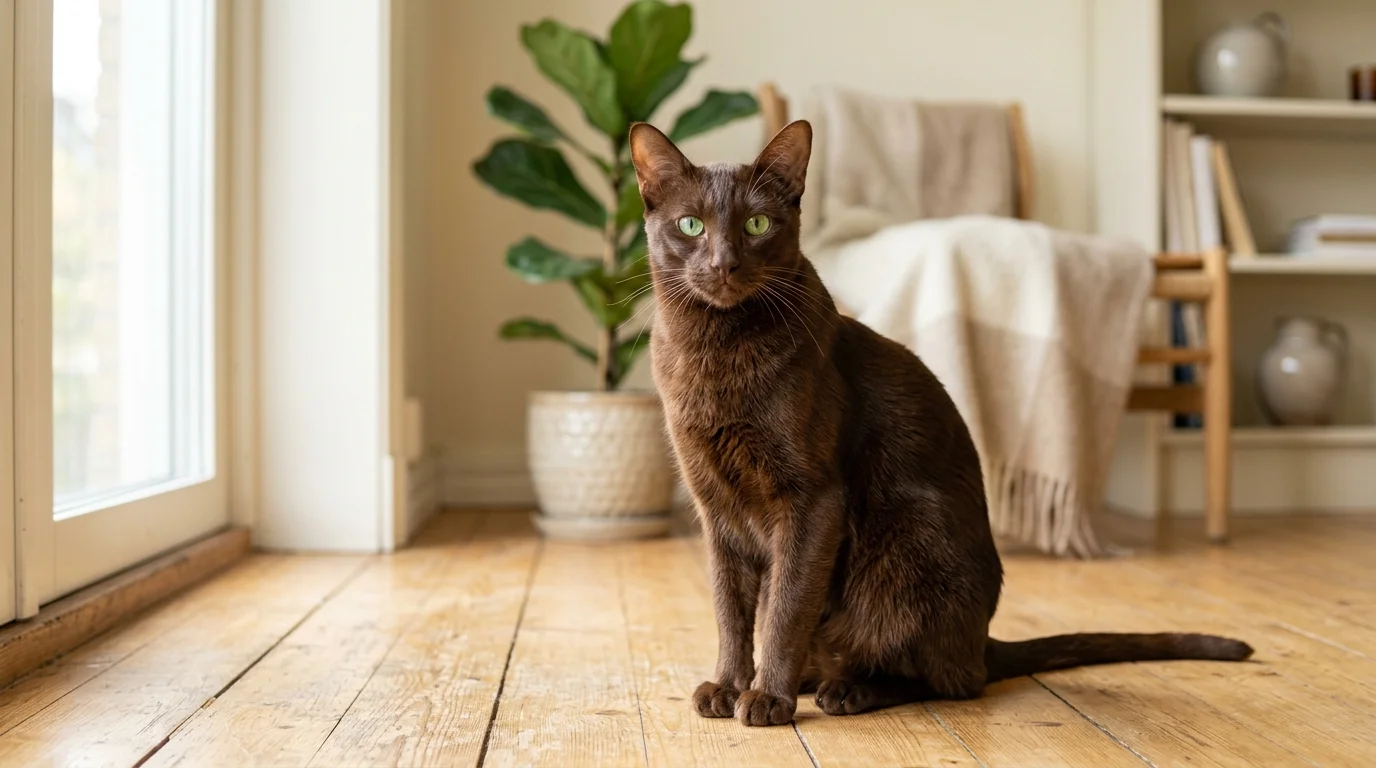
The Havana Brown is one of the rarest pedigree cat breeds in the world — a sleek, medium-sized cat distinguished by an even, rich mahogany-brown coat that extends from the tip of each hair to the roots. The only cat breed that is uniformly chocolate-coloured from nose to tail, the Havana Brown pairs its striking appearance with a warm, sociable personality and a deeply affectionate nature. This is a breed that craves companionship and gives it in equal measure.
History & Origins
The Havana Brown was created in England during the 1950s through a deliberate breeding programme by a group of British cat fanciers who wanted to produce a wholly chocolate-coloured cat. The founding cross was between chocolate-point Siamese cats carrying the recessive chocolate gene and black domestic shorthairs. In 1952, a chocolate-brown male kitten named Elmtower Bronze Idol was born — the first true Havana Brown.
The breed takes its name from the Havana cigar, whose colour the coat precisely resembles. Fancier Elsie Quinn imported the first Havana cats to North America in the mid-1950s, and all North American Havana Browns descend from Quinn's original bloodlines.
Interestingly, the breed diverged significantly between its British and American lines. British breeders eventually merged their chocolate cats back into the Oriental Shorthair programme, while American breeders maintained the distinct Havana Brown type. The CFA and TICA both recognise the breed, though it remains one of the rarest pedigree breeds in the world.
Appearance
The Havana Brown is a medium-sized cat with a slender yet muscular build. Adults typically weigh 2.7–4.5 kg, with males on the heavier end. The body is longer than it is tall, with straight, slender legs and a tail that is medium in length and tapers to a rounded tip.
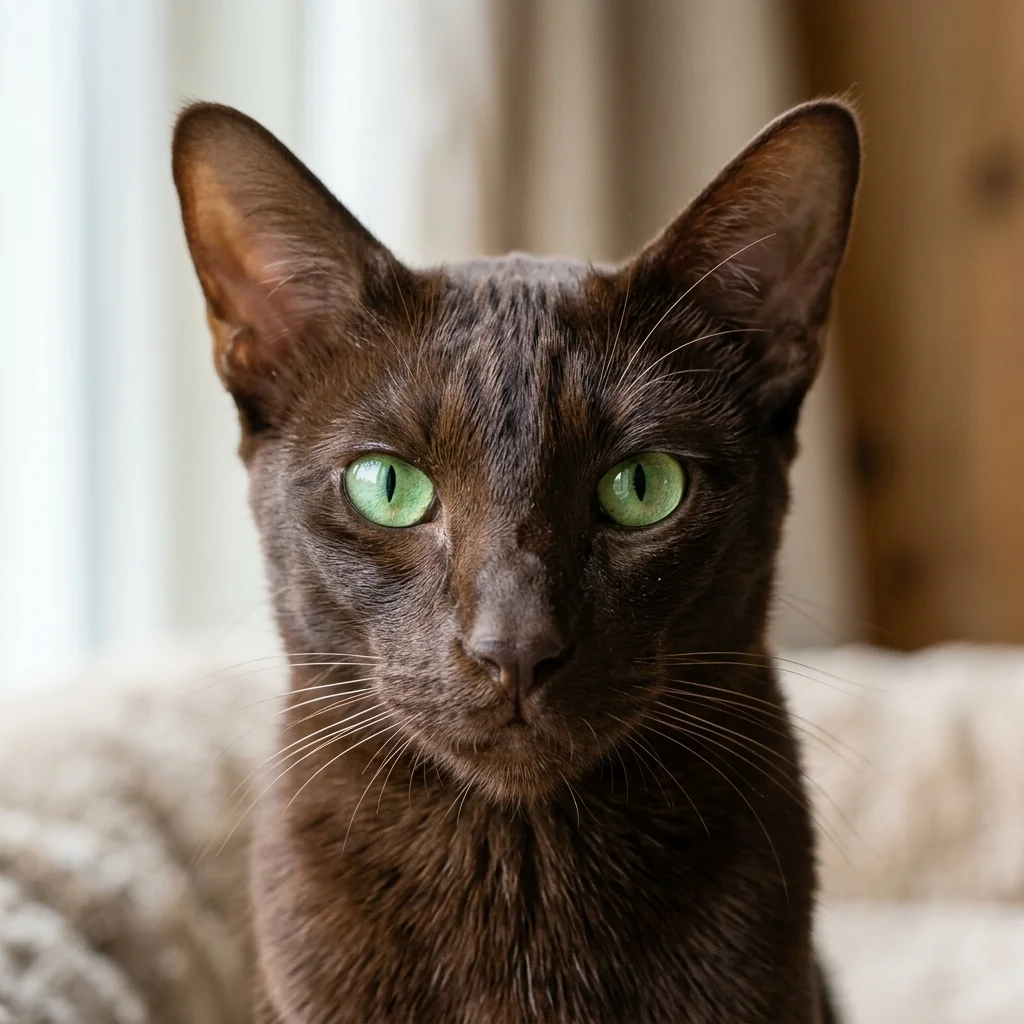
The coat is the breed's defining feature: uniformly rich mahogany-brown from root to tip, short, smooth, and close-lying with a natural gloss. There are no tabby markings, ghost patterns, or other colours — the Havana Brown is a cat of one singular, deep brown hue. Show standards require that even the whiskers are brown, not white — a unique requirement among pedigree breeds.
The head is longer than it is wide, with a distinct stop at the brow and a pronounced but not extreme muzzle. Eyes are oval, medium-sized, and any shade of green — deeper green is preferred in show standards. Ears are large and forward-tilting, giving the cat an alert, attentive expression.
Temperament
Havana Browns are warmly affectionate cats that tend to bond deeply with one primary person while remaining friendly and sociable with everyone in the household. They are known to follow their favourite person throughout the home and will often reach out with a paw to initiate contact — a charming habit that owners describe as "tapping" for attention.
This breed communicates in a soft, chirping trill rather than a demanding meow, which makes them pleasant companions in quieter households. They are curious and intelligent, enjoying exploration, interactive toys, and problem-solving activities. Their play style is engaged but not frenetic.
Havana Browns are sociable with children, other cats, and dogs, particularly when socialised from kittenhood. They do not do well with prolonged isolation and thrive in households where they have regular company. A second cat can make a significant difference to their wellbeing if the household is often absent during the day.
Despite being moderately active, Havana Browns have a balanced temperament — not too energetic, not too sedate — making them adaptable companions for a wide range of living situations.
Activity & Play
Activity and Exercise Needs
The Havana Brown is an active, playful breed with a curious and engaged personality. Though not as intensely athletic as some Oriental breeds, it has a steady energy level that requires daily attention and stimulation.
Energy Level
Havana Browns are moderately active cats. They enjoy play sessions but also appreciate calm companionship. They remain playful through adulthood and age gracefully without becoming completely sedentary.
Daily Exercise
Aim for 15 to 25 minutes of interactive play per day. The Havana Brown does well with two shorter sessions rather than one long one. Consistent daily engagement prevents boredom and the mild mischief that can follow.
Play Styles
Havana Browns are paw-oriented cats and frequently use their paws to examine objects and bat at toys. Wand toys, feather teasers, and small balls that can be batted across the floor appeal strongly. Many Havana Browns enjoy fetch-like games where they retrieve and return small toys. Their curiosity means they investigate anything new in their environment.
Enrichment
Puzzle feeders work well for this intelligent breed. Rotating toys every few days maintains novelty. Paper bags, cardboard boxes, and tunnels provide low-cost entertainment. The Havana Brown appreciates variety and will lose interest in the same toy left out permanently.
Vertical Space
While not extreme climbers, Havana Browns do enjoy elevated vantage points. A medium-height cat tree or a few cleared shelves give the cat comfortable options without requiring an elaborate vertical setup.
Indoor vs. Outdoor
The Havana Brown is best kept indoors. It does not have the wariness of street-wise breeds and can be naive around hazards. Supervised outdoor time in a secure garden or on a leash is a safe compromise.
Grooming
The Havana Brown's short, smooth coat is extremely low-maintenance and requires minimal effort to keep in excellent condition. Weekly brushing with a soft bristle brush or a rubber grooming mitt is all that is needed to remove loose hairs and maintain the coat's characteristic mahogany gloss.
Because the coat is short with no undercoat to speak of, shedding is modest and matting is not a concern. The Havana Brown's rich colouring is best showcased on a well-groomed coat, so regular light brushing is worthwhile for aesthetic as well as practical reasons.
Routine care includes nail trimming every two to three weeks, ear cleaning as needed, and regular dental hygiene. Havana Browns are slender and muscular, and weight management is important — the breed can be prone to weight gain if feeding is not monitored.
Health
The Havana Brown is generally considered one of the healthier pedigree cat breeds, with a lifespan of 12–15 years. The breed does not have an extensive list of documented hereditary conditions, though its small global population means that comprehensive health data is limited.
Potential concerns include upper respiratory issues, which can be associated with the breed's Siamese ancestry, and hypertrophic cardiomyopathy (HCM), which can occur in any breed. Regular veterinary check-ups are recommended to catch any issues early.
Obesity is a practical concern — Havana Browns have a slender, elegant build that can disguise early weight gain, making regular body condition checks important. A measured feeding routine rather than free-feeding is advisable. Overall, this is a hardy breed that rewards attentive ownership with many years of healthy companionship.
Nutrition
Nutrition
The Havana Brown is a medium-sized cat with a lean, muscular build. A quality diet supports its coat's rich colour and the moderate activity level that defines the breed.
Macronutrient Targets
Aim for a food with 28 to 35% protein on a dry matter basis, sourced primarily from animal proteins such as chicken, turkey, or fish. Fat content of 12 to 18% is appropriate for a moderately active adult. Carbohydrates should remain low.
Wet vs. Dry Food
Wet food is the preferred base for the Havana Brown diet. It provides hydration, which supports urinary tract health, and is easier to portion control. Dry food can supplement as an enrichment tool in puzzle feeders. A 50 to 60% wet food proportion is a good target for most adults.
Feeding Frequency
Kittens under 6 months: three to four small meals per day. Adolescents 6 to 12 months: two to three meals per day. Adults: two measured meals per day. Avoid free feeding, which can lead to overeating in less active individuals.
Breed-Specific Concerns
Havana Browns are a rare breed with a limited gene pool, and some lines have shown sensitivity to certain dietary ingredients. Introduce new foods gradually over seven to ten days. The breed's rich mahogany coat may dull if dietary fat or essential fatty acids are insufficient; a food with added omega-3 and omega-6 supports coat quality. Monitor weight, as the breed can become softly overweight if activity declines.
Treats
Limittreatsto 10% of daily calories. Single-ingredient treats such as freeze-dried chicken or salmon are a good choice.
Family Fit
Family Fit
The Havana Brown is an affectionate, people-focused breed that integrates well into most households. It thrives on human connection and dislikes being left alone for long periods.
With Children
Havana Browns are gentle and patient with children. They enjoy interactive play and will engage willingly with kids who treat them respectfully. Their moderate energy suits both rambunctious and quieter children. Teach younger children how to approach the cat calmly, and the Havana Brown will reward them with genuine affection.
With Other Cats
This breed generally does well in multi-cat households, particularly when another cat provides companionship during the owner's absences. The Havana Brown dislikes solitude, so a feline companion is genuinely beneficial. Introductions should be gradual and structured.
With Dogs
Dog-friendly Havana Browns are common, especially when the dog is calm and the introduction is carefully managed. The breed's sociable nature means it often adapts faster than expected. High-energy or prey-driven dogs may cause stress.
With Elderly Owners
The Havana Brown is a natural fit for older adults who want close, attentive companionship. It enjoys sitting near its owner, following them around the house, and being gently interactive without demanding vigorous play. Its moderate energy level is manageable without extensive effort.
Apartment Living
Excellent apartment cats, provided they have daily interaction and a feline or human companion. They do not need outdoor access and are content with an enriched indoor environment.
First-Time Owners
A good choice for first-time owners who want an interactive, affectionate cat. The main consideration is that this breed does not do well when left alone all day; it needs company, whether human or feline.
Fun Facts
- The Havana Brown is the only cat breed in the world required to have brown whiskers — white whiskers are a disqualification in the show ring.
- Despite the name, the Havana Brown has no connection to Cuba — the breed was developed entirely in England and named after the colour of a Havana cigar.
- The British and American lines of Havana Browns diverged so significantly that they are now considered distinct breeds by some registries — the British version was absorbed into the Oriental Shorthair.
- Havana Browns are known for their distinctive greeting habit: they reach out and tap their owner with a paw to initiate contact, as if politely knocking on a door.
- With an estimated population of only a few hundred individuals worldwide, the Havana Brown is one of the rarest domestic cat breeds in existence.
FAQ
Frequently Asked Questions
How long do Havana Browns live?
Havana Browns typically live 12 to 15 years. Indoor cats with regular veterinary care and a quality diet often reach the higher end of this range.
Do Havana Browns shed a lot?
Shedding is minimal to moderate. The short, sleek coat releases little hair and requires only weekly brushing to stay in good condition. Havana Browns are a practical choice for owners who dislike dealing with excessive cat hair.
Are Havana Browns vocal?
Yes, but softly so. Havana Browns are known to communicate with quiet, gentle voices. They will express their needs and preferences but are not loud or demanding. Their vocal style is more of a soft conversation than a loud demand.
Are Havana Browns rare?
Yes. The Havana Brown is one of the rarest pedigree cat breeds, particularly in North America. Breed registries regularly list it among the breeds with the smallest registered population. Finding a reputable breeder may require a waiting list and possibly travel.
How much does a Havana Brown kitten cost?
Expect to pay between $800 and $1,500 USD for a kitten from a registered breeder, though prices vary significantly by region and availability. Given the breed's rarity, expect some difficulty finding a breeder and possibly a waiting period.
Do Havana Browns do well alone?
No. This breed is highly people-oriented and dislikes long periods of solitude. Owners who are away from home regularly should consider getting a second cat or ensuring a cat sitter visits daily. A Havana Brown left alone all day repeatedly may become anxious or withdrawn.
Gallery
Explore more Havana Brown-style breeds
Browse related breeds or take our matching quiz to find the right fit for your home.
Stay in the loop
Get weekly breed spotlights, care guides, and new additions - straight to your inbox.