Burmese
social, playful, vocal, people-oriented
Quick Facts
- Lifespan
- 12-16 years
- Weight
- 4-6 kg
- Origin
- Myanmar/United States
- Coat
- Short
Overview
The Burmese is one of the most people-oriented cat breeds in existence — compact, muscular, and endlessly sociable, with an intensity of devotion that regularly earns comparisons to dogs. Originally bred from a single Burmese cat brought to the United States in 1930, the breed has developed into a loving, vocal, and playful companion that thrives on close human contact.
History & Origins
The modern Burmese breed descends from a single cat — a small, dark brown female named Wong Mau — who was brought to the United States from Burma (now Myanmar) by Dr. Joseph Thompson of San Francisco in 1930. At the time, Wong Mau was thought to be a Siamese variant, but Thompson noticed her differences and began a careful breeding program to establish her type.
Wong Mau was bred to a Siamese, and selective breeding of the resulting offspring eventually isolated the sable brown cats without Siamese points that became the foundation of the breed. The CFA first registered Burmese in 1936 and granted full recognition in 1957.
Over time, two slightly different types developed: the American Burmese (rounder, more compact head) and the European/British Burmese (more angular and long-nosed). Both are recognised but have separate breed standards in some registries.
Appearance
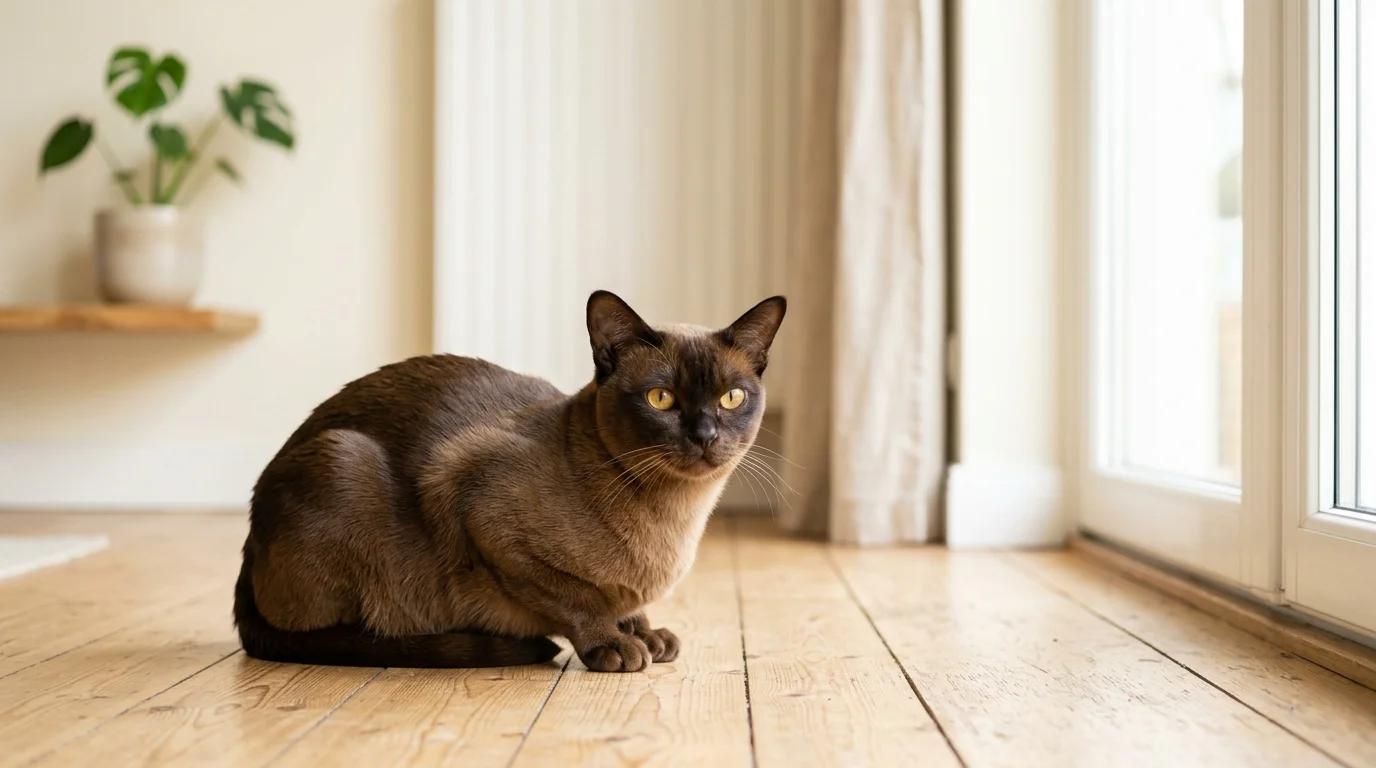
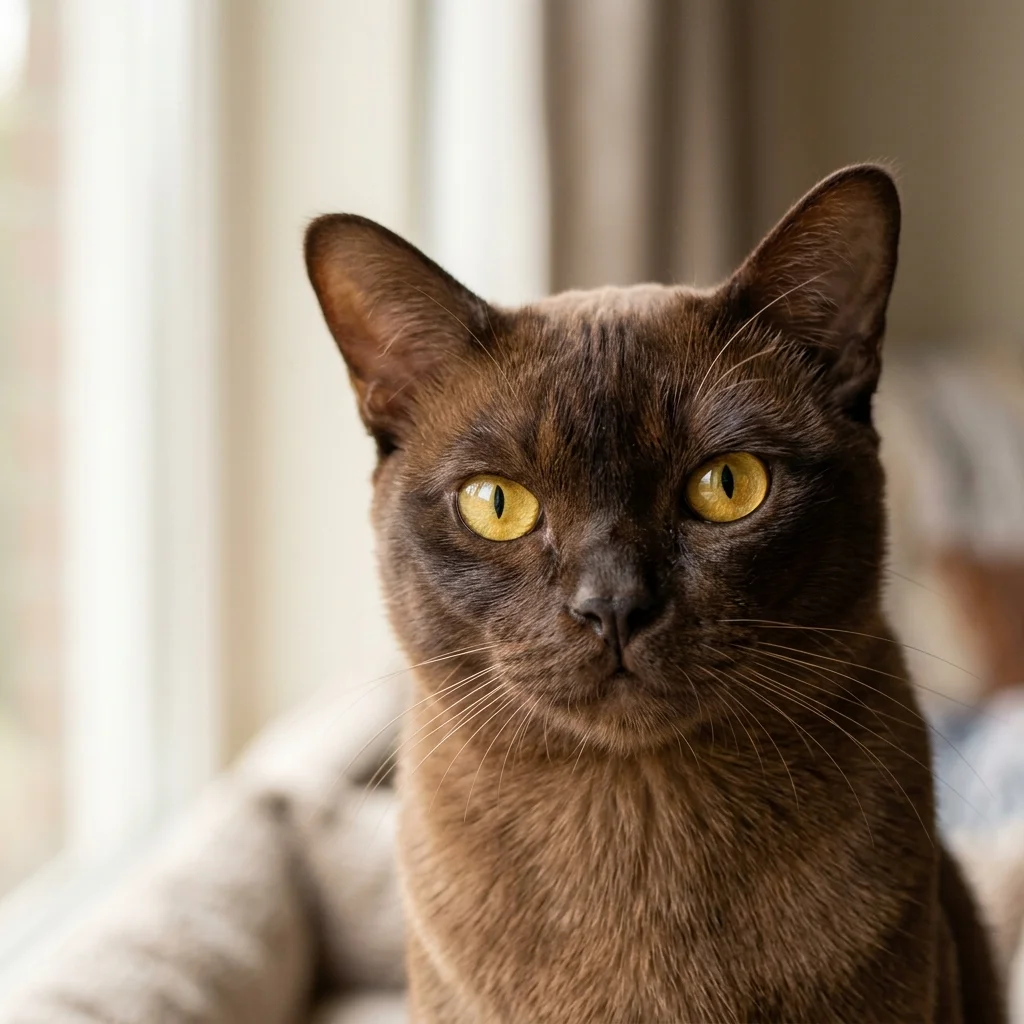
The Burmese is a surprisingly heavy cat for its size — breeders often describe it as "a brick wrapped in silk." The body is compact and muscular with a round head (in the American type), rounded eyes, and a short, blunt muzzle.
The coat is short, fine, and incredibly glossy, lying close to the body and gleaming in the light. The traditional and most recognised colour is sable (a rich dark brown), but the breed is now accepted in a range of colours including champagne (warm beige), platinum (light grey), and blue, as well as many additional shades in the European standard.
Adult males typically weigh 4–6 kg; females 3–4.5 kg.
Temperament
Burmese cats are famously dog-like in their attachment to their people. They follow their owners from room to room, greet them at the door, and are known to supervise household activities with great interest. They do not thrive when left alone for long periods and do best in homes where they will have regular company.
They are highly vocal — not in the way of Siamese, but with a soft, persistent murmur used to narrate their day and request attention. Burmese are both playful and affectionate, remaining kitten-like in energy well into adulthood while also being happy to settle into a lap at the end of the day.
They are exceptionally good with children and generally accepting of other pets. Their openness and confidence mean they rarely hide from visitors, preferring instead to introduce themselves.
Activity & Play
Activity
Burmese cats are moderately high-energy companions with a playfulness that often persists well into adulthood. Unlike some breeds that slow down after kittenhood, a healthy Burmese typically remains lively and interactive for most of its life.
Energy Level and Daily Exercise
Plan for at least 30 minutes of active play per day, ideally split into two or three shorter sessions. Burmese thrive on interaction and do not do well with passive enrichment alone. A toy left on the floor is far less satisfying to them than a play session with you.
Play Styles
Burmese love interactive games more than solo exploration. Favorite activities include:
- Wand and feather toys that mimic prey movement
- Fetch with small crinkle balls or foil toys (many Burmese learn this game readily)
- Puzzle feeders and food-dispensing toys that combine play with mealtime
- Hide-and-seek games where you move from room to room
Toys
Rotate toys regularly to prevent boredom. Burmese are intelligent enough that novelty matters. Interactive electronic toys can help on busy days, but should not fully replace human-led play sessions.
Vertical Space
Burmese are athletic climbers. A tall cat tree or a few sturdy wall shelves give them opportunities to survey their territory from above, which reduces boredom and anxiety.
Indoor vs. Outdoor
Burmese are best kept as indoor cats. Their friendly, trusting nature makes them vulnerable outdoors, as they tend to approach strangers without caution. A secure catio or harness walks provide outdoor enrichment safely.
Grooming
The Burmese has a short, fine, glossy coat that is among the easiest of any cat breed to maintain. A weekly brush or rub-down with a chamois or soft cloth is generally all that is needed to remove loose hairs and keep the coat gleaming.
The coat sheds very lightly and does not mat. Beyond coat care, routine maintenance includes regular nail trimming, ear cleaning, and dental care. Burmese teeth and gums can be particularly susceptible to dental disease, so brushing teeth regularly is strongly recommended.
Despite their minimal grooming needs, Burmese cats typically enjoy the grooming session itself as a form of interaction and bonding with their owner.
Health
Burmese cats have several breed-specific health concerns worth being aware of. Diabetes mellitus is notably more prevalent in Burmese than in the general cat population, with some estimates suggesting up to 10% of Burmese cats may be affected. Maintaining a healthy body weight is crucial in minimising this risk.
Feline orofacial pain syndrome (FOPS) is an inherited condition seen predominantly in Burmese cats, causing episodic facial and oral pain that can be triggered by eating, grooming, or mouth movement. It can be severe and requires veterinary management.
Hypokalaemia (low blood potassium causing muscle weakness) is another hereditary condition seen in the breed, typically appearing in the first year of life. Expected lifespan is 9–13 years, though many Burmese live longer with good care.
Nutrition
Nutrition
Burmese cats are muscular, athletic, and energetic, and their diet needs to reflect that. This breed thrives on high-quality animal protein and does not do well on carbohydrate-heavy food.
Protein and Fat Targets
Protein should account for more than 50% of daily caloric intake, sourced from quality animal ingredients such as chicken, turkey, or fish. Fat content up to around 20% provides concentrated energy for their active lifestyle. Carbohydrates should be kept below 3% where possible, as Burmese cats have limited metabolic ability to process them efficiently.
Feeding Frequency by Age
- Kittens up to 12 months: 3-4 small meals per day to support rapid growth
- Adults 1-7 years: 2 meals per day with controlled portions
- Seniors 7 and older: 2 meals per day; consider formulas that support joint and heart health
Wet vs. Dry Food
A combination of wet and dry food works well for most Burmese. Wet food supports hydration, while high-quality dry food can contribute to dental health. Avoid foods where grains, starches, or unnamed by-products appear as primary ingredients.
Breed-Specific Dietary Concerns
Burmese cats have a documented elevated risk of diabetes compared to many other breeds. Controlling carbohydrate intake is a key preventive measure. Portion control is equally important because this breed is known for acting hungry even when adequately fed, which can lead to overfeeding. Ensure adequate taurine in the diet to support heart health, as taurine deficiency is linked to hypertrophic cardiomyopathy. Consult your vet if you have concerns about your Burmese cat's weight or blood sugar levels.
Family Fit
Family Fit
Burmese cats are among the most people-oriented breeds in the cat world. They actively seek out human company and form deep bonds with the people they live with.
Families with Children
Burmese do very well with children who know how to handle cats with care. Their playful, interactive nature makes them great companions for older children (6 and up) who can match their energy. With younger children, supervision is recommended as with any cat, but Burmese are generally tolerant and gentle.
Other Cats and Dogs
This breed socializes well with other pets, particularly when introductions are handled gradually. Burmese often enjoy having a feline companion, as they are highly social and can develop separation anxiety if left alone for long periods. Dog-friendly households tend to work well, especially with breeds that are calm or cat-experienced.
Elderly Owners
Burmese are affectionate lap companions who enjoy close physical contact, which makes them appealing for older adults. However, their energy level means they need daily interactive play. A retired owner with time to engage them will be rewarded with deep loyalty and constant companionship.
Apartments
Burmese adapt well to apartment living as long as they receive enough daily interaction and enrichment. They do not need outdoor access to thrive, but they do need mental stimulation and human presence.
First-Time Owners
Burmese are an excellent choice for first-time cat owners. They are communicative, easy to read, and respond well to gentle handling. Their dog-like loyalty and sociability make the bond feel intuitive and rewarding. The main consideration is that they should not be left alone for extended periods regularly.
Fun Facts
- The entire Burmese breed traces back to a single cat named Wong Mau, brought from Burma to San Francisco in 1930.
- Burmese cats are often described as "a brick wrapped in silk" — they are deceptively heavy and muscular for their size.
- The breed is so people-focused that they have been reported to suffer genuine separation anxiety when left alone for long periods.
- Two distinct types exist: the rounder-headed American Burmese and the more angular-featured European Burmese, with differing standards across registries.
- Burmese cats are recognised in the Guinness World Records as one of the longest-lived domestic cat breeds, with documented lifespans exceeding 25 years.
FAQ
Frequently Asked Questions
How long do Burmese cats live?
Burmese cats typically live 10-16 years, with many exceeding that range under good care. Research from the Royal Veterinary College has noted Burmese among breeds with above-average life expectancy.
Do Burmese cats shed a lot?
Burmese have a short, fine, satin-like coat that sheds minimally. Weekly brushing is sufficient to keep the coat healthy and reduce loose hair around the home. They are among the lower-maintenance breeds when it comes to grooming.
Are Burmese cats vocal?
Yes, Burmese are moderately vocal. They enjoy conversation and will let you know their opinions on mealtimes, your schedule, and your lap availability. Their voice is softer than a Siamese, but they are not quiet cats.
Are Burmese cats good for allergy sufferers?
Burmese are not considered hypoallergenic. All cats produce Fel d 1, the main allergen, in their saliva and skin. However, their low-shedding coat means less airborne dander, which some allergy sufferers find easier to tolerate.
Can Burmese cats be trained?
Absolutely. Burmese are intelligent, curious, and people-focused, which makes them genuinely trainable. Many learn fetch, leash walking, and a range of commands or tricks with positive reinforcement. Mental stimulation through training also helps prevent boredom-related behavior.
Are Burmese cats prone to any specific health conditions?
Burmese have an elevated risk of diabetes compared to most breeds. They may also be prone to hypertrophic cardiomyopathy (HCM) and hypokalaemia. Regular vet check-ups and a low-carbohydrate diet are important preventive measures.
Gallery
Explore more Burmese-style breeds
Browse related breeds or take our matching quiz to find the right fit for your home.
Stay in the loop
Get weekly breed spotlights, care guides, and new additions - straight to your inbox.