Siamese
vocal, affectionate, intelligent, social
Quick Facts
- Lifespan
- 10-13 years
- Weight
- 3-5 kg
- Origin
- Thailand
- Coat
- Short
Overview
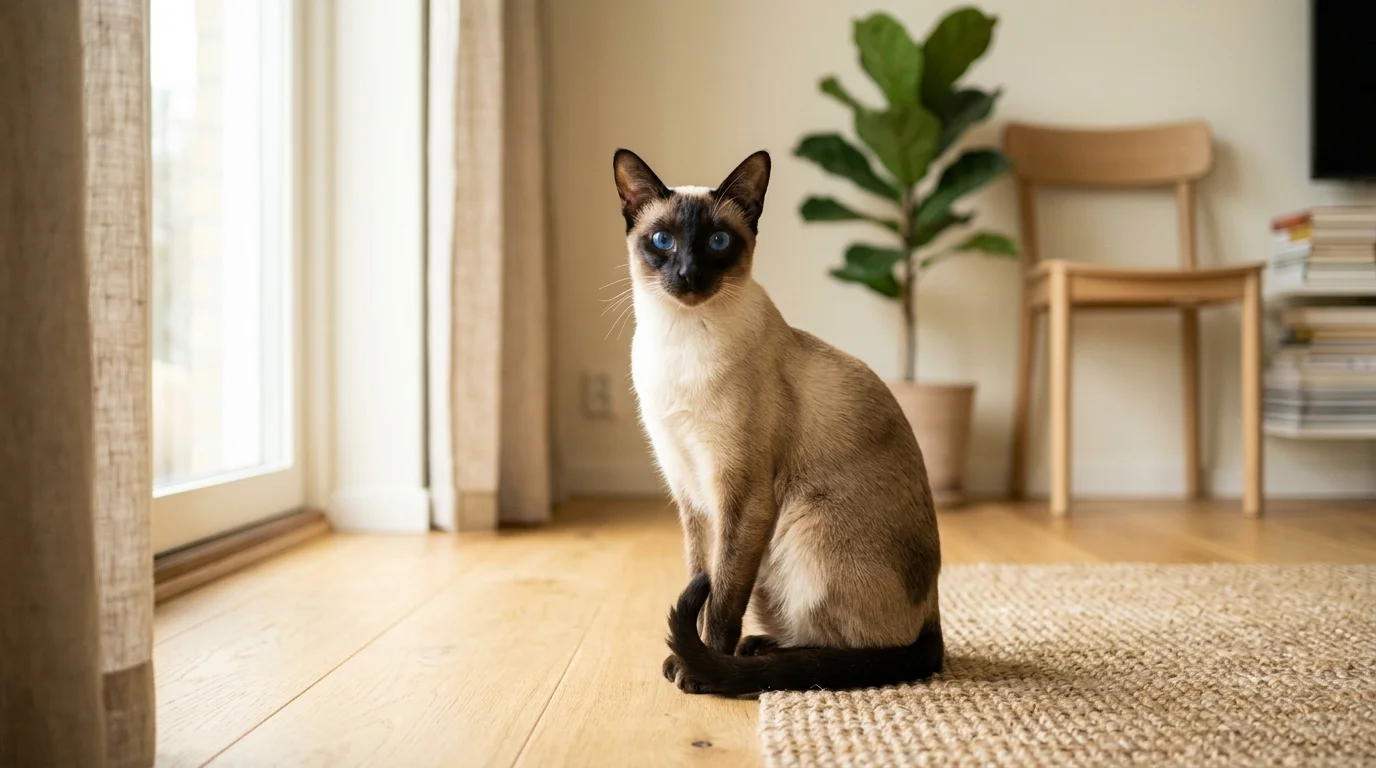
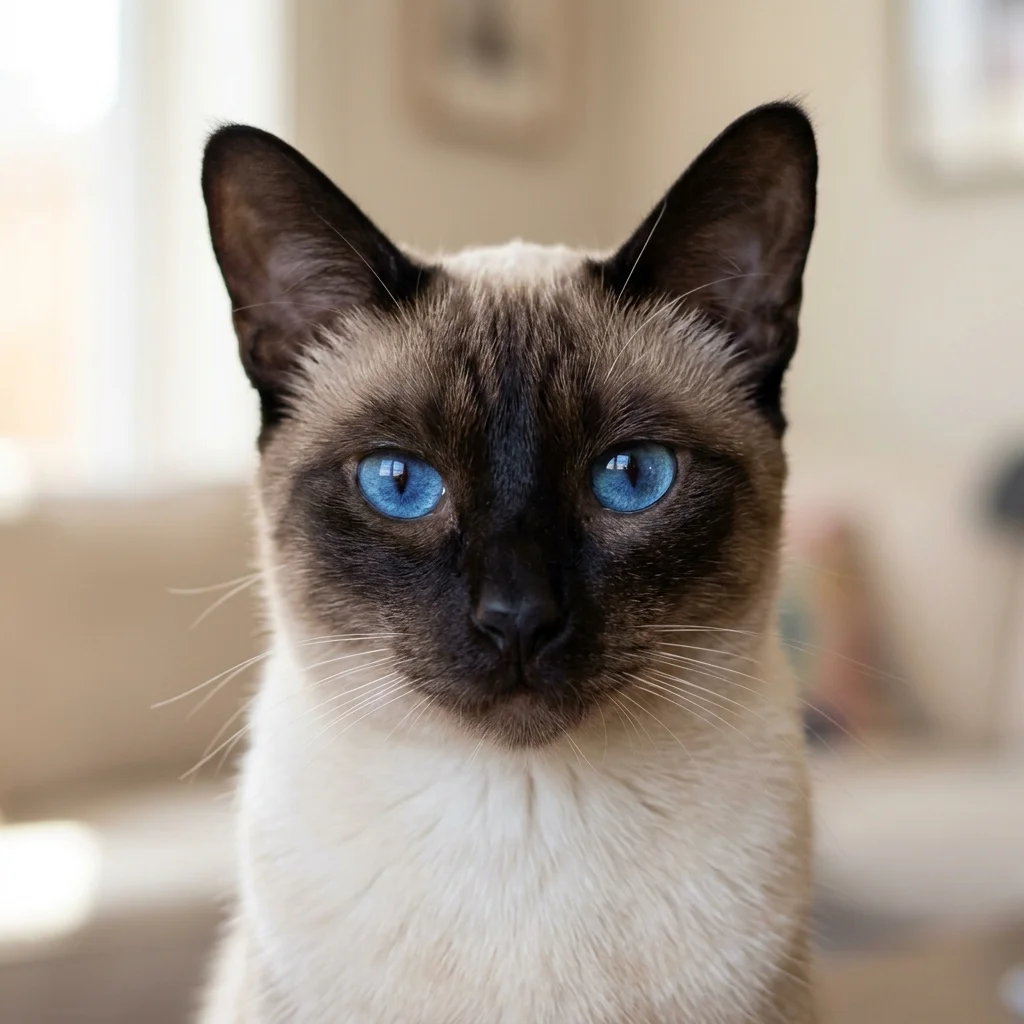
The Siamese is one of the oldest and most iconic domestic cat breeds in the world, instantly recognised by its striking blue eyes, pale body, and darkly pigmented points on the face, ears, paws, and tail. Originally from Thailand (historically known as Siam), this breed has captivated cat lovers for centuries with an extraordinary combination of beauty, intelligence, and personality.
Siamese cats are famously vocal. They communicate with a loud, distinctive voice that has been likened to a baby's cry, and they are not shy about using it. This is a breed that demands involvement in your daily life. Siamese do not thrive on independence; they form intense, loyal bonds with their owners and are happiest when treated as a full family member rather than a pet.
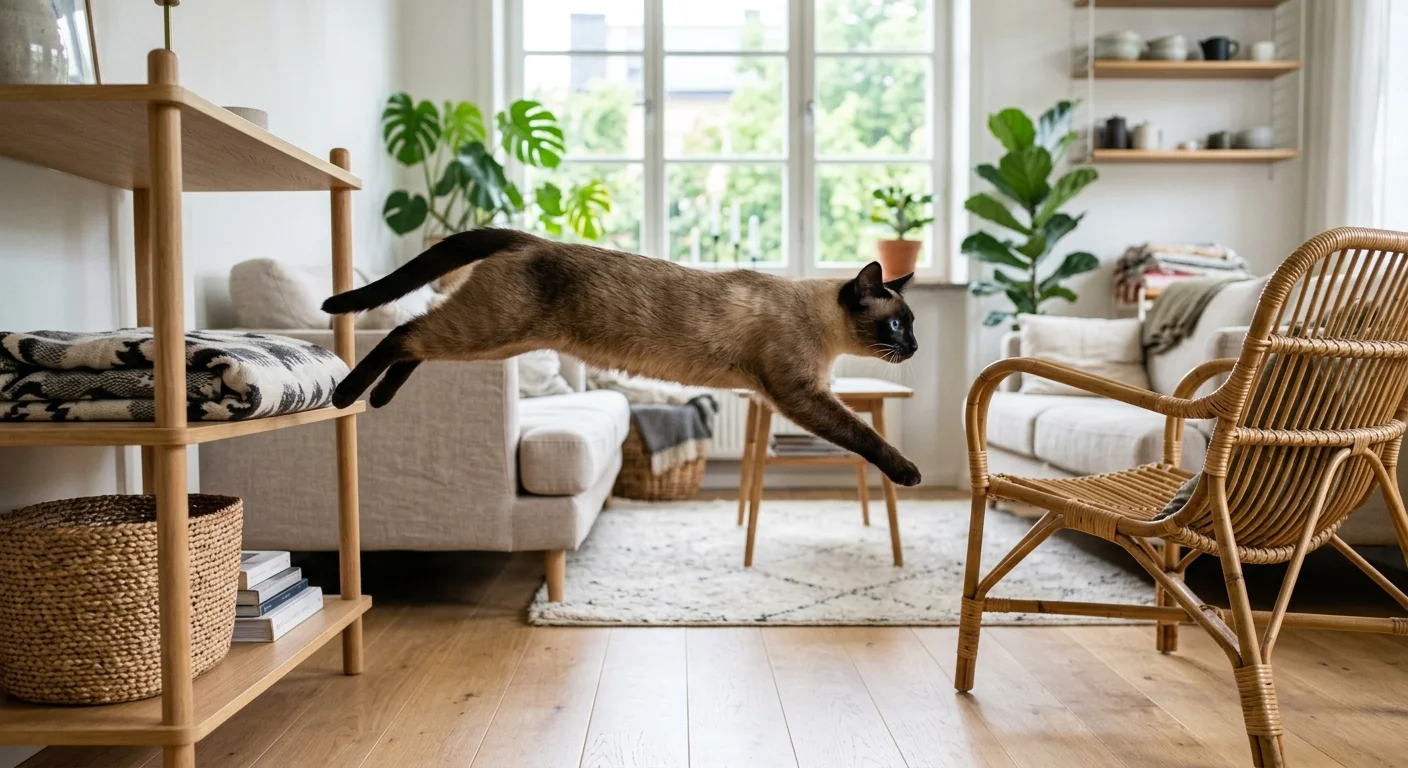
Despite their slender, elegant appearance, Siamese are energetic, playful, and surprisingly athletic. They remain curious and active well into adulthood, enjoy interactive toys and puzzle feeders, and often learn to play fetch. Their intelligence means they can become bored quickly without sufficient mental stimulation.
The modern Siamese comes in two distinct body types: the Traditional (or Apple-head) Siamese, which has a rounder, more moderate build, and the Show (or Wedge) Siamese, which is the slender, highly angular type seen in championship competition. Both types share the same point colouration and temperament.
Siamese typically weigh between 3.5 and 5.5 kg and live an impressively long life, with many reaching 15 to 20 years in good health. They are one of the most rewarding breeds for owners who want an interactive, communicative companion.
History & Origins
The Siamese is one of the oldest pedigree cat breeds with a documented history, originating in the Kingdom of Siam (present-day Thailand). The earliest known written reference to colourpoint cats in Thailand appears in the Tamra Maew, a collection of Thai cat poems believed to date from the Ayutthaya period (approximately 1350 to 1767 CE). These manuscripts describe the Wichianmat landrace (meaning 'moon diamond' or 'diamond gold'), a pale-coated cat with dark points, as a cat of great value brought into royal households for good fortune.
The Siamese arrived in the Western world during the late 19th century. The first documented import to Britain occurred around 1884, when the British Consul-General in Bangkok, Edward Blencowe Gould, brought a pair of Siamese cats to the UK as a gift for his sister. These cats, named Pho and Mia, were exhibited at Crystal Palace in 1885 and caused considerable public fascination. In the United States, President Rutherford B. Hayes received a Siamese cat in 1878, believed to be the first documented Siamese in America.
The Cat Fanciers' Association recognised the Siamese at its founding in 1906, making it one of the first breeds officially registered by the organisation. Early in the 20th century, breeders began selectively breeding for the more extreme angular, wedge-shaped head that characterises the modern show Siamese. By the mid-20th century, this more elongated type had largely replaced the rounder traditional type in championship competition, though the Traditional (Apple-head) Siamese remains popular with many owners.
The breed's influence on the cat fancy is enormous. The Siamese is one of the parent breeds of the Oriental Shorthair, the Balinese (longhaired Siamese), the Himalayan, the Tonkinese, and numerous other modern breeds.
Appearance
The Siamese is one of the most recognisable cat breeds in the world, with a distinctive body shape and colour pattern that sets it apart at a glance. The modern show-type Siamese has a long, tubular, and extremely elegant body on slim but surprisingly muscular legs. Males typically weigh between 4.5 and 5.5 kg, while females are somewhat lighter at 3.5 to 5 kg. The breed reaches full physical maturity around 12 months.
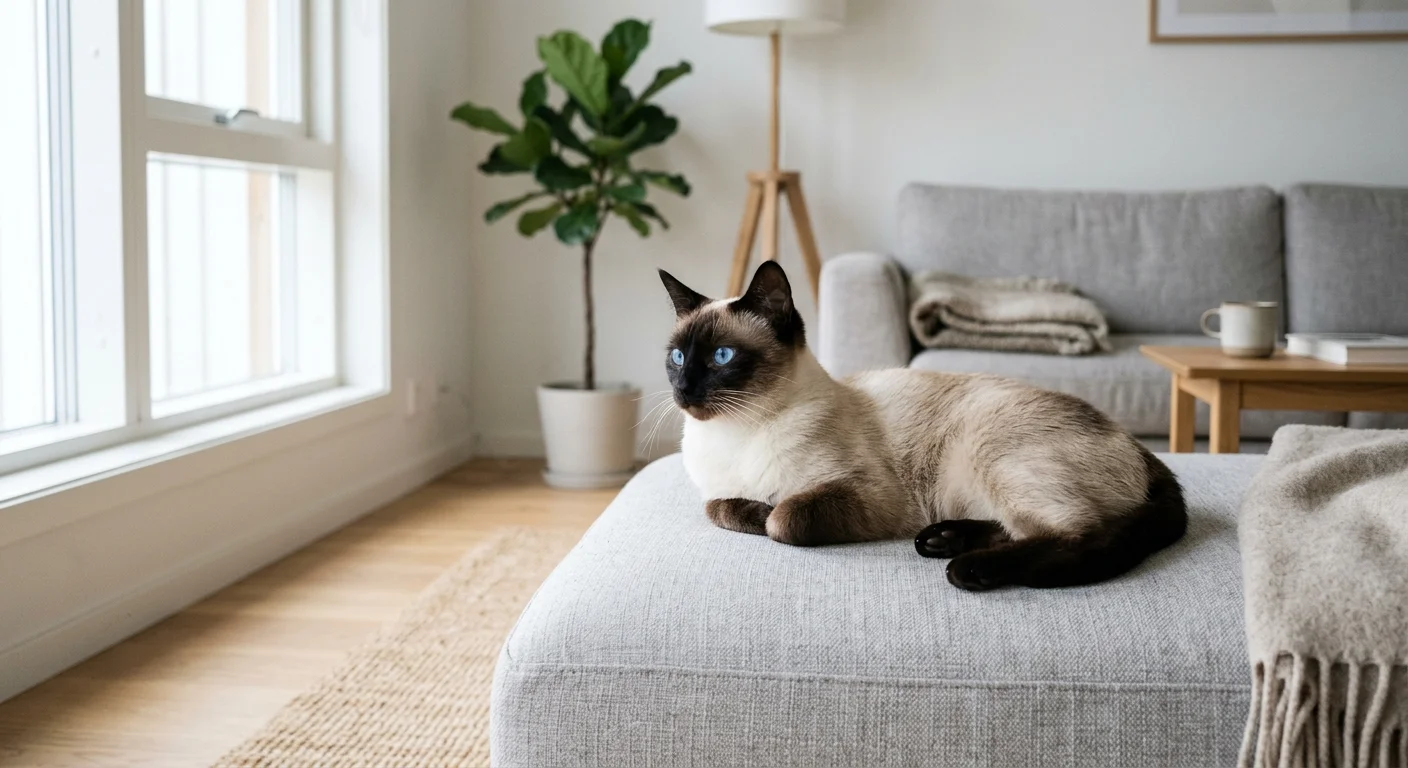
The defining feature of the Siamese is its colourpoint coat pattern, produced by a temperature-sensitive mutation in the tyrosinase enzyme (TYR gene, Cs allele). Because tyrosinase is less active at warmer body temperatures, the cat's core remains a pale cream or ivory, while the cooler extremities (face mask, ears, legs, and tail) develop rich, dark pigmentation. This is why Siamese kittens are born entirely white and gradually develop their points over the first few weeks of life as body temperature differentials take effect.
The four classic point colours recognised by the CFA are seal point (dark brown-black points on pale fawn), chocolate point (warm milk-chocolate points on ivory), blue point (slate-blue points on bluish-white), and lilac point (pinkish-grey points on glacial white). Other associations recognise additional colours including red, cream, tortie, and lynx points.
The head is wedge-shaped with a long, straight profile, large wide-set ears forming a triangle from nose tip, and vivid deep-blue almond-shaped eyes. Eye colour should be as deep and vivid a blue as possible; pale or cross-eyed expression is considered a fault in the modern standard.
The coat is short, fine, and close-lying with minimal undercoat, requiring very little grooming effort. The tail is long and slender, tapering to a fine point.
Temperament
The Siamese is one of the most extroverted and communicative cat breeds in existence. Owning a Siamese is less like having a pet and more like having a highly opinionated housemate who has strong feelings about dinner timing, your work schedule, and the fact that you closed the bathroom door.
Vocalization is the breed's most famous (and sometimes most challenging) trait. The Siamese voice is loud, low, and insistent, often compared to the cry of a human infant. They will call for attention, comment on household activities, and express displeasure with admirable directness. Prospective owners should be fully prepared for a cat that will not be ignored.
Beneath the noise is a cat of extraordinary warmth and loyalty. Siamese form deep, lasting attachments to their people and are prone to following their chosen person from room to room. They do not adapt well to being left alone for long periods; if your household is frequently empty during the day, a second cat companion (ideally another active breed) is strongly recommended.
Siamese are highly intelligent and genuinely curious. They learn quickly, can be trained to walk on a harness-leash, and respond well to clicker training and positive reinforcement. Many enjoy interactive puzzle toys. Their intelligence also means they can become destructive or develop anxious habits if understimulated.
With children, Siamese tend to thrive, appreciating the activity level and engagement that busy family life provides. They are generally tolerant of other cats and adaptable dogs, though they will assert themselves if ignored. With strangers, they are typically inquisitive rather than shy, often appointing themselves the social director of any gathering.
Activity & Play
Despite their slender, elegant frame, Siamese cats are energetic, athletic, and genuinely playful. They maintain their kitten-like enthusiasm well into adulthood, and daily play is important for both their physical fitness and mental wellbeing. A bored Siamese will let you know about it, loudly.
Aim for two interactive play sessions of 10 to 15 minutes per day. Wand toys, feather teasers, and laser pointers work well, as do puzzle feeders and treat-dispensing toys that channel the breed's keen intelligence. Many Siamese enjoy fetch and will reliably return small toys to their owners.
Siamese are curious climbers. A tall, sturdy cat tree with multiple platforms gives them the vertical territory they instinctively seek. Window perches with bird feeders positioned outside provide hours of passive entertainment and mental enrichment.
The Siamese adapts well to indoor living provided stimulation is sufficient. They do not require outdoor access, and given their sociable, trusting nature, unsupervised outdoor access carries real risks. If outdoor enrichment is desired, a secure catio or harness-leash walks are excellent alternatives that many Siamese take to readily.
Siamese are one of the breeds most amenable to harness training. Starting the process at a young age makes leash walks a realistic and enriching activity. The exercise and sensory stimulation of controlled outdoor exposure benefits this inquisitive breed considerably.
Grooming
The Siamese coat is one of the lowest-maintenance in the entire cat world. Its short, fine, close-lying texture has virtually no undercoat, meaning shedding is minimal and matting is essentially non-existent. A weekly brush with a soft rubber grooming mitt or a chamois cloth is sufficient to remove loose hairs and keep the coat gleaming. Many Siamese enjoy this as a bonding ritual rather than tolerating it as a grooming chore.
Bathing is rarely necessary unless the cat is being prepared for a show. The coat stays clean and odour-free under normal conditions with minimal effort from the owner.
Dental hygiene deserves more attention than the coat does. Siamese are prone to dental disease and gingivitis. Regular tooth brushing (ideally several times a week using cat-specific toothpaste) and annual professional dental cleanings by a vet are strongly recommended. Starting a dental care routine early in kittenhood makes the process significantly easier.
Ears should be checked weekly for wax build-up or early signs of infection. Clean gently with a cotton ball and a vet-approved ear cleaner; do not insert anything into the ear canal. Nails should be trimmed every two to three weeks. A sturdy scratching post is essential not just for nail management but also for the Siamese's active, physical personality.
The vivid blue eyes of the Siamese can be prone to discharge, particularly in the inner corners. A gentle wipe with a damp cotton pad as part of the weekly grooming routine is sufficient to keep this under control.
Health
The Siamese is generally a long-lived breed, with many individuals reaching 15 to 20 years when well cared for. However, they do carry a higher-than-average risk for several specific health conditions that prospective owners and breeders should understand.
Hepatic amyloidosis is the most serious breed-specific concern. This condition involves the abnormal deposition of amyloid protein in the liver, causing progressive organ dysfunction and, in severe cases, fatal liver rupture. Genetic studies have identified single nucleotide polymorphisms associated with AA-amyloidosis in Siamese and Oriental Shorthair cats. The average age of onset can be as young as 1 to 5 years. Clinical signs include lethargy, loss of appetite, weight loss, increased thirst and urination, and jaundice. There is currently no genetic test available to screen breeding cats, making awareness and early veterinary monitoring the main tools.
Progressive retinal atrophy (PRA) is a heritable recessive condition that causes gradual degeneration of retinal cells, eventually leading to blindness. Reputable breeders screen breeding cats through ophthalmological examination.
Dental disease is common in the breed. Siamese are predisposed to gingivitis and periodontal disease. Regular dental care and annual professional cleaning are important.
Respiratory conditions including asthma and chronic upper respiratory issues occur at higher rates than in some other breeds. The breed's narrow nasal passages can contribute to sensitivity.
Mediastinal lymphoma (a type of chest cancer) is reported at elevated rates in Siamese compared to the general cat population; studies suggest Siamese may be more susceptible. Regular veterinary check-ups and prompt investigation of any breathing changes are advised.
Lifespan: 15 to 20 years is achievable with attentive care, though 12 to 15 years is more typical.
Nutrition
Siamese cats have a lean, athletic build and a high activity level that means their caloric needs are well-matched by a high-quality, protein-forward diet. A diet with named meat or fish as the primary ingredient (such as chicken, turkey, or salmon) should form the foundation. Wet food is particularly beneficial for this breed given Siamese cats' tendency toward lower water intake, and because adequate hydration supports kidney and urinary health.
Siamese can be prone to digestive sensitivity, and some individuals develop intolerances to certain proteins or grains. If your cat experiences recurring loose stools or vomiting after meals, a limited-ingredient or grain-free diet may be worth discussing with your vet.
Portion control is important despite the Siamese's typically lean physique. Allowing free-feeding (leaving food out constantly) can lead to overconsumption, particularly as the cat ages and activity levels gradually decline. Two measured meals per day is generally recommended for adults.
Kittens require a kitten-formulated diet rich in protein, fat, and essential fatty acids to support rapid growth; transition to adult food around 12 months. Senior Siamese (10 years and older) benefit from a diet that supports joint health, kidney function, and lean muscle maintenance. Your vet can advise on appropriate senior nutrition as your cat ages.
Fresh water should be available at all times. Many Siamese prefer running water; a cat drinking fountain can encourage better hydration, which is especially valuable for cats eating primarily dry food.
Family Fit
The Siamese is one of the most family-oriented cat breeds available, but it is important to be honest about what kind of family suits it best. This is an intensely social breed that requires genuine engagement; it is not a good choice for households where it would spend most of the day alone.
With children, the Siamese is typically an excellent match. Children who enjoy playing with and interacting with a cat will find the Siamese an enthusiastic and endlessly entertaining companion. The breed appreciates the energy and attention that active family life provides, and tends to be patient and tolerant with gentle, respectful children.
With other cats, Siamese generally integrate well, particularly with similarly active and social breeds. A second cat is actually recommended for most Siamese owners, as it helps address the breed's social needs during the day. A poorly matched companion (such as a very timid or solitary cat) can sometimes cause friction, so introducing a confident, playful match works best.
With dogs, the Siamese typically holds its own well. Their boldness means they are less likely to be intimidated by dog interaction, and many Siamese form genuine friendships with dog companions, particularly when introduced during kittenhood or with patient, gradual introductions.
Apartment living is entirely suitable for Siamese, provided they have sufficient vertical space, stimulation, and company. They do not need a garden. However, any home that is empty for 8 to 10 hours a day without a companion animal is not ideal for this breed. A Siamese left alone and unstimulated will become stressed, vocal, and potentially destructive.
Fun Facts
1. Their colour points shift with temperature. Siamese coat pigmentation is controlled by a temperature-sensitive enzyme. Cooler parts of the body (ears, face, paws, tail) develop dark pigmentation; the warm core stays pale. A Siamese kept in a warmer environment will have lighter points than one in a cooler climate.
2. They were the first registered breed in the United States. President Rutherford B. Hayes received what is believed to be the first Siamese cat documented in the US, as a diplomatic gift in 1878 from the US Consul in Bangkok.
3. Kittens are born completely white. Because the temperature-sensitive pigment enzyme is inactive at the uniformly warm temperature inside the womb, Siamese kittens are born with entirely white coats. Points develop gradually over the first few weeks.
4. They are one of the founding breeds of the modern cat fancy. The CFA recognised Siamese at its founding in 1906, making them one of the earliest officially registered breeds in the world.
5. Their voice has been compared to a human baby's cry. The Siamese produces a distinctive, loud, low-pitched vocalisation that many people find eerily human-like. This is partly why the breed has such a strong reputation as an exceptionally communicative cat.
6. They are one of the parent breeds of many modern breeds. The Oriental Shorthair, Balinese, Himalayan, Tonkinese, and Javanese all count the Siamese as a direct ancestor.
7. Cross-eyed Siamese were once common. Early Siamese frequently had crossed eyes, a trait linked to the same genetic mutation that causes the colourpoint pattern. Modern breeding has largely selected against this trait.
FAQ
Are Siamese cats good for first-time owners? Siamese can be excellent for first-time cat owners who want a highly interactive, communicative companion. However, they are not suitable for owners seeking a low-maintenance or independent cat. They require daily engagement, company, and mental stimulation. First-time owners should be prepared for a vocal, demanding, and deeply affectionate cat.
Do Siamese cats get along with other pets? Generally yes. Siamese are sociable and bold, which means they typically adapt well to other cats and even dogs. A second cat companion is strongly recommended, as Siamese do not thrive with long periods of solitude.
Are Siamese cats noisy? Yes. The Siamese is considered one of the most vocal cat breeds. They produce a loud, persistent vocalisation and will use it to communicate hunger, boredom, affection, and displeasure. This is a fundamental trait of the breed, not a problem to be trained away.
How long do Siamese cats live? Siamese are among the longest-lived domestic cat breeds. A lifespan of 12 to 15 years is typical, and many individuals reach 18 to 20 years with attentive care.
Do Siamese cats shed a lot? No. Their short, fine coat with minimal undercoat means shedding is low compared to most other breeds. Weekly grooming is sufficient.
What health tests should a Siamese breeder perform? Reputable breeders should screen breeding cats for progressive retinal atrophy (PRA) through ophthalmological examination, and be knowledgeable about the breed's predisposition to hepatic amyloidosis. Ask breeders about their health testing protocols and whether they have vet references.
Can Siamese cats live in apartments? Yes, comfortably. They do not require outdoor space, but they do need sufficient vertical territory, daily interactive play, and ideally a companion animal to share the space.
Gallery
Explore more Siamese-style breeds
Browse related breeds or take our matching quiz to find the right fit for your home.
Stay in the loop
Get weekly breed spotlights, care guides, and new additions - straight to your inbox.