Bombay
affectionate, social, intelligent, playful
Quick Facts
- Lifespan
- 12-16 years
- Weight
- 2.7-5 kg
- Origin
- United States
- Coat
- Short
Overview
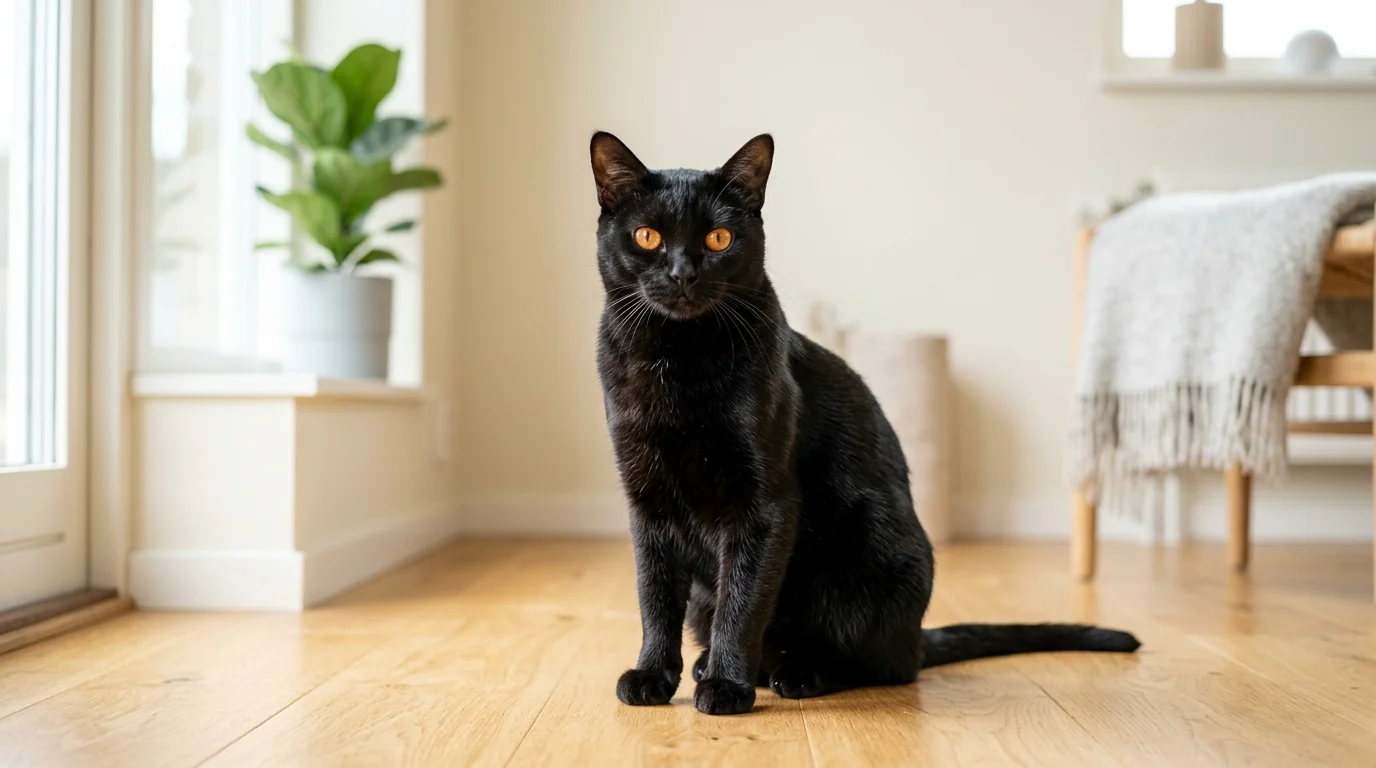
The Bombay is often called the "parlour panther" — a miniature black panther in sleek patent-leather coat, with round copper eyes that glow with warmth and intelligence. Developed to capture the exotic look of the Indian black panther in a domestic-sized package, the Bombay combines stunning good looks with an endearingly affectionate, people-devoted personality. This is a cat that genuinely wants to be with you at all times.
History & Origins
The Bombay was the creation of Nikki Horner, a breeder from Louisville, Kentucky, who in the 1950s set out to produce a domestic cat that looked like a miniature Indian black panther. She achieved this by crossing a sable Burmese with a black American Shorthair, selectively breeding over several generations for a jet-black coat, copper eyes, and the Burmese body type.
The name Bombay was chosen to evoke the city of Bombay (now Mumbai), India — land of the black leopard that inspired the breed's creation. The Bombay was recognised for Championship competition by the CFA in 1976 and by TICA and the GCCF subsequently. It remains a relatively rare breed, though its striking appearance and affectionate personality have earned it a devoted following.
Appearance
The Bombay is a medium-sized cat with a muscular, compact body that is heavier than it looks — a trait shared with its Burmese ancestor. Males typically weigh 4–6 kg, females 3–4.5 kg. Despite the solid build, the Bombay moves with fluid grace and agility.
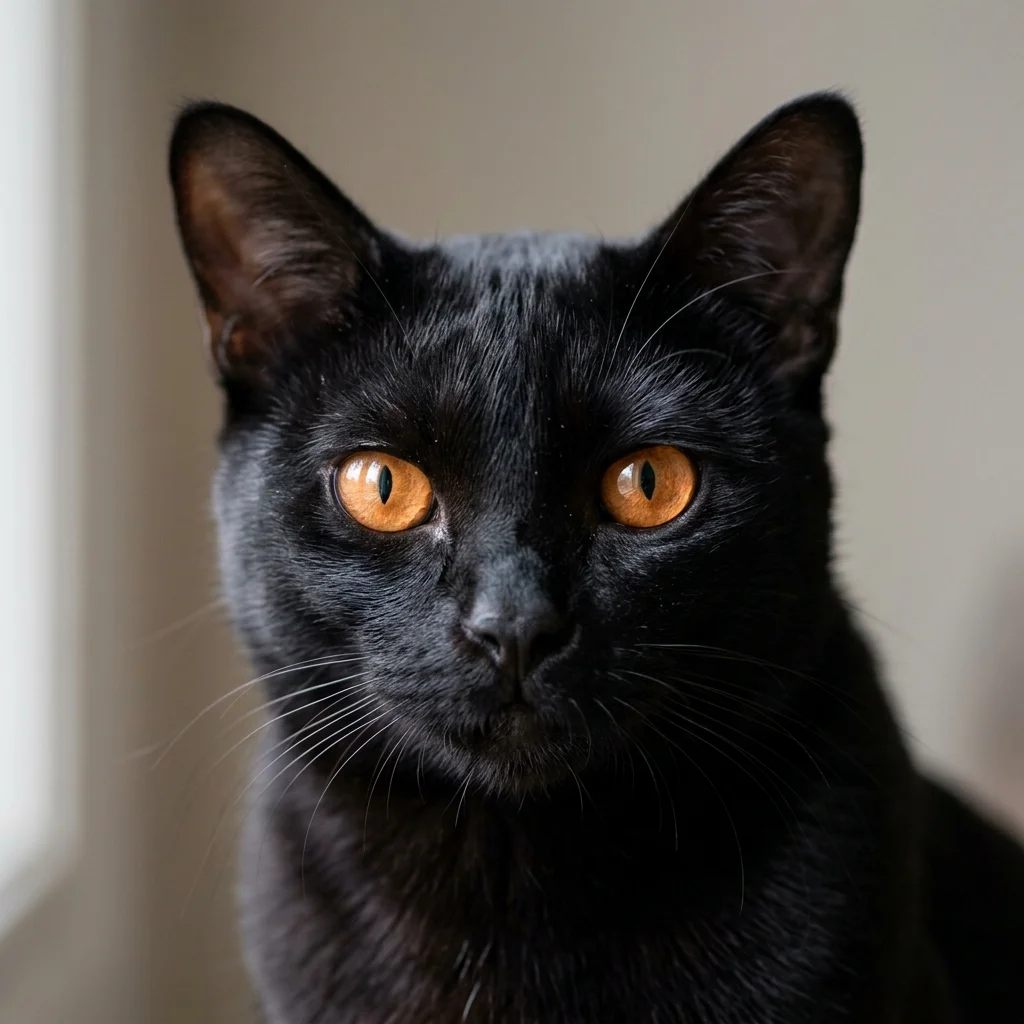
The defining feature of the breed is its jet-black coat — described as patent leather by CFA standards — which should be uniformly black from root to tip with a pronounced glossy sheen. The coat is short, close-lying, and satiny in texture.
The head is round from every angle: round skull, round full face, rounded muzzle, and rounded tips to the medium-sized ears. The eyes are large and round, set wide apart, and range in colour from gold to deep copper — a vivid contrast to the black coat. Black is the only accepted colour in CFA and TICA show standards.
Temperament
The Bombay is one of the most people-oriented breeds in the cat world. It actively seeks out human company, gravitates toward laps, and is genuinely distressed by prolonged solitude. If you sit down, expect a Bombay to find its way onto you within minutes.
Intelligent and curious, Bombays are playful throughout their lives and retain a kitten-like enthusiasm for games well into adulthood. They are known to walk on a leash, play fetch, and engage with puzzle toys. They communicate with a moderate, melodic voice — talkative but not shrill.
Bombays are highly adaptable and tend to get along well with children, other cats, and cat-friendly dogs. They enjoy being the centre of attention and will cheerfully greet visitors at the door. Their social nature makes them well-suited to busy households, though they need reliable human company — a Bombay left alone for hours every day is an unhappy Bombay.
Despite their exotic appearance, they have none of the aloofness sometimes associated with show-quality breeds — they are warm, gregarious, and genuinely affectionate.
Activity & Play
Bombay Activity and Exercise
Despite their sleek, panther-like appearance suggesting cool mystery, Bombay cats are energetic and playful companions who need genuine daily engagement to stay happy.
Energy Level
Bombays sit at a medium-high energy level. They are not the frantic, wall-bouncing type, but they are far from lap-sitters who sleep through the day. Expect a cat that initiates play sessions, investigates every corner of the home, and follows you from room to room out of genuine curiosity.
Daily Exercise Needs
Aim for at least 20 to 30 minutes of active, interactive play each day, split across two or three sessions. Morning and evening sessions work well for most households. Without adequate stimulation, Bombays can develop mild destructive habits or become overly clingy.
Favourite Play Styles
Bombays are intelligent cats who enjoy play that mimics hunting. Feather wands, fishing rod toys, and battery-operated mice that dart unpredictably hold their attention well. They are also known to enjoy fetch, which surprises many first-time Bombay owners. Puzzle feeders and treat-dispensing toys engage their sharp minds between interactive sessions.
Toys and Enrichment
Rotate toys regularly to prevent boredom. A good rotation might include a crinkle ball, a laser pointer (always end sessions with a physical toy so the cat can catch something), a tunnelling tube, and a window perch with a bird feeder outside. Bombays enjoy watching the world almost as much as participating in it.
Vertical Space and Indoor Living
Bombays are confident climbers. A tall cat tree placed near a window gives them an outlet for climbing and a satisfying vantage point. They are fully suited to indoor living provided their environment is enriched. Unsupervised outdoor access is not recommended given their trusting, curious nature.
Grooming
The Bombay's short, glossy coat is one of the easiest to maintain. Its patent-leather sheen is a natural quality of the breed, not a product of extensive grooming. A weekly rub-down with a rubber curry brush or soft chamois cloth is all that is needed to remove loose hairs and polish the coat to its characteristic gleam.
Shedding is minimal to moderate. The short, fine coat does not mat, making grooming an enjoyable rather than labour-intensive task for both owner and cat.
Routine care includes nail trimming every two weeks, regular ear cleaning, and dental hygiene through weekly tooth brushing. Eye discharge may need occasional gentle wiping, and some Bombays may be prone to excessive tearing due to their facial structure.
Health
The Bombay is generally a healthy breed with a lifespan of 12–16 years, though it does carry some specific health vulnerabilities worth being aware of.
Hypertrophic cardiomyopathy (HCM) is the primary hereditary health concern and should be screened for regularly via veterinary cardiac examination. Craniofacial defects — a developmental abnormality that can affect the skull and face — have been reported in some Bombay kittens; reputable breeders screen for this.
Due to the breed's relatively flat face, some Bombays experience mild breathing difficulties and sinus issues, as well as a tendency toward excessive eye tearing. Gingivitis and dental disease are also noted concerns, making dental hygiene a priority from an early age. Overall, a well-bred Bombay from a health-conscious breeder is a robust and long-lived companion.
Nutrition
Feeding Your Bombay
The Bombay is a muscular, medium-sized cat with an active metabolism. Proper nutrition keeps this breed lean and their coat gleaming.
Protein and Fat Targets
Look for foods where a named animal protein (chicken, turkey, fish) appears first on the ingredient list. A quality adult formula should contain 30-36% protein and 12-16% fat on a dry matter basis. Bombays do well on both wet and dry food, but a majority-wet diet helps with hydration.
Wet vs. Dry
Wet food should make up at least half of the diet where possible. The higher moisture content supports kidney function and helps prevent the urinary issues that can arise in indoor cats. A complete dry kibble serves as a convenient supplement or for free-feeding windows, but watch portions carefully as Bombays can overeat when bored.
Feeding by Age
- Kittens (under 1 year): 3-4 meals per day using a kitten-specific formula with elevated protein and DHA for brain development.
- Adults (1-8 years): Two measured meals daily. Avoid ad libitum feeding once the cat reaches full size.
- Seniors (8+ years): Transition to a senior formula with added joint support and slightly reduced calories.
Watch Points
Bombays can be prone to weight gain if under-stimulated. Monitor body condition monthly and adjust portions before obesity sets in. Taurine-rich formulas support heart health. Always ensure fresh water is available, ideally from a flowing fountain.
Family Fit
Is the Bombay Right for Your Family?
The Bombay is one of the most socially adaptable cats you can choose. This breed genuinely enjoys the company of people and rarely retreats from household activity.
With Children
Bombays are patient and playful with children who know how to interact respectfully with a cat. They enjoy games, will tolerate moderate handling, and are less likely than many breeds to scratch or hide when things get lively. Supervise very young children as you would with any cat, but school-age kids and Bombays tend to become fast friends.
With Other Cats
This breed generally gets along well with other cats, especially when introduced gradually. Bombays can be assertive and may want to be top cat in a multi-cat household, but serious conflict is uncommon. A slow, scent-first introduction over a week or two smooths the process considerably.
With Dogs
Bombays are among the more dog-friendly cat breeds. Their confident, curious nature means they tend to assess a dog with interest rather than panic. Cat-savvy dogs and confident Bombays often form genuine bonds, particularly when raised together.
With Seniors and Singles
The Bombay bonds deeply with its primary person and thrives in quieter households too. Seniors who can offer consistent company and daily play will find this breed deeply rewarding. Bombays do not do well with very long periods of solitude, so a retired owner at home suits them well.
Apartment Living
Bombays adapt well to apartments provided they have vertical space, interactive toys, and daily attention. They are not noisy cats but do need mental and physical stimulation to avoid boredom.
Fun Facts
- The Bombay was intentionally bred to resemble a miniature Indian black panther — its creator, Nikki Horner, called it the "parlour panther."
- Every hair of a Bombay's coat should be black from root to tip — even a single white hair disqualifies a show cat.
- Bombays are so people-oriented they have been described as "Velcro cats" — they attach themselves to their humans and rarely leave their sides.
- The breed's copper eyes are sometimes described as "new penny" eyes — warm, vivid, and metallic in appearance.
- Despite their panther-like appearance, Bombays are one of the most gentle and affectionate breeds in the domestic cat world.
FAQ
Bombay FAQ
How long do Bombay cats live?
With good care, Bombays typically live 12 to 18 years. Their relatively small gene pool means health screening of parents matters, so buy from breeders who test for hypertrophic cardiomyopathy.
Do Bombays shed a lot?
Shedding is minimal for this breed. The short, close-lying coat loses very little hair, and a weekly rub-down with a chamois or grooming glove is usually all the maintenance needed.
Are Bombays vocal cats?
Bombays are moderately talkative. They will let you know when they want food or attention, but they do not have the persistent yowling of Siamese-type breeds. Their voice is soft and pleasant.
Are Bombays hypoallergenic?
No cat is truly hypoallergenic. Bombays produce Fel d 1 like all cats. That said, their minimal shedding means less allergen distributed around the home, which some allergy sufferers find more manageable.
How much does a Bombay kitten cost?
Expect to pay $500 to $1,200 from a reputable breeder. Show-quality or breeding-rights kittens cost more. Adoption through a breed rescue is a lower-cost alternative.
Are Bombays good for first-time owners?
Yes, with one caveat: they need daily interaction. Bombays bond deeply and do not tolerate being left alone for long stretches. Owners who work long hours should consider getting two cats to keep each other company.
Gallery
Explore more Bombay-style breeds
Browse related breeds or take our matching quiz to find the right fit for your home.
Stay in the loop
Get weekly breed spotlights, care guides, and new additions - straight to your inbox.