Snowshoe
affectionate, vocal, intelligent, social
Quick Facts
- Lifespan
- 14-19 years
- Weight
- 3.2-5.4 kg
- Origin
- United States
- Coat
- Short
Overview
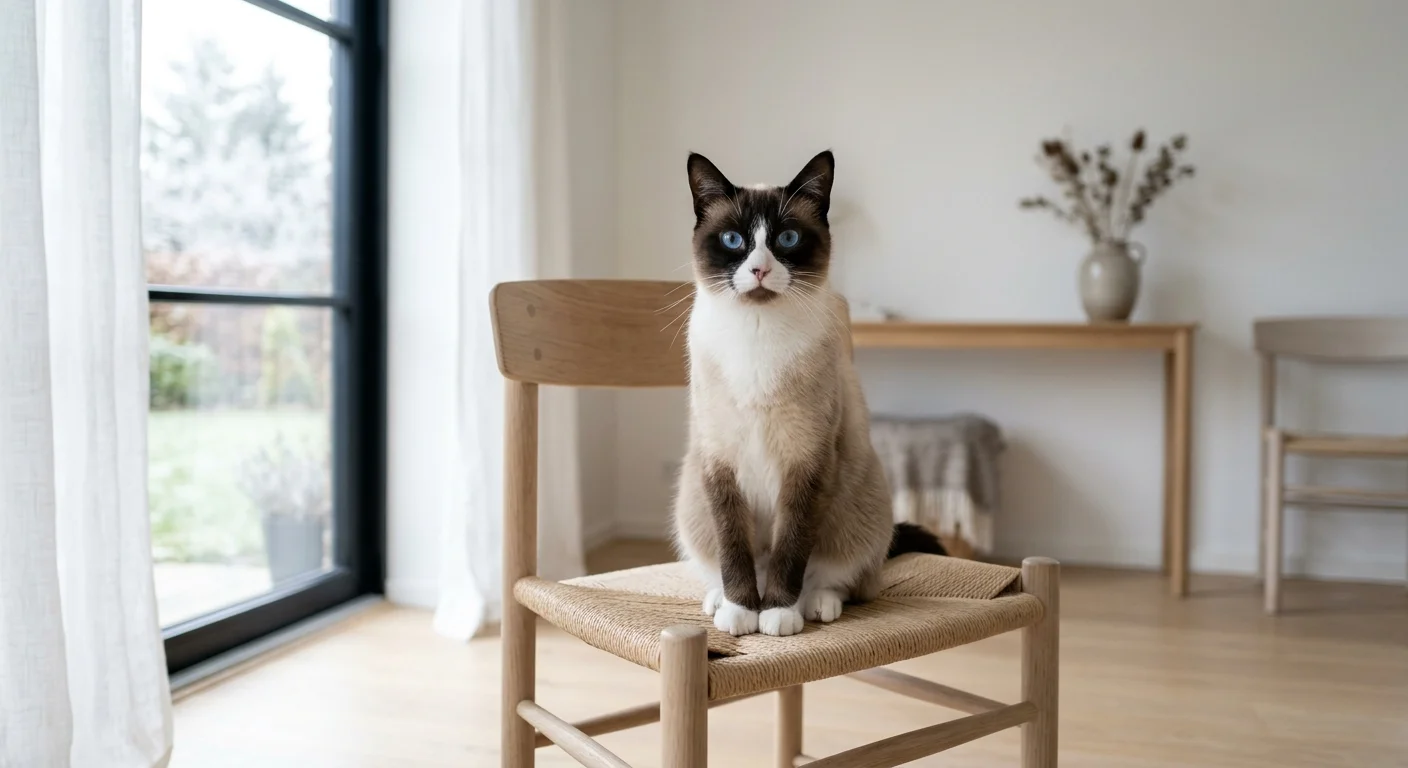
The Snowshoe is a striking medium-sized cat that combines the elegant pointed colouring of the Siamese with distinctive white-gloved paws — an effect that gives the breed its name. Sociable, vocal, and deeply affectionate, the Snowshoe thrives on human interaction and dislikes being left alone. With its bright blue eyes and expressive face, this breed is as visually arresting as it is warm in personality.
History & Origins
The Snowshoe breed originated in Philadelphia, Pennsylvania in the early 1960s when Dorothy Hinds-Daugherty, a Siamese breeder, noticed three kittens born with four white paws in a litter. Captivated by the combination of Siamese pointed colouring with white feet, she set out to develop this trait consistently by crossing Siamese cats with bi-colour American Shorthairs. The resulting cats displayed the distinctive white inverted "V" facial marking that became a hallmark of the breed alongside the white paws.
Breed development was slow and the Snowshoe's popularity dipped in the 1970s, but interest revived in the 1980s when breeders returned to developing the line. TICA granted the Snowshoe full championship status in the 1990s, and ACFA followed. The CFA also recognises the breed.
One of the breed's more unusual claims to fame is Grumpy Cat — the internet-famous cat whose perpetually disapproving expression captivated millions — was believed to be a mixed-breed Snowshoe. Today the Snowshoe remains a relatively uncommon but steadily growing breed.
Appearance
The Snowshoe is a medium to medium-large, semi-foreign-type cat with a solid, well-muscled body. Adults typically weigh 3.2–5.4 kg, with males on the heavier end. The body is athletic and well-proportioned, with a moderately long torso and sturdy bone structure.
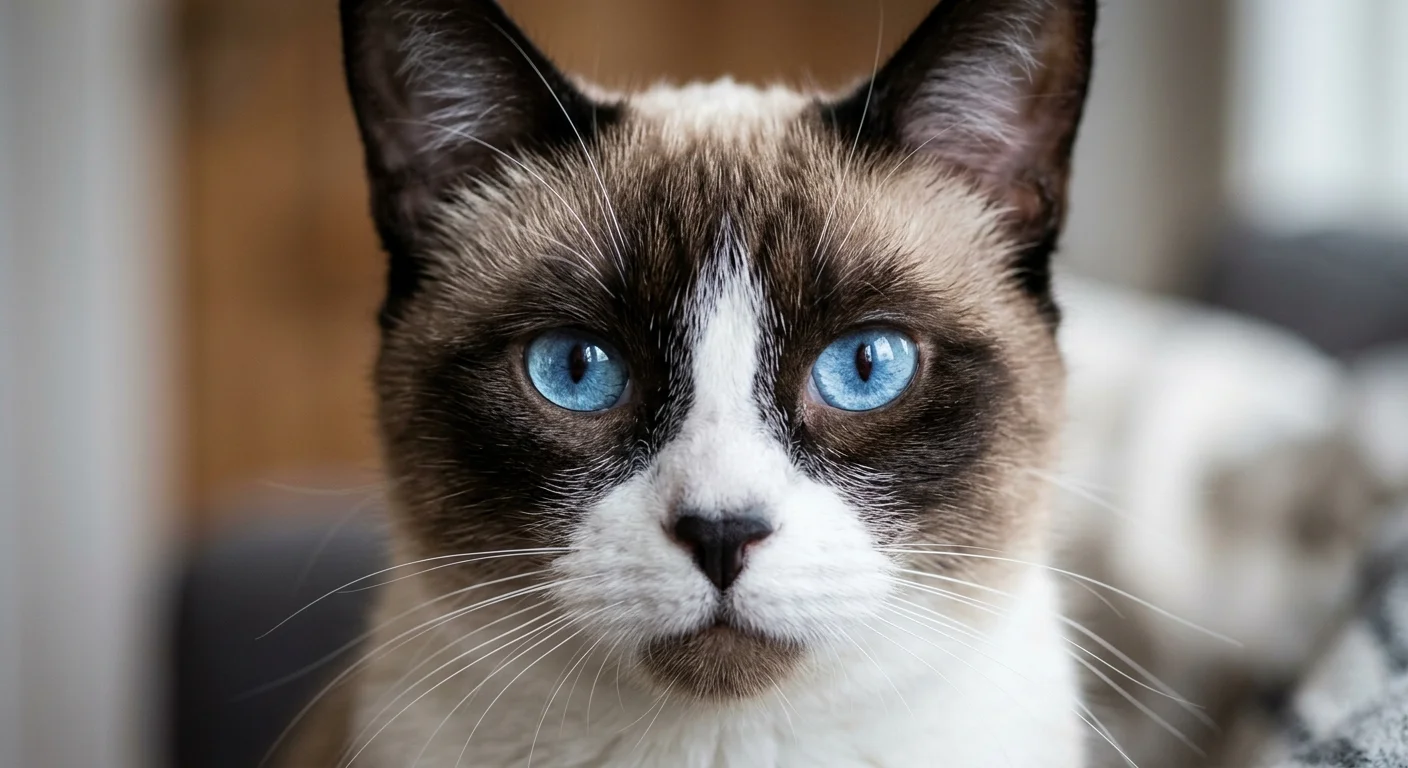
The coat is short, close-lying, and moderately dense. The Snowshoe's colouring is point-patterned — similar to the Siamese, with darker colouration on the face mask, ears, legs, and tail. Accepted show colours include seal point and blue point. The breed's most distinctive physical features are the white paws ("snowshoes") and the white inverted "V" marking on the face, running from between the eyes to the nose bridge.
The eyes are walnut-shaped (slightly rounder than a Siamese), vivid blue, and set at a slight upward angle. The head is a broad, modified wedge with rounded contours. Kittens are born entirely white and develop their point colouration over the first weeks and months of life.
Temperament
Snowshoes are famously social and affectionate, forming strong bonds with their families and often attaching particularly strongly to one favourite person. They follow their chosen human throughout the home, greeting them at the door and positioning themselves as close as possible to whatever activity is underway.
Sharing their Siamese heritage, Snowshoes are vocal and communicative. They "talk" to their owners in a softer, more melodic voice than the Siamese, but they are nonetheless expressive and opinionated. They do not like being ignored and will make their feelings known.
This breed is intelligent and playful, responding well to puzzle toys, interactive play, and even basic training. Snowshoes can learn their name, respond to commands, and enjoy games of fetch. Their activity level is moderate — energetic enough to be entertaining, calm enough to be a comfortable companion.
Snowshoes do not cope well with long periods alone. They are best suited to households where someone is home much of the time, or where they have a companion cat for company. They are gentle and patient with children and generally sociable with other pets.
Activity & Play
Activity and Exercise Needs
The Snowshoe is a moderately active, playful breed that balances periods of interactive engagement with genuine enjoyment of relaxation and companionship. It is neither a hyperactive athlete nor a couch potato.
Energy Level
Snowshoes have moderate to moderately-high energy. They enjoy play sessions and will seek out interaction, but they also have an easy-going quality that means they adapt to the household rhythm rather than demanding constant stimulation.
Daily Exercise
Aim for 15 to 25 minutes of interactive play each day, split into one or two sessions. Snowshoes are social and prefer play that involves their owner rather than solo entertainment.
Play Styles
Snowshoes enjoy chasing wand toys, batting at feather teasers, and pouncing on toy mice. They tend to prefer toys that allow interaction with their owner rather than playing alone. Some Snowshoes enjoy fetch when introduced early. Their intelligence means they appreciate variety in play.
Enrichment
Puzzle feeders and food-dispensing toys keep the Snowshoe's mind active. Rotating toy selections help maintain interest. Window perches with bird feeders outside provide hours of passive enrichment. The breed is social enough that feline or human companionship counts as meaningful enrichment.
Vertical Space
Snowshoes enjoy climbing and appreciate a cat tree or wall shelves. They like to observe household activity from an elevated position. A tree near a window is particularly appreciated.
Indoor vs. Outdoor
The Snowshoe is best suited to indoor life. It forms strong bonds with its family and can become anxious when left to roam outside unsupervised. A secure outdoor enclosure or supervised garden time provides safe enrichment.
Grooming
The Snowshoe's short, close-lying coat is low-maintenance and requires minimal grooming effort. Weekly brushing with a soft bristle brush or fine-toothed comb is sufficient to remove loose hairs and keep the coat looking sleek. The coat does not mat and sheds moderately.
Because the Snowshoe's pointed colouring is temperature-sensitive (as with Siamese and related breeds), the darker areas of the coat will deepen in cooler parts of the body and lighten as the cat ages. This is a natural characteristic of the colour genetics and requires no special attention.
Routine care includes regular nail trimming, ear cleaning as needed, and dental hygiene. The breed's bright blue eyes should be gently cleaned with a damp cloth if any discharge accumulates in the inner corners. Overall, the Snowshoe is an easy-care breed that is well-suited to owners who want a beautiful cat without a demanding grooming schedule.
Health
The Snowshoe is considered a generally robust breed, with a notably long lifespan of 14–19 years. This longevity is one of the breed's most appealing qualities for prospective owners.
As with many breeds that trace back to Siamese ancestry, Snowshoes may be at slightly elevated risk for certain conditions. Hypertrophic cardiomyopathy (HCM) is the most commonly noted concern and should be screened for by responsible breeders. Chronic kidney disease (CKD) is also worth monitoring as the cat ages, particularly given the breed's longevity.
Because the Snowshoe is produced from a combination of Siamese and American Shorthair genetics, the gene pool is broader than many pedigree breeds, which contributes to general hardiness. Routine annual veterinary check-ups, a high-quality diet, and regular dental care are the foundations of keeping a Snowshoe healthy into old age.
Nutrition
Feeding Your Snowshoe
Snowshoes are medium-sized cats with moderate energy levels. A well-balanced diet supports their lean, muscular build and keeps their coat short and clean.
Protein: Aim for a food where animal protein makes up at least 35 to 40 percent of dry matter. Named meats like chicken, turkey, or salmon should appear at the top of the ingredient list. High protein intake supports muscle maintenance throughout adulthood.
Fat: A fat content of 12 to 18 percent on a dry matter basis provides enough energy for their active lifestyle without promoting unnecessary weight gain. Look for named fat sources like chicken fat or salmon oil.
Wet versus dry food: Snowshoes benefit from wet food as a primary or significant part of their diet. It provides hydration and tends to have a higher protein-to-carbohydrate ratio than dry kibble. A combination of wet and dry works well for most adult Snowshoes.
Feeding by age:
- Kittens (up to 12 months): feed three to four times daily using kitten-specific food with higher calorie and nutrient density.
- Adults (1 to 7 years): two meals per day, measured to prevent overeating.
- Seniors (7 years and older): transition to senior formulas as needed; monitor weight and kidney health.
Breed-specific notes: Snowshoes can be food-motivated and prone to weight gain if free-fed. Measured portions and scheduled meals are recommended. Avoid foods with artificial fillers, by-products, or high grain content as the primary ingredient. Always provide fresh water, particularly if dry food is the dietary staple.
Family Fit
Is the Snowshoe a Good Fit for Your Family?
The Snowshoe is one of the most adaptable and people-oriented cats you will find. Their Siamese roots give them a sociable, communicative nature, while their American Shorthair influence adds a grounded, easy-going temperament. That combination makes them a strong match for a wide range of households.
Children: Snowshoes do very well with children. They enjoy interactive play and are patient enough to handle the energy of younger kids. They will engage in games, follow kids around the house, and settle in for cuddles. Supervision is still recommended with toddlers to protect both the child and the cat.
Other cats: Snowshoes generally accept other cats without difficulty, particularly when introductions are done gradually. They like having a companion and can develop strong bonds with a feline housemate. Avoid pairing them with highly territorial breeds.
Dogs: With a calm, cat-friendly dog, Snowshoes typically adapt well. Their confidence means they are unlikely to hide away, and many will establish their own boundaries assertively. A phased introduction allows both animals to adjust at their own pace.
Elderly owners: Snowshoes are affectionate without being overwhelming. They enjoy company and sitting close, which suits retired owners who have time for interaction. Their moderate activity level means they do not demand constant stimulation.
Apartments: Snowshoes are well-suited to apartment living as long as they receive daily interaction and mental engagement. They are not particularly loud, though they will let you know when they want attention.
First-time cat owners: Yes. Their gentle, social temperament and manageable grooming needs make them a rewarding choice for people new to cat ownership.
Fun Facts
- Snowshoe kittens are born entirely white — their pointed colouring and distinctive markings develop gradually in the first months of life.
- The Snowshoe's colour is temperature-sensitive: cooler parts of the body produce darker fur, which is why the extremities (mask, ears, paws, tail) are the darkest.
- Grumpy Cat, the viral internet sensation known for her permanent frown, was believed to be a mixed-breed Snowshoe — bringing unexpected celebrity to the breed.
- Achieving the perfect white paw pattern is notoriously difficult to breed for consistently, which is one reason the Snowshoe remains relatively uncommon despite its appealing looks.
- The Snowshoe shares the Siamese's love of conversation but has a distinctly softer, gentler voice — all the expressiveness with less of the volume.
FAQ
How long do Snowshoe cats live?
Snowshoe cats generally live between 14 and 19 years. They are considered a relatively healthy breed without many breed-specific genetic conditions, and cats kept indoors with regular vet care often reach the upper end of that range.
Do Snowshoe cats shed a lot?
Snowshoes have a short, close-lying coat that sheds moderately. Weekly brushing is enough to manage loose hair and keep the coat looking neat. They are not a high-maintenance breed in terms of grooming.
Are Snowshoe cats vocal?
Yes, though less so than their Siamese ancestors. Snowshoes will talk to you, ask for attention, and comment on what is happening, but their voice is softer and less insistent than a purebred Siamese. They communicate frequently but are not generally described as disruptive.
Are Snowshoe cats hypoallergenic?
No. Snowshoes produce the Fel d 1 protein that triggers most cat allergies. Their short coat makes grooming easier, but it does not significantly reduce allergen exposure. People with cat allergies should spend time with a Snowshoe before committing to adoption.
How much does a Snowshoe kitten cost?
Snowshoe kittens from reputable breeders typically cost between $600 and $1,200. The breed is uncommon, so availability can be limited and waiting lists are not unusual. Rescue organizations occasionally have Snowshoes or Snowshoe mixes available at lower cost.
Are Snowshoe cats good for first-time owners?
Yes. Snowshoes are social, trainable, and relatively easygoing. They bond closely with their people and adapt well to household routines. Their moderate care requirements make them a manageable and rewarding choice for first-time cat owners.
Gallery
Explore more Snowshoe-style breeds
Browse related breeds or take our matching quiz to find the right fit for your home.
Stay in the loop
Get weekly breed spotlights, care guides, and new additions - straight to your inbox.