Siberian
affectionate, playful, intelligent, adventurous
Quick Facts
- Lifespan
- 11-15 years
- Weight
- 3.5-8 kg
- Origin
- Russia
- Coat
- Long
Overview
The Siberian is Russia's ancient forest cat — a large, powerful breed that has thrived in the harsh Siberian climate for centuries. With a magnificent triple-layered coat, an adventurous spirit, and a deeply affectionate nature, the Siberian is sometimes described as the perfect blend of wild grandeur and devoted companionship. The breed is also widely noted as a potentially lower-allergen option for sensitive cat lovers.
History & Origins
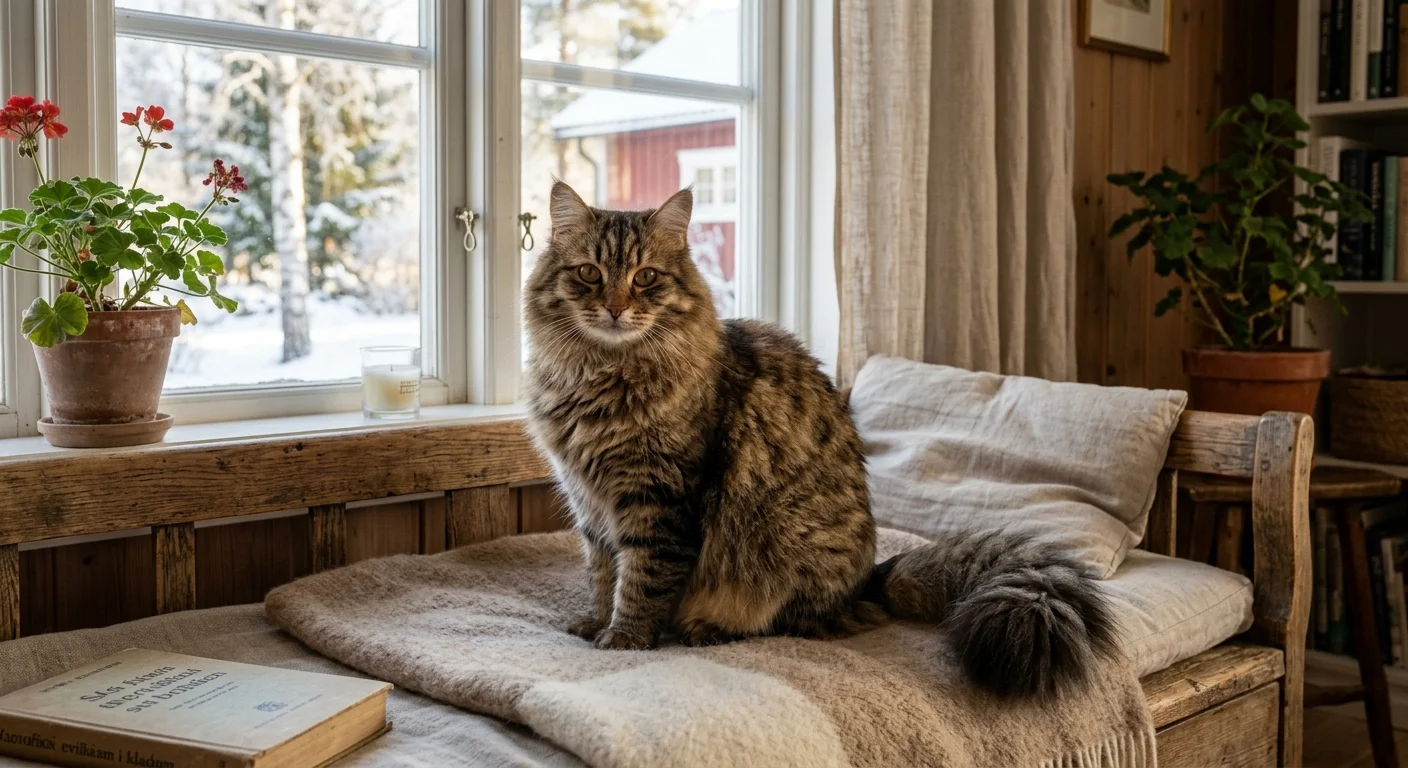
The Siberian is a centuries-old landrace breed native to the forests of Siberia, Russia. References to large semi-longhaired Russian cats appear in Slavic folktales and artwork dating back to the 10th century. The cats are believed to have developed naturally in the extreme climate of Siberia, where their dense triple coat was essential for survival.
The breed was first formally documented in Russian cat show records in the 1980s, and a breed standard was established in the late 1980s as Russian cat fancy gained organised structure. TICA recognised the Siberian in 1996, followed by the American Cat Fanciers Association (ACFA) in 1999 and the CFA in 2006.
The first Siberians arrived in the United States in 1990, brought over by a breeder from St. Petersburg. The breed has grown steadily in popularity since then, valued both for its beauty and its reported lower allergen levels.
Appearance
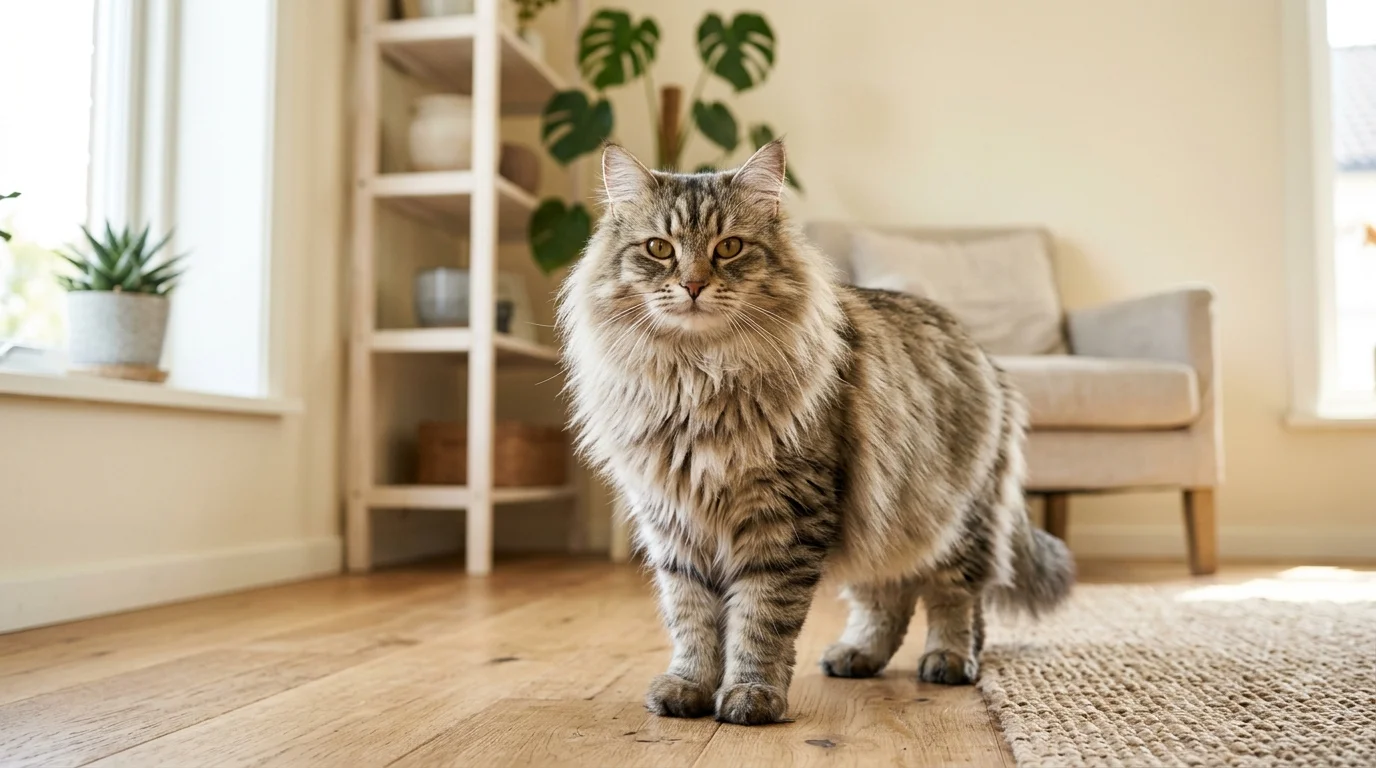
The Siberian is a large, powerful cat with a broad, rounded head and a strong, muscular body. Males typically weigh 6–8 kg; females are smaller at 4–6 kg. The breed matures slowly, not reaching full size until around age 5.
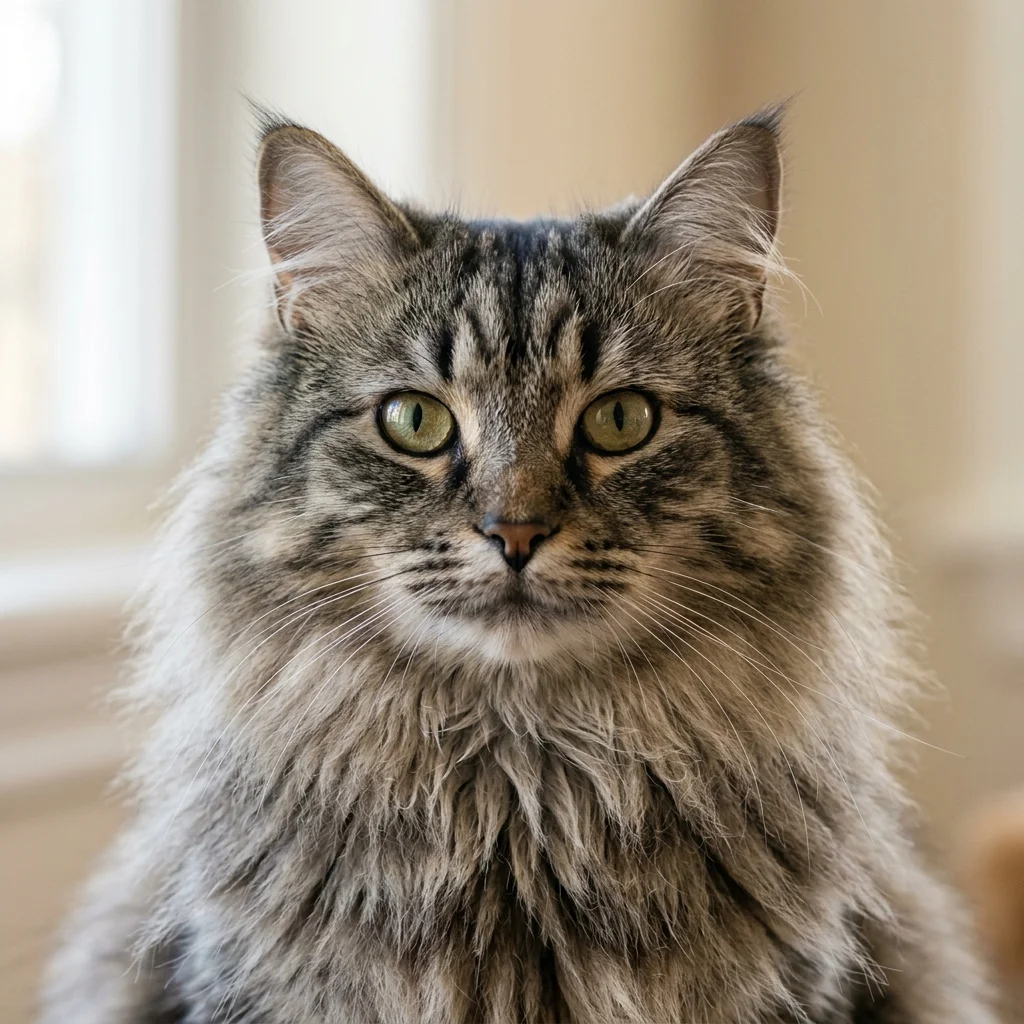
The triple-layered semi-longhaired coat is one of the breed's defining features — dense, glossy, and water-resistant. The ruff around the neck and chest is prominent, the tail is full and bushy, and the hind legs are slightly longer than the front. Tufts of fur grow between the toes, a practical adaptation to walking on snow.
The Siberian comes in virtually all colours and patterns. The eyes are large and nearly round, typically in shades of gold, green, or copper. Some colour-pointed Siberians (known as Neva Masquerade) may have blue eyes.
Temperament
Siberians are playful, energetic, and highly affectionate — a combination that earns them frequent comparisons to dogs. They enjoy interactive games, fetch, and learning tricks, yet they are equally content curling up with their family in the evening. They are genuinely social cats that like being involved in household activity.
Despite their large, forest-cat appearance, Siberians are gentle and good-natured. They tend to be curious and fearless — undeterred by new people, environments, or other pets. This makes them an excellent choice for families with children, other cats, or cat-friendly dogs.
Siberians have a soft, trilling voice and enjoy "talking" to their owners. They are neither overly demanding nor aloof — they strike a balance that makes them adaptable to a wide range of lifestyles.
Activity & Play
Siberian Cat Activity Guide
The Siberian is a playful, athletic cat with a surprising amount of energy for a large breed. They are not couch cats by nature, though they do enjoy relaxing once they have burned off their energy.
Energy Level
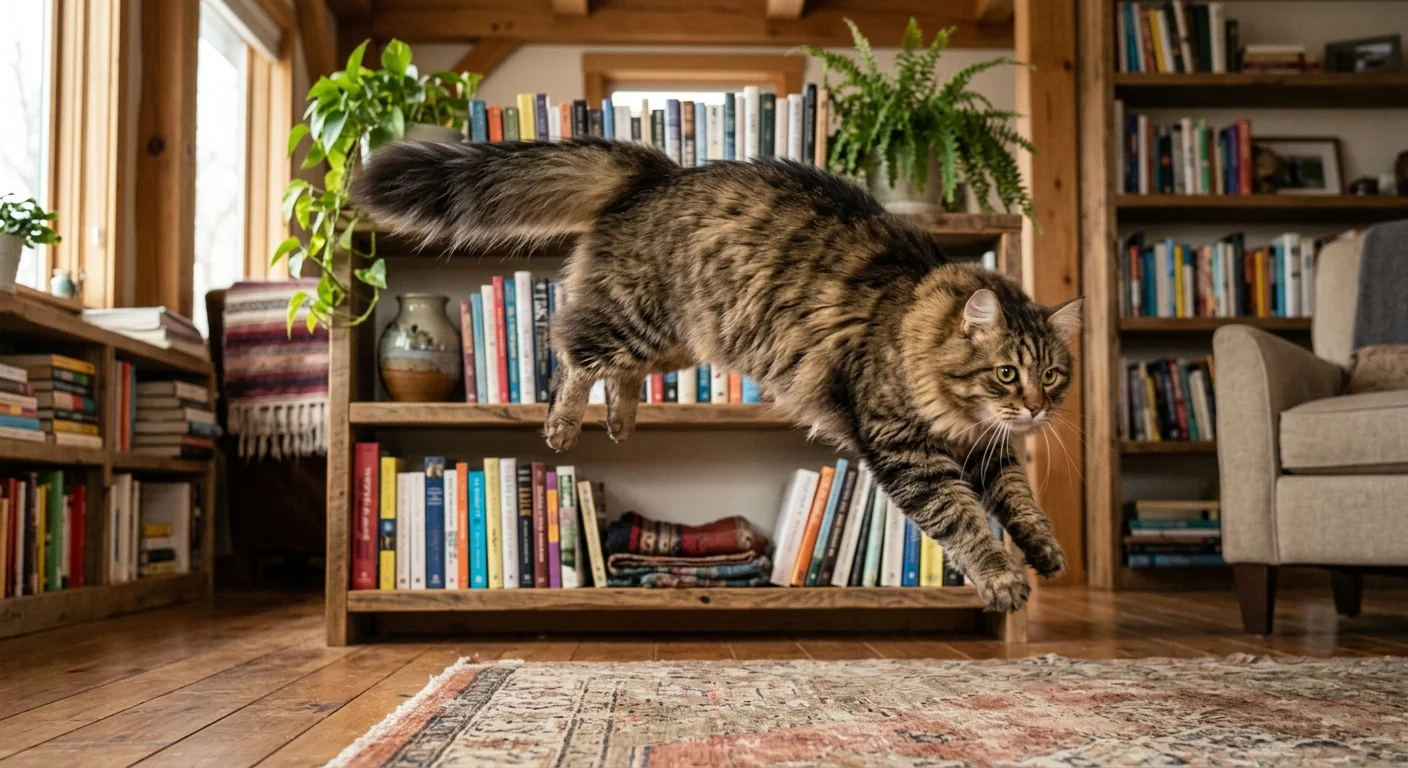
Siberians are moderately to highly active. They love to jump, climb, and explore. Unlike some high-energy breeds that are frantic, the Siberian tends to have bursts of activity followed by calm periods. They are athletic and agile despite their size.
Daily Exercise Needs
Plan for at least 20-30 minutes of active play per day, split into two sessions. Siberians enjoy interactive toys like feather wands and fishing rod toys. They also love puzzle feeders that challenge their intelligence.
Play Styles
Siberians are natural hunters. They prefer toys that mimic prey movement - things that dart, flutter, or hide. They also enjoy retrieving small toys and may bring them back to you to repeat the game. Many Siberians will initiate play on their own terms.
Vertical Space
This breed loves to be up high. A tall cat tree with multiple platforms is essential. Wall-mounted shelves or a catio give them the climbing outlets they need. Without vertical options, they will find their own routes up bookshelves and kitchen cabinets.
Indoor vs. Outdoor
Siberians can adapt to indoor-only life if given adequate stimulation. They were originally outdoor cats from the Russian forests, so supervised outdoor time (enclosed garden or harness walks) is appreciated. Full free-roaming outdoor access carries the usual safety risks and is best avoided in urban areas.
Mental Stimulation
Puzzle feeders, rotating toys, and training sessions keep a Siberian mentally satisfied. They are curious and observant cats that notice changes in their environment quickly.
Grooming
The Siberian's semi-longhaired triple coat — comprising a guard layer, awn hairs, and a dense undercoat — is naturally resistant to matting and surprisingly manageable given its fullness. The coat is water-resistant and designed by nature to withstand extreme cold.
Brushing two to three times per week is recommended during most of the year. The Siberian undergoes two major seasonal moults — in spring and autumn — during which daily brushing is needed to manage the volume of shed fur. The coat lightens significantly in summer, when the heavy undercoat is largely shed.
Despite its density, the coat does not tend to mat as readily as other semi-longhaired breeds. Regular nail trimming, ear cleaning, and dental care should be part of the routine.
Health
The Siberian is generally a robust, healthy breed that benefits from centuries of natural selection. The primary hereditary health concern is hypertrophic cardiomyopathy (HCM), and responsible breeders screen breeding cats via echocardiogram to reduce the prevalence of this condition.
Siberians are a slow-maturing breed and do not reach full physical and mental maturity until around 5 years of age. They tend to have a strong constitution and lower overall disease risk than many purebreds: research has found Siberians have a significantly lower risk than average in multiple diagnostic categories.
Expected lifespan is 12–15 years. Maintaining healthy body weight and providing regular veterinary check-ups are the most important factors in long-term wellbeing.
Nutrition
Siberian Cat Nutrition
The Siberian is a large, muscular breed that needs quality nutrition to maintain its impressive physique and semi-long coat.
Protein and Fat
Feed a diet with named animal protein (chicken, salmon, turkey) as the first ingredient. Aim for around 35-40% protein and 15-20% fat on a dry matter basis. The omega-3 and omega-6 fatty acids in fish-based foods support the Siberian's dense, water-resistant coat.
Wet vs. Dry
A mix of wet and dry food suits most Siberians well. Wet food provides essential hydration. Dry food is convenient and supports dental health. A water fountain encourages drinking, which benefits kidney health over time.
Feeding by Age
- Kittens (0-12 months): 3-4 meals daily using kitten-specific food. Siberians are slow to mature and benefit from kitten food longer than smaller breeds.
- Adults (1-7 years): 2 meals daily. Measure portions to avoid overfeeding - Siberians have a hearty appetite.
- Seniors (7+ years): Transition to senior food with added joint support. Wet food is easier to chew for older cats.
Weight Management
Siberians are naturally large but should not be obese. Monitor body condition and adjust portions if your cat starts gaining excess weight. Treats should make up no more than 10% of daily calories.
Family Fit
Is the Siberian a Good Family Cat?
The Siberian is one of the most versatile family cats available. Their calm confidence and genuine affection for people make them suitable for a wide range of living situations.
Families with Children
Siberians are patient and gentle, which makes them good companions for children of all ages. They enjoy interactive play and have the size and temperament to handle enthusiastic kids without becoming stressed. They are unlikely to scratch or bite when handled roughly, though teaching children respectful interaction is always recommended.
Multi-Pet Households
This breed tends to get along well with other cats and with calm, cat-friendly dogs. They are confident without being aggressive, so introductions usually go smoothly with a gradual approach. Siberians are social enough that they benefit from having a companion if owners are away for long hours.
Elderly Owners
Siberians are affectionate and enjoy being near their people, making them good companions for older adults. Their moderate activity level means they do not demand constant attention but will happily sit nearby or on a lap. They are sturdy cats that do not require delicate handling.
Apartments
Siberians can adapt to apartment life if given enough vertical space and daily play. They are not overly vocal, which helps in shared buildings. A tall cat tree and regular play sessions are the main requirements.
First-Time Cat Owners
The Siberian is an excellent choice for first-time cat owners. They are forgiving, communicative, and easy to read. Their adaptable nature means they settle into new homes without much drama.
Fun Facts
- Siberians are often cited as a lower-allergen cat breed because they produce lower levels of the Fel d 1 protein than many other breeds — though no breed is truly hypoallergenic.
- The breed takes up to 5 years to reach full physical maturity — unusually long for a domestic cat.
- Siberians are natural athletes and enjoy water; some individuals will play with water bowls or dripping taps.
- In Russian folklore, the Siberian cat was believed to guard against evil spirits and was kept in homes as a protector.
- The colour-pointed variety of the Siberian is known as the Neva Masquerade, named after the Neva River in St. Petersburg.
FAQ
Siberian Cat FAQ
How long do Siberian cats live?
Siberian cats typically live 12-15 years. With good nutrition, regular vet care, and indoor living, many reach the upper end of that range.
Are Siberian cats good for allergy sufferers?
Siberians produce lower levels of the Fel d 1 protein than most breeds, which causes fewer reactions in some allergy sufferers. They are not hypoallergenic, but many people with mild cat allergies tolerate them better. Spend time with a Siberian before adopting if allergies are a concern.
Do Siberian cats shed a lot?
Yes, especially during spring and autumn when they shed their heavy winter coat. Weekly brushing reduces loose fur. Their coat does not mat as easily as other long-haired breeds thanks to its oily, water-resistant texture.
Are Siberian cats vocal?
Moderately. Siberians communicate with soft chirps, trills, and gentle meows. They are not as vocal as Siamese cats but will let you know when they want attention or food.
How much does a Siberian kitten cost?
From a reputable breeder, Siberian kittens typically cost $1,200-$2,000. Prices vary by lineage and colour. Rescue Siberians are available at much lower cost.
Do Siberians do well in cold climates?
Yes. Their triple-layered, water-resistant coat evolved in the Russian climate. They handle cold homes well but adapt comfortably to warmer indoor environments too.
Gallery
Explore more Siberian-style breeds
Browse related breeds or take our matching quiz to find the right fit for your home.
Stay in the loop
Get weekly breed spotlights, care guides, and new additions - straight to your inbox.