German Rex
lively, friendly, playful, intelligent
Quick Facts
- Lifespan
- 12-14 years
- Weight
- 2.5-4.5 kg
- Origin
- Germany
- Coat
- Short
Overview
Overview
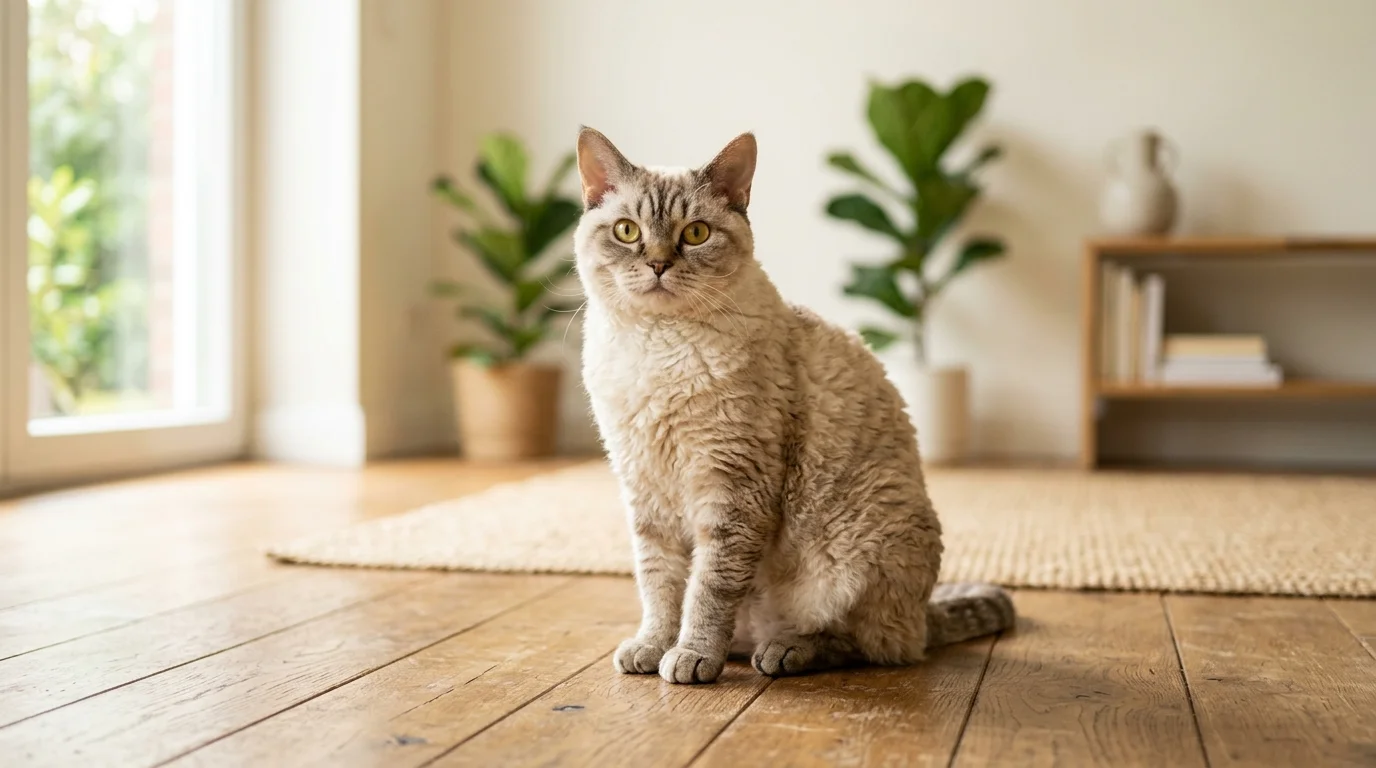
The German Rex is Europe's original curly-coated cat — predating even the Cornish Rex in documented history. With a wavy, velvety short coat, curled whiskers, and an irresistibly friendly personality, this is a breed that makes an impression at first sight and at first meeting.
Recognized by FIFe (Federation Internationale Feline) since 1982 and also by the WCF, the German Rex remains relatively rare, particularly outside Europe. It shares a coat mutation gene with the Cornish Rex, yet the two breeds are genetically and physically distinct.
If you are looking for a highly social, playful companion that combines the tactile charm of a curly coat with an outgoing, people-loving temperament, the German Rex delivers on every front.
History & Origins
History
The German Rex story begins in Berlin in the summer of 1951. Dr. Rose Scheuer-Karpin noticed an unusual black cat with a wavy, curly coat living in the garden of the Hufelandklinik hospital. She adopted the cat and named her Lämmchen — German for "little lamb" — a name that perfectly captured the soft, woolly texture of her coat.
Lämmchen became the maternal ancestor of all current German Rex cats. Breeding efforts began in earnest in 1957, and by the 1960s the breed had spread from Germany to France, England, and the United States. The first German Rex cats were shown publicly in 1960.
FIFe officially recognized the German Rex in 1982. The breed shares its coat mutation with the Cornish Rex — the gene responsible for the curl was later found to be the same — but the two breeds developed independently and maintain separate standards. Today the German Rex is recognized by FIFe and WCF.
Appearance
Physical Characteristics
The German Rex is a medium-sized cat with a rounded head, large open ears, and medium-sized eyes in any color that harmonizes with the coat. Its body is somewhat heavier in build than the Cornish Rex — closer in type to a European Shorthair — giving it a solid, well-muscled appearance.
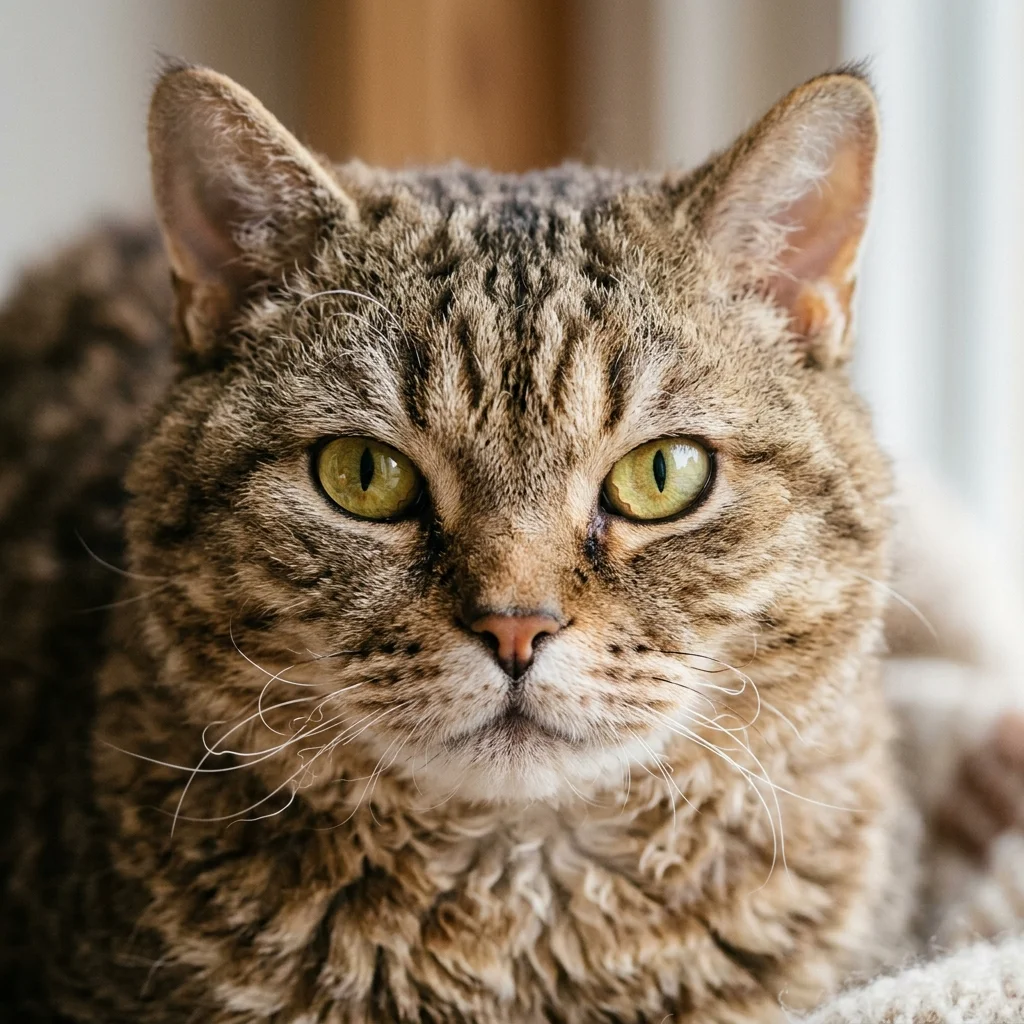
The defining feature is the coat: short, soft, wavy all over, without guard hairs, and with a texture often described as velvet or plush. The whiskers also curl, though less tightly than in the Cornish Rex. All coat colors and patterns are permitted.
Weight ranges from 2.5 to 4.5 kg, with females typically lighter than males.
Temperament
Temperament
The German Rex is a lively, friendly, and deeply people-oriented cat. It bonds quickly and intensely with its human family, often following owners from room to room and seeking out close physical contact. This is not a breed that tolerates long periods of solitude well.
Highly playful and intelligent, German Rex cats enjoy interactive games, learning tricks, and being involved in whatever their owners are doing. They are patient with children and generally welcoming toward other pets, making them well suited to busy, sociable households.
Despite their high energy, they are also known for a gentle, adaptable quality — equally happy to curl up in a lap after a bout of play. Their temperament closely resembles that of their relative, the Cornish Rex.
Activity & Play
Activity and Exercise
The German Rex is a playful, energetic cat that stays kitten-like well into adulthood. Daily interactive play is essential for this breed.
Daily Exercise Needs
Aim for 20 to 30 minutes of active play each day. German Rexes enjoy chasing, jumping, and exploring their environment.
Play Styles
Chase games with wand toys and feather teasers are favorites. German Rexes also enjoy learning tricks and interactive puzzle feeders that reward curiosity.
Recommended Toys
Feather wands, crinkle balls, tunnel toys, and treat-dispensing puzzles suit this breed well.
Vertical Space
German Rexes enjoy climbing. Cat trees, shelves, and perches give them the height and vantage points they seek.
Indoor vs. Outdoor
German Rexes adapt well to indoor life. Outdoor access through a catio adds enrichment but is not required.
Signs of Under-Stimulation
A bored German Rex may become destructive or overly vocal. Regular play prevents most behavioral problems.
Grooming
Grooming
The German Rex's curly coat is short, very soft, and almost entirely without guard hairs, giving it a velvet-like texture to the touch. Because the coat is so fine and short, it requires minimal brushing — a gentle weekly wipe or soft brush is generally sufficient.
However, the absence of guard hairs means this breed is less insulated than average and more sensitive to temperature extremes. German Rex cats should be kept indoors to protect them from cold, wind, rain, and direct sun exposure.
Wiskers also curl on the German Rex, though less dramatically than in the Cornish Rex. Routine care — regular nail trims, ear checks, and dental hygiene — is the same as for any cat.
Health
Health
The German Rex is considered a healthy breed with no documented hereditary conditions specific to the breed. Most individuals live 12–14 years, though some have exceeded 18 years.
Because the curly coat offers less thermal insulation than a standard coat, German Rex cats are more susceptible to cold and should be kept as indoor cats. They may also be more prone to sunburn if exposed to intense sunlight.
Owners should maintain a regular preventive care schedule: annual vet visits, core vaccinations, parasite control, and dental monitoring. The breed's high social and activity level means that mental stimulation is also an important aspect of their overall health and wellbeing.
Nutrition
Nutrition
The German Rex is a medium-sized cat with a lean, muscular build. Keeping that physique in good shape depends on a diet that delivers adequate protein while avoiding excess calories.
Macronutrient Targets
- Protein: 35-45% of dry matter. High-quality animal proteins (chicken, turkey, fish) should appear as the first ingredient.
- Fat: 15-25% of dry matter. Moderate fat supports coat health without promoting weight gain in a less active cat.
- Carbohydrates: Keep below 10% where possible. Cats are obligate carnivores and have limited ability to metabolise starch efficiently.
Feeding Frequency by Age
- Kittens (up to 12 months): 3-4 small meals per day. Kittens need energy-dense food to support rapid growth.
- Adults (1-7 years): 2 meals per day, morning and evening. Measured portions prevent gradual weight creep.
- Seniors (7+ years): 2-3 smaller meals per day. Metabolism slows with age; senior formulas with added joint support are beneficial.
Wet vs. Dry Food
A combination of wet and dry food works well for this breed. Wet food contributes to daily hydration, which supports kidney health. Dry food can be used as a measured base meal or as dental-health kibble. Aim for at least 50% of calories from wet or raw sources.
Breed-Specific Considerations
The German Rex's wavy, single-layer coat does not shed heavily, but the coat quality still reflects diet. A food rich in omega-3 and omega-6 fatty acids (from fish oil or flaxseed) keeps the distinctive curls soft and healthy. Some individuals are prone to a sensitive digestive system, so abrupt food changes should be avoided. Transition to any new food gradually over 7-10 days. Always provide fresh water alongside meals, especially for cats eating primarily dry kibble.
Family Fit
Family Fit
The German Rex is affectionate and people-oriented, making it a good fit for active families.
Children
German Rexes enjoy playful children and handle gentle handling well. Teach young children to interact calmly.
Other Cats
This breed generally gets along well with other cats. Proper introductions ensure a smooth transition.
Dogs
German Rexes adapt to dog-friendly households when introductions are gradual.
Elderly Owners
Their affectionate, calm side suits older owners well. They enjoy companionship without being overly demanding.
Apartment Living
German Rexes adapt well to apartments as long as they get daily play and vertical space to climb.
First-Time Owners
This breed is an excellent choice for first-time cat owners. They are social, gentle, and responsive to attention.
Fun Facts
Fun Facts
- The German Rex is the oldest documented Rex-type cat breed, with Lämmchen discovered in 1951 — predating the Cornish Rex's first documented litter.
- The breed's foundational cat, Lämmchen, was named after the German word for "little lamb" — a perfect description of her woolly coat.
- The German Rex and Cornish Rex share the same recessive coat mutation gene, meaning crossing the two breeds can produce curly-coated offspring.
- Despite its early discovery and show debut in 1960, the German Rex remains one of the rarer cat breeds, especially outside Europe.
- German Rex whiskers curl too — a detail that delights cat lovers who meet the breed for the first time.
FAQ
Frequently Asked Questions
How long do German Rex cats typically live?
The German Rex has a lifespan of 12-16 years when kept indoors and provided with regular veterinary care. Some individuals reach their late teens with a healthy diet and routine checkups.
Do German Rex cats shed a lot?
No. The German Rex has a short, single-layer wavy coat with minimal guard hairs, which means shedding is very low compared to most cat breeds. They are not considered hypoallergenic, but many allergy sufferers report fewer reactions than with other breeds.
Are German Rex cats vocal?
They are moderately vocal. They will communicate with their owners using a soft, pleasant voice but are not known for constant or loud vocalisation. They are more likely to chirp or trill than to yowl.
Are German Rex cats suitable for people with allergies?
While no cat breed is truly hypoallergenic, the German Rex produces lower levels of the Fel d 1 protein than some breeds and sheds very little. People with mild cat allergies sometimes tolerate them better, but individual reactions vary. Spending time with the breed before adopting is always recommended.
How much does a German Rex kitten cost?
German Rex kittens are rare outside of Europe, and particularly outside Germany. Expect to pay between $800 and $1,500 USD from a reputable breeder. Import costs can increase this significantly for buyers in North America or Australia.
Are German Rex cats easy to train?
Yes. The German Rex is intelligent, curious, and people-oriented, which makes them responsive to positive reinforcement training. They can learn to fetch, follow commands, and walk on a leash with patience. Mental stimulation through training also helps keep them content.
How do German Rex cats handle cold climates?
Their short, single-layer coat offers minimal insulation, making them sensitive to cold. They prefer warm indoor environments and should not be left outdoors in cold weather. Providing warm resting spots and avoiding draughts keeps them comfortable year-round.
Gallery
Explore more German Rex-style breeds
Browse related breeds or take our matching quiz to find the right fit for your home.
Stay in the loop
Get weekly breed spotlights, care guides, and new additions - straight to your inbox.