Sokoke
active, intelligent, vocal, athletic
Quick Facts
- Lifespan
- 9-15 years
- Weight
- 2.5-5 kg
- Origin
- Kenya
- Coat
- Short
Overview
Overview
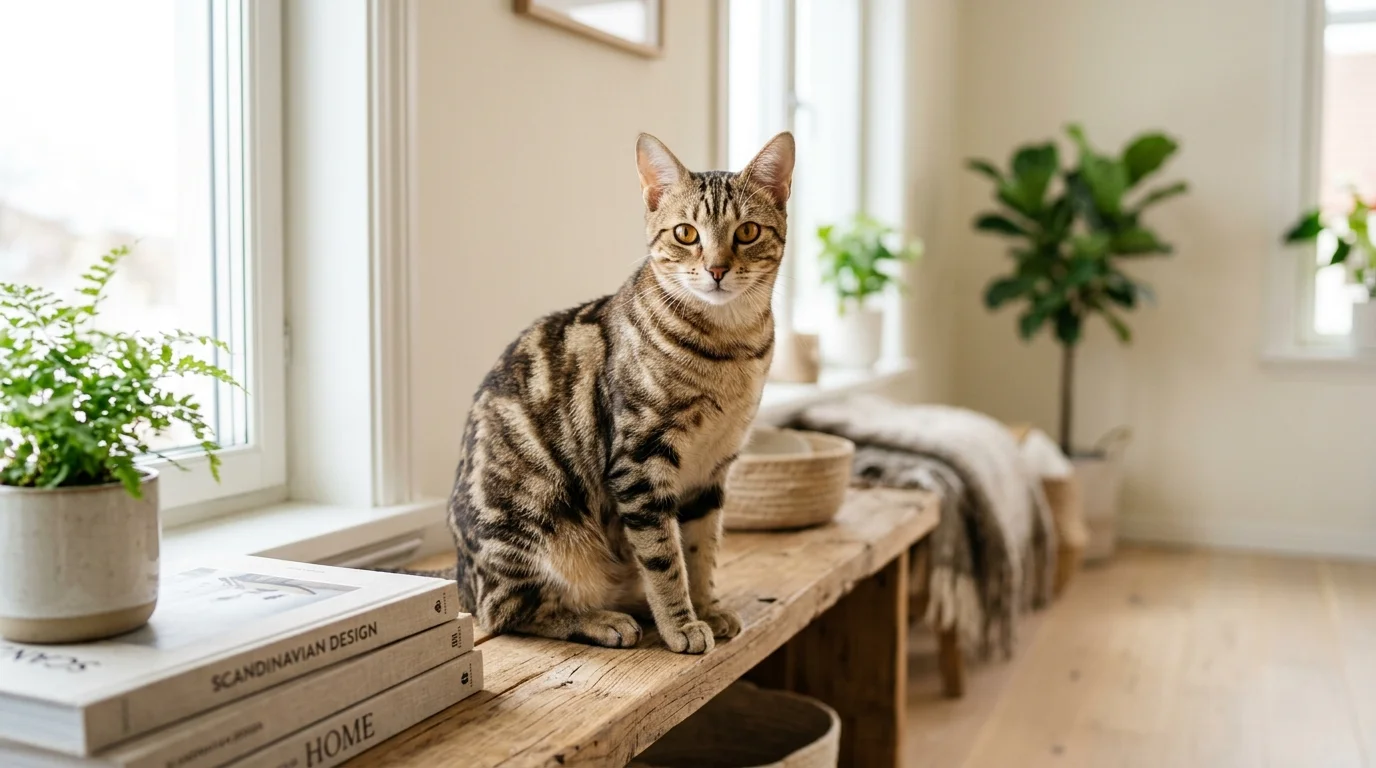
The Sokoke is one of the rarest cat breeds in the world — a natural landrace from the coastal forests of Kenya that has been formally developed as a breed since the late 1970s. Named after the Arabuko Sokoke National Park, its homeland, the Sokoke is a lean, athletic, and intensely bonded companion unlike any other.
Recognized by FIFe (1993), TICA, and GCCF, the breed remains extremely scarce: FIFe's 2024 statistics recorded zero registered Sokoke kittens that year. Genetic studies confirm the Sokoke is fully domestic, descended from an ancient Asian cat lineage that arrived in Africa long ago.
For experienced cat owners who appreciate a wild-looking, active, and deeply loyal companion, the Sokoke is a uniquely rewarding choice.
History & Origins
History
The Sokoke's story begins with the khadzonzo — a population of feral cats living in the Arabuko Sokoke forest and surrounding coconut plantations of coastal Kenya. In 1978, horse breeder and wildlife artist Jeni Slater encountered these cats near Watamu and began a careful breeding program.
In 1983, Gloria Moeldrop brought the first cats to Denmark, where further breed development took place. The breed was formally recognized by FIFe in 1993 and later by TICA and GCCF.
Genetic research has since confirmed that the Sokoke is not a wildcat hybrid as once speculated, but a fully domestic cat with ancient Asian ancestry — likely arriving in East Africa through historical trade routes. It is named after the Arabuko Sokoke National Park near its place of origin.
Appearance
Physical Characteristics
The Sokoke has a lean, athletic build with notably long hind legs that give it a distinctive elevated, tip-toe gait — reminiscent of a small wild cat.
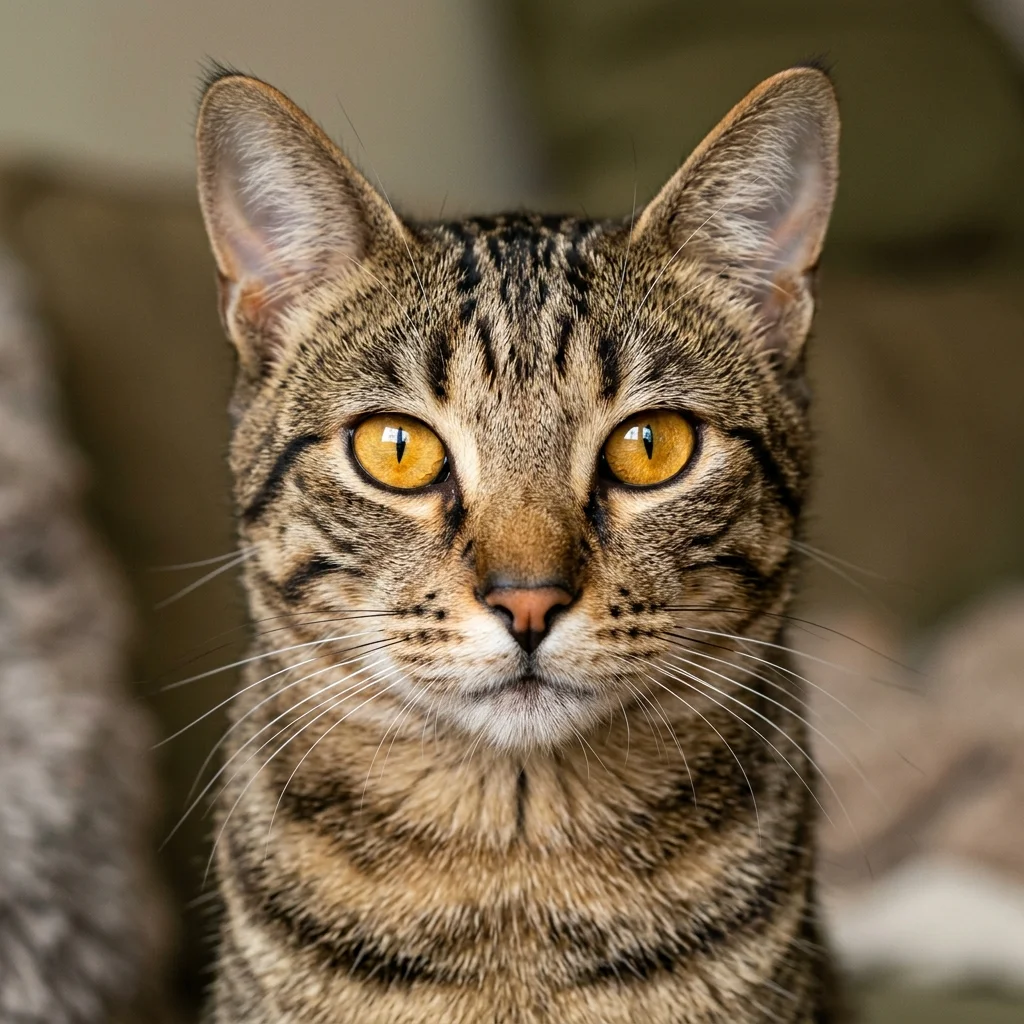
Body: Medium-sized, lean, and muscular; hind legs longer than front Head: Relatively small and wedge-shaped with prominent cheekbones Eyes: Amber to light green, almond-shaped Ears: Medium to large, upright Coat: Short, coarse, and lustrous; very little undercoat Color: Brown ticked tabby (blotched/classic marbled pattern) in shades of black to warm brown — the only accepted pattern Weight: 2.5–5 kg Lifespan: 9–15 years
Temperament
Temperament
The Sokoke is an active, alert, and vocal cat that forms deep bonds with its chosen people. It is not a typical lap cat but shows affection on its own terms and engages enthusiastically with family life.
Key traits:
- Highly active — loves to climb, jump, and explore; needs vertical space and stimulation
- Intelligent — quick to learn routines and responsive to its name
- Vocal — communicates with a distinctive range of chirps and meows
- Bonding — forms very strong attachments; rehoming is particularly difficult for this breed
- Social with familiar people — can be reserved with strangers initially
Because the Sokoke bonds so intensely, it is best suited to stable households where it will not be frequently left alone for extended periods.
Activity & Play
Activity & Exercise
The Sokoke is an active, agile, and naturally alert cat originating from the Arabuko-Sokoke Forest in Kenya. Its wild forest origins give it a high prey drive, excellent athleticism, and a need for stimulating, movement-rich environments.
Daily Exercise Needs
Aim for 45 to 60 minutes of active play each day. The Sokoke is not a cat that settles for minimal enrichment -- it needs purposeful play to stay balanced and content. Multiple sessions distributed across the day suit its natural activity rhythms.
Play Styles
The Sokoke is a focused, energetic hunter-type player:
- Wand toys and fast-moving teasers: trigger the breed's sharp hunting reflex
- Stalking games: slow movements followed by quick bursts mirror natural hunting behaviour and keep the Sokoke engaged longer than random chase
- Toy mice and small plush prey toys: the Sokoke will carry, toss, and stalk these independently
- Puzzle feeders: high engagement; the Sokoke is a natural problem-solver
- Outdoor exploration: the breed is well suited to supervised outdoor time or enclosed garden access
Vertical Space
Vertical space is important for the Sokoke. It is a capable, enthusiastic climber that prefers height. Tall cat trees (5 to 7 feet), wall shelves, and multi-level structures satisfy the breed's need to survey its territory from above.
Indoor vs. Outdoor
The Sokoke is one of the more naturally suited breeds for outdoor access, reflecting its recent forest heritage. In safe, low-traffic environments, enclosed garden access or a large catio provides valuable enrichment. It can adapt to indoor-only life but requires higher levels of enrichment to compensate.
Mental Stimulation
Highly intelligent with strong independent problem-solving ability. Food puzzles at mealtimes, rotating toy libraries, and outdoor-adjacent window positions all help. The Sokoke is less people-dependent for stimulation than some breeds and will engage in solo exploration more readily.
Grooming
Grooming
The Sokoke's coat is short, coarse, and lustrous with very little undercoat — making it one of the easiest-care coats in the cat fancy.
- Brushing — a weekly wipe-down or light brush is all that is needed
- Shedding — minimal; the lack of undercoat means very little loose fur around the home
- Bathing — rarely necessary
- Nails, ears, teeth — standard routine care applies
The distinctive brown ticked tabby (blotched marbled) pattern is the only accepted coat pattern — it creates a beautiful wild appearance that requires no special maintenance to look its best.
Health
Health
The Sokoke developed through natural selection in the Kenyan coastal forest and carries no known breed-specific hereditary disorders. However, as a naturally evolved landrace with a very small captive population, some considerations apply:
- No known genetic disorders in the breed
- Small gene pool — with so few breeding cats worldwide, genetic diversity is limited; responsible breeders work carefully to avoid inbreeding
- Sensitivity to environmental changes — noted in some sources as more susceptible to stress-related illness than more domestically adapted breeds
- Lifespan: 9–15 years; 15 years is considered a good old age for the breed
Regular vet check-ups and a stable, low-stress home environment are especially important for this breed.
Nutrition
Feeding Your Sokoke
The Sokoke is a lean, athletic cat with high energy demands. Their diet should support an active lifestyle and preserve their naturally slender build.
Protein: Target 38 to 45 percent protein on a dry matter basis. As a breed with a semi-wild background, the Sokoke thrives on meat-rich diets. Chicken, turkey, rabbit, and fish are excellent primary protein sources.
Fat: A fat content of 15 to 20 percent supports their energy output and keeps the coat healthy. Fish-based oils like salmon oil add omega-3 fatty acids that benefit skin and coat condition.
Wet versus dry food: Wet food should form the core of the Sokoke diet. It mirrors the high moisture content of prey animals and supports kidney health over the long term. Dry food can be offered as a supplement but should not be the primary source.
Feeding by age:
- Kittens (up to 12 months): three to four meals per day with calorie-dense kitten food to fuel rapid growth.
- Adults (1 to 7 years): two measured meals per day; free-feeding is not recommended as Sokokes may overeat if bored.
- Seniors (7 years and older): adjust portions to match reduced activity levels and support joint and organ health.
Breed notes: The Sokoke has a lean frame that can make weight loss or gain easy to miss. Weigh your cat monthly and adjust portions accordingly. Avoid high-carbohydrate dry foods as the main diet. Fresh water should always be available, and a cat fountain can encourage drinking.
Family Fit
Family Fit
The Sokoke is a loyal, selective, and active cat that forms close bonds with specific family members rather than being universally friendly to all. Its semi-wild heritage means it approaches new people and situations with more caution than most domestic breeds.
With Children
Best suited to older children (8 and above) who can interact calmly and confidently. The Sokoke is not fragile, but it is more reserved than breeds developed specifically as family companions. Rough or sudden handling stresses the breed. Children who earn the Sokoke's trust will find it a loyal, active playmate.
With Other Cats
Can coexist with other cats, particularly those with similar energy levels. The Sokoke may be cautious initially but typically establishes a workable relationship with patient introductions. It does well with active feline companions that share its play intensity.
With Dogs
Cautious with dogs and requires slow, controlled introductions. The Sokoke will not be easily dominated but needs time to assess a new dog before relaxing. Calm, cat-experienced dogs are the best match. High-prey-drive dogs are not recommended.
With Elderly Owners
Not the ideal primary companion for sedentary owners. The Sokoke's energy level and stimulation needs are better matched to active households. It can work in a quieter home if significant enrichment is provided, but it will not be fully satisfied with minimal interaction.
Apartment Living
Challengeing in smaller apartments without adequate vertical space and enrichment. The Sokoke does better in homes with more space, or apartments with large catios or access to enclosed outdoor areas.
For First-Time Cat Owners
Not recommended for first-timers. The Sokoke's semi-wild temperament, activity needs, and selective bonding style require experience and patience. It rewards committed, knowledgeable owners but can be difficult for those expecting a universally social, easy-going cat.
Fun Facts
Fun Facts
- World's rarest breed — FIFe recorded zero registered Sokoke kittens in 2024; it is consistently ranked the least-registered breed in the world
- Not a hybrid — genetic studies proved the Sokoke is fully domestic, dispelling earlier speculation about wildcat ancestry
- Ancient lineage — DNA analysis suggests Asian cat ancestry arrived in East Africa through ancient trade routes
- Tip-toe walk — the Sokoke moves with a unique gait caused by its longer hind legs, resembling a small wild cat
- Named after a forest — the breed is named after the Arabuko Sokoke National Park in coastal Kenya
- Discovered by an artist — the breed was first brought to the world's attention by horse breeder and wildlife artist Jeni Slater in 1978
FAQ
How long do Sokoke cats live?
Sokoke cats typically live between 12 and 15 years. They are generally a hardy breed without many known hereditary conditions, and indoor cats with regular veterinary care tend to live toward the upper end of that range.
Do Sokoke cats shed a lot?
No. The Sokoke has a short, tight coat with minimal undercoat, which means shedding is low compared to most breeds. Basic weekly brushing is sufficient. Their coat is one of the easiest to maintain among pedigreed cats.
Are Sokoke cats vocal?
Moderately. Sokokes are communicative and will chirp or trill to express themselves, but they are not known for being loud or demanding. They tend to use a variety of soft sounds and body language to interact with their owners.
Are Sokoke cats hypoallergenic?
No cat is fully hypoallergenic. The Sokoke produces Fel d 1 like all cats. However, their short, low-shedding coat distributes less dander than many breeds. Allergy sufferers should spend time with a Sokoke before adopting.
How much does a Sokoke kitten cost?
Sokoke kittens are rare outside of their native Kenya and Scandinavia. From a specialist breeder, prices typically range from $500 to $1,500. Finding a breeder may require patience and international contacts.
Do Sokoke cats do well in warm climates?
Yes. The Sokoke originated in coastal Kenya and is well-adapted to warmth. They handle heat better than most breeds. Cold climates are less ideal, and indoor heating becomes important during winter months.
Gallery
Explore more Sokoke-style breeds
Browse related breeds or take our matching quiz to find the right fit for your home.
Stay in the loop
Get weekly breed spotlights, care guides, and new additions - straight to your inbox.