Arabian Mau
loyal, affectionate, active, independent
Quick Facts
- Lifespan
- 12-14 years
- Weight
- 4-7 kg
- Origin
- Arabian Peninsula
- Coat
- Short
Overview
Overview
The Arabian Mau is a natural landrace cat native to the Arabian Peninsula, where it has lived for more than 1,000 years in the desert towns and cities of Saudi Arabia, Kuwait, Qatar, Oman, Bahrain, and the United Arab Emirates. Shaped by the harsh desert environment, the Arabian Mau is a lean, hardy, and heat-adapted cat with a short coat and a loyal temperament.
Formally recognized by the World Cat Federation (WCF) in 2008, the Arabian Mau is also recognized by the Emirates Feline Federation (EFF). It is still largely unknown outside the Middle East and remains relatively rare in formal cat shows.
Weighing 4–7 kg with a lifespan of 12–14 years, the Arabian Mau is an active, affectionate, and independent companion.
History & Origins
History
The Arabian Mau has roamed the streets and homes of the Arabian Peninsula for over a millennium. Descended from the African wildcat populations that spread throughout the Middle East with the expansion of human settlements, these cats adapted over centuries to the extreme heat and arid conditions of the desert.
For most of their history, Arabian Maus were simply the native street cats of the region — independent, resourceful, and valued for rodent control. In the early 2000s, cat enthusiasts in the UAE began working to formally document and develop the breed from the best examples of the existing street population.
The WCF recognized the Arabian Mau in August 2008, making it one of the few formally recognized breeds native to the Arabian Peninsula. The Emirates Feline Federation (EFF) also supports the breed.
Appearance
Physical Characteristics
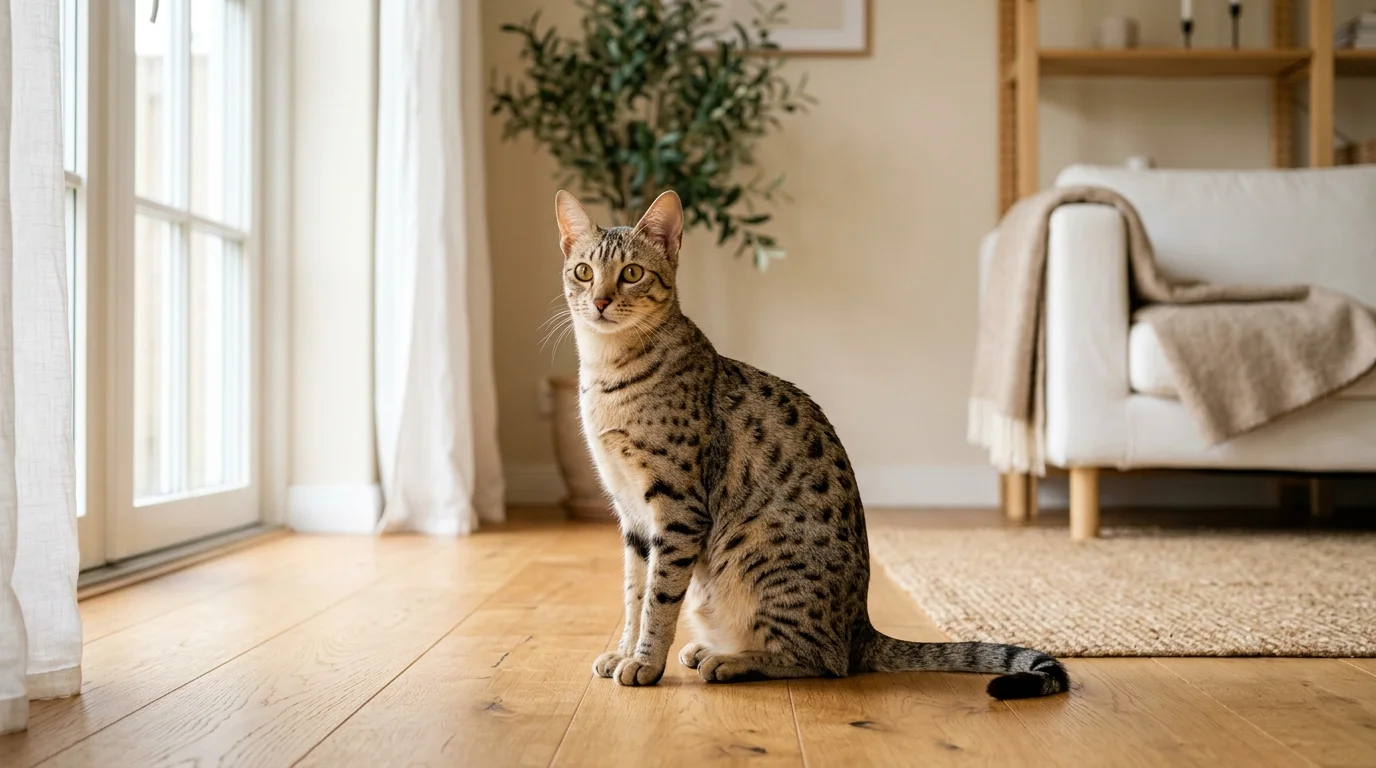
The Arabian Mau is a medium to large cat with a lean, muscular build designed for agility and endurance in hot conditions.
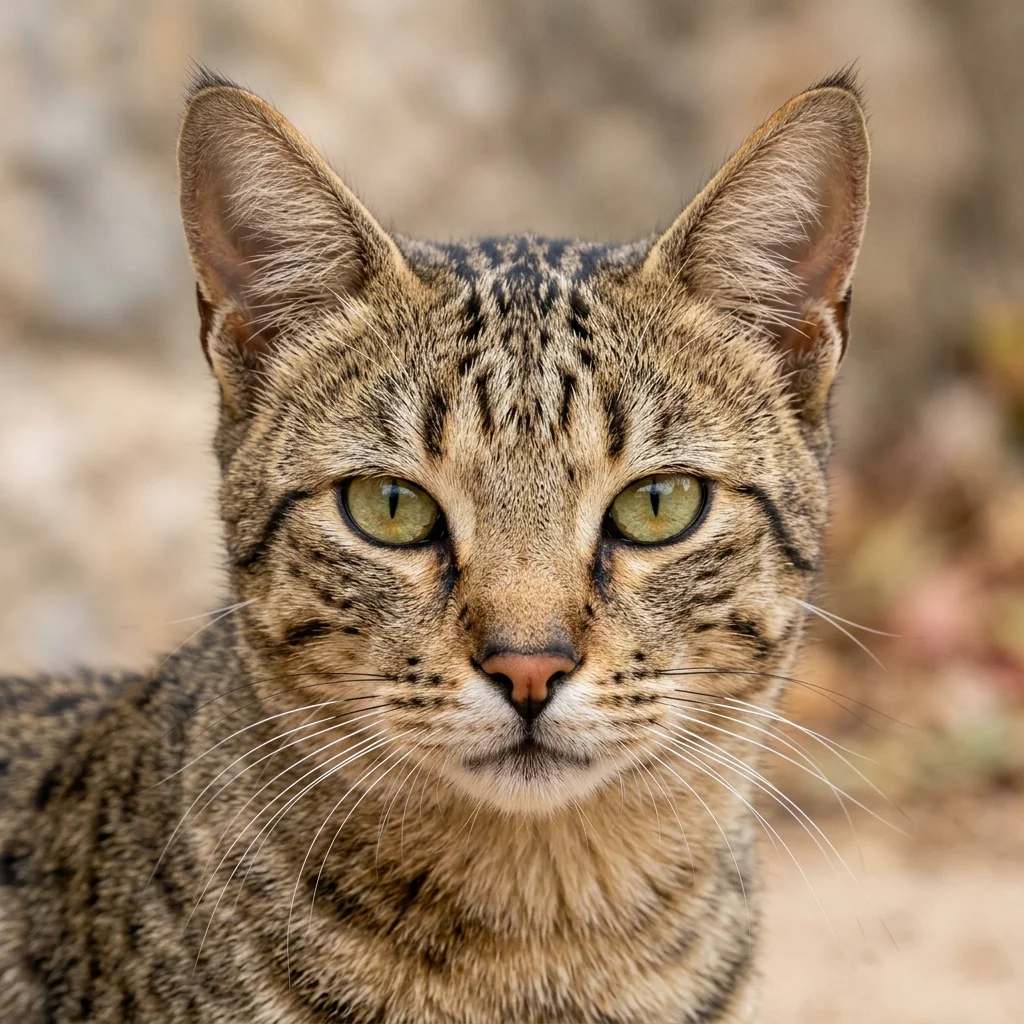
Body: Medium to large, lean, and muscular; long-legged relative to body depth Head: Rounded with a slightly elongated muzzle and prominent cheekbones Eyes: Large and oval; green is preferred, but all colors are accepted Ears: Large, upright, and slightly forward-tilted; a distinctive feature Coat: Short, dense, and close-lying; no undercoat or minimal undercoat Colors: All colors and patterns accepted; tabby, solid, bicolor, and tortoiseshell are all common Weight: 4–7 kg; males are noticeably larger than females Lifespan: 12–14 years
Temperament
Temperament
The Arabian Mau is an energetic, loyal, and affectionate cat that balances an independent spirit with a genuine bond to its family. Centuries of street life have made it self-reliant, but generations of living alongside humans have made it sociable and trusting.
Key traits:
- Active and athletic — needs space to move; not a sedentary lap cat
- Loyal — forms strong bonds with family members; can be affectionate and attentive
- Independent — comfortable alone for reasonable periods; does not suffer from separation anxiety as intensely as some breeds
- Good hunter — strong prey drive; interactive toys are a must
- Territorial — can be protective of its space with unfamiliar cats or animals, though socialization helps
- Affectionate with its people — will seek out attention and enjoy being close to familiar humans
With proper socialization, the Arabian Mau integrates well into family life including households with children.
Activity & Play
Activity and Exercise
The Arabian Mau is a naturally athletic breed shaped by thousands of years as a desert-dwelling cat in the Arabian Peninsula. It is energetic, agile, and well-suited to active households.
Daily Exercise Needs
Plan for 25 to 35 minutes of active play each day. Arabian Maus are fast, reactive cats that enjoy running, jumping, and chasing. Without adequate outlets, they may become restless or engage in unwanted exploratory behaviour around the home.
Play Styles
Arabian Maus have a strong prey drive and enjoy anything that mimics a moving target. Fast wand toys, laser pointers, and toy mice dragged across the floor are all popular. They are natural sprinters and can accelerate quickly in short bursts, making chase-based games their favourite.
Vertical Space
This breed benefits from tall cat trees and shelving systems that allow climbing and perching. In the wild, elevation offers a hunting advantage, and domestic Arabian Maus retain this instinct. High perches near windows are particularly appreciated.
Toys
Variety prevents boredom. Track toys, crinkle balls, and feather wands rotate well for this active breed. Puzzle feeders slow down eating and provide mental stimulation between active sessions.
Indoor vs. Outdoor
Arabian Maus were historically outdoor cats, but urban environments present significant risks. Indoor living with enrichment is recommended. A secure catio or supervised outdoor time on a leash provides a safe outlet for outdoor instincts.
Grooming
Grooming
The Arabian Mau's short, close-lying coat is one of the simplest to maintain of any breed. Adapted to desert heat, the coat has almost no undercoat.
- Brushing — once a week removes loose hair and keeps the coat shiny
- Shedding — minimal; the short coat and lack of undercoat means very little loose fur
- Bathing — rarely necessary
- Nails — trim every 2–3 weeks
- Ears — check and clean monthly; the upright ears can collect dust
- Teeth — regular brushing supports dental health
The breed's natural coat is self-maintaining to a large degree — a reflection of its origins as a street cat in an arid environment.
Health
Health
The Arabian Mau is a naturally evolved landrace with no documented breed-specific hereditary health conditions. Desert life over many centuries has selected for hardy, resilient cats.
- No known genetic disorders
- Heat-adapted — well-suited to warm climates; may need extra attention to temperature regulation in colder environments
- Robust constitution — natural selection rather than deliberate breeding has maintained a healthy gene pool
- Lifespan: 12–14 years — typical for a medium-to-large domestic cat
Routine vaccinations, parasite prevention, annual vet check-ups, and dental care are all that is typically required. There are no breed-specific screening tests currently recommended.
Nutrition
Nutrition
The Arabian Mau evolved in desert conditions where food was not always abundant, which gives this breed an efficient metabolism and a tendency toward lean musculature. Nutrition should reflect both its active lifestyle and its heritage.
Protein and Fat
High-quality animal protein is the cornerstone of the Arabian Mau's diet. Look for foods listing chicken, turkey, duck, or fish as the primary ingredient. A protein content of 38 to 44 percent on a dry matter basis supports lean muscle development. Fat content around 14 to 18 percent provides energy without excess.
Wet vs. Dry Food
Given the breed's desert origins, natural water intake from food is important. Wet food helps ensure adequate hydration and supports kidney health. A combination of wet food for hydration and dry food for dental health is a practical approach.
Feeding Frequency
Kittens under six months should receive three to four meals per day. Adults do well on two measured meals daily. Avoid free-feeding, as even naturally lean breeds can gain weight indoors without the movement demands of outdoor life.
Breed-Specific Considerations
Arabian Maus are known for a relatively robust constitution and few documented dietary sensitivities. However, monitoring body weight is important for indoor cats. Avoid foods with artificial preservatives or heavy grain fillers, which provide poor nutritional value relative to caloric density.
Family Fit
Family Fit
The Arabian Mau is a confident, social cat that bonds strongly with its household. Its adaptable nature suits many living situations, though its energy level should be factored into the decision.
Children
Arabian Maus generally do well with children who understand how to interact respectfully with cats. They enjoy play and can keep pace with an active child. Young children should be supervised to ensure interactions remain calm and positive.
Other Cats
This breed usually accepts other cats, particularly when introduced carefully. Early socialisation helps, as Arabian Maus can be territorial in established homes. Gradual introductions in neutral territory reduce conflict.
Dogs
Arabian Maus can adapt to living with dogs of calm temperament. Their confidence means they are unlikely to hide from a dog, but a dog with a high prey drive is not a suitable match.
Elderly Owners
The breed's moderate-to-high energy makes it better suited to active owners. An elderly person who enjoys interactive play and provides enrichment can still form a strong bond with an Arabian Mau, though a calmer breed may be a better fit for those with limited mobility.
Apartments
Apartment living is possible if the space is enriched with climbing structures, play opportunities, and window access. Without adequate enrichment, this active breed may become frustrated in a small environment.
First-Time Owners
The Arabian Mau can work for first-time owners who have researched the breed's needs. Its independence is a benefit, but its activity level requires commitment to daily play and environmental enrichment.
Fun Facts
Fun Facts
- Desert survivor — the Arabian Mau evolved to thrive in one of the world's harshest climates; it can tolerate heat that would be dangerous for most cat breeds
- Over 1,000 years of history — these cats have been documented on the Arabian Peninsula for more than a millennium
- Street cats turned breed — the formal breed was developed directly from the best examples of the region's existing street cat population in the early 2000s
- WCF recognized in 2008 — recognition came at the WCF Annual General Meeting in Germany, formalizing what had been a landrace for centuries
- Regional celebrity — in the UAE and surrounding countries, the Arabian Mau is a beloved and familiar sight in neighborhoods and traditional markets
- Large ears for a reason — the large, upright ears help dissipate heat — a common adaptation in animals native to hot desert environments
FAQ
Frequently Asked Questions
How long do Arabian Mau cats live?
Arabian Maus typically live 12 to 15 years. As a naturally selected breed with strong genetic diversity, they are generally healthy and resilient, often reaching the upper end of that range with proper care.
Do Arabian Mau cats shed a lot?
Shedding is minimal. The Arabian Mau has a short, close-lying coat with no undercoat, a characteristic adapted to the hot desert climate. Weekly brushing or occasional hand-grooming is usually all that is needed.
Are Arabian Mau cats vocal?
Arabian Maus are moderately vocal. They communicate with their families through meows and chirps but are not as consistently loud as Oriental breeds. They will express needs clearly without being overwhelming.
Are Arabian Mau cats hypoallergenic?
No. The Arabian Mau produces Fel d 1 allergen like all cats. Their low-shedding coat may reduce the amount of allergen spread around the home, but they are not a safe option for people with significant cat allergies.
How much does an Arabian Mau cat cost?
Arabian Maus are primarily found in the Middle East. Breeders outside this region are rare, and kittens can cost anywhere from 500 to 1,500 US dollars depending on pedigree and availability.
Do Arabian Mau cats tolerate heat well?
Yes. Their short coat, large ears, and lean body are natural adaptations to hot climates. They are generally comfortable in warm environments but should always have access to cool water and shade indoors.
Gallery
Explore more Arabian Mau-style breeds
Browse related breeds or take our matching quiz to find the right fit for your home.
Stay in the loop
Get weekly breed spotlights, care guides, and new additions - straight to your inbox.