Toyger
outgoing, playful, intelligent, easygoing
Quick Facts
- Lifespan
- 12-15 years
- Weight
- 3.5-6.8 kg
- Origin
- United States
- Coat
- Short
Overview
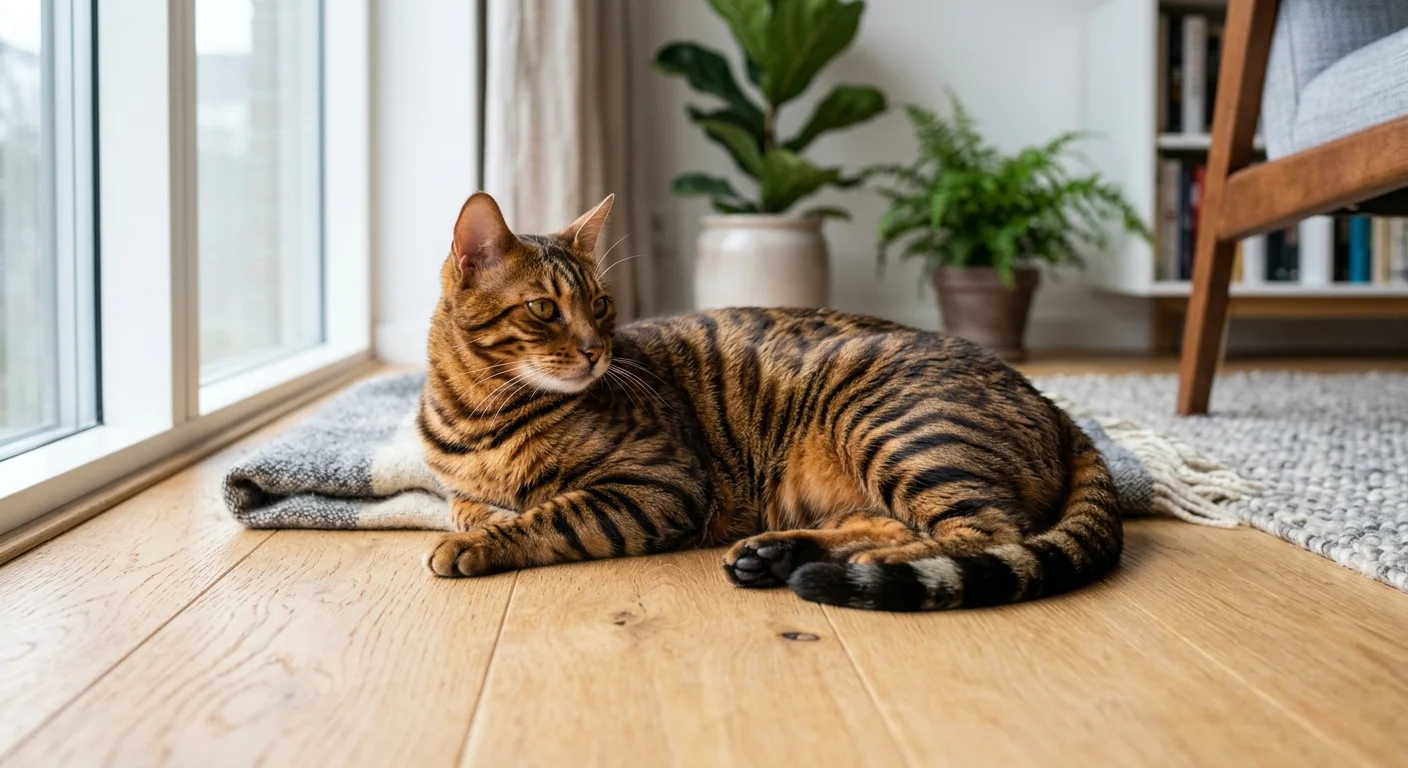
The Toyger is a striking domestic cat bred to resemble a miniature tiger, with bold, branching tabby stripes on a warm orange background coat. Despite its wild appearance, the Toyger is entirely domestic — gentle, affectionate, and highly trainable. Developed in the United States by Judy Sugden beginning in the late 1980s, the breed was designed with a conservation purpose in mind: to inspire people to care about tiger preservation by bringing the tiger's beauty into the home.
History & Origins
The Toyger was created by Judy Sugden, daughter of Jean Mill — the founder of the Bengal breed — who began her project in the late 1980s. Sugden's goal was to develop a domestic cat with the circular, branching stripe pattern of a tiger, both as a striking pet and as a symbol to inspire tiger conservation awareness.
The foundation cats were a striped domestic shorthair named Scrapmetal and a large-boned Bengal named Millwood Rumpled Spotskin. In 1993, Sugden imported a street cat from Kashmir named Jammu Blu, whose unusual head spotting helped add variety to the breed's facial markings.
TICA accepted the Toyger for registration in 1993 and granted it full Championship status in 2007. The breed remains rare globally, with most breeders located in the United States.
Appearance
The Toyger is a medium-to-large cat with a long, muscular body and a broad, deep chest — built for an impression of power and tiger-like presence. Adults typically weigh 3.5–6.8 kg.
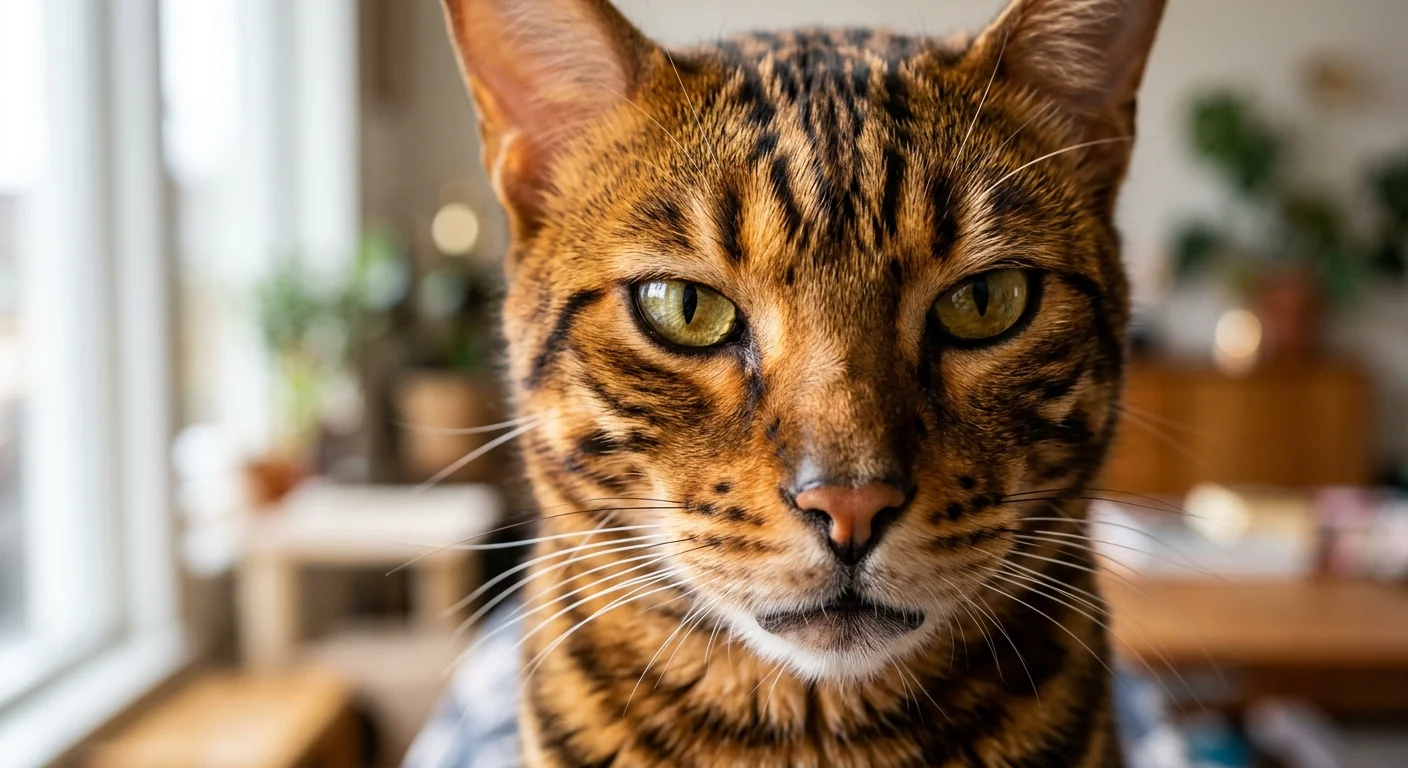
The coat is short and dense with a warm orange-brown background overlaid by bold, dark, branching stripes that should ideally be circular (encircling the body) rather than purely mackerel (running parallel). The markings on the face mimic the distinctive circular forehead patterns of a tiger. The head is medium in size with a long, broad nose, strong jaw, and small, rounded ears placed low on the sides of the head to enhance the tiger silhouette.
The overall appearance should suggest a miniature version of a wild tiger — powerful but sleek, with a long, low-slung stride.
Temperament
The Toyger's personality is as appealing as its appearance. These are outgoing, friendly cats that adapt easily to family life — welcoming strangers, getting along with children and other pets, and slotting comfortably into busy households.
Toygers are notably intelligent and highly trainable — they can learn to walk on a leash, play fetch, and respond to commands. Their trainability, combined with a calm and easygoing disposition, makes them unusually easy to live with for an active breed.
Despite their tiger-like looks, Toygers are gentle and not aggressive. They enjoy interactive play and require mental stimulation, but they are equally happy to settle beside their owners in the evenings. They do best in homes where they receive regular attention and engagement.
Activity & Play
Activity Level and Exercise Needs
The Toyger is a medium-energy breed with an athletic build that belies a surprisingly manageable temperament. Bred to resemble a miniature tiger, the Toyger has the confident, curious nature of its wild-looking appearance but without the intensity of truly high-drive breeds.
Daily Exercise
Aim for 20 to 30 minutes of active, engaged play per day. Toygers enjoy interactive sessions but also entertain themselves with appropriate toys when owners are busy. They are not couch potatoes, but they are not relentlessly demanding either.
Play Styles
Toygers enjoy chase-based play that activates their predatory instincts. Wand toys with feathers or ribbons, laser pointers, and rolling ball toys all work well. They often engage in fetch-like behavior, carrying toys back to their owner for another round. This social play style is one of the breed's most appealing traits.
Vertical Space
The Toyger is a capable climber and enjoys elevated vantage points. Cat trees, floating shelves, and window perches give them the height they seek. A multi-level cat tree near a window is ideal, combining climbing opportunity with the visual stimulation of watching the outdoors.
Indoor vs. Outdoor
Toygers are best kept as indoor cats. They adapt fully to indoor life and do not exhibit the restlessness of breeds that strongly desire outdoor roaming. Leash training is possible and gives the Toyger safe access to outdoor sights and smells without the risks of free roaming.
Enrichment
Mental stimulation is as important as physical exercise for the Toyger. Puzzle feeders, interactive treat dispensers, and rotating toy selections prevent boredom. This breed also enjoys learning new behaviors through clicker training, which serves as both mental and social enrichment.
Grooming
The Toyger's short, dense coat is low-maintenance and requires only weekly brushing to remove loose hairs and keep the striking stripe pattern looking crisp. The coat lies close to the body and has a soft, luxurious texture.
Because the coat is short and the skin is generally healthy, bathing is rarely necessary unless the cat gets into something messy. Regular nail trimming, ear cleaning, and dental care are the mainstays of the Toyger's grooming routine.
The Toyger's bold markings are best showcased when the coat is well-nourished — a high-quality diet supports coat health and helps maintain the rich orange-brown colouration that makes this breed so visually distinctive.
Health
The Toyger is considered a generally healthy breed with a lifespan of 12–15 years. As a relatively new and still-rare breed, long-term breed-specific health data is still being established.
The primary health concern identified in Toygers is an elevated risk of heart murmurs and hypertrophic cardiomyopathy (HCM) compared to the general feline population. Responsible breeders screen breeding cats via cardiac ultrasound to reduce the risk of passing HCM to offspring.
Routine veterinary care, a balanced diet, and maintaining a healthy weight are the most important factors for keeping a Toyger healthy. As with all breeds, annual health checks and dental care are recommended.
Nutrition
Feeding Your Toyger
The Toyger is a medium to large, muscular breed, and its diet should support an active, athletic body. Good nutrition helps maintain the coat's distinctive markings and overall body condition.
Macronutrient Guidelines
High-quality animal protein should dominate the Toyger's diet, constituting at least 35 to 40% of dry matter content. Chicken, turkey, and fish are all appropriate primary protein sources. Fat content of around 15 to 20% supports energy needs and coat shine. The Toyger's short, dense coat benefits from adequate omega-3 and omega-6 fatty acid intake. Carbohydrate levels should be kept low, with plant ingredients serving as fiber sources rather than caloric foundations.
Wet vs. Dry Food
A wet-primary or mixed feeding approach works well for Toygers. Wet food supports hydration, which is important for long-term kidney health. Dry food can be offered alongside, ideally in portion-controlled amounts or through a puzzle feeder to slow eating and engage the Toyger's mind. Avoid leaving dry kibble out all day without tracking intake.
Feeding Frequency
Adult Toygers do well with two meals per day at set times. Consistent feeding schedules support digestion and make portion management easier. Kittens under 12 months should eat three to four times daily to meet the demands of growth.
Breed-Specific Concerns
Toygers are generally healthy with no documented breed-specific dietary conditions. However, like many pedigree cats, they can be prone to obesity if overfed. Monitor body condition by feeling for the ribs, which should be palpable without applying pressure, and by checking for a visible waist from above. Adjust portions as needed and consult a vet annually to review dietary needs.
Family Fit
Is the Toyger Right for Your Family?
The Toyger's combination of striking appearance and adaptable temperament makes it an appealing choice for many household types. It is social, moderately active, and generally gets along well with people and other animals when properly introduced.
With Children
Toygers are patient and playful with children, particularly those old enough to engage in interactive play. They enjoy the energy children bring to play sessions. Younger children should be supervised, as the Toyger will walk away from unwanted handling rather than endure it indefinitely.
With Other Cats
Toygers generally integrate well into multi-cat households. They are sociable without being pushy, and introductions that follow a slow, scent-first approach typically go smoothly. They do best with cats of similar energy level rather than very timid or very dominant breeds.
With Dogs
The Toyger's confident disposition helps it hold its own with dog companions. A dog that is calm and cat-tolerant can become a genuine companion to a Toyger. The breed's curiosity means it may actually approach the dog first once it feels secure in its environment.
For Elderly Owners
Toygers are suitable for active retirees who enjoy spending time with a sociable cat. Their play needs are moderate and their affectionate nature makes them rewarding companions. They are not overly demanding, but they do appreciate daily interaction and will seek it out.
For Apartments
Apartment life suits the Toyger well. They do not require outdoor space to thrive, and their vocal level is moderate enough to avoid neighbor complaints. Providing vertical enrichment and regular play in a smaller space is sufficient to keep them content.
For First-Time Owners
The Toyger is a good choice for first-time cat owners who are prepared for an interactive, social pet. They are not aloof or unpredictable, and their trainability makes managing behavior straightforward. Grooming needs are low due to their short, dense coat.
Fun Facts
- The Toyger was specifically designed to raise awareness of tiger conservation — making it one of the few cat breeds created with a conservation mission.
- Judy Sugden, the breed's creator, is the daughter of Jean Mill, who founded the Bengal breed — making the Toyger something of a dynasty in designer cat breeding.
- The ideal Toyger stripe pattern is circular, wrapping around the body like a real tiger — this is significantly harder to achieve through breeding than the more common mackerel tabby stripes.
- In 1993, a street cat from Kashmir named Jammu Blu was imported to contribute spots between the ears — a feature that helps mimic the tiger's unique head markings.
- Despite looking like a miniature apex predator, Toygers are described by their owners as gentle, laid-back, and easy to train.
FAQ
How long do Toyger cats live?
Toygers typically live 10 to 15 years. As a relatively young breed, comprehensive longevity data is still developing, but with proper care, regular veterinary attention, and an indoor lifestyle, many Toygers reach the upper end of this range.
Do Toyger cats shed a lot?
Toygers have a short, dense coat that sheds moderately. They are not heavy shedders, and a weekly brush is generally sufficient to manage loose fur and keep the coat in good condition. They do not have the seasonal blowouts of long-haired or double-coated breeds.
Are Toyger cats vocal?
Toygers are moderately vocal. They communicate with their owners using soft meows and chirps but are not persistently loud. Their voice tends to be deeper and more resonant than many other breeds, fitting their tiger-inspired image.
Are Toyger cats hypoallergenic?
No. Toygers produce Fel d 1 like all domestic cats and are not hypoallergenic. Their short coat means slightly less surface area for dander distribution, but this does not meaningfully reduce allergic reactions in sensitive people. Anyone with cat allergies should spend time with a Toyger before committing.
How much does a Toyger kitten cost?
Toyger kittens from registered breeders typically cost between $1,500 and $5,000. The breed's rarity and the ongoing selective breeding program to improve tiger-like markings keeps prices high. Pet-quality kittens sit at the lower end; show-quality individuals are at the top.
Are Toyger cats easy to train?
Yes. Toygers are among the more trainable cat breeds. They respond well to clicker training and positive reinforcement and can learn commands, tricks, and leash walking. Their intelligence and curiosity make training sessions engaging for both cat and owner.
Gallery
Explore more Toyger-style breeds
Browse related breeds or take our matching quiz to find the right fit for your home.
Stay in the loop
Get weekly breed spotlights, care guides, and new additions - straight to your inbox.