British Shorthair
calm, even-tempered, dignified, loyal
Quick Facts
- Lifespan
- 9-15 years
- Weight
- 3-8 kg
- Origin
- United Kingdom
- Coat
- Short
Overview
The British Shorthair is the original pedigree breed of the United Kingdom and one of the oldest recognised cat breeds in the world. With its round face, thick plush coat, and wonderfully calm temperament, the British Shorthair has earned a reputation as the perfect companion for households of all sizes and types. They are affectionate without being demanding, adaptable without being aloof, and remarkably easy to live with.
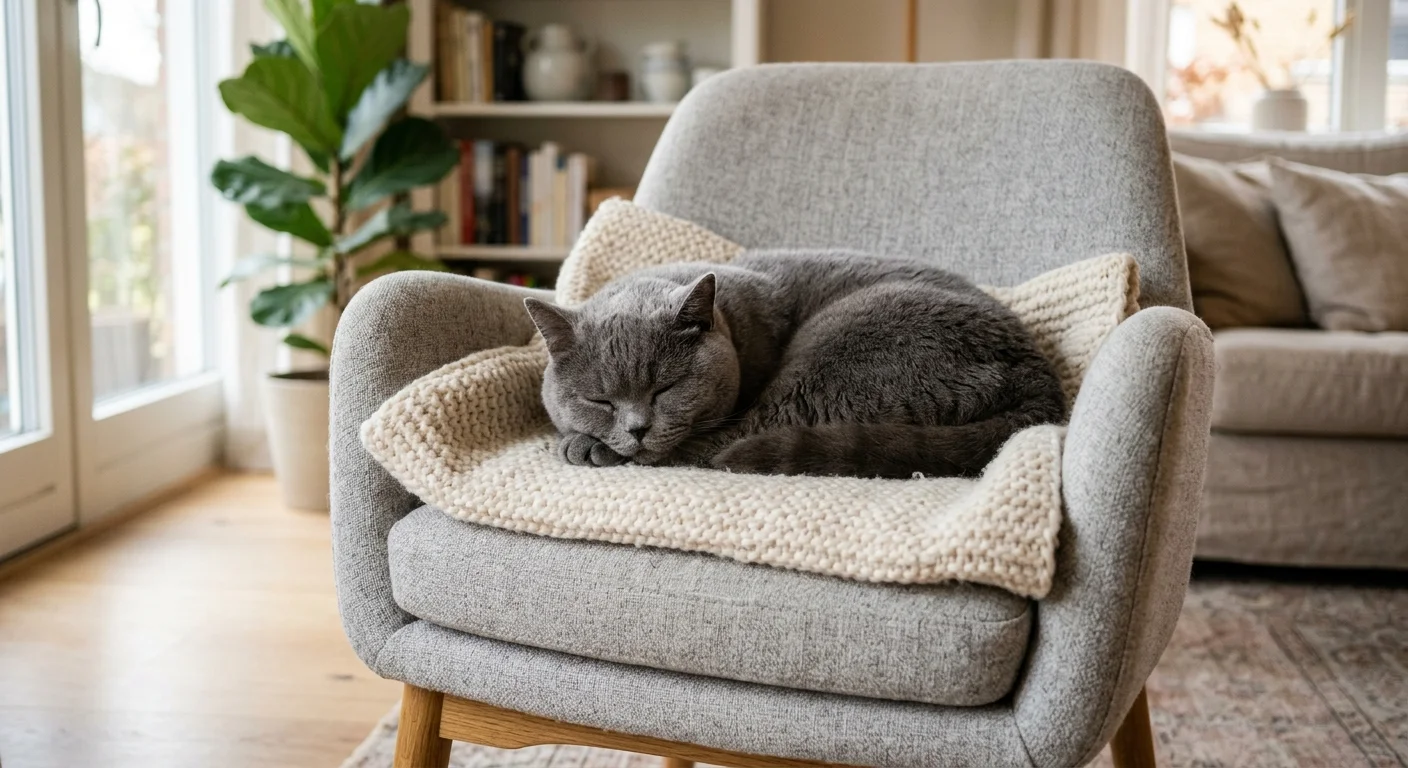
This is a breed that is unhurried by nature. The British Shorthair does not leap from surface to surface or vocalise constantly; it makes its presence felt through quiet, steady companionship. They enjoy being near their people, will often follow you from room to room at a dignified pace, and are content to sit beside you rather than on you. Their emotional register runs deep but quiet.
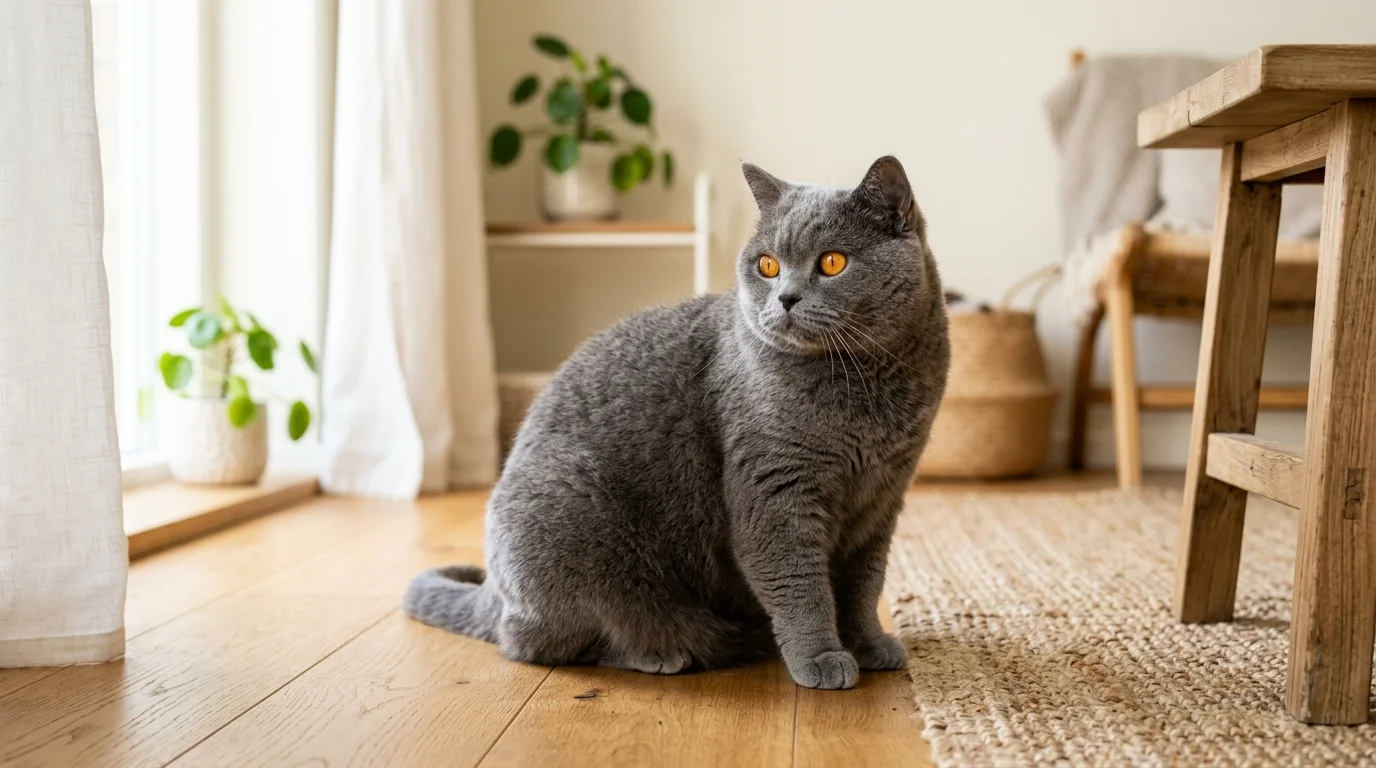
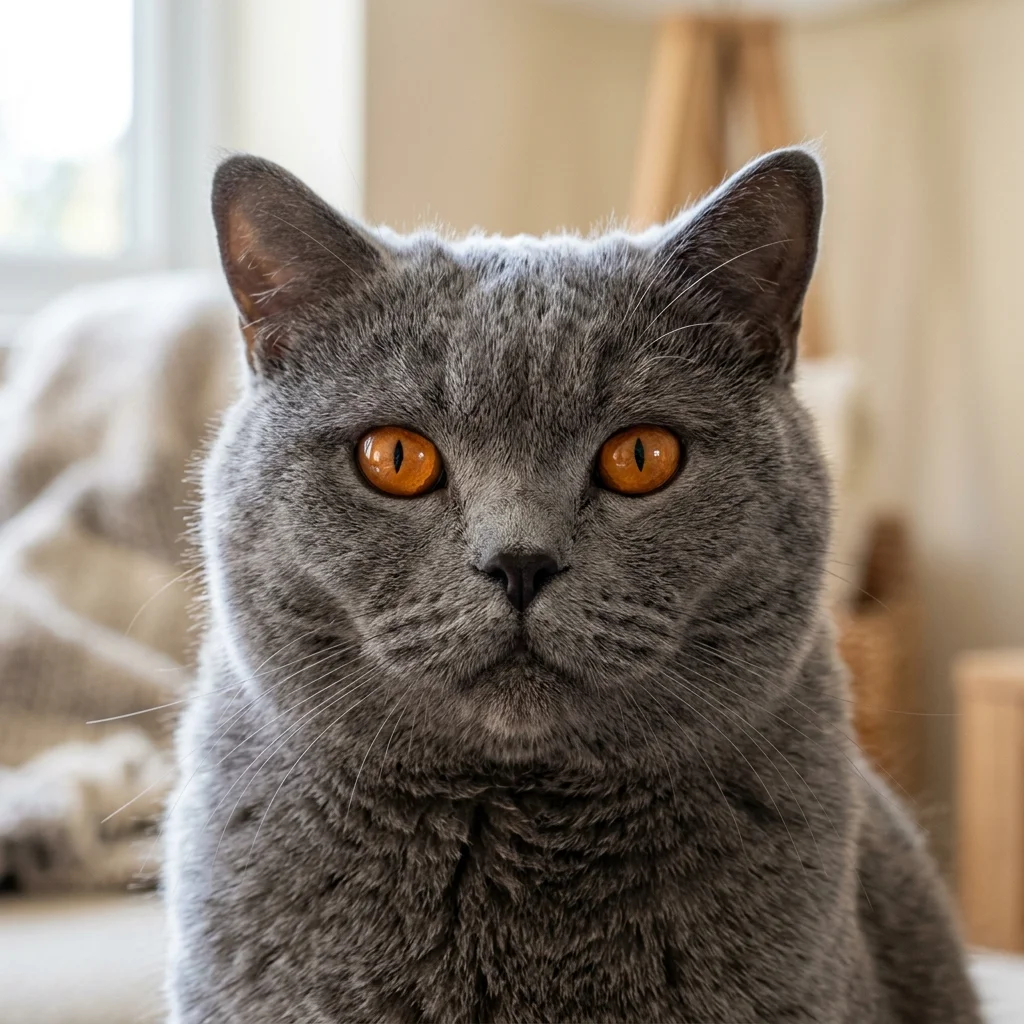
Physically, the British Shorthair is a substantial cat. Adults are medium to large in size with a broad, compact body, dense double coat, and notably round head with large round eyes that give the face an open, honest expression. Males typically weigh between 5.5 and 8 kg; females between 4 and 6 kg. They are one of the slower-maturing cat breeds, not reaching full physical maturity until three to five years of age.
The breed comes in an extraordinary range of colours and patterns, with the blue (grey) British Shorthair being the most iconic and widely recognised. Other popular variations include black, white, cream, tabby, colourpoint, silver, golden, and bicolour. Almost every colour and pattern combination seen in domestic cats is available in the British Shorthair.
British Shorthairs are an excellent choice for families, first-time cat owners, single-person households, and anyone seeking a stable, calm, long-lived companion. They tolerate routine changes and home rearrangements with equanimity. They are gentle with children and adaptable with other pets. Lifespan is typically 12 to 17 years, with many individuals thriving into their mid-teens.
History & Origins
The British Shorthair is one of the oldest cat breeds in the world, with roots that trace directly to the domestic cats brought to Britain by Roman legions from 43 CE onward. These cats interbred with the native felines already present in Britain, and over centuries of natural selection in the British climate, the sturdy, thick-coated type that would eventually become the British Shorthair began to emerge. The breed represents, in a very real sense, the working cat of Britain shaped by necessity rather than fashion.
The breed's formal history began with Harrison Weir, a Victorian artist and cat enthusiast who is widely credited with establishing the modern cat fancy. Weir organised the first recorded cat show at Crystal Palace in London in 1871, where British Shorthairs were exhibited as a distinct type. He also wrote the first breed standards. The British Shorthair was among the founding breeds of the organised cat fancy and retained that prestige through the late Victorian and Edwardian periods.
In the early 20th century, the breed's popularity declined sharply with the arrival of longhaired Persian cats from continental Europe, which became the fashionable type of the era. The situation worsened considerably through the First and Second World Wars, during which the British Shorthair breeding population was severely depleted. Post-war recovery required careful and extensive outcrossing to other breeds, including Persians, Russian Blues, and domestic shorthairs, before registration numbers recovered. This Persian outcrossing, while necessary for the breed's survival, introduced the PKD1 gene mutation into British Shorthair lines.
The Cat Fanciers' Association (CFA) recognised the British Shorthair in 1980. Today the breed is consistently among the most popular in Europe and one of the most widely registered pedigree cats globally, prized as much for its temperament as its appearance.
Appearance
The British Shorthair is a solidly built, compact, and powerfully muscled cat that gives an immediate impression of strength and roundness. Almost every element of the British Shorthair's physical appearance is characterised by roundness: the broad, rounded head, the full rounded cheeks, the large round eyes, and the rounded overall body silhouette. This is a fundamentally different aesthetic from the angular Siamese or the sleek, horizontal Bengal.
Adult males are notably larger than females, typically weighing between 5.5 and 8 kg. Females generally weigh between 4 and 6 kg. The breed is slow to mature: some males do not reach full physical size until three to five years of age, which is unusually late even among pedigree cats. Owners sometimes worry their male is behind on development, when in fact the breed simply takes its time.
The coat is the breed's most distinctive physical feature: short, very dense, and plush, with a crisp texture that springs back when stroked against its natural lie. This is described as a 'crisp' rather than silky or soft coat, and it stands slightly away from the body rather than lying flat, giving the cat an almost sculptural, teddy-bear quality. The dense undercoat contributes significantly to this effect.
The most iconic and widely recognised colour is British Blue: a clear, even blue-grey. However, the British Shorthair is bred in one of the widest colour and pattern ranges of any pedigree cat, including black, white, cream, silver, golden, tabby (classic, mackerel, and spotted), tortoiseshell, bicolour, and colourpoint. Eye colour varies by coat: copper or gold in blue and most solid-coloured cats; green in silver tabby; blue in colourpoint varieties.
The legs are short to medium and well-boned. The tail is thick, medium in length, and rounded at the tip. The overall impression is of a cat that is dense, balanced, and entirely comfortable in its own body.
Temperament
The British Shorthair is defined above all by its calm, steady temperament. This is not a breed prone to hyperactivity, anxiety, or drama. It observes its world with a placid intelligence and settles into domestic life with remarkable ease. British Shorthairs are often compared to a dependable friend: reliably even-tempered, comfortable in their own skin, and entirely without neurosis.
They are affectionate, but on their own terms. Most British Shorthairs prefer to sit beside their people rather than on them; close-contact cuddling for extended periods can feel too warm given their dense double coat. They will, however, follow their preferred people around the house, acknowledge greetings with quiet dignity, and occasionally request attention through gentle head-butts or a deliberate paw placed on your leg. It is affection expressed with restraint, which many owners find deeply satisfying.
British Shorthairs are not vocal cats. They have a soft, low voice and use it sparingly, which makes them excellent companions for flats, terraced houses, noise-sensitive environments, and anyone who does not want to be serenaded at 3 am. They do not demand attention incessantly and are perfectly capable of entertaining themselves for periods when their people are busy.
With strangers, British Shorthairs are reserved rather than immediately welcoming. They will assess a new person carefully from a distance before deciding whether to approach. This is a consistent personality trait, not shyness or a welfare concern. Given time, most British Shorthairs warm to familiar visitors and will eventually choose to be in the same room.
Despite their laid-back demeanour, British Shorthairs are genuinely intelligent cats who respond well to gentle positive reinforcement. They learn their names reliably, accept handling and veterinary procedures with relatively good grace, and adapt to changes in routine without excessive distress. They are not easily destabilised by ordinary household change.
With children and other pets, the British Shorthair's temperament is typically one of its greatest assets. They are tolerant and steady in the face of the noise and activity that busy family life produces, and rarely respond to provocation with anything other than calm withdrawal.
Activity & Play
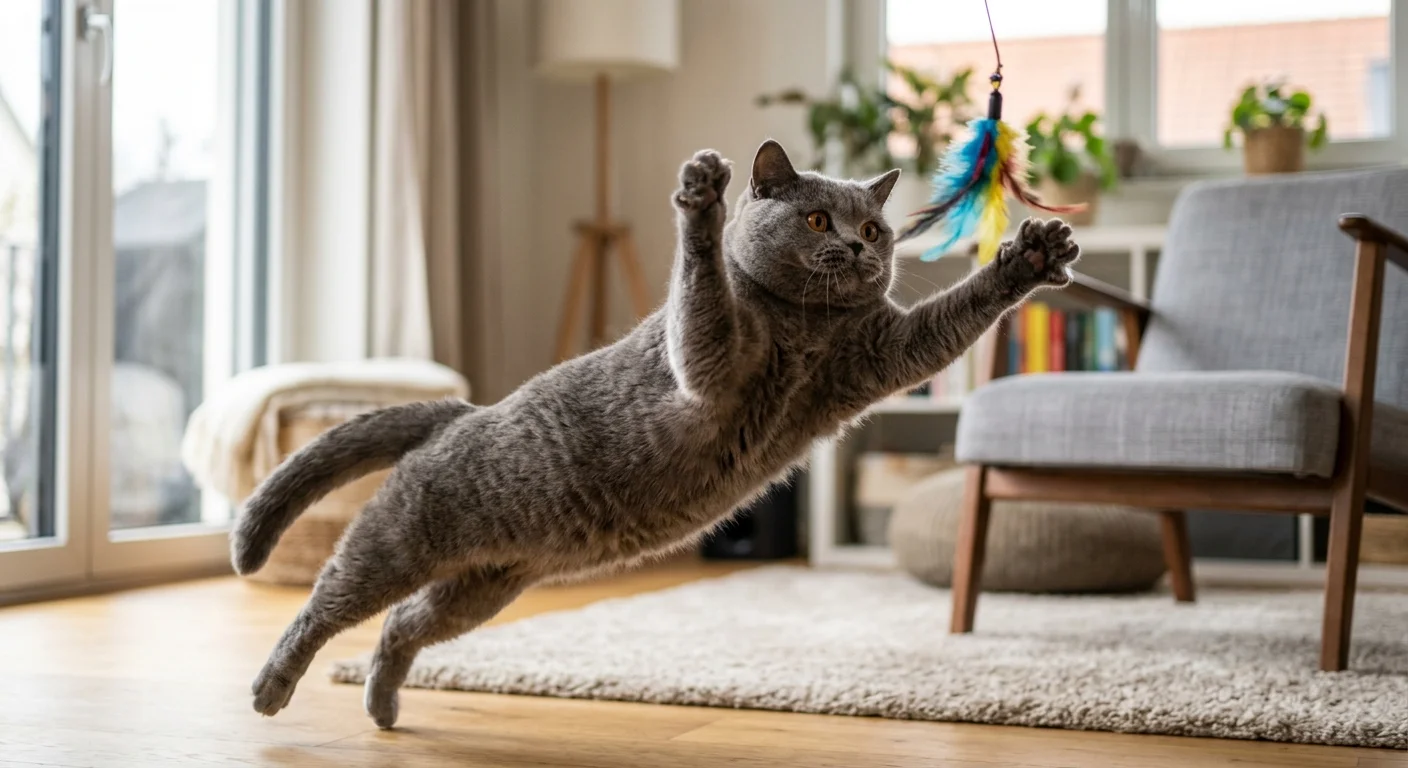
The British Shorthair is a moderately active breed that does not have the demanding exercise requirements of high-energy cats such as the Bengal or Abyssinian. They have a calm, unhurried disposition and are content with shorter, focused play sessions rather than marathon activity. That said, daily play is genuinely important, particularly because British Shorthairs are prone to weight gain and obesity if activity is insufficient.
Aim for two to three short interactive play sessions of around 10 to 15 minutes each per day. Wand toys, feather teasers, and small toy mice that allow the cat to stalk and pounce work well with the breed's instinctive hunting drive. Food puzzle toys and slow feeders also provide excellent mental enrichment and help slow eating, which matters given the breed's tendency toward overindulgence.
British Shorthairs are effective self-entertainers. They will often play independently with toys left around the home and do not require constant human involvement to stay occupied. A good selection of rotating toys prevents habituation.
Vertical territory is appreciated but not essential: a low-to-medium cat tree gives this heavier breed a comfortable perch without requiring athletic feats. Scratching posts are important for claw health and the natural stretching behaviour that supports muscle tone.
British Shorthairs adapt well to full indoor living. They do not typically seek outdoor access, but if a secure enclosed garden or catio is available, gentle outdoor exploration is enriching. They are not natural roamers and are generally safer managed as indoor or supervised-outdoor cats.
As they age, British Shorthairs tend to become progressively less active. Monitoring weight and adjusting diet accordingly becomes increasingly important from middle age onward.
Grooming
The British Shorthair's dense plush coat requires more grooming attention than its short length might suggest. The thick double coat, while not prone to matting in the way a longhaired breed's coat does, sheds considerably, particularly during the seasonal moults of spring and autumn. Regular grooming removes loose fur, prevents hairball formation, and maintains the coat's distinctive crisp, plush texture.
Brush two to three times per week as a baseline. A steel wide-toothed comb works through the dense undercoat effectively, and should be followed by a slicker brush or rubber grooming mitt to remove loose surface hairs and add finish. During heavy shedding seasons, daily brushing significantly reduces the amount of fur deposited on furniture and clothing, and makes grooming a much more pleasant experience for both cat and owner.
Do not attempt to fluff or significantly alter the coat's natural lie; the British Shorthair's characteristic plush texture comes from the coat's natural density, and excessive brushing can break the coat structure rather than enhance it.
Bathing is rarely necessary for British Shorthairs maintained as house cats. Occasional baths, two to three times per year or before shows, can be done if the cat tolerates them. Use a cat-safe shampoo and ensure the coat is completely and thoroughly dried afterwards. The dense double coat retains moisture and can chill the cat if left damp.
Nail trimming should be done every two to three weeks. A sturdy scratching post provides an important supplement to nail maintenance and supports the cat's stretching behaviour. Ears should be checked weekly for wax accumulation or early signs of infection; clean gently with a vet-approved solution if needed.
Dental hygiene matters. Regular brushing with cat-safe toothpaste, ideally several times per week, combined with annual professional dental cleaning, supports long-term oral health. Starting this routine during kittenhood makes the process far easier.
Health
The British Shorthair is generally a healthy and long-lived breed with a typical lifespan of 12 to 17 years. However, there are several health conditions that prospective owners and breeders should know about, and that make careful breeder selection particularly important.
Hypertrophic Cardiomyopathy (HCM) is the most common cardiac condition in domestic cats, and the British Shorthair has a documented elevated risk. A Danish study published in the Journal of Veterinary Internal Medicine (Granstrom et al., 2011) screened 229 British Shorthairs over four years and found approximately 8.5% met the criteria for HCM; male cats showed significantly higher occurrence (around 20%) compared to females (around 2%). Because there is no breed-specific genetic test for HCM in British Shorthairs, annual echocardiographic screening of breeding cats is the primary tool. Ask breeders whether their breeding cats receive annual cardiac screening.
Polycystic Kidney Disease (PKD) entered British Shorthair lines through historical outcrossing with Persian cats during the post-war recovery period. PKD is caused by an autosomal dominant mutation (PKD1 gene) that causes fluid-filled cysts to form progressively in the kidneys, impairing function over time. A DNA test is available through the UC Davis Veterinary Genetics Laboratory and similar providers. Responsible breeders test all breeding cats and will not breed from PKD-positive animals. Both parents should be tested and documented as PKD-negative.
Obesity is a consistent concern. British Shorthairs have a strong appetite and a tendency toward weight gain, particularly after neutering and as they age. Obesity increases risk of diabetes, joint disease, and cardiovascular strain. Measured feeding and regular weight monitoring are important throughout the cat's life.
Dental disease is common across all cat breeds; regular brushing and professional dental cleaning help prevent periodontal problems.
Ask your vet to include cardiac auscultation at annual examinations and arrange echocardiography if any murmur is detected.
Nutrition
Nutrition is one of the most important management considerations for British Shorthair owners. This is a breed with a healthy appetite and a tendency toward weight gain, particularly after neutering and as activity levels decline with age. Obesity in British Shorthairs is not merely a cosmetic concern: excess weight puts significant strain on joints, increases cardiovascular risk, and can contribute to diabetes and urinary issues.
Feed measured portions twice daily using a quality complete cat food with a high named-meat protein source (chicken, turkey, salmon) as the primary ingredient. Free-feeding, where food is left out constantly, should be avoided for this breed. Even small amounts of daily overfeeding accumulate significantly over months and years.
Wet food is beneficial for hydration and satiety. A combination of wet and dry food works well for many British Shorthairs: wet food at mealtimes for protein and moisture, with a small amount of dry food for dental benefit if preferred. Avoid foods with high cereal or carbohydrate content as a primary ingredient.
Kittens should be fed a kitten-formulated diet with higher protein and fat to support growth until around 12 months. Neutered adults and seniors require careful portion management. Weight should be monitored monthly: you should be able to feel the ribs easily but not see them. A body condition score check at each veterinary visit is a useful discipline.
Treats should be used sparingly and factored into the daily calorie allowance. If your British Shorthair is already at the upper end of a healthy weight, it is easy for well-meaning treats to tip the balance. Low-calorie treat alternatives such as small pieces of cooked plain chicken or specially formulated low-calorie cat treats keep the experience rewarding without the caloric cost.
Family Fit
The British Shorthair is one of the most universally adaptable cat breeds when it comes to household type. Their calm, even temperament and low-maintenance approach to life means they fit naturally into a remarkably wide range of homes.
With children, the British Shorthair is a reliable and tolerant companion. They are not easily rattled by noise or activity, and their sturdy physical build means they are less vulnerable to accidental rough handling than more delicate breeds. They will typically set their own limits with gentle assertiveness rather than aggression. Younger children should always be taught to respect the cat's space and body language, as with any breed.
With other cats, British Shorthairs generally coexist without difficulty. They are not territorial in an aggressive sense, and their calm nature means they rarely instigate conflict. Introductions should always be gradual and supervised, but British Shorthairs typically adjust to a feline housemate with relatively little drama.
With dogs, similar patience applies. British Shorthairs are confident enough not to be intimidated by most dogs, and many live happily alongside relaxed, cat-friendly dog companions. High-prey-drive dogs require more careful management, but the British Shorthair's composure generally helps keep interactions measured rather than reactive.
For first-time cat owners, the British Shorthair is a consistently recommended breed. Their predictable temperament, independence, and low-drama nature make them genuinely easy to live with. They do not demand constant attention, but they are reliably present and companionable.
Apartment living suits British Shorthairs very well. They do not need outdoor access or large spaces to stay content. The primary requirement is moderate daily play and careful weight management. Households that are frequently away from home should be aware that while British Shorthairs tolerate solitude better than high-need breeds, they still benefit from companionship and should not be left alone for extended days without enrichment.
Fun Facts
1. They were the original champions of the cat fancy. The British Shorthair was one of the first breeds exhibited when Harrison Weir organised what is widely regarded as the world's first modern cat show at Crystal Palace, London, in 1871.
2. Their ancestry may stretch back to Roman Britain. Roman legions brought domestic cats to Britain from 43 CE onward. The natural selection pressures of the British climate over many centuries likely shaped the robust, thick-coated type we now call the British Shorthair.
3. They were nearly lost after the Second World War. The breeding population was severely depleted during both World Wars. Post-war recovery required careful outcrossing to Persian, Russian Blue, and domestic shorthair cats before numbers recovered sufficiently.
4. The blue British Shorthair is thought to have inspired the Cheshire Cat. John Tenniel's original illustrations for Lewis Carroll's 'Alice's Adventures in Wonderland' are widely believed to have been inspired by the British Blue, a connection that has contributed to the colour's enduring cultural status.
5. They are one of the most colour-diverse cat breeds registered. The British Shorthair breed standard accepts a very wide range of colour and pattern combinations, from the classic British Blue to silver shaded, golden, lilac, and many others.
6. Males can take up to five years to reach full size. British Shorthairs are unusually slow to mature. A male at age one is still essentially a teenager; full physical maturity may not arrive until age three to five.
7. Their coat springs back when touched. The plush, dense coat of the British Shorthair will visibly spring back to its original position when stroked against the natural lie, a tactile quality quite unlike any other shorthaired breed.
FAQ
Are British Shorthair cats good with children? Yes. British Shorthairs are one of the most child-friendly cat breeds. Their calm, tolerant nature and robust build make them well-suited to family life. They will set limits calmly if overwhelmed, but are not typically reactive or aggressive.
Do British Shorthairs like to be held? Most British Shorthairs tolerate and occasionally enjoy being held, but prefer not to be scooped up or cuddled against their will. They tend to choose proximity over contact: sitting beside you rather than on you. Respect their preference and they will be affectionate on their own terms.
Are British Shorthairs high-maintenance? No. They are one of the easier breeds to care for. The coat needs two to three weekly brushes; they do not need outdoor access; and their temperament is steady and low-drama. The main ongoing concern is weight management.
How long do British Shorthairs live? Typically 12 to 17 years. Many well-cared-for individuals reach 15 years and beyond.
What health tests should I ask a breeder for? Ask for PKD (Polycystic Kidney Disease) DNA test results for both parents: both should be PKD-negative. Ask also about HCM cardiac screening via echocardiogram, which is recommended annually for breeding cats. Reputable breeders will provide documentation for both.
Do British Shorthairs shed a lot? Moderately. The dense double coat sheds, particularly during seasonal changes in spring and autumn. Regular brushing (two to three times per week, daily during shedding season) manages this well.
Can British Shorthairs live in flats? Yes. They adapt well to apartment living and do not require outdoor access. Their calm, self-contained nature suits smaller spaces better than higher-energy breeds.
Gallery
Explore more British Shorthair-style breeds
Browse related breeds or take our matching quiz to find the right fit for your home.
Stay in the loop
Get weekly breed spotlights, care guides, and new additions - straight to your inbox.