Serengeti
active, confident, vocal, agile
Quick Facts
- Lifespan
- 12-15 years
- Weight
- 3.5-7 kg
- Origin
- United States
- Coat
- Short
Overview
Overview
The Serengeti is a striking spotted cat developed in the United States with the goal of creating a domestic breed that resembles the African serval — without any recent wild blood. Created by biologist Karen Sausman in California in 1994, the Serengeti was developed by crossing Bengal cats (already many generations from wild ancestry) with Oriental Shorthairs.
Currently registered by TICA as a Preliminary New Breed, the Serengeti is still in development but has gained a dedicated following among enthusiasts of wild-looking domestic cats. It is an intensely active, confident, and affectionate breed that thrives in engaged, active households.
Weighing 3.5–7 kg and living 12–15 years, the Serengeti is athletic, agile, and vocal.
History & Origins
History
The Serengeti was created in 1994 by Karen Sausman, a conservation biologist at Kingsmark Cattery in California. Her goal was to produce a domestic cat with the exotic spotted appearance of the African serval — but without any hybrid wild-cat blood in the breeding program.
The foundation cross was between Bengal cats (themselves already many generations removed from their wild Asian leopard cat ancestry) and Oriental Shorthairs. The Oriental contribution brings the long legs and large ears associated with serval-like appearance, while the Bengal contributes the bold spotted coat pattern.
The breed is registered with TICA and eligible to be shown as a Preliminary New Breed. No other major registries currently recognize the Serengeti. The breed is still in active development, with breeders working to refine type and increase the population.
Appearance
Physical Characteristics
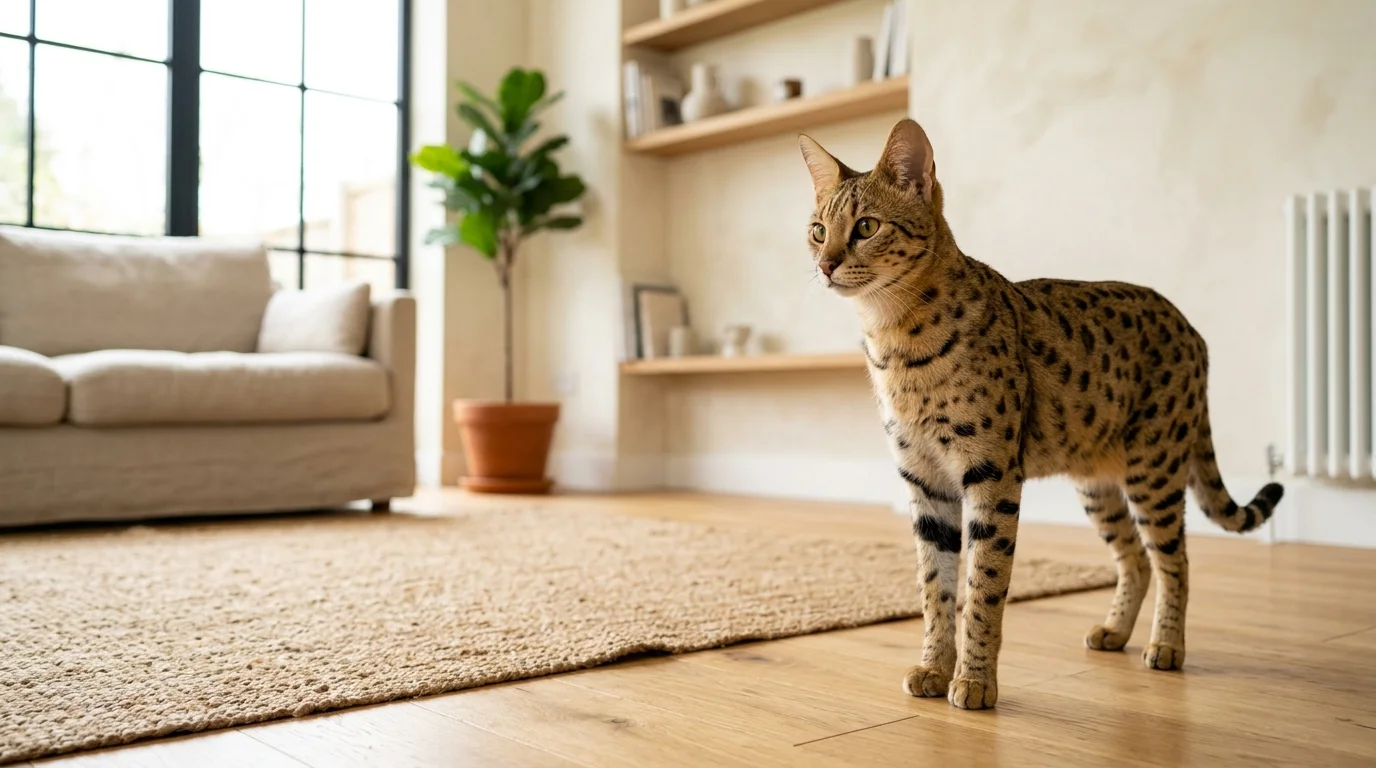
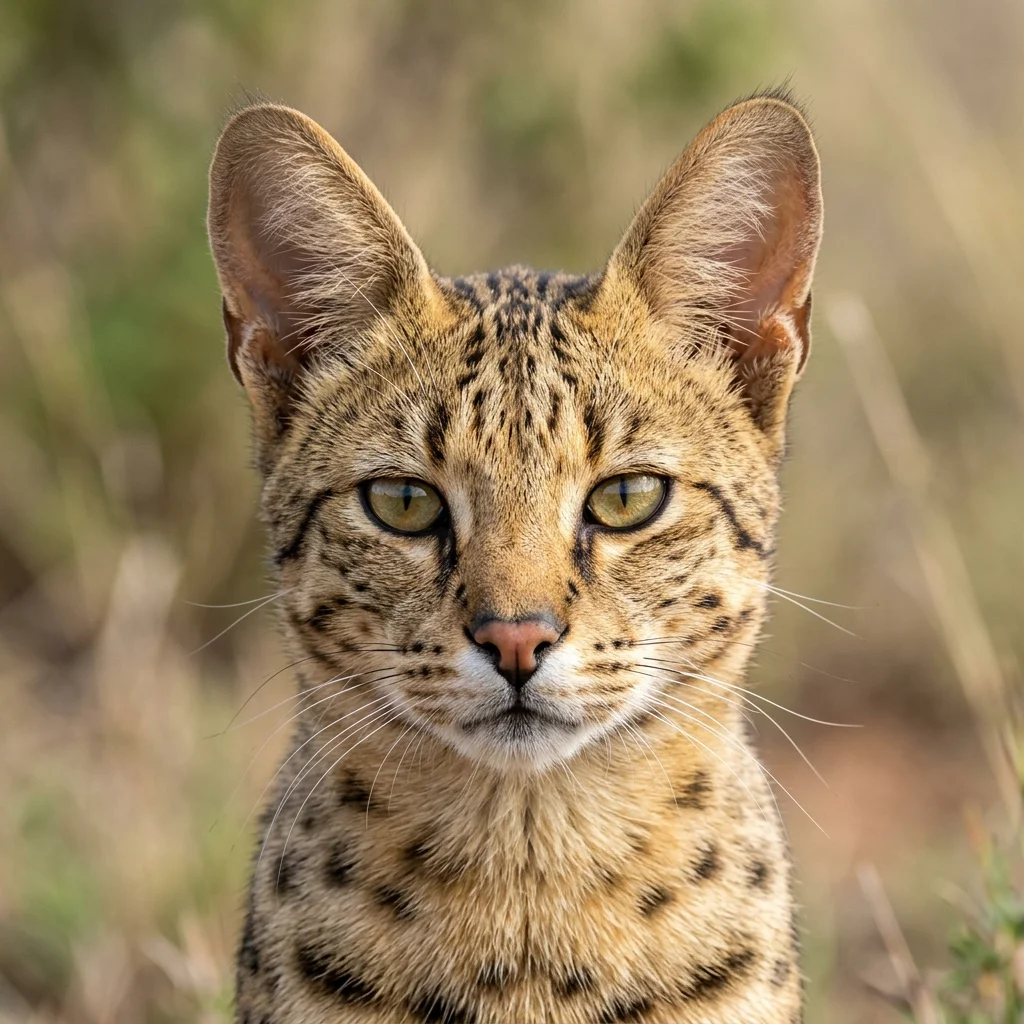
The Serengeti is built to look like a domestic serval — tall, lean, and spotted, with noticeably large ears and long legs.
Body: Medium to large, long-legged, lean, and muscular Head: Small in proportion to the body; long neck emphasizes the serval-like silhouette Eyes: Large, round to slightly oval; gold or brown Ears: Very large, upright, and wide at the base — a defining feature of the breed Coat: Short, dense, and close-lying Color: Spotted tabby on a warm golden to tan base; black spots on a black or dark background ("smoke" variant) also accepted Weight: 3.5–7 kg Lifespan: 12–15 years
Temperament
Temperament
The Serengeti is a bold, sociable cat that combines the athleticism of a Bengal with the outgoing nature of an Oriental Shorthair. They are deeply loyal to their families and enjoy being involved in household activities.
Key traits:
- Active and agile — loves to climb, run, and leap to high places; needs vertical space
- Confident — self-assured even in new environments, though may be briefly shy
- Vocal — chatty and expressive, likely inherited from Oriental ancestry
- Affectionate — bonds strongly with family members; follows owners around the home
- Playful — remains kitten-like well into adulthood; needs interactive stimulation
- Friendly — typically good with children and other cats
The Serengeti is not a cat for owners who want a quiet companion. They need space, activity, and engagement to be happy.
Activity & Play
Activity & Exercise
The Serengeti is a high-energy cat that craves movement, mental stimulation, and interactive play. Developed to resemble a wild African serval, this breed carries that exotic athleticism into everyday life at home.
Daily Exercise Needs
Plan for at least 30 to 45 minutes of active play per day. The Serengeti does not settle easily into a couch-cat lifestyle and will become restless or even destructive if its exercise needs go unmet.
Play Styles
Serengetis love anything that mimics the hunt. Feather wands, laser pointers, and fast-moving toy mice trigger their strong prey drive. They are enthusiastic chasers and will sprint, leap, and pounce with impressive speed and precision. Puzzle feeders and treat-dispensing toys add a mental challenge that keeps them occupied between play sessions.
Vertical Space
Vertical territory is essential for this breed. A tall cat tree with multiple platforms, wall-mounted shelves, and window perches give the Serengeti places to survey its environment from above. This cat is an accomplished jumper and will use every inch of available height.
Toys
Rotate toys regularly to prevent boredom. Serengetis are intelligent enough to lose interest in the same toy within a few days. Interactive electronic toys, track balls, and crinkle tunnels are well received. Wand toys used during scheduled play sessions bond the cat to its owner while satisfying hunting instincts.
Indoor vs. Outdoor
The Serengeti is best kept as an indoor cat to protect it from outdoor hazards, but a secure outdoor enclosure or catio is a welcome addition. Supervised garden time on a harness and leash is also possible with patient training from kittenhood.
Grooming
Grooming
The Serengeti has a short, dense coat that is among the lowest-maintenance of any breed.
- Brushing — once a week is sufficient to remove loose hair and keep the spotted coat looking sharp
- Shedding — minimal; the short coat rarely produces significant loose fur
- Bathing — rarely needed; the coat stays clean naturally
- Nails — trim every 2–3 weeks
- Ears — check and clean monthly
- Teeth — brush regularly to prevent periodontal disease
The breed's striking spotted tabby pattern requires no special treatment to look its best — a healthy diet and weekly brushing are all that is needed.
Health
Health
The Serengeti is a generally healthy breed with no known breed-specific hereditary conditions. As a relatively new development breed, long-term health data is still being established.
Health profile:
- No documented breed-specific genetic disorders
- As a Bengal × Oriental Shorthair cross, breeding stock should be screened for conditions relevant to both parent breeds
- Oriental ancestry means sensitivity to anaesthesia is possible; inform your vet
- Lifespan: 12–15 years
Buying from breeders who health-test their breeding cats is important, particularly for HCM (hypertrophic cardiomyopathy, which can affect Bengals) and amyloidosis (Oriental Shorthair lineage). Routine preventive veterinary care keeps most Serengetis in excellent condition.
Nutrition
Nutrition
The Serengeti is an active, muscular cat that requires a diet rich in animal protein to support its lean body and high energy output.
Protein and Fat
Look for a cat food where the first one or two ingredients are named animal proteins such as chicken, turkey, or fish. A protein content of around 38 to 42 percent on a dry matter basis supports muscle maintenance in this athletic breed. Fat content in the range of 15 to 18 percent provides sustained energy for its active lifestyle.
Wet vs. Dry Food
A combination of wet and dry food works well for most Serengetis. Wet food contributes to daily hydration, which supports urinary tract health. Dry food can be used for puzzle feeders and foraging toys, turning mealtime into an enrichment activity.
Feeding Frequency
Kittens up to six months should eat three to four small meals per day to support rapid growth. Adults do well on two measured meals daily. Free-feeding dry food is not recommended, as this breed can gain weight if access to food is unrestricted and play is insufficient.
Breed-Specific Considerations
The Serengeti does not have highly documented breed-specific dietary sensitivities, but as with all active cats, maintaining an ideal body weight is important. Monitor body condition regularly and adjust portion sizes if the cat becomes less active or begins to gain weight. Avoid foods with excessive fillers such as corn, soy, or artificial additives.
Family Fit
Family Fit
The Serengeti is a sociable, confident cat that fits well into active households. Its outgoing personality makes it a good companion for families, but potential owners should understand its need for engagement before committing.
Children
Serengetis generally do well with children who know how to interact respectfully with cats. Their playful energy matches well with older kids who enjoy interactive games. Young toddlers should always be supervised, as this breed dislikes rough handling and will move away rather than tolerate it.
Other Cats
This breed usually coexists peacefully with other cats, especially when introduced gradually. Another active cat makes a good companion, providing additional stimulation when owners are busy or away.
Dogs
Serengetis can adapt to dog-friendly homes when introductions are managed carefully. A dog with a calm temperament and no strong prey drive is the safest match.
Elderly Owners
The Serengeti's high activity level and need for daily play make it a challenging choice for elderly owners who prefer a quieter companion. It can work with a senior who is still active and committed to providing stimulation.
Apartments
Apartment living is possible if vertical space is maximised and play sessions are consistent. A small, understimulating flat without enrichment is not suitable for this breed.
First-Time Owners
The Serengeti is not the easiest breed for first-time cat owners due to its high energy and intelligence. Those willing to research the breed and invest time in daily play will be rewarded with an exceptionally engaging companion.
Fun Facts
Fun Facts
- Designed to look like a serval — the breed's entire purpose is to capture the wild beauty of the African serval in a fully domestic, safe companion cat
- No wild blood — despite its exotic appearance, the Serengeti has no recent wild cat genetics; all ancestry is fully domestic
- Created by a conservationist — founder Karen Sausman was a conservation biologist, not a conventional cat breeder
- Still developing — the Serengeti remains a Preliminary New Breed with TICA; the breed standard is still being refined
- Velcro cat — Serengetis are known for following their owners everywhere, earning the nickname among enthusiasts
- Two-speed personality — can sprint at full speed around the house one moment and demand a cuddle the next
FAQ
Frequently Asked Questions
How long do Serengeti cats live?
Serengetis typically live 10 to 15 years with good care, regular veterinary visits, and a balanced diet. Their relatively recent development as a breed means long-term health data is still accumulating, but well-cared-for individuals often reach the upper end of this range.
Do Serengeti cats shed a lot?
No. The Serengeti has a short, close-lying coat that sheds minimally compared to longhaired breeds. Weekly brushing is usually sufficient to remove loose hair and keep the coat in good condition.
Are Serengeti cats vocal?
Yes, Serengetis tend to be moderately vocal. They will communicate with their owners through chirps, trills, and meows, particularly when they want attention or playtime. They are not as persistently loud as Siamese cats but are not silent either.
Are Serengeti cats hypoallergenic?
No cat breed is truly hypoallergenic. Serengetis produce Fel d 1 allergen like all cats. Their short coat and lower shedding may reduce the spread of allergen around the home, but this does not make them safe for people with serious cat allergies.
How much does a Serengeti cat cost?
Because the Serengeti is a relatively rare breed, kittens from reputable breeders typically cost between 600 and 1,500 US dollars. Prices vary depending on breeder reputation, pedigree, and geographic location.
Can Serengeti cats be trained?
Yes. Serengetis are intelligent and respond well to positive reinforcement training. Many owners successfully teach them to walk on a leash, perform simple commands, and use puzzle toys. Consistent short training sessions work best with this curious and alert breed.
Gallery
Explore more Serengeti-style breeds
Browse related breeds or take our matching quiz to find the right fit for your home.
Stay in the loop
Get weekly breed spotlights, care guides, and new additions - straight to your inbox.