Oriental Shorthair
vocal, social, intelligent, playful
Quick Facts
- Lifespan
- 12-15 years
- Weight
- 2.7-5 kg
- Origin
- Thailand/Europe
- Coat
- Short
Overview
The Oriental Shorthair is a Siamese cousin in everything but colour — sharing the same slender, angular body and expressive personality, but offered in an extraordinary range of coat colours and patterns. With over 280 recognised colour combinations, this is one of the most visually diverse breeds in the cat fancy world. Beneath that elegant, sculptural exterior lives a passionate, vocal, and deeply people-oriented companion who demands engagement and returns it tenfold.
History & Origins
The Oriental Shorthair was deliberately developed in post-war England during the 1950s and 1960s, when British breeders working to rebuild their Siamese programmes began crossing Siamese cats with breeds including the Russian Blue, British Shorthair, Abyssinian, and various domestic shorthairs. The goal was to create a cat identical to the Siamese in type and personality, but available in a full spectrum of colours and patterns beyond the traditional pointed coat.
Non-pointed kittens from these crosses were bred back to Siamese lines, and all non-pointed Siamese-type cats were eventually grouped under the name Oriental Shorthair. The breed was introduced to the United States and quickly gained recognition: the CFA accepted the Oriental Shorthair in 1977. TICA, FIFe, and GCCF also recognise the breed.
Today there are over 280 recognised colour and pattern combinations — more than any other breed in the cat fancy world.
Appearance
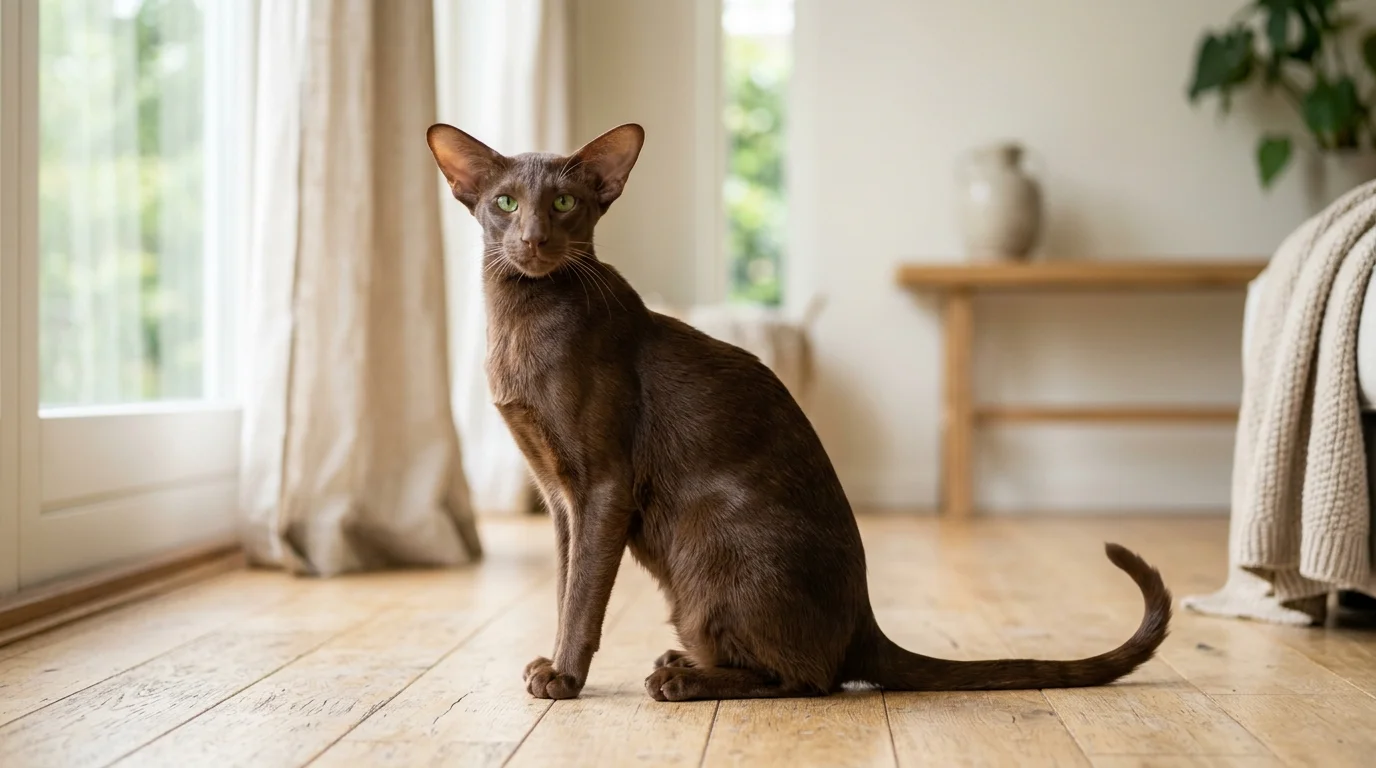
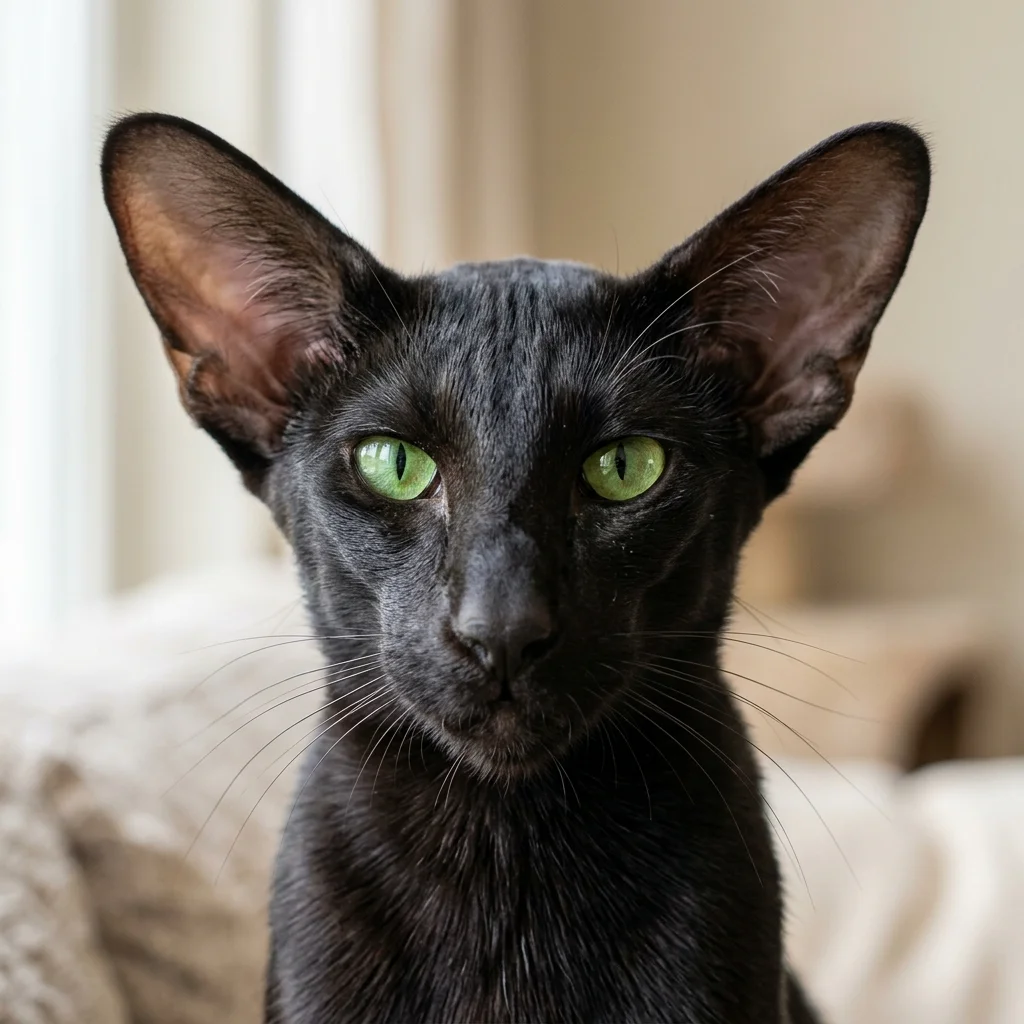
The Oriental Shorthair is a study in long, elegant lines. The body is long and tubular, the legs are slender and fine-boned, the tail is long and tapering to a fine point, and the ears are strikingly large — set wide apart on a narrow, triangular wedge-shaped head. Males typically weigh 4–6 kg, females 3–4.5 kg.
The coat is short, fine, and lies very close to the body, almost skin-like in its closeness, with a subtle sheen. The enormous variety of colour and pattern options — more than 280 in total — includes solids, tabbies, tortoiseshells, torbies, smokes, silvers, and bicolours.
Eyes are almond-shaped, set at a slant consistent with the wedge of the head, and in show-standard solids they should be vivid green. White cats may have blue or odd-coloured eyes.
Temperament
The Oriental Shorthair is one of the most communicative and emotionally expressive cat breeds you can own. They vocalise enthusiastically, form intense bonds with their favourite humans, and can become genuinely distressed if left alone for long periods. For this reason, many experts recommend keeping Orientals in pairs or with another highly social cat.
They are relentlessly curious and intelligent, constantly exploring, problem-solving, and investigating. Owners should expect cabinets to be opened, shelves to be inspected, and bags to be thoroughly examined. Mental stimulation is as essential as physical exercise for this breed.
Oriental Shorthairs are highly social and integrate well with other cats and confident dogs, though they are definitively the cat who needs to be the centre of attention. They do best in homes where they are included in daily life rather than left to their own devices.
Despite their demanding nature, they are deeply rewarding companions — affectionate, funny, and fiercely loyal to the people they love.
Activity & Play
Activity & Exercise
The Oriental Shorthair is one of the most energetic cat breeds you will encounter. These cats have a constant need for stimulation and will fill any quiet moment with play, exploration, or vocal commentary. Expect to dedicate at least 60 to 90 minutes per day to active engagement, split across several sessions.
Interactive wand toys, feather teasers, and puzzle feeders work particularly well with this breed. Oriental Shorthairs also enjoy fetch and will often retrieve lightweight toys and drop them at your feet for another round. This dog-like behavior makes them rewarding play partners.
Vertical space is essential. Cat trees, wall-mounted shelves, and window perches give them the climbing outlets their long, athletic bodies crave. Without adequate vertical territory, they will find their own elevated spots, including shelves and tops of cupboards.
Oriental Shorthairs are strictly indoor cats when it comes to safety, but they tolerate indoor living well as long as they receive sufficient stimulation. A second cat or a patient dog companion can help meet their social and play needs during the hours when you are unavailable.
Without enough activity, these cats become restless and may develop unwanted behaviors such as excessive vocalization, destructive scratching, or attention-seeking acts. Daily engagement is not optional for this breed; it is a core requirement for a balanced, happy Oriental Shorthair.
Grooming
The Oriental Shorthair's sleek, close-lying coat is one of the easiest to maintain of any pedigree breed. A quick weekly once-over with a soft-bristle brush or a chamois cloth is all that is needed to remove loose hairs and bring out the coat's natural gloss. Shedding is minimal.
Routine care follows the same pattern as other short-coated breeds: trim nails every two weeks, clean ears when needed, and brush teeth regularly. Dental disease can be a concern in the Oriental family of breeds, so establishing a tooth-brushing habit early is worthwhile.
Bathing is rarely necessary, though the Oriental Shorthair's fine coat makes bathing straightforward when a show or medical reason requires it.
Health
The Oriental Shorthair is generally a healthy cat with a lifespan of 12–15 years, though as a close relative of the Siamese it shares some of that breed's hereditary vulnerabilities.
Amyloidosis is the most significant breed-specific concern — an abnormal accumulation of amyloid protein in the liver that can cause liver failure. While not common, it is worth discussing with a vet and monitoring through regular blood panels. Progressive retinal atrophy (PRA) has also been reported in the breed, with signs beginning in young cats and potentially progressing to full blindness.
Megaesophagus, an enlargement of the oesophagus that affects the cat's ability to swallow food normally, is another condition seen in Oriental Shorthairs, though it is relatively rare. Maintaining a healthy weight, scheduling annual veterinary check-ups, and screening for cardiac issues provides the best foundation for a long, healthy life.
Nutrition
Nutrition
The Oriental Shorthair is a lean, muscular cat with a high metabolism fueled by near-constant activity. Their diet needs to reflect that energy output with a strong emphasis on quality animal protein.
Protein and fat: Look for foods where the first ingredient is a named meat source such as chicken, turkey, or fish. A protein content of around 35 to 40 percent on a dry matter basis is appropriate. Fat should be moderate, around 15 to 20 percent, to support energy without contributing to weight gain on less active days.
Feeding frequency: Because Oriental Shorthairs stay active and have fast metabolisms, they benefit from two to three measured meals per day rather than free-feeding. Kittens up to six months old should eat three to four smaller meals daily to support growth.
Wet versus dry: A mix of wet and dry food works well. Wet food aids hydration and is easier on the digestive system, while dry kibble can support dental health. Aim for roughly 60 to 70 percent wet food if the cat shows any tendency toward urinary issues.
Breed-specific considerations: Oriental Shorthairs are generally not prone to obesity, but their slight frames mean any excess weight is noticeable quickly. Avoid overfeeding even with an active cat. Some individuals may have sensitive digestion, so high-fiber or grain-inclusive foods can sometimes cause loose stools. Monitor and adjust accordingly.
Family Fit
Family Fit
The Oriental Shorthair thrives in active, engaged households. This breed forms intensely close bonds with its people and does not do well with long periods of solitude. If your home has plenty of activity and someone around for most of the day, the Oriental Shorthair will be in its element.
Children: Oriental Shorthairs generally get along well with older children who can respect their energy and match their playful spirit. They are tolerant and enjoy interactive games. With younger children, supervision is recommended, as this breed is sensitive and may become stressed by rough handling or unpredictable noise.
Other cats and dogs: This breed does well with other cats, particularly another Oriental or Siamese-type companion. They are social enough to welcome a cat-friendly dog, especially if introductions are made gradually.
Elderly owners: Oriental Shorthairs can adapt to quieter homes but will still need dedicated daily play. An elderly owner who enjoys interactive sessions and gentle companionship can make a good match, provided they are able to meet the breed's activity requirements.
Apartments: Oriental Shorthairs adapt well to apartment living as long as the space is enriched with vertical climbing options, toys, and consistent human interaction.
First-time owners: This breed is best suited to owners who have researched high-energy, vocal cats. Their demands for attention and stimulation can feel overwhelming without preparation. That said, their intelligence and affectionate nature make them deeply rewarding companions for any owner ready to commit.
Fun Facts
- The Oriental Shorthair is recognised in over 280 colour and pattern combinations — more than any other breed in the world.
- Despite the name, the breed was not developed in the Orient but in post-war England by breeders working with Siamese lines.
- Oriental Shorthairs and Siamese cats are genetically nearly identical — the main difference is coat colour and pattern.
- Their vocalisation is sometimes described as a "honk" rather than a meow — a distinctly unusual and memorable sound.
- Orientals are one of the breeds most prone to separation anxiety, making them better suited to homes where they will have regular company.
FAQ
Frequently Asked Questions
How long do Oriental Shorthairs live?
Oriental Shorthairs typically live between 10 and 15 years. With good nutrition, regular veterinary checkups, and a safe indoor lifestyle, many reach or exceed the upper end of that range.
Do Oriental Shorthairs shed a lot?
No. Their short, fine coat produces minimal shedding compared to most breeds. A weekly wipe-down with a soft cloth or grooming mitt is usually sufficient to keep the coat tidy.
Are Oriental Shorthairs vocal?
Yes, very much so. This breed is known for a loud, raspy voice and uses it freely to communicate hunger, boredom, affection, and opinion. If you prefer a quiet household, this is not the cat for you.
Are Oriental Shorthairs hypoallergenic?
No cat is truly hypoallergenic. Oriental Shorthairs produce less dander than many breeds due to their short coat, which some allergy sufferers find more tolerable. Spending time with the breed before committing is always recommended.
How much does an Oriental Shorthair cost?
From a reputable breeder, expect to pay between $600 and $1,500. Show-quality cats can cost more. Rescue organizations occasionally have Oriental Shorthairs available at adoption fees.
Can you train an Oriental Shorthair?
Yes. This breed is highly intelligent and responds well to clicker training and positive reinforcement. Many individuals learn tricks, walk on a leash, and play fetch reliably with consistent training from an early age.
Gallery
Explore more Oriental Shorthair-style breeds
Browse related breeds or take our matching quiz to find the right fit for your home.
Stay in the loop
Get weekly breed spotlights, care guides, and new additions - straight to your inbox.