Javanese
vocal, intelligent, affectionate, playful
Quick Facts
- Lifespan
- 12-15 years
- Weight
- 2.3-5 kg
- Origin
- United States
- Coat
- Long
Overview
Overview
The Javanese is a longhaired, point-colored cat developed in North America from Balinese and Colorpoint Shorthair ancestry. It shares the silky, flowing single-layer coat of the Balinese but comes in a wider range of point colors, including red, cream, lynx point, and tortoiseshell point patterns not found in traditional Balinese.
Recognized by the CFA (originally as a separate breed, then merged into the Balinese as the Javanese Division in 2008), the Javanese is closely related to the Siamese family and inherits its characteristic vivacity. It is intelligent, vocal, affectionate, and deeply attached to its people.
If you want a sophisticated, expressive companion that will engage you in conversation and follow you everywhere, the Javanese is a beautiful and rewarding choice.
History & Origins
History
The Javanese was developed in North America, primarily in Canada and the United States, in the 1970s. Balinese breeders who produced kittens in non-traditional point colors (such as red, cream, and tortoiseshell points) sought CFA recognition for these new color variations.
The CFA accepted the cats for registration in 1979 under the new name "Javanese" — chosen by pointing to a map and selecting Java, an island near Bali, continuing the tradition of naming Oriental-type cats after Southeast Asian places. The Javanese was treated as a distinct breed from Balinese in CFA registrations until 2008, when the two were merged: the Javanese became the Javanese Division of the Balinese breed, reflecting its coat and type origins.
Outside the CFA, many other registries (including TICA) have always classified the Javanese and Balinese together as color variants of the same breed.
Appearance
Physical Characteristics
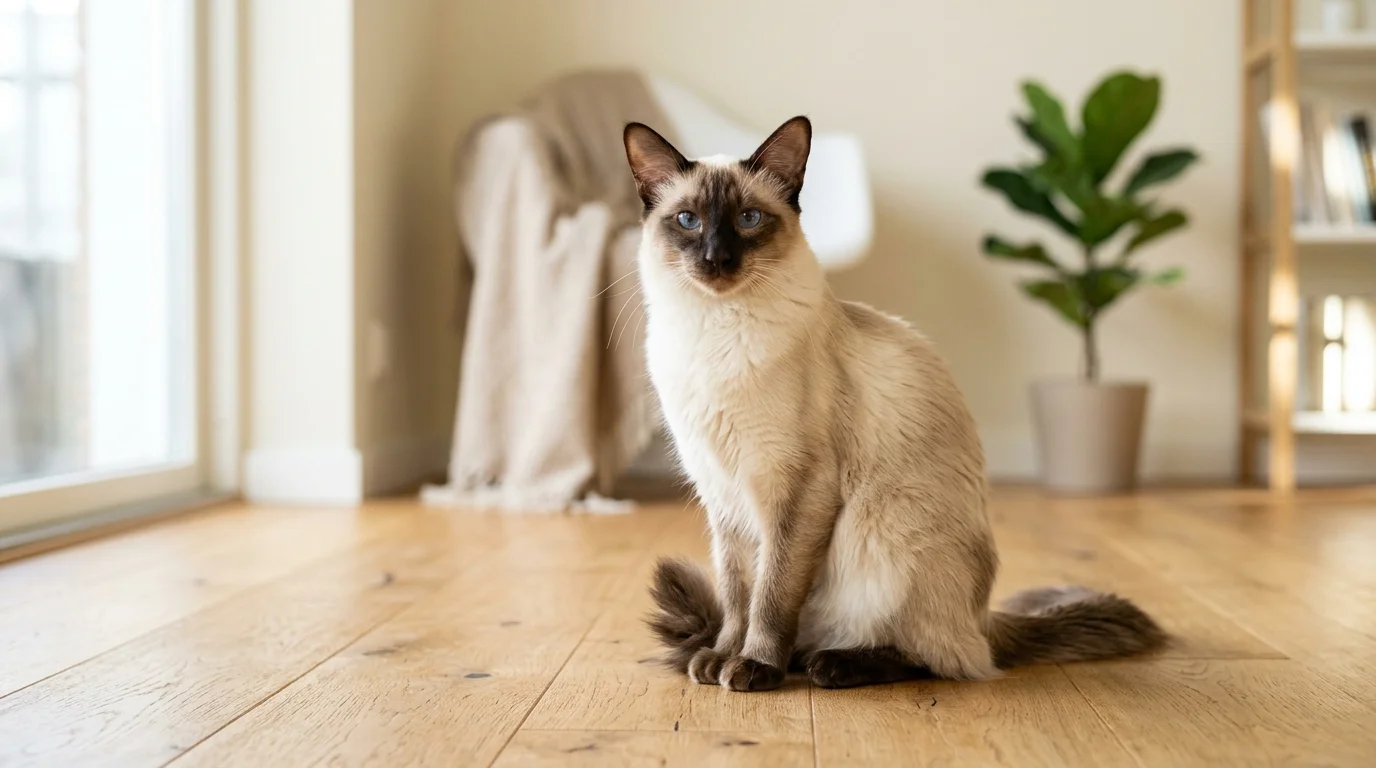
The Javanese is a slender, elegant cat with the long tubular body, fine bones, and wedge-shaped head characteristic of the Siamese family. It is a lightweight breed, typically weighing 2.3–5 kg, with a svelte but muscular build.
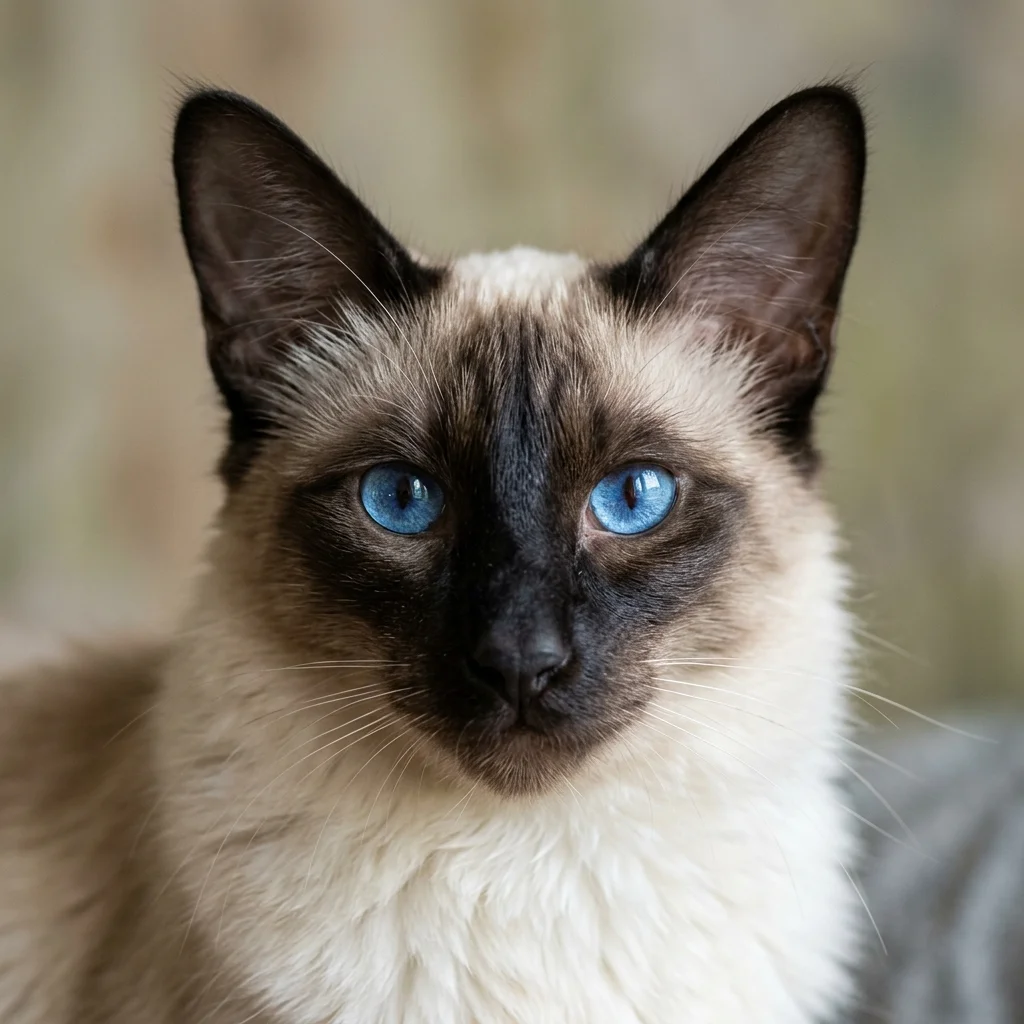
The coat is long and silky, lying close to the body without the bulk of a double coat. It comes in the non-traditional point colors that distinguish it from the Balinese: red point, cream point, lynx point (in various base colors), and tortoiseshell point. The eyes are always a vivid, deep blue.
The tail is long and plumed, the ears large and wide-set, and the profile shows a straight, elegant line from forehead to nose tip.
Temperament
Temperament
The Javanese is one of the most communicative and interactive cat breeds you will encounter. It vocalizes frequently and expressively, using its voice to comment on everything from your routine to the contents of its food bowl. Like its Siamese relatives, it wants to be involved in every aspect of household life.
Highly intelligent and endlessly curious, Javanese cats enjoy puzzle toys, learning tricks, and mastering fetch. They form intense bonds with their primary person and can become distressed if left alone for long periods. They are best suited to households where someone is home often, or where they have feline company.
Despite their demanding personality, they are also deeply affectionate and rewarding companions — loyal, warm, and endlessly entertaining.
Activity & Play
Activity
The Javanese is a slender, athletic cat built for speed and agility. Closely related to the Balinese and Siamese, it shares the same high energy and strong need for interaction and mental stimulation.
Energy Level
Javanese cats are high-energy and highly active. They are rarely still for long and prefer to be involved in whatever their owners are doing. Energy levels remain elevated throughout adulthood.
Daily Exercise
Aim for 20-40 minutes of active play each day, split across 2-3 sessions. Interactive wand toys, feather teasers, and ball tracks engage their prey drive effectively. Without adequate exercise, Javanese cats can become vocal, restless, or destructive.
Play Styles
- Interactive chasing: Wand toys and moving targets are irresistible to this breed.
- Climbing and leaping: Javanese cats are agile and love to jump to high surfaces.
- Fetch: Some individuals retrieve toys enthusiastically.
- Puzzle feeders: Food puzzles engage their sharp intelligence between play sessions.
- Social play: Javanese cats strongly prefer interactive play with people over solo toys.
Vertical Space
Vertical space is important for the Javanese. They will use every surface available. A tall, sturdy cat tree with multiple platforms gives them a sanctioned outlet for climbing. Wall shelves create a dedicated high-level route they will use daily.
Indoor vs. Outdoor
Javanese cats are best suited to indoor living. They are social and can become anxious if left outdoors alone. A secure catio provides safe outdoor enrichment if desired.
Grooming
Grooming
Despite its long, silky coat, the Javanese is relatively easy to groom. The coat is a single layer without an undercoat, which means it does not mat or tangle as readily as double-coated longhaired breeds.
Brush two to three times per week with a soft slicker brush or comb to keep the coat free of loose hairs and maintain its silky sheen. The Javanese sheds moderately; regular brushing significantly reduces hair around the home.
Routine maintenance — nail trims, ear checks, and regular dental care — is important, particularly dental hygiene, as Siamese-related breeds can be prone to periodontal disease. A consistent grooming routine from kittenhood makes the process enjoyable for both cat and owner.
Health
Health
As a member of the Siamese family, the Javanese shares some of the health vulnerabilities associated with Oriental breeds. The most notable concern is amyloidosis — a condition where abnormal proteins accumulate in organs, particularly the liver and kidneys. There is no genetic test for this, but responsible breeders avoid breeding from lines with a history of the condition.
Other health concerns include progressive retinal atrophy (PRA), which can cause gradual vision loss; inflammatory bowel disease (IBD); hypertrophic cardiomyopathy (HCM); and dental issues.
With attentive care, a Javanese typically lives 12–15 years. Regular veterinary check-ups, bloodwork, and dental monitoring are especially important for this breed. Choose breeders who health-test their breeding stock.
Nutrition
Nutrition
The Javanese is a slender, fine-boned cat with a lean, tubular body. Maintaining this naturally slim physique requires a diet that delivers adequate protein without excess calories.
Macronutrient Targets
- Protein: 35-45% of dry matter. High-quality animal proteins (chicken, turkey, white fish) should form the foundation of the diet. As obligate carnivores, cats use protein as their primary energy source.
- Fat: 15-20% of dry matter. Moderate fat supports the Javanese's fine coat without contributing to unwanted weight gain on a naturally slim frame.
- Carbohydrates: Below 10% where possible. Low-carbohydrate diets better match the Javanese's metabolic needs.
Feeding Frequency by Age
- Kittens (up to 12 months): 3-4 meals per day. Active, growing kittens need frequent calorie-dense meals to sustain their rapid development.
- Adults (1-7 years): 2 meals per day at set times. Portion control is straightforward with this breed as they rarely overeat, but a schedule prevents grazing habits.
- Seniors (7+ years): 2-3 smaller meals per day. Older cats benefit from easily digestible proteins and formulas with kidney and joint support.
Wet vs. Dry Food
A combination of wet and dry food works well for the Javanese. Wet food supports daily hydration, which benefits long-term kidney health. Dry food can serve as a measured meal component or dental kibble. Aim for the majority of calories to come from wet or raw food.
Breed-Specific Considerations
Javanese cats have a naturally lean build and can look underweight even when healthy. Focus on body condition rather than appearance alone. If ribs are easily visible without pressure, consult a vet about calorie intake. The breed's silky single-layer coat benefits from diets rich in omega fatty acids. Always provide fresh water, and consider a pet fountain as Siamese-related breeds often prefer moving water.
Family Fit
Family Fit
The Javanese is a people-oriented, affectionate cat that does best in an active household where it receives regular attention and companionship. It bonds deeply with its family and dislikes being left alone for long periods.
Children
Javanese cats are well-suited to families with children. They enjoy active play and are agile enough to hold their own in a lively household. They tend to seek out children as playmates. Teaching children to handle cats gently ensures a positive relationship for both.
Other Cats
Javanese cats do well with other cats, particularly social breeds of similar energy levels. A feline companion helps prevent loneliness when owners are away. Siamese, Balinese, or other Oriental breeds make particularly compatible housemates.
Dogs
Javanese cats can coexist with cat-friendly dogs, especially when introduced gradually. Their confident temperament means they are less likely to hide from dogs and more likely to engage on their own terms.
Elderly Owners
The Javanese can be a rewarding companion for elderly owners who enjoy a talkative, attentive cat. However, their high energy and need for interaction means they are best suited to owners who can provide regular engagement. A second cat helps fill social needs when owners are less active.
Apartments
Javanese cats adapt well to apartment living provided they have vertical space, toys, and daily interactive play. Their slim build means they do not require a large space, only an enriched one.
First-Time Owners
Javanese cats can work for first-time owners who are prepared for a demanding, vocal companion. They are not a low-maintenance cat and will make their needs known clearly. Owners who can commit to daily interaction will be rewarded with an unusually devoted pet.
Fun Facts
Fun Facts
- The name "Javanese" was chosen entirely from a map — breeders picked Java as a neighbor to Bali, continuing the Southeast Asian naming tradition for Oriental-type cats.
- The Javanese is considered one of the most vocal cat breeds in the world, known for its expressive, conversational meow.
- In 2008, the CFA merged the Javanese back into the Balinese as the Javanese Division — effectively making the name a historical artifact in one of cat fancy's major registries.
- Despite having a long coat, the Javanese's single-layer coat sheds less than most longhaired breeds.
- The Javanese is known to play fetch and learn tricks — unusual skills for a cat, though typical of the highly intelligent Siamese family.
FAQ
Frequently Asked Questions
How long do Javanese cats live?
Javanese cats typically live 12-16 years. With proper veterinary care and a healthy diet, many individuals reach their mid-teens or beyond. They are generally a long-lived breed with no major genetic health crises specific to the breed.
Do Javanese cats shed a lot?
Javanese cats shed less than most breeds. They have a single-layer, silky coat without a dense undercoat, which greatly reduces the volume of loose fur. Regular gentle brushing once a week keeps their coat in good condition and removes any loose hair.
Are Javanese cats vocal?
Yes. The Javanese is one of the more vocal cat breeds, inheriting this trait from its Siamese ancestry. They use a wide range of vocalisations and are not shy about communicating their opinions on food, attention, and anything else they feel strongly about. Their voice is softer than the Siamese but still present.
Are Javanese cats suitable for people with allergies?
Javanese cats are sometimes considered more tolerable for allergy sufferers due to their single-layer coat and lower shedding. However, they are not hypoallergenic. Cat allergies are primarily triggered by the Fel d 1 protein in saliva and skin, not fur alone. Individual reactions vary.
How much does a Javanese kitten cost?
Javanese kittens typically cost between $600 and $1,500 USD from a reputable breeder. The breed is less common than its Balinese and Siamese relatives, so availability can vary by region.
Are Javanese cats easy to train?
Yes. The Javanese is highly intelligent and eager to engage with its owner, which makes training enjoyable. They can learn tricks, leash walking, and even basic commands using positive reinforcement. Mental stimulation through training also satisfies their need for activity.
How do Javanese cats handle being alone?
Not well. The Javanese is a highly social breed that bonds strongly with its family. Prolonged daily solitude can lead to anxiety, excessive vocalisation, or destructive behaviour. A second cat or a consistent daily routine with plenty of interaction time helps greatly.
Gallery
Explore more Javanese-style breeds
Browse related breeds or take our matching quiz to find the right fit for your home.
Stay in the loop
Get weekly breed spotlights, care guides, and new additions - straight to your inbox.