Chartreux
quiet, observant, intelligent, gentle
Quick Facts
- Lifespan
- 12-15 years
- Weight
- 3-7 kg
- Origin
- France
- Coat
- Short
Overview
The Chartreux is France's iconic blue cat — a powerful, woolly-coated breed with a perpetual smile and a quietly devoted personality. Known for their intelligence, gentle nature, and remarkable patience, Chartreux cats are often described as dog-like in their loyalty without being demanding. They are observant, calm, and deeply attached to their families, making them one of the most rewarding and low-drama cat breeds you can welcome into your home.
History & Origins
The Chartreux is one of France's oldest natural breeds, with a history steeped in legend and a little mystery. The most popular account links the breed to Carthusian monks at the Grande Chartreuse monastery near Grenoble, though records from the monastery itself do not confirm any specific breeding programme. The first documented reference to the breed appears in the writings of the French naturalist Buffon in the 18th century.
A systematic breeding programme was established in France in the late 1920s, producing the strong, blue-coated cat known today. The breed was nearly wiped out by both World Wars; breeders on the island of Belle-Île-en-Mer are credited with preserving the lineage. After World War II, cats were crossed with blue Persians and British Shorthairs to rebuild numbers, though the breed was restored to its distinctive type over the following decades.
The Chartreux is today considered the national cat of France and is recognised by the CFA, TICA, and FIFe.
Appearance
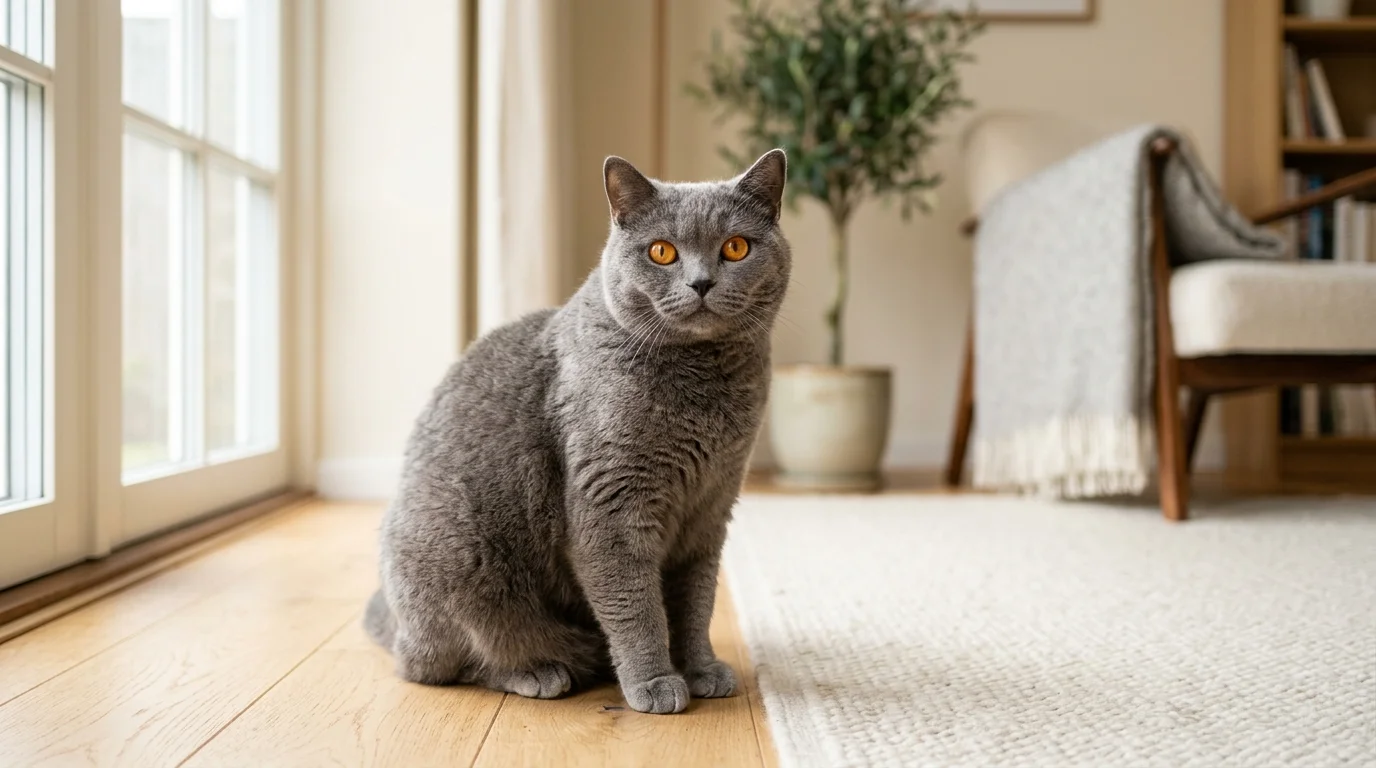
The Chartreux is a medium to large cat with a broad, muscular body and a surprisingly robust build beneath its soft exterior. Males are notably larger than females, typically weighing 5–7 kg, while females average 3–5 kg. The overall appearance is powerful yet refined.
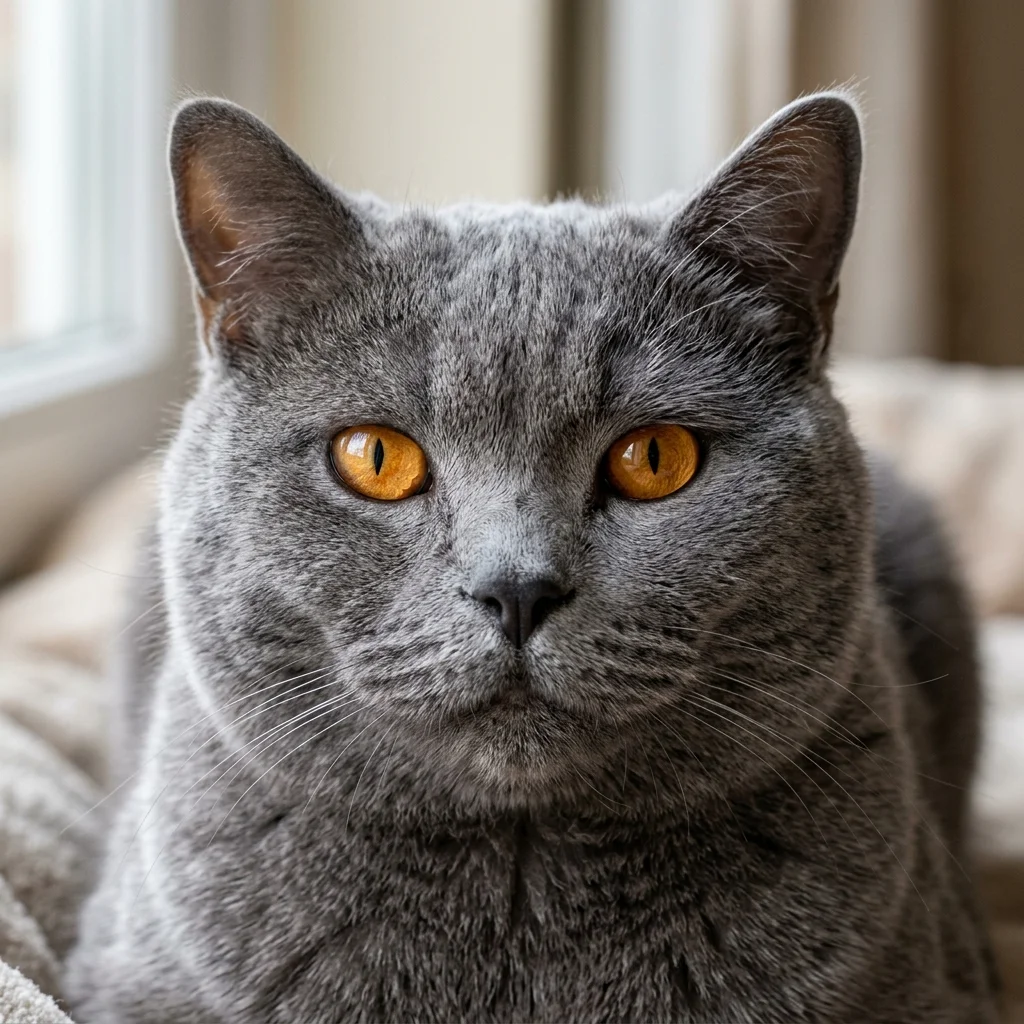
The breed's most iconic feature is its uniform blue-grey coat — a silvery, blue shade that comes in all tones from pale ash to deep slate. Each hair is tipped with silver, giving the coat a shimmering quality. The woolly double coat is medium-short, dense, and water-resistant with a characteristic break or ripple when touched.
The head is broad and rounded with full cheeks, a short muzzle that gives the impression of a permanent smile, and bright copper to gold eyes that are round and wide-set. The forehead is flat, and the ears are medium-sized and set high.
Temperament
The Chartreux is a quiet, observant cat that watches the world carefully before deciding how to engage with it. They are not the first to rush to a stranger or leap into a new situation, but once comfortable, they form profound and lasting bonds with their human families. They are loyal in the way of a devoted companion — present, attentive, and reliably calm.
Despite their dignified, almost philosophical demeanour, Chartreux are genuinely playful. They remain engaged in games well into adulthood and can be taught to fetch small objects much like a dog. Their intelligence is evident in the way they observe their environment and respond to their owners' moods.
Unlike many highly vocal breeds, the Chartreux is almost silent. Historically thought to have been selectively bred to avoid disturbing meditating monks, these cats communicate through chirps, trills, and body language rather than persistent meowing. This makes them an excellent choice for anyone who prefers a calm household.
Chartreux are typically good with respectful children and other cats, though they may take time to warm up to new animals.
Activity & Play
Chartreux Activity and Exercise
The Chartreux is often described as a dog in a cat suit: calm and quiet indoors, but athletic and surprisingly playful when the mood strikes.
Energy Level
Chartreux cats have a moderate energy level. They are not demanding about playtime the way some high-energy breeds are, but they genuinely enjoy active sessions and become noticeably more settled when given daily outlets. They are agile for their sturdy build and can move with impressive speed when chasing prey.
Daily Exercise Needs
Two play sessions of 15 to 20 minutes each day satisfies most Chartreux cats. They tend to pace themselves and will often disengage when they have had enough, which is different from breeds that keep going until they collapse. Respect this self-regulation: it is a sign of a confident, well-adjusted cat.
Favourite Play Styles
The Chartreux was historically bred as a working mouser, and this heritage shows in play. They prefer toys that move like prey: feather wands, small plush mice flicked across the floor, and remote-controlled toys. They tend to stalk before pouncing, making each session feel like a mini hunting expedition.
Toys and Enrichment
Interactive wand toys remain the Chartreux favourite across their entire lifespan. Puzzle feeders complement physical play by giving them a mental challenge. A window perch with an outdoor view, particularly near a bird feeder, provides hours of passive enrichment between sessions.
Vertical Space and Indoor Living
A sturdy mid-height cat tree is sufficient for most Chartreux cats. They do not have the frantic climbing drive of some breeds but enjoy having elevated resting spots. They adapt well to full indoor living and do not typically attempt escapes if their environment is adequately enriched.
Grooming
The Chartreux has a distinctive double coat that is woolly in texture, dense, and medium-short in length. It has a water-resistant quality that causes it to break or ruffle when touched, similar to sheepskin. This coat requires more attention than a typical shorthaired breed.
Brushing once or twice a week with a wide-toothed comb is recommended rather than a standard slicker brush — vigorous brushing can damage the woolly texture. During the spring shedding season, the Chartreux may shed heavily, and more frequent grooming helps manage loose hair.
Routine care rounds out the regime: trim nails every two weeks, clean ears gently when needed, and brush teeth regularly to guard against dental disease. The Chartreux's double coat should never be clipped as this can damage its natural structure.
Health
The Chartreux is considered a robust and generally healthy breed, with a typical lifespan of 12–15 years. Its centuries of natural development as a working cat have given it a solid genetic foundation.
The primary breed-specific concern is patellar luxation, a condition where the kneecap slips out of position. This can range from mild to severe and is the most commonly identified hereditary issue in the breed. Reputable breeders screen for this condition. Bladder stones have also been reported in some individuals, as has polycystic kidney disease in rare cases.
Overall, the Chartreux requires standard veterinary care: annual check-ups, appropriate vaccinations, parasite prevention, and attention to diet to prevent obesity. Their calm temperament and preference for routine contribute to a generally stress-free, healthy life.
Nutrition
Feeding Your Chartreux
The Chartreux is a robust, well-muscled breed that maintains condition well when fed appropriately. Obesity is the main dietary risk to manage.
Protein and Fat
Choose a high-quality formula with a named meat protein as the first ingredient. Target 30-35% protein and 10-15% fat on a dry matter basis. The Chartreux active lifestyle means it burns more than a sedentary indoor cat, but portion control still matters.
Wet vs. Dry
A mix of wet and dry food works well. Wet food provides hydration and supports kidney health. Dry food can be used for portion-controlled meals or mild free-feeding in active adult cats. Avoid low-quality kibble with excessive fillers.
Feeding by Age
- Kittens (under 1 year): 3-4 meals daily with a kitten formula rich in protein and essential fatty acids.
- Adults (1-8 years): Two measured meals per day. The Chartreux metabolises well but can gain weight if inactive.
- Seniors (8+): A senior formula with glucosamine and reduced phosphorus suits this life stage well.
Breed Considerations
The Chartreux has no breed-specific dietary disorders but benefits from taurine-rich food to support heart health. Dental health is worth monitoring; dry kibble can help reduce tartar when used alongside regular brushing. Always provide access to fresh water.
Family Fit
Is the Chartreux Right for Your Family?
The Chartreux is a calm, loyal breed that adapts well to a range of households without being needy or difficult. Their quiet nature is one of their most appealing traits for families seeking a low-drama companion.
With Children
Chartreux cats are patient and gentle with children. They are unlikely to scratch or bite when startled, preferring to simply walk away from overly boisterous handling. Older children who engage them in interactive play will earn a devoted playmate. Toddlers should be supervised as with any pet.
With Other Cats
The Chartreux is generally peaceable in multi-cat households. They are not territorial in an aggressive way and will usually find their own space rather than contest it. Proper introductions over several days reduce any initial tension significantly.
With Dogs
Many Chartreux cats coexist well with calm, cat-friendly dogs. Their self-possessed temperament means they are less likely to flee in panic, which often de-escalates dog-cat tension. Boisterous or prey-driven dogs may require more careful management.
With Seniors
The Chartreux makes an excellent companion for seniors or quieter households. They enjoy sitting near their person without demanding constant interaction. Their moderate activity needs are easy to meet with a couple of daily play sessions, and they are content to nap companionably for the rest of the day.
Apartment Living
Chartreux adapt very well to apartment life. They are quiet, not destructive, and not inclined to escape attempts. A window perch and a sturdy cat tree provide sufficient enrichment in a smaller space.
Fun Facts
- The Chartreux is the national cat of France and has been associated with French culture for centuries.
- Their near-silent nature is legendary — folklore suggests they were bred by Carthusian monks to avoid disturbing meditation sessions.
- Despite their quiet demeanour, Chartreux are enthusiastic players and can often be taught to fetch small objects.
- The Chartreux's copper or gold eyes combined with its blue coat create one of the most striking colour contrasts of any cat breed.
- French writer Colette, who owned a Chartreux, immortalised the breed in her writings, helping to raise its profile in 20th-century France.
FAQ
Chartreux FAQ
How long do Chartreux cats live?
Chartreux typically live 12 to 15 years. Regular veterinary checkups, a healthy diet, and an indoor lifestyle all contribute to reaching the upper end of that range.
Do Chartreux cats shed much?
Moderate shedding is normal, with heavier seasonal blowouts in spring and autumn. The dense double coat benefits from weekly brushing to manage loose fur and prevent matting at the undercoat.
Are Chartreux cats vocal?
The Chartreux is famously quiet. Many individuals are nearly silent, using body language and gentle chirps rather than meowing. They are one of the least demanding cats in terms of vocal noise.
Are Chartreux hypoallergenic?
No. Like all cats, they produce the Fel d 1 allergen. Their dense coat can actually trap more hair and dander close to the skin, though regular grooming reduces what becomes airborne.
How much does a Chartreux cost?
Chartreux are relatively rare outside France. Expect to pay $1,000 to $2,000 from a responsible breeder. Waitlists are common. Adoption through a rescue is worth exploring as an alternative.
Are Chartreux good for first-time cat owners?
Yes. Their calm, adaptable temperament and low-maintenance personality make them an excellent choice for new owners. They are not demanding, tolerate routine changes well, and rarely develop behavioural problems.
Gallery
Explore more Chartreux-style breeds
Browse related breeds or take our matching quiz to find the right fit for your home.
Stay in the loop
Get weekly breed spotlights, care guides, and new additions - straight to your inbox.