British Longhair
calm, easygoing, affectionate, loyal
Quick Facts
- Lifespan
- 12-15 years
- Weight
- 3-8 kg
- Origin
- United Kingdom
- Coat
- Long
Overview
The British Longhair is the semi-long-coated version of the beloved British Shorthair, combining that breed's calm, easygoing personality with a dense, plush coat that adds a touch of extra glamour. Sturdy, affectionate, and highly adaptable, the British Longhair settles comfortably into almost any household environment. It is loyal and gentle without being clingy, and its serene temperament makes it an ideal companion for families, singles, and seniors alike.
History & Origins
The British Longhair traces its ancestry to the ancient domestic cats of Britain, which are thought to descend from cats brought to the British Isles by Roman soldiers around 43 CE. These cats were selectively bred over centuries into the stocky, round-faced British Shorthair that became a fixture at early cat shows in Victorian England.
After the devastation of both World Wars nearly wiped out the British Shorthair population, breeders turned to Persian and Russian Blue outcrosses to rebuild numbers. The Persian crossings introduced the longhair gene into the British gene pool. For many decades, longhaired kittens produced by British Shorthair breeding programmes were simply sold as pets. It was not until the late 20th century that enthusiasts began systematically developing these longhaired cats as a distinct breed.
TICA officially recognised the British Longhair in 2009. FIFe and WCF also grant recognition, though the CFA does not currently accept the breed as distinct from the British Shorthair. The breed is still relatively uncommon outside Europe.
Appearance
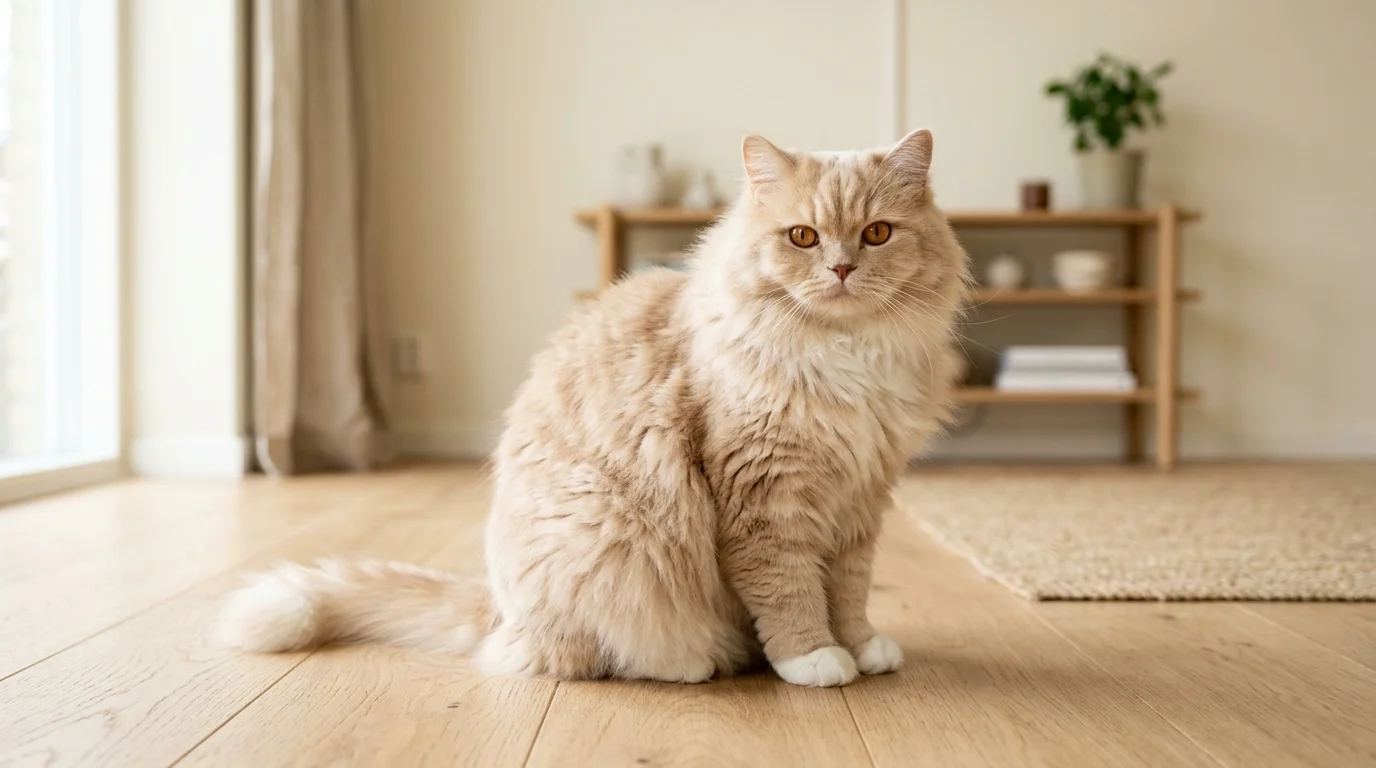
The British Longhair is a medium to large, semi-cobby cat with a broad chest, strong muscular body, and substantial bone structure. Males typically weigh 5–8 kg; females are lighter at 3–5.5 kg. The breed's rounded, compact silhouette is immediately distinctive.
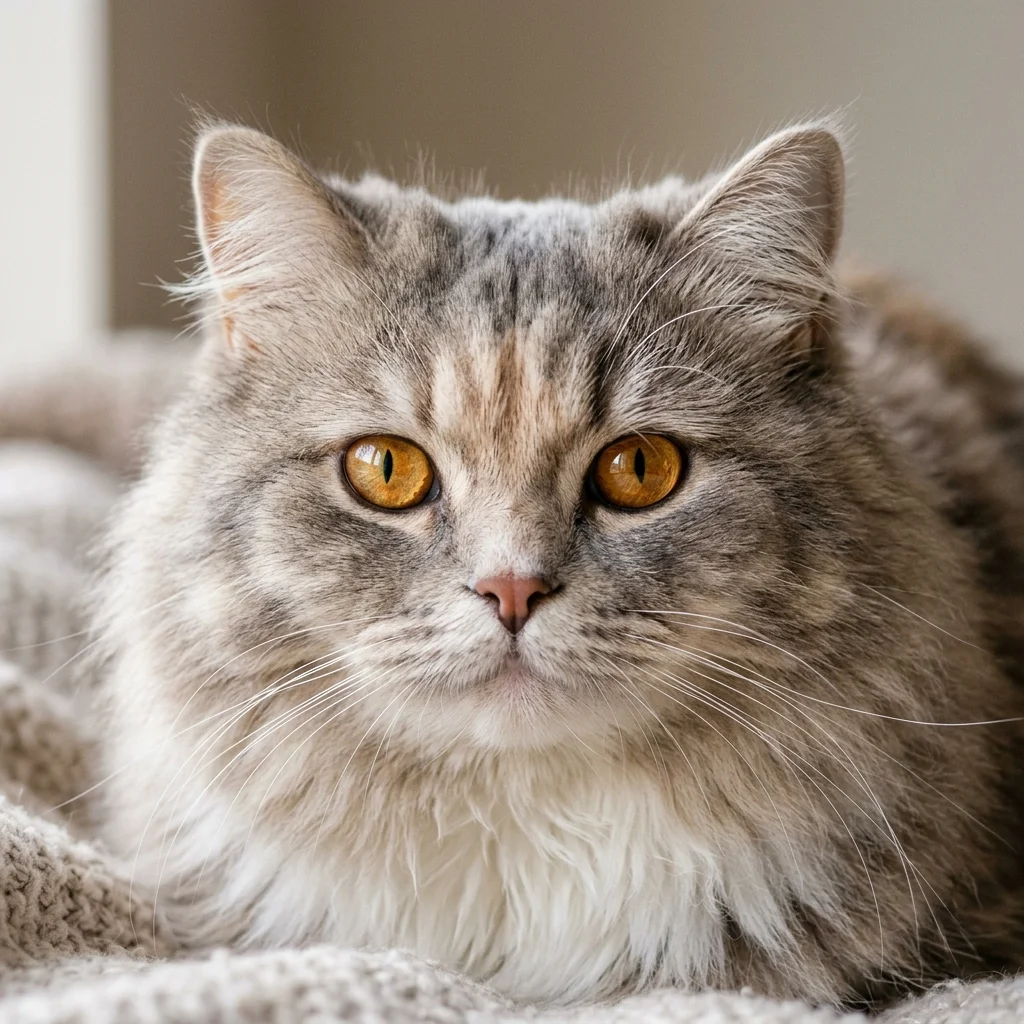
The coat is the breed's most arresting feature: long, dense, and plush, with a thick undercoat that gives it a full, rounded appearance. A pronounced neck ruff, fluffy breeches, and a full brush tail complete the look. The British Longhair comes in almost every colour and pattern recognised in the British Shorthair, including solid, tabby, tortoiseshell, bi-colour, and colourpoint.
The head is large and round with full cheeks, a broad, short nose, and a strong chin. Eyes are large, round, and expressive; eye colour ranges from gold, copper, and blue to green depending on coat colour. Ears are medium-sized and set wide apart, with rounded tips.
Temperament
British Longhairs have a famously steady, unflappable temperament. They are calm and quiet by nature, rarely given to bursts of frantic energy, and content to observe the household at their own pace. While they enjoy company and seek out their family, they are not needy or demanding and do not vocalise excessively.
This breed tends to sit beside rather than on top of its people. British Longhairs are affectionate on their own terms — they will appear at your side for a chin scratch and then settle nearby rather than clambering into your lap uninvited. Their independent streak means they can manage short periods alone without anxiety.
British Longhairs are tolerant and even-tempered with children and other pets. They are not easily provoked and rarely scratch defensively. They adapt well to new environments and routines, making them excellent travel companions or transition cats for changing households.
Despite their relaxed demeanour, British Longhairs do have occasional kitten-like bursts of energy, particularly when young, and appreciate interactive play sessions and puzzle feeders.
Activity & Play
Activity & Exercise
The British Longhair is the longhaired counterpart of the British Shorthair, sharing the same even-tempered, unhurried personality. This breed sits comfortably in the low-to-moderate activity range and is well-suited to a calm indoor lifestyle.
Daily Exercise Needs
British Longhairs benefit from around 20 to 25 minutes of interactive play per day. They are not naturally inclined toward vigorous self-directed activity and can become sedentary if not encouraged to move. Regular play sessions help maintain a healthy weight, which is important given the breed's tendency to put on pounds.
Play Styles
British Longhairs enjoy measured, deliberate play rather than frantic bursts of activity. Interactive wand toys, crinkle balls, and remote-controlled mice engage their curiosity without demanding more energy than they are comfortable expending. Puzzle feeders are an excellent tool for mental enrichment. This breed is known for a calm, methodical approach to play, often watching a toy carefully before making a single, precise pounce.
Vertical Space & Environment
While not avid climbers, British Longhairs appreciate having a sturdy, low-to-medium cat tree or a padded window perch. They enjoy observing their surroundings from a comfortable vantage point. Wide platforms suit their stocky build far better than narrow perches.
Indoor vs. Outdoor
British Longhairs are best suited to indoor life. Their trusting, unhurried temperament makes them poorly suited to navigating outdoor dangers independently. A secure outdoor enclosure or supervised garden time can supplement their indoor environment if space allows.
Grooming
The British Longhair's dense, plush coat requires considerably more attention than that of its shorthaired counterpart. The coat is thick, full, and prone to matting if neglected, particularly around the neck ruff, hindquarters, and between the hind legs.
Brushing two to three times per week is the minimum; daily brushing is ideal, especially during the heavy seasonal shedding periods in spring and autumn. A wide-toothed metal comb is the most effective tool for working through the dense undercoat, followed by a softer brush to finish. Starting grooming sessions early in kittenhood will help the cat accept handling calmly.
Beyond coat care, routine maintenance includes regular nail trimming, ear cleaning, and dental care. The British Longhair's round face can make it prone to minor tear staining, so periodic gentle cleaning around the eyes is recommended. Overall, this is a breed that rewards consistent grooming with a spectacular-looking coat.
Health
The British Longhair is generally a robust breed with a lifespan of 12–15 years, but it shares two significant health predispositions with its founding breeds: hypertrophic cardiomyopathy (HCM) and polycystic kidney disease (PKD).
HCM is a thickening of the heart muscle that can progress to heart failure and is the most common heart disease in cats. Responsible breeders screen all breeding cats via echocardiogram annually. PKD, inherited from Persian ancestors in the breed's background, causes cysts to slowly form on the kidneys. DNA testing for PKD is widely available and reputable breeders test their stock.
Obesity is another concern for this low-activity breed. British Longhairs have hearty appetites and a tendency to prefer lounging over exercise, making portion control and regular interactive play important. Routine annual veterinary check-ups are strongly recommended.
Nutrition
Nutrition & Feeding
British Longhairs share the British Shorthair's predisposition to weight gain, making a carefully managed feeding routine one of the most important aspects of their care.
Macronutrient Guidelines
A high-protein, moderate-fat diet forms the best nutritional foundation for this breed. Target foods with 30 to 40 percent protein and 12 to 18 percent fat on a dry matter basis, sourced from quality animal proteins such as chicken, turkey, or fish. Carbohydrate content should be kept low, particularly for less active adults.
Wet vs. Dry Food
A combination of wet and dry food is suitable for most British Longhairs. Wet food adds hydration and tends to be more filling per calorie, helping prevent overeating. Dry food can be offered in controlled portions. Free-feeding dry kibble is not recommended because this breed will readily overeat if given unlimited access.
Feeding Frequency
Kittens up to six months of age should receive three to four meals per day to support growth. From six to twelve months, two to three meals daily is appropriate. Adult British Longhairs (one year and older) do best on two measured meals per day. Seniors may benefit from a senior-formula food adjusted to their lower activity level.
Breed-Specific Considerations
Weight management is the primary nutritional concern for this breed. Use a kitchen scale to measure portions accurately and weigh your cat monthly. Omega-3 fatty acids support the health of the long, plush coat. Joint supplements may be beneficial as the cat ages, given the breed's solid, heavy build.
Family Fit
Family Compatibility
The British Longhair is an adaptable, composed breed that fits naturally into many different household types. It combines affection with self-sufficiency in a way that makes it unusually versatile.
Children
British Longhairs are patient and tolerant with children, though they tend to prefer calm interaction over boisterous play. Older children who respect the cat's need for quiet time will form strong bonds with this breed. With younger children, supervision is recommended, as the British Longhair may withdraw rather than engage when overstimulated.
Other Cats & Dogs
This breed generally coexists peacefully with other cats and with calm dogs. British Longhairs are not aggressive or territorial, though they value their personal space. Introductions should be gradual and structured. They tend to ignore rather than confront other animals, which keeps household tension low.
Elderly Owners
The British Longhair is an excellent companion for older adults. It is affectionate without being demanding, content to sit nearby without requiring constant attention. Its moderate grooming needs (a few brushing sessions per week) are manageable for most owners.
Apartments
British Longhairs adapt very well to apartment living. Their calm temperament, low noise level, and modest space requirements make them ideal urban companions. They do not need access to outdoor spaces to remain content.
First-Time Owners
This breed is a strong choice for first-time cat owners. The British Longhair is forgiving of inexperience, adapts readily to a new home, and does not have extreme demands. Its easygoing nature makes the learning curve of cat ownership gentler and more enjoyable.
Fun Facts
- The British Longhair existed for decades before being formally recognised as a breed — longhaired kittens from British Shorthair litters were simply sold as pets until breeders decided to develop them intentionally.
- The breed's longhair gene was introduced through Persian outcrossing after World War II, when the British Shorthair population had nearly collapsed.
- Despite their plush appearance, British Longhairs are actually quite athletic when motivated — they simply prefer a relaxed lifestyle to unnecessary exertion.
- The CFA does not yet recognise the British Longhair as a separate breed from the British Shorthair, making it one of the few major pedigree breeds without CFA championship status.
- British Longhairs are often said to resemble stuffed animals — a reputation bolstered by their tendency to sit perfectly still and observe their surroundings with a serene, owlish expression.
FAQ
Frequently Asked Questions
How long do British Longhairs live?
British Longhairs typically live between 12 and 15 years. Good nutrition, regular veterinary care, and keeping them at a healthy weight all contribute to a longer life.
Do British Longhairs shed a lot?
Yes, British Longhairs shed moderately to heavily, with increased shedding during spring and autumn. Brushing two to three times per week prevents matting and keeps loose hair under control. Their dense undercoat benefits from regular combing.
Are British Longhairs vocal?
This breed is generally quiet and undemanding. British Longhairs communicate through soft meows and tend not to vocalise excessively. They are not known for persistent or loud calls.
Are British Longhairs hypoallergenic?
No. British Longhairs shed regularly and produce the Fel d 1 protein that triggers allergic reactions. They are not a suitable choice for allergy-sensitive households.
How much does a British Longhair kitten cost?
Pedigree British Longhair kittens from reputable breeders typically cost between $1,000 and $2,000 USD. Price depends on coat colour, lineage, and the breeder's location. The breed is rarer than the British Shorthair, which can affect availability.
Are British Longhairs easy to train?
British Longhairs are intelligent and can learn household routines and basic commands with consistent positive reinforcement. They are not as eager-to-please as some breeds, but they respond well to calm, reward-based training sessions.
Gallery
Explore more British Longhair-style breeds
Browse related breeds or take our matching quiz to find the right fit for your home.
Stay in the loop
Get weekly breed spotlights, care guides, and new additions - straight to your inbox.